Wednesday, 26 October 2016

Wroclaw: Where to go and what to see in 48 hours

Travel essentials

Why go now?

Winter is easing its grip on this fascinating city in south-west Poland – and Wroclaw's status as European Capital of Culture makes this the ideal year to visit, with a wide range of events (wroclaw2016.pl). Besides the current cultural surge, the capital of Lower Silesia has an architectural repertoire that fills a spectrum from Silicon Valley to Stalingrad.

As German-held Breslau, the city suffered widespread destruction in the Second World War. It was the unrestored post-war cityscapes that persuaded Steven Spielberg to choose Wroclaw as a location for his Oscar-winning Cold War thriller, Bridge of Spies, as a stand-in for East Berlin in 1960.

Touch down

Fly to Nicolas Copernicus airport, 12km west of the city centre, from one of seven UK airports. Ryanair flies from Bristol, East Midlands, Glasgow, Liverpool and Stansted, while Wizz Air flies from Doncaster/Sheffield and Luton.

The tourist desk in Arrivals opens 8am to 8pm daily. The only bureau de change offers poor rates for sterling – wait until you reach the city to change money. 

Bus 406 runs every 20 minutes and takes 40 to 60 minutes to reach the city centre, depending on traffic. Pay on board using the machine which accepts only cards – not cash. Choose between a single ticket costing 3 zlotys (zl3/50p) or a pass valid for 24 hours (zl11/£2), 48 hours (zl20/£3.60) or 72 hours (zl26/£4.80). 

For the city centre get off either at Plac Orlat Lwowskich (1) or the Renoma shopping centre (2).

A taxi from the airport to the centre will cost at least zl50 (£9).

Get your bearings

If the map of Poland were a clock face, Wroclaw would be at eight o'clock, just north of the Sudeten mountains that divide Poland from the Czech Republic. It is where the Oder river splits into several channels to create 12 islands. One of the isles contains the Old Town, with the medieval Rynek – a market square so vast that it has an entire city block's worth of buildings in the middle. The tourist office (3) is at the south-west corner (00 48 71 3443 111; wroclaw-info.pl), open 9am to 7pm, daily.

The Jewish quarter occupies the south-west quadrant of the Old Town. Wroclaw's Jewish history dates from the 12th century. To the south, is the more modern commercial centre.

As you wander through the city, look down to pavement level, for some of the 300 or so gnomes that decorate the streets; the first appeared in the 1980s as Poland's democracy movement unfolded. 

Check in

Hotel Dwor Polski (4) at Kielbasnicza 2 (00 48 71 372 34 15; dworpolski.wroclaw.pl) is a century-old four-star that is ageing elegantly. Rooms are comfortably furnished, with high-speed wi-fi the only modern dimension. I paid zl290 (£53) for a twin including breakfast. Opposite is the Czesk Film Pub (00 48 71 342 25 49), with a warren of caves, and a succession of spaces with old armchairs and cheap beer.

For a 21st-century experience, the Puro Hotel (5) at Pawla Wlodkowica 6 (00 48 71 772 51 00; purohotel.pl) in the Jewish quarter is stylish and well-appointed. Doubles from zl250 (£54) to zl500 (£90), depending on demand.

At the colourful and welcoming Bemma Hostel (6) at Kazimierska 15 (00 48 531 531 598; hostelbemma.pl), dorm beds start at zl35 (£6.50), with doubles for zl100 (£18) midweek and zl120 (£22) at weekends, excluding breakfast.
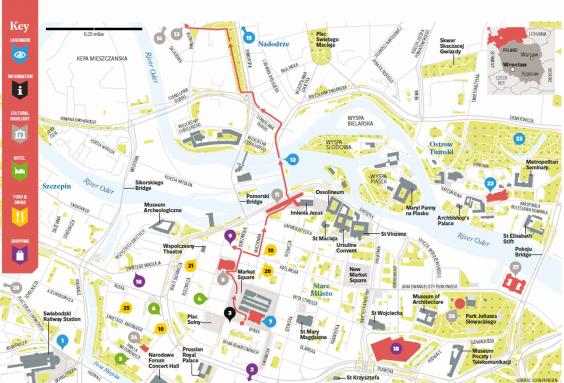
wroclaw-map.jpg

Day one

Take a hike

Start in the middle of Rynek, surveying the exuberant façades of the Town Hall (7). At the north-west corner of the square walk between the “Hansel and Gretel” townhouses into the churchyard of St Elizabeth's (8). See the austere interior; for another perspective on the city climb the 90 metres to the top of the tower (5zl/£1; erratic opening hours).

Walk north along Odrzanska, diverting west a block later to the former meat market (9), which is now a row of art galleries. Go two blocks east to the former city prison (10) where these days you can pause for a coffee. 

North along Wiezienna takes you into the University area; bear right to survey the dazzling Baroque main building, now the University Museum (11) (00 48 71 375 26 18; muzeum.uni.wroc.pl; 10am to 3.30pm, daily except Wednesday, zl12/£2).

Go through the arch and over University Bridge (12). Follow Dubois across a couple of traffic junctions, and turn sharp right into Kurkowa (13).

Devastated buildings such as No 34 (on then left as you walk north) provide a chilling reminder that Wroclaw was the last city to fall as the Second World War ended in Europe. Not everything was destroyed; along the broad, cobbled Tomasza (14) you can even see the faded signs of German-era merchants. Turn right at the end and a memorial (15) awaits – a cross slicing through a concrete wall, dedicated to those Poles deported to Siberia in Soviet times. 

Lunch on the run

The Central Café (16) at ul Sw Antoniego 10 (centralcafe.pl; 7am to 9pm) calls itself a “Nice Place & Deli” serving a formidable range of soups, bagels, eggs, juices and coffee at prices that would put any Manhattan diner out of business. Soup, a smoked salmon and cream cheese bagel and coffee come in at around zl28 (£5).

Window shopping

The value continues at Galeria Dominikanska (17), the biggest city-centre mall, with 100-plus stores including international brands at low prices.

For something more vernacular, the Polish Poster Gallery (18) at ul Sw Mikolaja 54 (00 48 71 780 4911; polishposter.com; noon to 6pm, Tuesday to Saturday) is a gallery of graphic arts – as well as a shop selling postcards and books.

The century-old market hall (19), north-east of the Old Town, provides a glimpse of daily life in Poland.

An aperitif

The Vinyl Cafe (20) at Kotlarska 35 (00 48 508 260 28) is a gem. The long, intimate interior is decorated with album art, and customers sip beer or wine while music (lots by David Bowie currently) is delivered at 33rpm.

Dine with the locals

Book in advance for jaDka (21) at ul Rzeznicza 24 (00 48 71 343 64 61; jadka.pl). Try to forget it was once an abattoir. Amid handsome redbrick surroundings, try wild boar loin in cranberry with dumplings and cabbage (zl73/£13) or pork knuckle roasted in honey and beer with potato pancakes, horseradish sauce and fried cabbage (zl58/£10.40). Room for dessert? Try the gooseberry pie (zl28/£5). 
wroclaw-cathedral.jpg
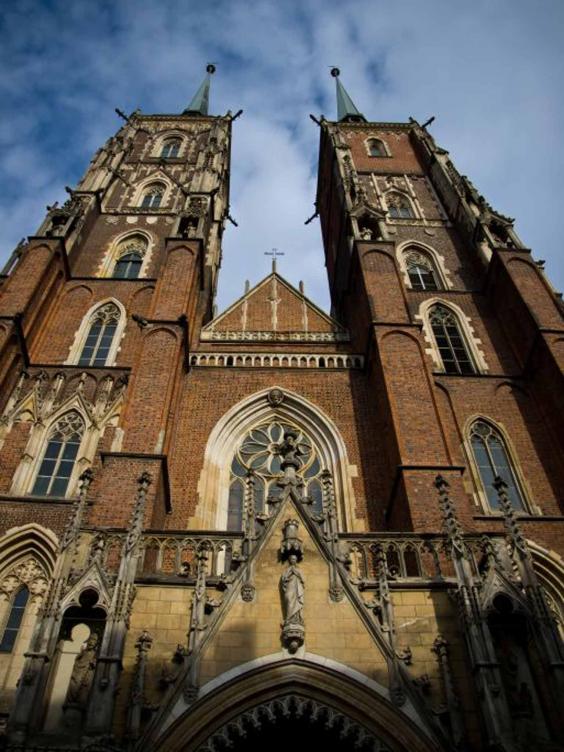
Wroclaw Cathedral

Day two

Sunday morning: go to church

Ostrow Tumski, north-east of the Old Town, is a quiet and pretty area dominated by St John's Cathedral (22), which was badly damaged in the Second World War but restored to its 13th-century glory, with the west portico a work of spiritual art.

A walk in the park

Just north, the first green shoots are visible in the Botanical Gardens (23) after a tough winter. 

Out to brunch

Since the reopening of the 19th-century White Stork Synagogue (24) in 2010, Jewish restaurants are now flourishing. The CIZ cafe (25) at Ulica Wlodkowica 9 serves up snacks such as hummus, and apple pie – and tells the story of Wroclaw's Jewish community.

Cultural afternoon

The Panorama of Raclawice (26) is a circular depiction of the battle for independence fought at Raclawice in 1794 between Polish militias and the Russian army. Your ticket, price zl30 (£5.50) for the Panorama (00 48 71 344 16 61; panorama raclawicka.pl; 9am to 4pm, daily except Monday) includes an English audio guide – and also provides admission to the National Museum (27) on Plac Powstancow (en.mnwr.art.pl; 10am to 5pm weekends, zl15/£2.75, free on Saturdays). A late 19th-century mansion has a fine collection of Polish art, Flemish works and an impressive Canaletto.

Take a ride Trams 3, 10, 20, 23, 31, 32 or 33, west from central Wroclaw, take you 2km west to Plac Strzegomska and the MWW (28) – the Wroclaw Contemporary Museum (00 48 784 973 213; muzeumwspolczesne.pl; noon to 8pm Sunday, 4 to 8pm other days, closed Tuesday; zl10/£2). Avant-garde Polish artists have created thought-provoking exhibitions in a multi-layered space. 

Icing on the cake

Outside the MWW, the Train to Heaven is an old steam locomotive raised almost vertically, as though soaring skyward.

Thursday, 20 October 2016

48 hours in Gothenburg: hotels, restaurants and places to visit

Why go now?

Sweden’s second city, a civilised, stylish port on the south-west coast, is worth visiting at any time of year but comes alive in autumn with festivals and Halloween excess. Hem, Villa & Bostadstratt (goteborg.hemochvilla.se), 28-30 October - a sort of Scandinavian Ideal Home Exhibition - showcases the best of interior design, encompassing Mitt Kok, an immersive food fair with cookery demonstrations. For fright-seekers young and old, Halloween events at the expansive Liseberg amusement park (liseberg.com) draw over 200,000 visitors in search of ghoulish fun. Head to zombie-prone District Z for a night of the living dead.

Get your bearings

Gothenburg is situated at the mouth of the Gota River on Sweden’s south-west coast, with most of the points of interest conveniently located within the compact heart of the city, with the port to the north.

julstaden139-copyrightdickgillberg.jpg
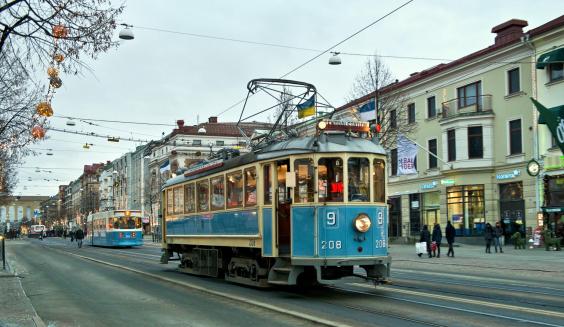
Trams are a great way of getting around the city (Dick Gillberg/Goteborg & Co)

The main tourist centre (1) can be found at Kungsportsplatsen 2 (00 46 31 368 4200; gothenburg.com). It opens Monday 9.30am-5pm Monday-Friday, 10am-2pm Saturday, closed Sunday; opening hours change after 1 May.

There is very little traffic in the city centre, although trams (Gothenberg has the largest system in Scandinavia) and buses slice through the streets with precise regularity. It’s wise to invest in a Goteborg card (335 krona/£31 for 48 hours, October-April; 525 krona/£50 May-September) for unlimited rides on all public transport (including ferries), free entry to museums, art galleries and the Liseburg amusement park. Cards can be purchased online (gothenburg.com) or at Gothenburg Tourist Offices. Single transport tickets cost 25 krona (£2.30) and are valid for any number of interchanges within 90 minutes.

Day One

Take a hike

Start at Stenpiren terminal (2) and catch the “criss-cross” ferry west down Gota alv, taking in the brutish Goteborgs Energi plant and – by contrast – the elegant south bank, lined by handsome history and centuries of architecture. 

Unboard at the Alvsborg bridge (3) and visit art space Roda Sten Konsthall (4) (rodastenkonsthall.se; 40 krona, under-26 free) for bold, contemporary work, and coffee on its harbour-front terrace. 

konstrundan2-copyrightdickgillberg-.jpg
Roda Sten Konsthall (Dick Gillberg/Goteborg & Co)

Walk the short distance up Mariaplan to Majorna, a working class district on the rise, where, along Mariagatan, you’ll find vintage treasures at Fabriken (5) (fabrikengbg.se), alfresco beers at Olstugen Tullen (6) (olstugen.se), and Tapasbaren (7) (tapasbaren.se), purportedly the best tapas in the city.

Lunch on the run

Take Tram 9 back to Central Station (8) and head for the herd of food trucks that converge in the small square off Magasinsgaten. Strommingsluckan (9) (strommingsluckan.se) offers hearty local food, such as local fried herring with mashed potatoes and lingonberries. 

For delicate pizza, freshly baked sourdough, and pour-over coffee, adjacent hipster bolthole, Da Matteo (10) (damatteo.se), is hard to beat; while Gabriel (11) (restauranggabriel.se), housed in the charming Feskekorka (Fish Church) market hall, at Rosenlundsvagen 411 25, is the go-to place for catch of the day.

141125-copyrightbeatricetornros-mg-0390.jpg
Da Matteo (Beatrice Tornros/Goteborg & Co)

Window shopping

On and around Magasinsgaten independent retailers rub shoulders with hip bars and off-beat restaurants. Highlights include Acne (12) the pricy but oh-so-stylish Swedish fashion label that has a store at No 19 (acnestudios.com), and another local brand, Nudie Jeans (13), which has its repair station around the corner at Vallhaten 15 (nudiejeans.com) – you can have alterations done here, or pick up recycled denim. Vallgaten 12 (14) at (of course) Vallgaten 12 (vallgaten12.se) houses furniture, food and art all under one stylish roof.

Read more

  • Alex Zane in Gothenburg: Three top dishes for a gourmet break
  • Unusual wine holidays: raise a glass in Slovenia or Sweden
  • On the Wallander trail in Ystad, Sweden

An aperitif

The opulent Puta Madre (15) at Magasinsgatan 3 (putamadre.se) is a wonderful hybrid: a tequila bar dressed in fin-de-siècle brothel style, brought to life by a ragtime soundtrack and dapper-looking waiting staff. Sip on mescal cocktails in the amber glow, or kick back with gum-singeing Swedish vodka shots.

Dine with the locals

Slip through Puta Madre’s secret door to Basque (basque.se), a buzzing, tiled bar serving perfectly curated pintxos, quality wines and ice-cold cava. 

galleri-20.jpg
Familjen (restaurangfamiljen.se)

For local flavour - and larger portions - head to the award-winning Familjen (16) at Arkivgatan 7 (restaurangfamiljen.se) for slow west Swedish dining in an unpretentious setting.

Day Two

Sunday morning: out to brunch

Le Petit Café (17) at Haga Nygata 2 (lepetitcafe.se), in the fashionable district of Haga, is a multicultural gem, run by Iranians and styled in candle-lit, “hygge” style. Choose from two main dishes, normally roast chicken or seasonal pasta. with a good salad bar, free bread and mountains of butter. On brighter days there are rickety iron tables lining the building outside, and Sunday opening hours are a generous 8am-8pm.

A walk in the park

Slottsskogen park (18) is a green oasis in the Linne district, where locals converge to stroll and socialise around its well-kept lawns. A small zoo is home to a variety of animals and birds, including Nordic species of elk and moose, and there are ancient trees, forest paths and waterways to discover at every turn.

gbg-151021-0526-edit-copyrightperpixelpetersson.jpg
Slottsskogen is Gothenburg's main park (Per Pixel Petersson/Goteborg & Co)

Take a ride

Bikes loom large here, and the relatively flat landscape makes it easy to traverse the city. The Styr & Stall cycle-share scheme (styrochstall.se) is available at more than 50 sites, and bikes are free with a Goteborg card. 
Take a short ride along the river and cross Gota alv bridge (19) to the regenerating harbour district of Frihamnen. The oncoming chill at this time of year makes a sauna particularly inviting, and the public one, Almanna Badet (20), is among the world’s most spectacular, rising from the bank of the river with its obtuse angles and corrugated steel exterior (timecenter.se; free, but online booking is essential).

gothenburg-allmannabadet-copyrightbeatricetornros-09.jpg
Allmanna Badet (Beatrice Tornros/Goteborg & Co)

Cultural afternoon

For superlative Nordic painting, the Gothenburg Museum of Art (21) on Gotaplatsen (goteborgskonstmuseum.se) is world class. Open from 11am Tuesday-Sunday with various closing times between 5pm and 8pm, closed Mondays.

Or head to the nearby Rohsska Museum (22) at Vasagaten 39 (rohsska.se) for design and decorative arts, from contemporary Scandinavian fashion to ancient Chinese ceramics. Open 12pm-8pm Wednesday, to 5pm Thursday-Friday, 11am-5pm Saturday-Wunday, closed Monday-Tuesday.

rhosska-0527-copyrightbeatricetornros-2220.jpg
Rhosska Museum (Beatrice Tornros/Goteborg & Co)

The icing on the cake

No trip to Gothenburg is complete without sailing to the city’s impressive archipelago - a constellation of car-free islands and fishing communities offering wild nature and postcard good looks. Take the ferry from Saltholmen (22) to Styrso (23), considered the hub of the southern part, for fishing, swimming and seal watching.

Travel Essentials

Getting there

The writer flew with Norwegian (norwegian.com), which operates six flights a week to Gothenburg from Gatwick. Ryanair (ryanair.com) flies from Stansted and Edinburgh, while British Airways (ba.com) flies from Heathrow.

All flights from the UK serve Landvetter airport (24), 30km east of the city centre. Buses from Landvetter leave about every 12 minutes from 4.15am-9pm and take half an hour. A return ticket from the airport to Nils Ericson Terminal (25) costs 185 krone (£17) when booked online in advance (flygbussarna.se), or an extra 10 krone on the day. A one-way taxi will set you back 400 krone (£39).

Staying there

For basic accomodation, the STD Goteborg City Hostel (26) at Drottninggaten 63-65 (swedishtouristassociation.com) has double rooms starting at 1,046 krona (£97) including breakfast, or 946 (£87) krona if you don’t mind making your own bed on arrival. A welcoming lobby strewn with old tin lanterns and fireplaces elevates the place from budget to boho.

Hotel Riverton (27) at Stora Badhusgatan 26 (riverton.se) is crisp, modern and well located, and its Sky Bar and restaurant on the 12th floor offers one of the best views in the city. A Superior Queen Room starts at 1,295 krona (£120), including breakfast and use of the spa.

riverton.jpg
Hotel Riverton (riverton.se)

Hotel Pigalle (28) at Sodra Hamngatan 2 (hotelpigalle.se) evokes La Belle Epoque with its rich, decorative rooms and charming bar and restaurant. Double rooms start at 2,954 krona (£273) including breakfast.

Cape Town travel tips: Where to go and what to see in 48 hours

Travel essentials

Why go now?

Economic turmoil in South Africa has made something of a basket case of the rand – you currently get twice the ZAR for your pound than you did 10 years ago. In addition, new air connections spell lower fares.

Autumn is on the way, so the occasionally punishing temperatures of the Western Cape are on the wane. It's still, however, beach weather, even if the sea is perennially freezing and far friendlier to seals and surfers than swimmers.

Touch down

British Airways (0344 493 0787; ba.com) flies non-stop from Heathrow twice a day. A new Ethiopian Airlines connection via Addis Ababa is barely half the fare; seats next month areavailable at around £500 return (0800 635 0644; flyethiopian.com). From other UK airports, good connections are available with Air France (0871 663 3777; airfrance.co.uk) and its partner KLM, Etihad (020 3450 7300; etihadairways.com), Qatar Airways (0844 846 8380; qatarairways.com) and Turkish (0844 800 6666; turkishairlines.com),

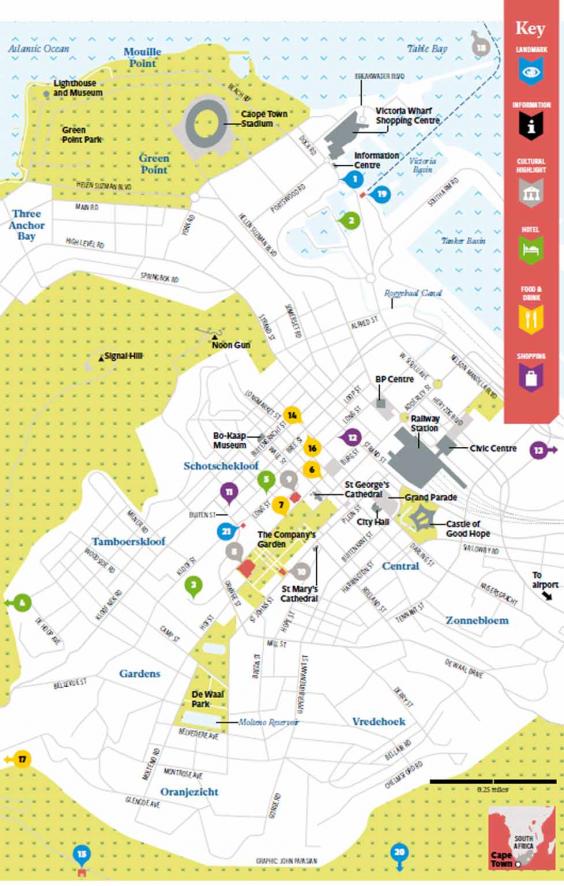
Cape Town airport (acsa.co.za) sits 12 miles east of the centre in Matroosfontein. The MyCiTi (myciti.org.za) bus departs from the airport for the city centre every 20 minutes (R81.20/£4), taking around an hour to reach the pleasant megamall of the V&A Waterfront (1). Far more convenient is a metered taxi (R200-R300/£9.30-£14). 

Get your bearings

Cape Town sprawls – largely because of the immense Table Mountain that sits at its centre. The Atlantic coastal resort spots of Camps Bay et al on the west side of Lion's Head feel like they belong to a different town – but are just minutes away from Green Point and the V&A Waterfront (1). The latter is where you'll find the main Cape Town Tourist Office (00 27 21 408 7600; capetown.travel; daily 9am to 6pm, to 5pm May to September). 

The shopping, museum and hotel areas of Long Street and the centre are east of Signal Hill, south of the Waterfront. Further east, you'll find bohemian Woodstock. Be cautious when walking around areas away from the Waterfront after dark – Cape Town is much safer than it used to be, but common sense should prevail. 

Taxis are convenient for getting around. A 20-minute ride will cost you under R100 (£4.50), and you can get to the cellar doors of wine country, in Stellenbosch, for less than R400 (£18). 
Check in

You'd pay at least twice the rate (from R6,441/£290, with breakfast) for the same level of luxury offered by Cape Grace (2), W Quay Road, V&A Waterfront (00 27 21 410 7100; capegrace.com) if it was located in Paris or London. The furnishings are nautical-themed and occasionally eccentric.

The Belmond Mount Nelson (3), 76 Orange Street (00 27 21 483 1000; belmond.com) is the most famous hotel in town. The gardens and outdoor pool are grand, and afternoon tea is an institution. It's also one of the few five-star hotels within walking distance of the main shopping and dining areas. Doubles from R4,985 (£224), including breakfast.

The view, as you'd expect, is the thing at Cape View Clifton (4), 232 Kloof Road (00 27 21 438 8748; capeviewclifton.co.za). Everything in this tiered, cliff-side, glass box of a beach house is white-on-white. Doubles from R3,780 (£168), B&B.

The Daddy Long Legs Art Hotel (5), 134 Long Street (00 27 21 422 3074; daddylonglegs.co.za) has budget, themed rooms from R925 (£42), room only.

cape-town-map.jpg

Day one

Cultural morning

Skip the hotel breakfast buffet. Instead, go for the perfect latte at a branch of Cape Town's finest caffeine vendor, Deluxe Coffeeworks (6) at 25 Church Street (00 27 79 416 1109; deluxecoffeeworks.co.za), followed by an omelette on the terrace of The Company's Garden Restaurant (7), 19 Queen Victoria Street (00 27 21 423 2919; thecompanysgarden.com). 

Leave the garden and check out the dinosaurs at the neighbouring Iziko South African Museum (8) and attached Planet- arium (00 27 21 481 3800; iziko.org.za; 10am to 5pm daily; R30/£1.40). On the other side of the gardens you'll see two benches outside the High Court (9) on Keerom Street – historic objects that serve as an arresting snapshot of South Africa's uncomfortable past. One is marked “Whites Only”, the other “Non-Whites Only”.

Nearby, the South African National Gallery (10) at Government Avenue (00 27 21 481 3970; iziko.org.za; 10am to 5pm daily; R30/£1.40) is an Art Deco landmark that houses a definitive retrospective of African art.

Window shopping

Seek out local designers in the Centre – the intricate leather bags at Missibaba (11) at 229 Bree Street (00 27 21 424 8127; missibaba.com) are unique, while Merchants on Long (12) at 34 Long Street (00 27 21 422 2828; merchantsonlong.com) is the city's top concept store. 

The Old Biscuit Mill (13) at 373-375 Albert Road in Woodstock, which is full of indie designers and interesting interiors and wine stores, could easily be a whole day out in itself (00 27 21 447 8194; theoldbiscuitmill.co.za), although stalls and stores close relatively early in the afternoon, around 2pm. Most shops close on Sundays.

Lunch on the run

Get to the tiny restaurant and deli Chef's Warehouse (14) at 92 Bree Street (00 27 21 422 0128; chefswarehouse.co.za) early – it takes no reservations, and fills up shortly after midday with locals who love the set menu of tapas. Order the Oysters Vietnamese, loaded with garnish and full of zest.

Take a view

The furry dassies (which look like bunnies but are actually related to elephants) are as good a reason for heading to the top of Table Mountain (00 27 21 424 8181; tablemountain.net) as the view. But the view is amazing. Catch the cableway (R240/£11) from the lower station (15) on Tafelberg Road. In March the first car of the day ascends at 8am, the last car is 6.30pm.

An aperitif

Opt for one of two very different styles – sink a bottle of sparkling Methode Cap at sundown on the terrace at the Mount Nelson (3), or book a bar stool at Outrage of Modesty (16) hidden away at 88 Market Street (00 27 21 422 2902; anoutrage.com) – an edgy new cocktail bar. Order a Rock & Rye with stone fruit, or the Snow – milk-based amasi (fermented milk), white chocolate and toasted rice. Cocktails from R70 (£3).

Dine with the locals

Arrive at The Roundhouse (17) on Round House Road, Camps Bay (00 27 21 438 4347; theroundhouserestaurant.com) an hour before sunset to enjoy the views from the foot of Table Mountain. The recently launched Bistronomy menu (R665/£32 for five courses) is a marvel – kicking off with a delicious dish of watermelon that has been wrangled into the texture of tartare. 

Book far, far ahead for a table at The Test Kitchen in The Old Biscuit Mill (13) (00 27 21 447 2337; thetestkitchen.co.za). Luke Dale-Roberts is the most celebrated chef on the continent, and has futuristic technique to burn. The spectacular degustation (R1,200/£58) is never anything less than outstanding. 

cape-town-pot-luck-cafe.jpg
Breakfast club: The Pot Luck Club

Day two

Sunday morning: take a ride 

Every visitor to Cape Town should feel duty-bound to sail to Robben Island (18) to see where Nelson Mandela was imprisoned for nearly two decades. Tours leave three times a day, at 9am, 11am and 1pm from the Nelson Mandela Gateway (19) at the V&A Waterfront (00 27 21 413 4200; robben-island.org.za; R300/£14) and return around four hours later.

Out to brunch

The Pot Luck Club (00 27 21 447 0804; thepotluckclub.za), set inside a spacious loft at the Old Biscuit Mill (13), still represents the ultimate Cape Town brunch scene. The look is industrial, with great views across the city, while the huge open kitchen (an offshoot of Test Kitchen) is full of techno know-how and wizardry. Small (and not so small) bites arrive on platters covering salt, sweet and umami – the set menu is R400/£19. For an extra R150/£7 on Sundays you get “bottomless bubbles”. 

A walk in the park

Kirstenbosch (20) on Rhodes Drive (00 27 21 799 8763; sanbi.org; 8am to 6pm winter, 8am to 7pm summer; R50/£2.50) is one of the most beautiful botanical gardens in the world. The Tree Canopy Walkway, high above the ground, flanked by the silhouette of Table Mountain with the sun behind, is a camera-ready highlight. Check out the concert schedules, or come for a picnic.

Icing on the cake

Going for a Turkish bath at the Long Street Baths (21) on Long Street is a unique timewarp experience (00 27 21 422 0100; from R48-R101/£2.20-£4.60). 

The building dates back to 1908. Don't expect a five-star spa; instead come for the crumbling visual history as much as the experience. The lettering on the façade is an elegant bit of Art Nouveau, and local artist Gregg Smith added murals inside in the late 1990s. Get steamed, pummelled and plunge yourself into icy water in the buff. Or just come for a swim and soak up the retro ambience.

Monday, 17 October 2016

Best Places To Spend A Halloween Holiday

Ghouls, skeletons, witches and zombies – Halloween is the scariest night in the calendar. Here are our pick of the creepiest places to spend the spooky holiday this year.

We’re not talking Casper the friendly ghost here, we mean proper haunted houses and bone-chilling theme parks. If you fancy a very frightening October 31st, here are the best places to go.

Rose Hall Great Home, Jamaica

If you want to experience a seriously spooky Halloween, head to Jamaica’s Rose Hall Great Home. Legend has it that its previous owner, Annie Palmer, was a Great White Witch and tortured countless victims in her dungeon. Great efforts were made to build a grave to stop Annie’s spirit from rising, but they didn’t work, and she still haunts the house to this day wearing a green dress and riding a black horse.

Port Aventura World, Costa Dorada

Every other day of the year, Spain’s biggest theme park welcomes nearly three million customers a year through its door to have a go on attractions such as white-knuckle water ride Grand Canyon, or Furius Baco, the fastest rollercoaster in Europe. But come Halloween, the park transforms into something a little spookier, with hanging lanterns, monster parades and pumpkin sculptors. You can also head down secret passages to mystery locations, and watch on in horror at the Halloween show performed on the gloomiest lake in the park. And for any younger visitors, meeting Elmo and the Cookie Monster dressed in their favourite Halloween costumes is a must.

portaventura

Terra Mitica, Benidorm

Terra Mitica is another theme park that transforms for Halloween. Think undead zombies chasing you, horror films in 5D, and creepy Lilith the Vampire Queen who walks around casting terrifying spells on unsuspecting people. And if that’s not enough, then their tagline of “come if you want…get out if you can” should give you goosebumps.

Island Of The Dolls, Mexico

These deserted woods located just two hours outside of Mexico City will fuel your worst nightmares. Thousands of mutilated dolls hang from the trees and hide among the branches like something straight out of a creepy horror film. They were put there by a reclusive man who once lived at the site and believed the dolls would calm the ghost of a little girl who drowned in the nearby canal. He claimed to hear her screams and footsteps in the darkness.  Even after the man’s death, many people who visit the woods say they can hear whispers in the night and feel the creepy dolls’ eyes following them. Jeepers!

Getty Images

Check out more of our spook-tacular __holidays over on our website.

Friday, 14 October 2016

48 Hours in Rio de Janeiro: hotels, restaurants and places to visit in the 2016 Olympics host city

Travel essentials

Why go now?

2016 is the year that the Olympic Games come to the riotous capital of carnival and caipirinhas. Rio de Janeiro, Brazil’s second city, underwent intense redevelopment ahead of the 2014 FIFA World Cup and the Games, which open this Friday, and it now boasts a revitalised historical district and waterfront as well as better transport, making this the perfect time to visit the city where people dance samba in the streets.

Touch down

Only British Airways (0344 493 0787; ba.com) flies direct from the UK to Rio, serving Galeao International Airport (1) from Heathrow. Stopover options include KLM (020 7660 0293; klm.com) from Manchester, Edinburgh and Heathrow; and from Gatwick with TAP Portugal (0345 601 0932; flytap.com) and Brazilian airline TAM (0800 026 0728, tam.com.br).

The 2018 bus, operated by REAL (realautoonibus.com.br), runs between the airport (1) and the main bus terminal (2) via Copacabana Beach (3) every 30 minutes between 5.30am and 10pm. A single ticket, which you buy from the driver, costs R$14.50. From the airport to Barra, where the Olympic Park (4) is, should take about an hour, but traffic in Rio is nightmareish during rush hour so allow up to two.

Rio’s public transport network includes a metro and a perplexing bus system with more than 1,000 lines. While buses are the cheapest option – at R$3 a go – they can be difficult to navigate and only stop when you hail them, or tell the driver (in Portuguese) you want to get off. The comfortable, air-conditioned metro runs until midnight Monday-Saturday and until 11pm on Sundays. A single ticket costs R$3.70. Its two lines – green and orange – cover the major tourist zones.

Get your bearings

Rio encompasses world-famous beaches, frenetic favelas and a rainforest. The city is split by the hilly Tijuca Forest national park (5) and spreads across four zones – Zona Sul, in the south, is the major tourist destination, home to upscale neighbourhoods like Copacabana and Ipanema. Centro, the business district, splices skyscrapers and historic monuments; Zona Norte boasts the Maracana football stadium (6); and Zona Oueste is where much of the Olympic Games is due to take place.

Currently £1 is worth 4.3 Brazilian reals (R$). US$1 is worth R$3.27.

Check in

Many of the hotels in Rio’s most popular districts, like Copacabana, and those close to the Olympic action, are fully booked for the Games. Where there is availability prices have soared, but if you’re still on the lookout for a last-minute place to stay, some hostels still have beds; expect to pay around R$180 a night.

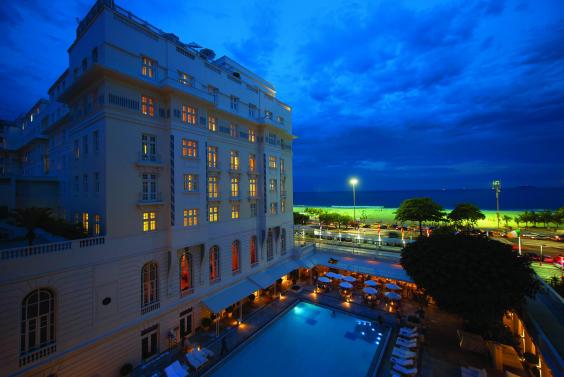
If you don’t plan to travel until after the Olympics, you have many more options. Overlooking Copacabana Beach and with breathtaking views of the ocean, the five-star Belmond Copacabana Palace (7), at Avenida Atlantica 1702 (00 55 21 2548 7070; belmond.com), is favoured by rock stars and Hollywood starlets for good reason. Doubles from R$1,875, including a poolside breakfast.

cop-pool-25.jpg
Belmond Copacabana Palace

A short taxi drive uphill, in boho Santa Teresa, Quinta Azul Boutique Pousada (8) sits in a colourful colonial-style building at Ria Almirante Alexandrino 256 (00 55 21 3253 1021;quintaazul.com), with garden rooms fringed by tropical rainforest. Doubles from R$440, room only.

Centrally located and with great metro links, Discovery Hostel (9) at Rua Benjamin Constant 26 (00 55 21 3449 0672; discoveryhostel.com), is a former baroness’s home that has been converted into a bright, colourful hostel with its own pet cat. A dorm bed costs R$54 per person, or you can get a private room for $R180-190 (£30).

Day one

Take a view

Join Christ the Redeemer (10) atop Corcovado hill by catching the funicular from Cosme Velho (11), Rua Cosme Velho 513, for a 20-minute, R$51 return trip. Start early: queues for the funicular can be lengthy, afternoon cloud can obscure the view over Rio and by midday you can hardly move for selfie sticks.

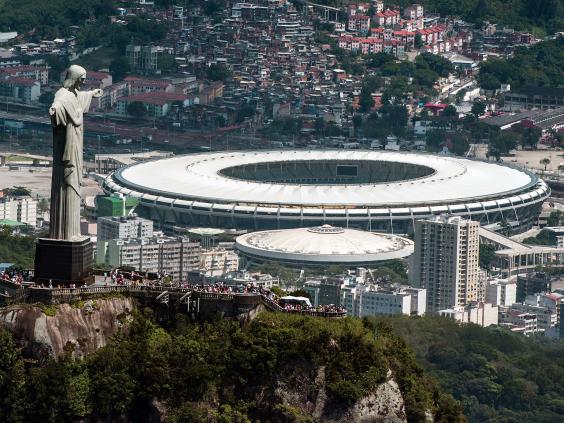
Christ-Redeemer.jpg
Christ the Redeemer looks out over the Maracana stadium (Getty)

Take a hike

Ramble through Rio’s historical district, whose old port was redeveloped for the Olympics. From Central metro station (12), walk east to the Baroque church, Igreja de Nossa Senhora da Candelaria (13) on Praca Pio X (7.30am-4pm, closed weekends; free).

Head right – along the port – on Rua 1 de Marco, to the equally impressive Old Cathedral (14) (8am-6pm, closed weekends; free). Adjacent to the Carmelite convent, it once served as the Royal Chapel.

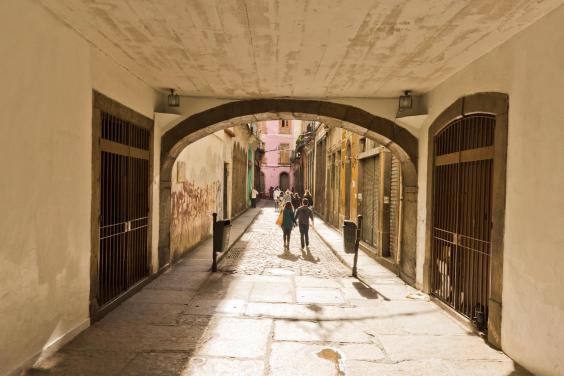
Cross onto the Largo do Parco and duck left under the Arco do Teles (15) into a labyrinth of multi-coloured streets – some of the oldest in Rio. The buildings were constructed with a gap at the top of the ground floor to help air circulate – an early kind of air conditioning. Stop to pay your respects at the church of Nossa Senhora de Lapa dos Mercadores (16), at the southern end of Rua dos Mercadores, whose miraculous Madonna statue survived a direct shot from a battleship.

shutterstock-440393029.jpg
Arco do Teles leads to some of the city's oldest streets (Shutterstock)

Lunch on the run

Lunch is the favourite meal of Rio’s locals – the Cariocas – and in the little warren of historic streets you can find plenty of places to join them. The Line Bistro (17) at Travessa do Comercio 20 (theline.com.br) serves a traditional buffet (priced per kilo) with plenty of black beans and rice.

Wash everything down with a craft beer at Al Farabi (18) at Rua do Rosario 30 (00 55 223 30879; alfarabi.com.br), a bar and antique bookshop.

Cultural afternoon

Read more

  • Simon Calder: the Olympics don't boost tourism, so bag a Brazil bargain now
  • 48 Hours in Lima: hotels, restaurants and places to visit in the Peruvian capital
  • Exploring Uruguay, the world's most successful footballing nation

Visit the Museu de Arte do Rio (19) (MAR) at Praca Maua 5 (00 55 21 3031 2741; museudeartedorio.org.br) for rooftop views of the Guabana Bay, and stay for its exhibitions on samba and the women of Rio. Open 12pm-7pm Tuesday-Friday; entry R$10 or free on Tuesdays. Nearby, the Museo de Arte Moderno (20) (MAM) at Avenida Infante Dom Henrique 85 (00 55 21 3883 5600) houses the world’s most complete collection of modern Brazilian art. Open Tuesday-Friday 12pm-6pm and 11am-7pm weekends; R$14.

An aperitif

Rio Scenarium (21) at Rua do Lavradio 20, in the trendy Lapa district, would not be amiss amid east London’s nightlife scene. The three-storey bar and nightclub (00 55 21 3147 9000; rioscenarium.art.br) is bursting with weird antiques and taxidermy. Hang over the first-floor balcony to watch locals dance samba to the live band, or have a go yourself – after enough caipirinhas, Brazil’s lethal local cocktail.

Dine with the locals

Perched amid the trees like an ewok encampment, Aprazivel (22) at Rua Aprazível 62 (00 55 21 2508 9174; aprazivel.com.br) has lovely views down onto the city, and rainforest-inspired food.

For fine dining, try Olympe (23) at Rua Custódio Serrao 62 (00 55 21 2537 8582; olympe.com.br), which serves French food with a Brazilian twist. Or fill up on street food: grilled cheese sticks, popcorn and deep fried pasties are sold at stalls on most street corners.

Day two

Window shopping

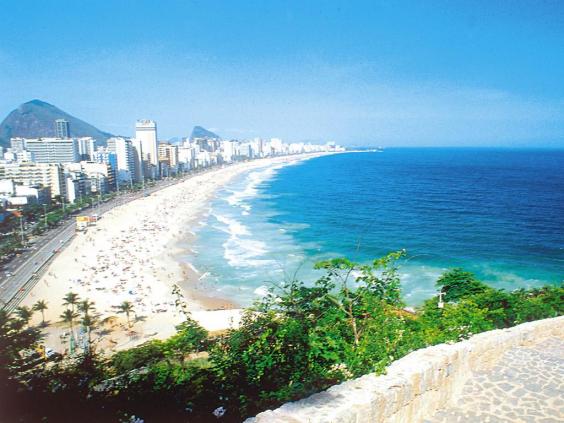
Take a walk down the pristine, 5km stretch of beach at Copacabana (3) – past the beach volleyball matches, surfers and football games – into upmarket Ipanema (24). A haven for beachware, many of the best-known brands are based at the Forum Ipanema shopping centre (25) on Rua Visconde de Pirajá. Visit BumBum (00 55 21 2227 4080; bumbum.com.br) or chic Lenny (00 55 2523 3796; lennyniemeyer.com) for luxury bikinis. On Sunday stock up on sarongs at the Feria Hippie De Ipanema (26) (Hippie Fair) in the Praca General Osorio.

Pg-80-Ipanema-1.jpg
Ipanema and Leblon Beaches ( Rio Visitors Bureau/Erick Barros Pinto)

Out to brunch

New Natural (27) at Rua Barão Torre 173 (00 55 21 2287 0301) is great for vegetarians – who might otherwise struggle with meat-heavy Brazilian cuisine – and sells organic salads by the kilo at its buffet.

Or indulge in Copacabana glamour and book ahead for a treat meal at the Hotel Cipriani restaurant at the Belmond Copacabana Palace (7) for northern Italian dining with local ingredients and a Brazilian twist.

A walk in the park

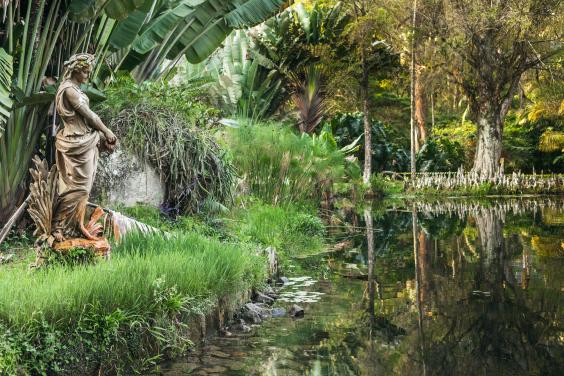
Overlooked by Christ the Redeemer (10) and in the shade of the Corcovado hill, the botanical gardens (28) at Rua Jardim Botanico 1008 (00 55 21 3874 1808; open 6am-8pm; R$9) are a fine place to escape the heat beneath tall Brazil nut trees. Keep an eye out for toucans.

shutterstock-330036539.jpg
Rio's botanical gardens (Shutterstock)

Take a ride

Channel Jurassic Park with a jeep tour of Tijuaca national park (5), the rainforest that carpets the city’s hills. A ride through lush forest accompanied by noisy monkeys takes you to the Vista Chinese, a hilltop pagoda with views of Copacabana beach and Guanabara Bay. A number of operators offer “safaris” through the park, of which Jeep Tour has a particular focus on sustainability (00 55 21 3486 6379; jeeptour.com.br; R$142 per person).

Icing on the cake

A backstage tour of the Maracana Stadium (6), where the Olympics opening and closing ceremonies will be held, is fascinating even for non-football fans. It’s at Avenida Presidente Castelo Branco and has its own Metro station (00 55 800 062 7222; maracana.com; tours R$36). Visit the changing rooms, lounge in the press seats and jog through the tunnel onto the pitch where Brazil’s collective heart was broken during the 2014 World Cup semi-final against Germany. The home team lost 7-1 – but it’s best not to bring that up.

Amsterdam travel tips: Where to go and what to see in 48 hours

Travel essentials

Why go now?

The Dutch capital may be small, with just a tenth of the population of London, but it packs a powerful cultural punch. Amsterdam is emerging from deep midwinter with a fresh, creative boost in the shape of new hotels and attractions and two ambitious new exhibitions at the Rijksmuseum (1). 

Touch down

Amsterdam Schiphol has better links with the UK than anywhere else on the planet, with connections from two dozen airports from Exeter to Inverness. The main carriers are KLM (klm.com), easyJet (easyJet.com) and Flybe (flybe.com). Frequent trains (€4.70 each way) from Schiphol airport take 18-24 minutes to reach Centraal Station (2). But be warned, the queue for tickets can be very long and there's no way for tourists to buy in advance online. The fast solution is to find the Holland Tourist Information office (hard to find, between the train station and baggage belt 8) and buy a transport pass valid for one, two or three days for €15, €20 or €25 respectively. It is valid for the airport train link and all public transport in Amsterdam. 

Get your bearings

Centraal Station (2) is planted north of the city's heart, on the south bank of the broad IJ river. The main tourist office (00 31 20 201 8800, amsterdamtourist.nl; open 9am to 7pm daily) and transport office (open weekends 10am to 6pm, weekdays 7am to 9pm) share a building opposite the main entrance. The original medieval city straggles south from here to scruffy Dam Square (3). But Amsterdam owes its unique shape to the Canal Ring, a ripple of artificial waterways flanked by handsome townhouses, with cobbled streets united by bridges. To the west, is the former Huguenot district of Jordaan; to the south, the cultural concentration of the Museum Quarter; and to the east, the rejuvenated docklands.

Check in

For decades, new arrivals at Amsterdam Centraal faced a row of unappealing places to stay. While the area is still a touch seedy, step inside the Art'Otel (4) at Prins Hendrikkade 33 (00 33 20 719 7200; artotelamsterdam.com) and you find a high-style, hi-tech oasis of indulgence. Besides enticing bedrooms (€278 double for two weekends' time, with breakfast at the adjoining 5&33), the public areas are a joy with one of Amsterdam's smartest bars, and the hotel's own art gallery. 

On the Canal Ring, there's the Pulitzer (5) which relaunched this month at Keizersgracht 224 (00 31 20 523 5235; pulitzeramsterdam.com). Twenty five canal houses have been made into a chic, character hotel with hidden gardens. Even the (temporary) lobby is dressed with Golden Age art. In the historic heart of Amsterdam, rooms are a mix of shapes and sizes; a prepaid “Classic” double costs €234 per night for next weekend; breakfast €25 for two. 

If you wish to be first in line for museums, consider the friendly Owl Hotel (6) at Roemer Visscherstraat 1 (00 31 20 618 9484; owl-hotel.nl), where doubles start at about €140, room only (better deals may be had). 

amsterdam-map.jpg

Day one

Take a hike

Behind St Nicholas Basilica (7), start along Zeedijk from its northern entrance. This is the city's oldest street and marks the first successful attempt to keep the water at bay, with a dam on the Amstel river. Today, it is flanked by small businesses with a world's worth of cuisines. 

While a touch tawdry these days, there are surprises such as the He Hua Buddhist temple (8), which welcomes visitors. The street joins Nieuwmarkt, dominated by De Waag (9) – the oldest surviving city gate. 

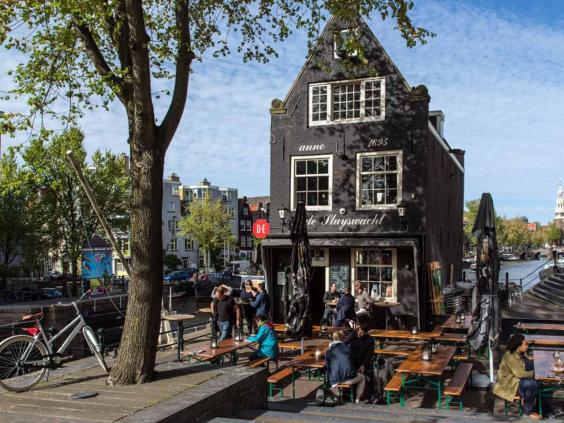
Continue along St Antoniesbreestraat, looking up at the menacing arch that leads to Zuiderkerk (10). Pause for a coffee at the Café de Sluyswacht (11). Across the road is the Rembrandthuis (12), where the master painter lived for 19 years (Jodenbreestraat 4; 10am to 6pm daily; 00 31 20 520 0400; rembrandthuis.nl; admission €13). 

On the west side of the house, follow the canal and cross Waterlooplein to the modern City Hall (13), which has a long internal boulevard with an impressive timeline about the city's rise, decline and rise again. It also has the “datum line” for Amsterdam's water level, which is now a global reference, and a 26m-long relief showing the height of various parts of the Netherlands.

Window shopping

The open spaces outside the City Hall (13) host the Waterlooplein flea market, which is at its busiest, and most fascinating, on Saturday mornings when the souvenir stalls are augmented by antiques vendors, booksellers and household junk.

At the other end of the retail spectrum, stand on the corner of Van Baerlestraat and P C Hooftstraat (14) and you'll see dozens of designer stores down both streets. 

Lunch on the run

De Laatse Kruimel (15) at Langebrugsteeg 4 (00 31 20 423 0499) translates as The Last Crumb. In a crowded bakery, with fixtures created from pallets, delicious sandwiches and fruit shakes (both from €3.50) are served with flair and friendliness. The signature sandwich is a stolwijker (old Dutch cheese, with hazelnut pesto and tomato, on spelt bread, €5.10). 

Take a ride

From the northern exit of Centraal Station (2), cross to the terminal for the IJ Buiksloterweg Ferry. Every few minutes, it sails across to Waterland – a serene area, steeped in tradition, with an eyecatching attraction in the shape of Eye (16), subtitled the New Film Museum in Amsterdam (00 31 20 589 1400; eyefilm.nl; 10am to 7pm daily, Fridays to 9pm; €10). It includes four cinemas, and all kinds of tricks to entertain and enthral the eye.

An aperitif

The Eye Bar Restaurant (00 31 20 589 1402; eyebarrestaurant.nl), part of the Eye (16), has a wide-screen view over the river to the city, to be enjoyed with a very good house wine (€3.95). 

Back on the other side of the IJ, you can retreat into the Golden Age of the 17th and 18th centuries, when the city grew rich, powerful and indulgent. The Café Papeneiland (17), at the corner of the Prinsengracht and the Brouwersgracht (00 31 20 624 1989) is an original “brown café”, so-called because of an interior deeply stained by centuries of smoking.

Dine with the locals

Restaurant Anna (18) at Warmoesstraat 111 (00 31 20 428 1111; restaurantanna.nl; 6pm to midnight daily, except Sunday) was created from a pair of back-to-back houses, and is now the longest restaurant in Amsterdam, at 40 metres, end to end. Despite its location in the Red Light District, the interior is chic and the dishes exquisite. 

The best deal is the chance to sample four dishes that the chef chooses for you for €47.50, combined with four set wines for €27.50; formidable gastronomy for a total of €75. Book in advance.

amsterdam-cafe-alamy.jpg

Day two

Sunday morning: go to church

The buds are beginning to open at the Begijnhof (19), a polygonal oasis in the city with gabled houses – and two impressive churches. It was created for pious Catholic women who cared for the elderly. You can reach it from a doorway on Spui or through the entrance on Begijnenstraat. 

The Begijnhofkapel, built in 1671, has deliberately anonymous doors (Catholicism was oppressed in the 17th century) but, once inside, the area fans out to reveal an opulent interior. Sunday mass at 10am in Dutch (11.15am in French).

Directly opposite stands one of the city's finest Protestant places of worship: the Engelskerk, which was adopted by Presbyterians in 1607 and is now part of the Church of Scotland. The pulpit has panels decorated by a young Piet Mondriaan. Sunday service is at 10.30am.

Out to brunch

ArtDeli (20) occupies a magnificent series of rooms at Rokin 93 (00 31 20 370 5624; art-deli.com; from 10am daily except Mondays). The divides between café, restaurant and gallery are divinely blurred. You can choose from soups, sandwiches and salads, as well as cold-pressed juices (€5.50).

A walk in the park

While the flower market (21) is mostly occupied selling bulbs and seeds (from tulips to marijuana), the best green space to enjoy is the Museumplein – where the spectacular new architecture of the Stedelijk and Van Gogh museums is complemented by the 19th-century might of the Rijksmuseum (1). 

Cultural afternoon

Pre-book your €17.50 ticket for the Rijksmuseum (1) online (rijksmuseum.nl). The highlight of the permanent collection is the breathtaking Gallery of Honour, where The Shooting Company of Captain Frans Banning Cocq – better known as Rembrandt's Night Watch – is flanked by other Old Masters. 

Starting this weekend are two superb new exhibitions. Catwalk, designed by the Dutch photographer Erwin Olaf, features fashion from William III's housecoat to a post-war austerity dress made from aviators' fabric maps. The second exhibition is Breitner: Girl in Kimono, in which all 14 of George Hendrik Breitner's portraits of Geesje Kwak, painted between 1893 and 1896, are together for the first time. 

Take a view

The new Bibliotheek Centrale (22) (Central Library; 10am to 10pm, free) has a splendid café on the seventh floor. Though the outdoor deck is closed until the end of March, you still get an excellent panorama and a sense of how the city defies the power of water.

Thursday, 13 October 2016

48 hours in Melbourne: Hotels, restaurants and places to visit

Why go now?

Melbourne has long prided itself as Australia’s arts capital. This year its premier arts showcase, the Melbourne Festival (5-23 October; festival.melbourne) welcomes a new (British) director, Jonathon Holloway, who has promised more public acts – such as Les Tambours De Feu by Catalan company Deabru Beltzak, which will see dancers with pyrotechnics and drums traverse Melbourne laneways.

Spring in Melbourne is also synonymous with horse racing, which culminates in the Melbourne Cup Festival (29 October-5 November; flemington.com.au), so pack your fascinator. 

Read more

Neighbours at 30: Melbourne __travel tips from Dr Karl, Toadie, and

Get your bearings

The Central Business District (CBD) lies at the heart of the city, on the Yarra River’s north bank. The Melbourne Visitor Centre (1) is here, at Federation Square, on the corner of Swanston and Flinders streets (00 61 3 9658 9658; visitmelbourne.com; 9am-6pm daily). 

Melbourne is often called Australia’s “Garden City” thanks to its parks, some of which run either side of St Kilda Road, south of the river. St Kilda itself is a hip district located along the beach that lines Port Phillip Bay. The edgy eastern suburbs of Fitzroy, Richmond and Collingwood, and the more upscale southeastern suburbs of South Yarra and Prahan, meanwhile, offer plenty of shops, restaurants and cafés.

£1 is currently worth AU$1.70; US$1 is worth AU$1.30

Day one

Take a hike

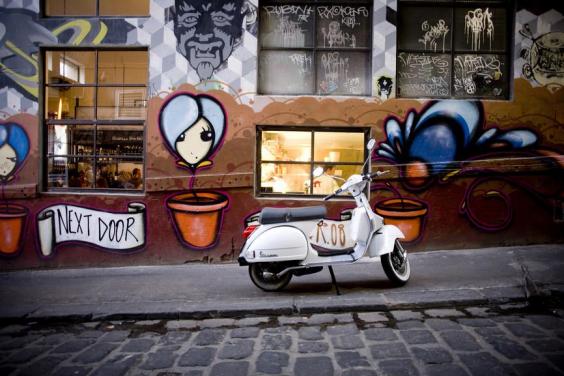
Start at the visitor centre (1). Cross Flinders Street and take the second left into Hosier Lane (2), Melbourne’s most celebrated lane for street art. Double back towards the city centre along Flinders Lane, mentally noting dinner options along this restaurant-lined street. 

hosier-lane-movida.jpg
Street art on Hosier Lane (visitmelbourne.com)

Turn right at Elizabeth Street, and pop into the beautiful Block Arcade (3) on the corner of Collins Street. Designed in the style of Galleria Vittorio Emanuele in Milan, this stunning shopping arcade was the place to be seen in 19th-century Melbourne. 

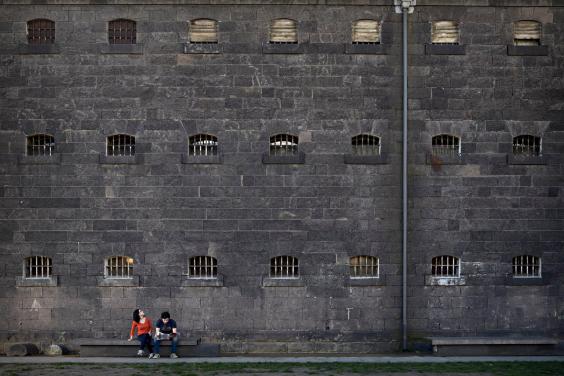
Continue up Elizabeth Street, making a right into the retail haven of Bourke Street Mall (4). Turn left at Swanston Street, admiring the State Library of Victoria (5) with its iconic octagonal dome at the corner of La Trobe Street. Opposite the Library sits the Old Melbourne Gaol (6) where infamous Australian bushranger, Ned Kelly, was hanged in 1880. 

286786-185270658217608-1135236677-o.jpg
Old Melbourne Gaol ( National Trust of Victoria/Facebook)

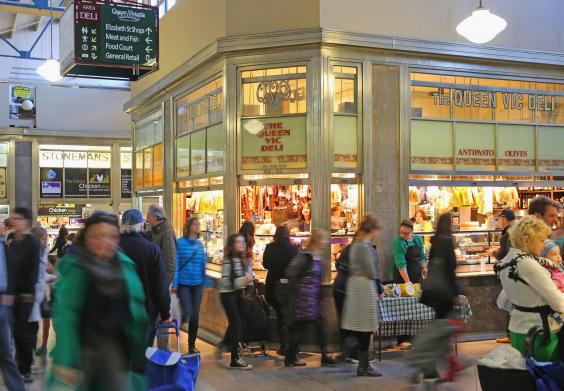
Heading west along La Trobe Street, turn right on Elizabeth Street until you reach the century-old Queen Victoria Market (7), the largest open-air market in the Southern Hemisphere. 

Lunch on the run

Pick up some soft cheeses and cured meats in the Queen Victoria Market’s deli hall (7) for a picnic on the go. If you’d rather sit down, tuck into modern Australian comfort food (think chicken and sweet corn soup in a dashi broth) – and perhaps a glass of natural wine – at new all-day laneway café Sun Moth Canteen & Bar (8) at 28 Niagara Lane (00 61 3 9602 4554; sunmoth.com.au). Open 12-11pm on Saturday, and from 8am weekdays. 

queen-victoria-market-melbourne-getty.jpg
Queen Victoria Market (Scott Barbour/Getty Images)

Window shopping

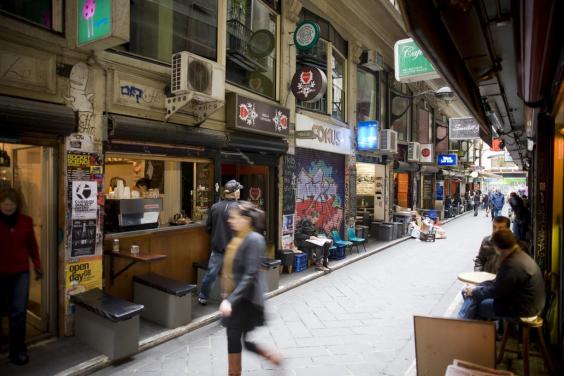
While known for its fashion, Melbourne is also a great place to shop for accessories. Head to Flinders Lane to coo over the Aladdin’s cave of designer fashion accessories at Christine (9) at No 181 (00 61 3 9654 2011; christineaccessories.com.au; open 10am-5pm Monday to Saturday, closed Sunday).

melbourne-flinders-lane.jpg
Flinders Lane (visitmelbourne.com)

Alternatively, take the lift to level five of Mitchell House at the corner of Lonsdale and Elizabeth Streets to peruse the wares of Lord Coconut (10) (00 61 3 450 015 263; lordcoconut.com), arguably Australia’s best contemporary jewellery retailer for men. Open 11am-6pm Monday to Friday, and 12pm-4pm Saturday, closed Sunday. 

A walk in the park

Just east of the CBD, the centrepiece of Fitzroy Gardens (11) is a 1930s conservatory featuring five floral displays each year. Open 9am-5pm daily (until 5.30pm during daylight savings), entry is free. 

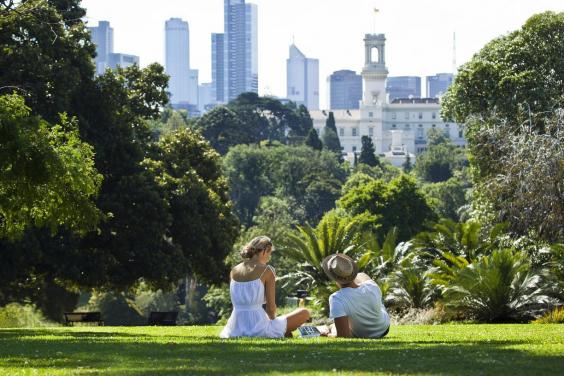
If you really need to stretch your legs, hit the trails that that weave through the 31 living plant collections at the Royal Botanic Gardens Melbourne (12) (open 7.30am until sunset daily; rbg.vic.gov.au). 

melbourne-visionsofvictoria1375249-303.jpg
The Royal Botanic Gardens

An aperitif

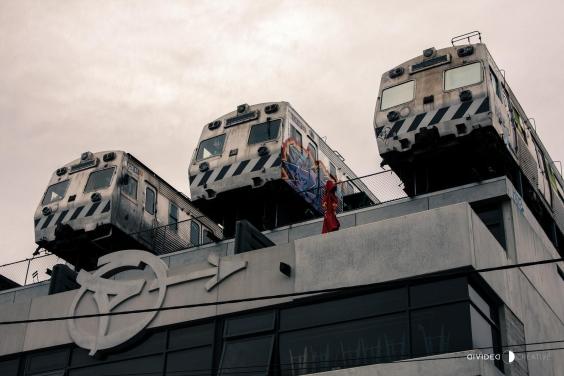
Spring in Melbourne signals rooftop boozing, with plenty of options to choose from – enjoy a carafe of sangria on the AstroTurf at Rooftop Bar (13) atop Curtin House, 252 Swanston Street (open noon-1am daily), or sip a locally brewed Mountain Goat beer in a train carriage perched on a Collingwood rooftop at Easeys (14), 48 Easey Street (easeys.com.au). Open 11am-10pm Sunday to Thursday, to 11pm Friday and Saturday. 

26447132753-deb06af2db-o.jpg
The train carriages that comprise Easeys ( Amanda K Grace/Flickr)

After dark, crowds disperse into hip laneway bars like Eau de Vie (15) at 1 Malthouse Lane (eaudevie.com.au/melbourne) for cocktails with serious flair (order the espresso martini here to see what I mean). Open 4pm-1am Friday and Saturday; hours vary on other days. 

Dine with the locals

Step back into mid-century Melbourne by pulling up a stool at Pellegrini’s Espresso Bar (16) at 66 Bourke St (00 61 3 9662 1885; open daily 8am-11.30pm), a Melbourne institution that has barely changed since opening in 1954. There’s no printed menu – simply tell counter staff how you like your home-style Italian pasta and it’ll be served up in a flash, accompanied by a buttered roll. Wash it down with a homemade watermelon granita or an espresso.

Day two

Out to brunch

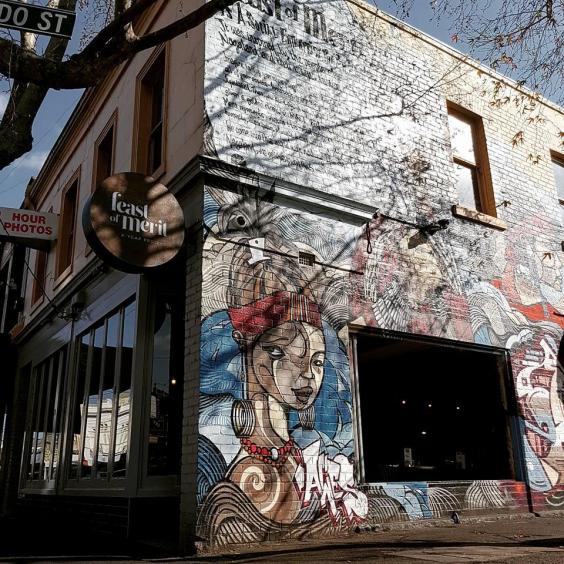
Melbourne’s restaurants are key to the city’s reputation as one of the world’s most sustainable cities. In Richmond, just one train stop from Flinders Street Station, Feast of Merit (17) at 117 Swan Street (00 61 3 9428 8480; feastofmerit.com) pumps its profits into initiatives that improve the lives of people living in poverty, which makes its Middle Eastern-style crumpets with vanilla and cinnamon labneh, pear puree, and pistachio praline (AU$13.50/£8) taste that much better. 

14203317-1777844182490918-5998804021643929344-n.jpg
Feast of Merit ( Feast of Merit/Facebook)

Take a ride

Riding Melbourne’s excellent tram network in the CBD is free, but you’ll need to purchase a Myki card (AU$6; ptv.vic.gov.au) for journeys into the suburbs (a two-hour pass for trips in zones 1-2 costs UA$3.90/£2.30). Jump on number 12, 16, 96 or 3a to St Kilda (about 25 minutes __travel time) for a stroll along the foreshore Bay Trail (18) and a beetroot latte at Matcha Mylkbar (19) at 72A Acland St (00 61 3 9534 1111; matchamylkbar.com), a vegan cafe at the forefront of Melbourne’s “rainbow coffee” trend. Open 7.30am-4pm daily.

Cultural afternoon

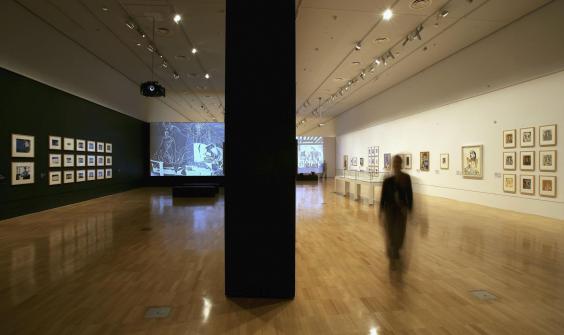
The National Gallery of Victoria (00 61 3 8620 2222; ngv.vic.gov.au) is split across two venues; peruse works by indigenous and other Australian greats at The Ian Potter Centre: NGV Australia (20) at Federation Square before heading across the river to ogle the extensive collections of the NGV International (21) at 180 St Kilda Rd. Both galleries are open daily from10am-5pm, with free general entry.

art-gallery-gettyimages-71331279.jpg
NGV International (Mark Dadswell/Getty Images)

At the other end of the city, Melbourne Museum (22) (00 61 3 8341 7777; museumvictoria.com.au) offers a window into Australia’s natural and cultural history. It’s located in Carlton Gardens, just north of the CBD, behind the resplendent Royal Exhibition Building (23). The museum is open 10am to 5pm daily; entry is AU$14. 

The icing on the cake

You can expect high-calibre coffee across Melbourne, but for a guaranteed good drop, try Dukes Coffee Roasters (24) at 247 Flinders Lane (00 61 3 9417 5578; dukescoffee.com.au; open 9am-5pm Saturday, and from 7am-4.30pm Friday), or Brother Baba Budan (25) at 359 Little Bourke Street (sevenseeds.com.au; open 7am-5pm Monday to Saturday, and from 9am Sunday).

Travel essentials

Read more

  • Melbourne: Race into pole position Down Under
  • Western Australia's wildlife: A marine hotspot that appeared out of the blue
  • How Tasmania became Australia’s newest gourmet hotspot: This island could become a pit-stop on the Michelin circuit

Getting there

Melbourne Airport (26) is served by various one-stop flights from the UK, including British Airways (ba.com) with its partner, Cathay Pacific; Qantas (qantas.com) with its partner, Emirates, and Qatar Airways (qatarairways.com).

The SkyBus (skybus.com.au) runs from Melbourne Tullmarine to Southern Cross Station (27) in the CBD every 10 minutes, 24/7. Tickets for the 40-minute journey cost AU$19 one-way. Taxis costs around AU$50-60. 

Staying there

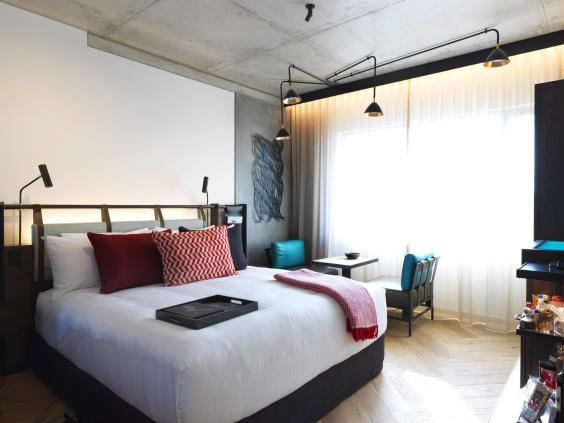
The brand new QT Melbourne (28) at 133 Russell Street (00 61 3 8636 8800; qthotelsandresorts.com/melbourne) plays up to its location at the French fashion-influenced “Paris end” of Collins Street with trademark QT quirkiness – bold art, a lobby patisserie and interactive elevators that call out to guests. Its industrial-style rooms start at AU$280, room only.

melbourne-qt-rooms-819-0136.jpg
A bedroom at QT Melbourne

More affordable boutique hotels are scattered throughout Melbourne’s suburbs. In seaside St Kilda, the 39 uniquely furnished rooms tucked behind the Art Deco façade of The Prince (29) at 2 Acland Street (00 61 3 9536 1111; theprince.com.au), start at AU$170 without breakfast. 

Cheaper still is the Space Hotel (30) at 380 Russell Street (00 61 3 9662 3888; spacehotel.com.au). Private rooms at this “flashpacker” favourite are a steal given its central location: AU$82 (not including breakfast). Bonus facilities include a rooftop deck, gym, home cinema and a kitchen for self-catering.

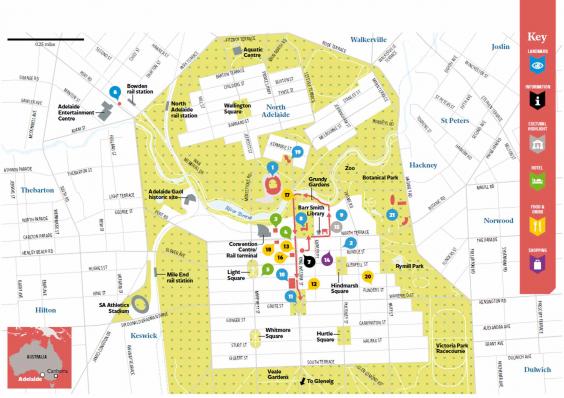
Adelaide travel tips: Where to go and what to see in 48 hours

Travel essentials

Why go now?

In March, Adelaide enters its “month of madness” when the city hosts several festivals and sporting events, starting with the Adelaide Fringe (adelaidefringe.com.au) from 12 February to 14 March and followed by Adelaide Arts Festival (adelaide festival.com.au) from 26 February until 14 March. Womad-elaide (womadelaide.com.au) runs from 11-14 March.

Australia's national football team, the Socceroos, take on Tajikistan at the Adelaide Oval (1) on 24 March in Asian Cup qualifiers (adelaideoval.com.au).

Touch down

From 3 May, Qatar Airways (0333 320 2454; qatarairways.com) launches daily flights from Doha to Adelaide with connections from Manchester, London Heathrow, Edinburgh and Birmingham. The route will compete with Emirates (0844 800 2777; emirates.com), which operates one-stop flights from Heathrow, Gatwick, Birmingham, Manchester, Glasgow and Newcastle.

Read more

  • 48 Hours in San Francisco: Where to go and what to see
  • 48 Hours in Prague: Where to go and what to see
  • 48 Hours in Budapest: Where to go and what to see
  • 48 Hours in Paris: Where to go and what to see
  • 48 Hours in Marrakech: Where to go and what to see
  • 48 hours in Auckland: Where to go and what to see

The airport is situated 6km south-west of the city centre; the 15-minute journey by taxi costs about A$25 (£12.40). It's also possible to take the JetExpress J1X bus (adelaidemetro.com.au) into the city, costing A$5.20 (£2.60) one way. It operates between 5am and 10.45pm and takes 25 minutes to reach Pulteny Street (2) in the city centre. 

Get your bearings

The South Australian capital stretches out for 12 miles from the Gulf of St Vincent to the foothills of the Adelaide Hills, with the shoreline to the west of the city. 

It is the only city in Australia to be enclosed by parkland and is planned in a grid format, neatly arranged into terraces with five public squares, making it easy to find your way around. The River Torrens flows east to west through the city centre. 

Adelaide offers free public transport on buses and trams within the centre. The 98A and 98C City Connector Bus routes connect the main tourist sites in a loop every 30 minutes; 99A and 99C link the main city destinations. 

There is also a frequent tram service taking passengers from Adelaide Entertainment Centre (3) on Port Road to Glenelg, a popular coastal resort; the free service runs as far as South Terrace. The O-Bahn, a tramway on which adapted local buses run, links the city with the northern suburbs (adelaidemetro.com.au). 

The tourist information office (4) at 9 James Place (00 61 8 8203 7611; southaustralia.com) is just off Rundle Mall, the main shopping area. It opens 10am to 4pm at weekends and 9am to 5pm weekdays.

Check in

InterContinental Adelaide (5) at North Terrace (00 61 8 8238 2440; icadelaide.com.au) sits on the south bank of the river Torrens opposite the Adelaide Oval (1). It has comfortable doubles starting at A$250 (£121), room only. It's right in the centre of the city and within walking distance of all Adelaide's main sites.

The Franklin Boutique Hotel (6) at 92 Franklin Street (00 61 8 8410 0036; thefranklinhotel.com.au) is is also centrally located and has seven rooms each decorated with work by local artists and some with stained glass windows. The hotel also offers free bike hire. Double rooms start at A$150 (£73), room only.

Voted best hostel in South Australia by the state tourism board in 2015, Adelaide Central YHA (7) at 135 Waymouth Street (00 61 8 8414 3010; yha.com.au) has private en-suite doubles for A$128 (£63), room only.

adelaide-map.jpg

Day one

Take a hike

The city has a strong Victorian architectural legacy. From the tourist information centre (4), walk down Stephens Place to the front of Government House (8), built in 1840 and the official residence of the state governor.

Continue along North Terrace towards the University of Adelaide (9). Established in 1874, it's the third-oldest university in the country and was the first in Australia to give degrees in science. Look out for the grand Victorian architecture of the Barr Smith Library. Carry on through the campus until you hit the riverside. Bear left along the Torrens where locals gather to picnic. When you hit King William Street, take a left and pass the General Post Office (10), built in 1867.

Around the corner is Victoria Square (11), known as Tarndanyangga by the Kaurna indigenous Australians who have gathered here for centuries for community events. Three Rivers Fountain, built to commemorate the Queen's visit in 1963, is a focal point. 

Lunch on the run

Blefari Café (12) at 182 Victoria Square (00 61 8 8232 5115; blefaricafe.com.au) offers a range of light lunches, including chicken schnitzel, or a bacon, lettuce and cheese wrap for A$11.90 (£5.90).

Window shopping

Haigh's Chocolates (13) at 2 Rundle Mall (0061 8 8231 2844; haighschocolates.com.au) is the oldest family owned chocolate-maker in Australia, established in 1915. At the flagship store, seek out the popular chocolate peppermint frogs and orange pastilles.

For a mix of Australian and international brands, head to Rundle Place shopping mall (14) at 77-91 Rundle Mall. Besides the vast food court, there are also clothing stores such as Aussie brand Country Road (countryroad.com.au) along with supermarkets and jewellers.

Cultural afternoon

The South Austral-ian Museum (15) at North Terrace (00 61 8 8207 7500; samuseum.sa.gov.au; 10am to 5pm; free entry) is home to the Australian Aboriginal Cultures Gallery, which has more than 3,000 artefacts collected from across the country, including boomerangs, photographs, paintings and bark canoes.

An aperitif

The Hennessy Bar (16) at the Mayfair Hotel, 5 King William Street (00 61 8 8210 8888; mayfairhotel.com.au/hennessy) has a great rooftop area with views of the city and the Adelaide Hills. Wines from the Hills, such as a Fox Gordon pinot grigio, cost A$13 (£6.40). There's also a great cocktail list; try the Honey Trap, with honey-infused vodka, lime, ginger and mint (A$22/£11).

Howling Owl (17) at 13 Frome Street (00 61 8 8227 1611; thehowlingowl.com.au) is a hit with residents for its local gins and craft beers. Try a KIS wild gin and tonic with strawberries for A$9 (£4.40) with gin from nearby Kangaroo Island. If beers are more your thing, order McLaren Vale Beer Co's Vale Ale (A$8.50/£4.20).

Dine with the locals

The award-winning Jolley's Boathouse (18) at 1 Jolley's Lane, overlooks the river (00 61 8 8223 2891; jolleysboathouse.com) and serves contemporary, locally sourced dishes such as Port Lincoln king prawns (A$30/£14.75) and crisp skin Cone Bay barramundi (A$36/£17.70). 

The Strathmore (19) at 129 North Terrace (00 61 8 8231 5475; strath.com.au) serves a good selection of Aussie pub fare. If you're feeling adventurous, try the kangaroo, crocodile, barramundi or lamb rump for A$38 (£18.70).

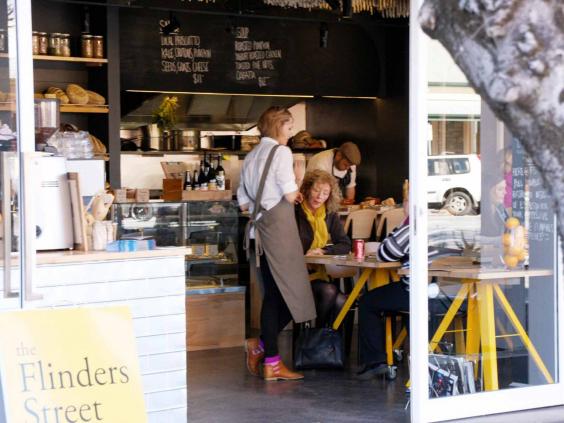
adelaide-flinders-street.jpg
Work of art: The Flinders Street Project

Day two

Sunday morning: go to church

An iconic mark on the city's skyline, visible from as far as the Adelaide Hills, St Peter's Cathedral (20) sits on the northern side of town at 27 King William Road. It was consecrated in 1878, although not completed until 1911. Inside, there is an ornate rose window situated above the main door depicting stories of South Australia and the Bible.

Sunday services are held at 8am and 10.30am (00 61 8 8267 4551; stpeters-cathedral.org.au; 9.30am to 4pm Monday to Saturday). 

Out to brunch

The Flinders Street Project (21) at 276 Flinders Street (00 61 8 72301 817, theflindersstreetproject.com.au) is all about fresh, local produce. All of its pastries and breads are home-made while the building is also an art gallery, with 10,000 spoons hanging from the ceiling. 

Choose from a selection of brunch dishes, from sourdough toast (A$7/ £3.50) to poached eggs served with avocado, lime and halloumi on sourdough (A$18/£8.90). Sunday brunch served 9am to 3pm.

A walk in the park

Adelaide Botanic Gardens (22) (00 61 8 8222 9311; botanicgardens.sa.gov.au; 9am to 6.30pm daily) is the perfect place for a Sunday walk. The 51-acre green retreat is right in the centre of the city. 

Highlights include the International Rose Garden, which holds more than 5,000 roses, and the Palm House, a Victorian glasshouse that was imported from Bremen, Germany, in 1875 and restored in 1995.

Take a ride

Head out to the seaside suburb of Glenelg on the tram, which leaves from Adelaide Entertainment Centre (3) every 10 minutes. The journey takes about 40 minutes and costs A$3.30 (£1.60) (A$5.20/£2.60 before 9am and after 3pm Monday to Friday and all day Saturday). Glenelg, on the shore of Holdfast Bay in the Gulf of St Vincent, is home to trendy bars, ice cream parlours and, most importantly, miles of sandy beach. 

Icing on the cake

Adelaide Oval (1) at War Memorial Drive (00 61 8 8331 5222; roofclimb.com.au), one of the world's most well-known cricket venues, will be running a new roof-climb experience from March, offering a bird's-eye view of the city. Opt either for a day or early-evening climb (times to be announced). Prices start at A$99 (£49).

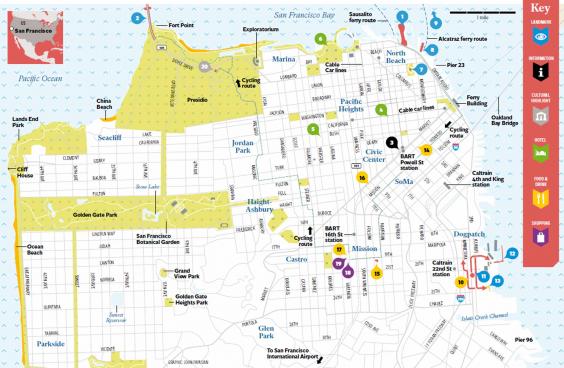
San Francisco travel tips: Where to go and what to see in 48 hours

Travel essentials

Why go now? 

The Super Bowl turns 50 tomorrow, and San Francisco is hosting the US's most watched TV event in its shiny new 49ers Levi's Stadium (actually in Santa Clara, 50 miles south-east of the city). 

Even if your interest in the Super Bowl only extends to the half-time entertainment, San Francisco is a city with plenty to offer. It's currently enjoying a second tech boom, as Silicon Valley companies move into the city itself – bad news for locals as rents rise, but great for visitors, with waves of hip new bar, restaurant and shop openings. 

There's plenty more activity on the calendar, including the Independent Film Festival (11-25 Feb; sfindie.com) plus the Tulipmania Festival (13-21 Feb; pier39.com) at Pier 39 (1). 

Read more

  • 48 Hours in Prague: Where to go and what to see
  • 48 Hours in Budapest: Where to go and what to see
  • 48 Hours in Paris: Where to go and what to see
  • 48 Hours in Marrakech: Where to go and what to see
  • 48 hours in Auckland: Where to go and what to see
  • 48 Hours in Helsinki: Where to go and what to see
  • How to visit Frank Sinatra's favourite bars, restaurants and homes

Touch down 

British Airways (0344 493 0787; ba.com) flies twice daily from Heathrow. Virgin Atlantic (0844 209 7777; virgin-atlantic.com) and United Airlines (0845 607 6760; unitedairlines.co.uk) also fly non-stop from Heathrow to San Francisco airport, 16 miles south of the city centre. The yellow line of the Bart suburban train network (bart.gov) connects with several stops in the city centre, from 4am until midnight. Single tickets cost $8.65 (£6.20); a taxi will cost upwards of $45 (£32). Both take about half an hour.

Norwegian (0843 3780 888; norwegian.com) launches budget flights in time for summer – from Gatwick to neighbouring Oakland on 12 May.

Get your bearings 

Tucked into the top of a peninsula on America's Pacific Coast, San Francisco is a happening city at a manageable size, bordered by water on three sides; to the north, the brick-red Golden Gate Bridge (2) seems to burn through the notorious San Francisco fog. 

The names of its districts recall a rich countercultural past – from the hippie drag of Haight-Ashbury to the home of the gay rights movement, Castro, to North Beach, where the Beatniks hung out. More recently, the place to be is the multicultural Mission, while SoMa (south of Market) is popular with techies. 

The city is famously hilly; locals know which walking and cycling routes to take to avoid calf-stretching climbs, but the city's Muni bus and cable-car networks (sfmta.com) can help whisk you around: see 511.org for route-finding. 

For more advice, visit the tourist office (3) at 900 Market Street (001 415 391 2000; sanfrancisco.travel; 9am to 5pm daily), or go to visitcalifornia.com.

Check in 

Perched atop genteel Nob Hill, luxury hotel The Scarlet (4) at 1075 California Street (001 415 474 5400; thescarlethotels.com) is grand: rooms are plush with red velvet and swagged silk, an oriental twist reflecting the proximity of Chinatown. Doubles from $343 (£245), breakfast included. 

The Kimpton Buchanan (5) at 1800 Sutter Street (001 855 454 4644; thebuchananhotel.com) also occupies a handy spot, at the junction of Japantown, Pacific Heights and Fillmore, all great for neighbourhood strolling. This boutique hotel has cool design, with nice touches such as tie-dyed kimono robes and welcome cookies. Doubles from $192 (£137), room only.

For a budget option with superlative views of the Bay, try the youth hostel: HI Fisherman's Wharf (6) at 240 Fort Mason (001 415 771 7277; sfhostels.org), in Fort Mason National Park; staff organise walking tours, even pub crawls. Dorm beds are $36 (£25); doubles rooms from $109 (£77), with breakfast. 

san-francisco-map.jpg

Day one

Take a view

Coit Tower (7) rises out of Telegraph Hill near the tip of the peninsula (001 415 249 0995; sfrecpark.org). Take the lift to the top for a view of the city and the bay (open 10am to 6pm daily; $7/£5); check out the murals around the base too.

For a different perspective, head to nearby Pier 33 (8), and catch a ferry to Alcatraz (9); it's a 15-minute journey with lovely views. The prison that made the tiny island famous closed in 1963; today, an audio guide thrills with tales of dastardly criminals and improbable escapes. Ferries run 8.45am to 6.40pm; tickets cost $39 (£28), including the tour – book in advance (001 415 981 7625; alcatrazcruises.com).

Lunch on the run 

Catch the Muni streetcar 'T' line from Embarcadero to 20th and 3rd, in Dogpatch, a neighbourhood full of artisanal, foodie businesses. Long Bridge Pizza (10) at 2347 3rd Street (001 415 829 8999; longbridgepizza.com) serves sourdough bases with generous toppings; from $12 (£8.50). 

Take a hike 

Formerly a working class ship building area, Dogpatch was in decline for many years but has seen a change of fortunes. 

The American Industrial Centre (11) started offering space to some 300 artists and makers; cafés, bars, and artisan shops soon followed. Walk SF Tours offers neighbourhood tours (001 415 779 5879; walksftours.rezdy.com; $79/£56). 

Read more

Everything you need to know about Super Bowl 50

Or strike out solo – head from Long Bridge Pizza (10) towards the waterfront on 20th Street to Pier 70 (12), for a glimpse of the industrial heritage. Retrace your steps, and continue down 3rd street, nosing into chocolatiers, fromageries and ice-cream parlours for samples.

Turn off towards the waterfront again at 24th Street, to Warm Water Cove Park (13) – once known as Toxic Beach, it's cleaned up its act, and the neighbourhood is also home to well preserved Victorian architecture.

From Warm Water Cove Park (13), walk back up 24th, and turn right on Tennessee Street then left down Minnesota Street, admiring the pastel-coloured workers' cottages, dating back to the 1880s. 

An aperitif 

On the 39th floor of the Marriott Marquis Hotel, 780 Mission Street (001 415 896 1600; sfviewlounge.com) is the View bar (14), a tourist hot-spot, but for good reason: the unbeatable view of the skyline. Grab a cocktail (around $15/£10) and watch the sun go down.

Dine with the locals

The Mission District is a Latino area transformed into the city's trendiest enclave. Southern Pacific Brewery (15), 620 Treat Avenue (001 415 341-0152; southernpacific brewing.com) is a vast warehouse bar-cum-restaurant, where a young crowd tucks into burgers (from $11/£8), washed down by craft beer. 

Dirty Water (16) is a recent opening inside the Twitter headquarters, 1355 Market Steet (001 415 792 5101; dirtywatersf.com). With dishes such as deer tartare and grilled quail ($22/£15), it caters to discerning diners – and drinkers: it offers more than 100 wines by the glass, and more than 50 beers on tap. 

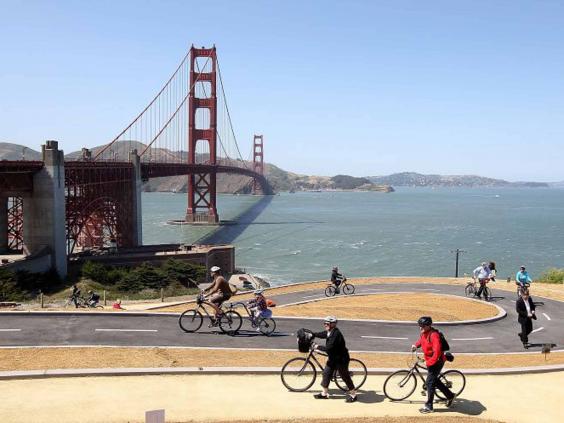
san-francisco-getty.jpg
Golden opportunity: cycling by the bridge (Getty)

Day two

Sunday morning: out to brunch

At Craftsman and Wolves (17), 746 Valencia Street (001 415 913 7713; craftsman-wolves.com), brunch changes with the seasons. There are savoury options – smoked cheddar gougeres, bacon and soft-boiled egg muffins – but save space for the sweets: the patisserie is almost too pretty to eat. Open from 8am weekends, 7am weekdays. 

Window shopping 

Stay on Valencia Street to walk off brunch: it's lined with book stores, vintage shops, boutiques and local designers. Look out for the tongue-in-cheek frontage at 826 Valencia Pirate Supply Store (18), a literary charity set up by writer Dave Eggers (noon till 6pm). 

Hire a colourful bike from the Mission Bicycle Company (19) on 766 Valencia Street (001 415 683 6166; missionbicycle.com, $40/£28 per day) – a fun, if energetic, way to explore the city.

Cultural afternoon

Pedal over to Presidio Park (about a 35-minute cycle – or take a taxi) to visit the Walt Disney Family Museum (20) at 104 Montgomery Street (001 415 345 6800; waltdisney.org). I promise no one dressed as Mickey Mouse will try to hug you. Instead, the museum offers a fascinating look at Walt's empire; his early innovations in animation are particularly interesting. Open 10am to 6pm daily; entry $20 (£14).

Take a ride

Continue cycling through the park and over the Golden Gate Bridge (2). Follow the coastal road down to the port town of Sausalito; slake your thirst at a waterfront bar before taking a ferry back to San Francisco ($11/£8, departing 3.50pm and 5.35pm). 

On arrival, succumb to Pier 39 (1), home to tourist tat shops and a community of basking, honking sea lions. Return your bike (18) by 6.30pm; if that sounds like too much cycling for one day, Mission Bicycles can arrange pick-up from anywhere in the city for an additional fee of $40 (£28).

Discover your perfect holiday in California with The Independent. 

48 hours in Colombo: Hotels, restaurants and places to visit

Why go now?

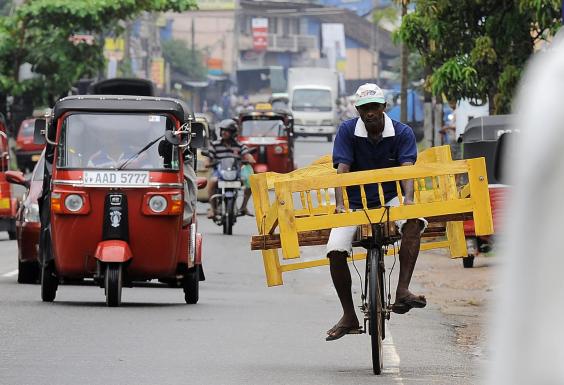
No longer just the sprawling city you have to endure on your way to the beaches and tea country, Sri Lanka’s capital is rapidly emerging as a destination in its own right. Increasing hotel construction offers more choice for travellers, while the opening of the Colombo-Katunayake Expressway in 2013 has more than halved the journey time from the airport to the capital. It’s a cosmopolitan city that will get the adrenaline pumping from the minute you hop in a tuk-tuk or push through the crowds of people in the bazaars.

Get your bearings

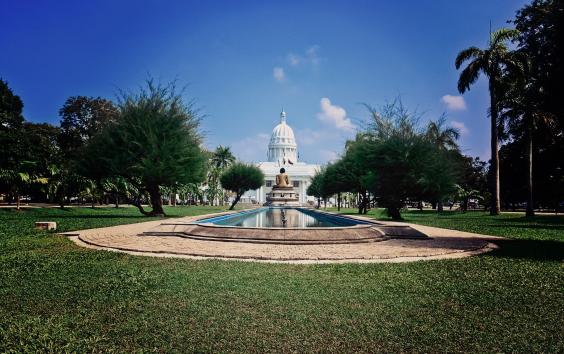
Colombo is split into 15 postal code areas, used to identify specific districts. The old colonial centre is Fort (Colombo 1) home to government buildings, the President’s House (1) and the World Trade Centre (2)

Just east lies Pettah (Col 11), an old quarter with thriving markets, and Cinnamon Gardens (Col 7), the city’s swankiest district. 

To the south is Slave Island (Col 2), not actually an island but it was used for keeping slaves during the Dutch colonial era. South of Fort and facing the sea, Galle Face Green is a stretch of lawn, dotted with kite flyers and food vendors. The main tourist office (3) is at 80 Galle Road (00 94 11 24 26 900; srilanka.travel). Open 8am-4pm Monday to Saturday; closed Sundays.

Day one

Take a hike

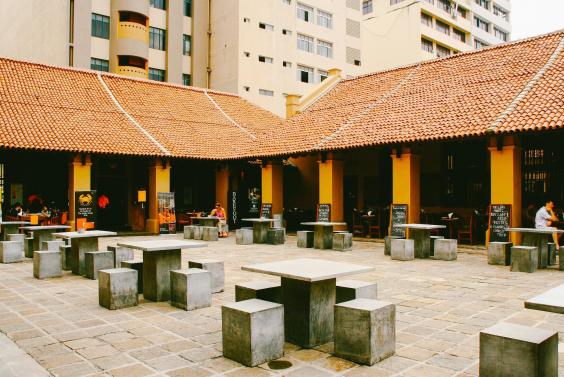
Start at the Old Dutch Hospital (4), a complex of teak beams and courtyards that dates back to the early 1600s but has been lavishly restored to house shops, cafés and restaurants. Exit and turn right up Hospital Lane and left onto Chatham Street, once part of a network of canals built by the Dutch which have been converted into streets by the British who arrived later, as Colombo was becoming more commercialised, and the backdrop for Duran Duran’s Hungry Like the Wolf music video. 

shutterstock-452817877.jpg
The Old Dutch Hospital (Shutterstock)

Pause at the junction with Janadhipathi Mawatha (formerly Queen Street) to admire the 95ft-high Clock Tower (5); built in 1857, this was Colombo’s tallest building at the time and originally served as a lighthouse. 

Turn right down Janadhipathi Mawatha, pausing to send a postcard from the Old General Post Office (6) on the right; the 19th-century building was used as a military barracks during the civil war but has recently returned to its original function. 

Read more

Kandy, Sri Lanka: A city of relics ringed with tea

Leaving behind the walled-off President’s House (1) opposite, follow the road round to the right until you reach the ornate 1906 building housing Cargill’s Main Store on York Street (7); now mostly empty, its faded elegance can still be glimpsed in the red facade’s cornucopia carvings and ground-floor colonnades. Continue along Sir Baron Jayathilake Mawatha until you reach Front Street, where the lively markets of Pettah begin.

For a historical account of the city, Colombo City Walks (facebook.com/Colombocitywalks) offers superb guided walks from US$40 (£33) per person.

Lunch on the run

For cheap, tasty eats, it’s hard to beat Colombo’s street food. Pick up a lunch packet (rice and curry packs sold from carts around the city for about 150 rupees/80p) or hoppers, bowl-shaped pancakes served with seeni sambal (a spicy chilli dip). Join the locals at Al-Batha Muslim Hotel (8), at 74 Olcot Mawatha, for samosas (40 rupees/20p) cooked in front of you. Open 24 hours, daily.

gettyimages-82987071.jpg
Grab a bite to eat at a street food stall (Getty Images)

Window shopping

Locals go to Pettah to pick up household goods and food. Each street has its speciality (for example, 1st Cross Street for electrical items and 2nd Cross Street for jewellery). Don’t miss Federation of Self Employees Market (9) which stretches along 5th Cross Street (7am-4pm daily). 

shutterstock-171705986.jpg
The busy Pettah neighbourhood, known for its markets (Shutterstock)

For something less hectic but more expensive, try Odel (10) at 5 Alexandra Place (odel.lk); the glitzy department store houses both international and local brands. Open 10am-9pm daily.

An aperitif

The west-facing seafront is the place to be come sunset. Treat yourself to a G&T (800 rupees/£4) at the Travellers’ Bar at Galle Face Hotel (11), with its comfy sofas and spectacular Indian Ocean sunset views (00 94 11 254 1010; gallefacehotel.com). Open 10am-12am daily.

Dine with the locals

On Galle Face Green, Nana’s (12) is a busy beachfront pop-up that opens in the evenings to serve fast food, such as devilled cuttlefish for 250 rupees (£1.40) (00 94 77 154 66 52). 

In the Old Dutch Hospital (4), Ministry of Crab is popular with city workers and tourists alike (00 94 11 234 2722; ministryofcrab.com). Try the garlic chilli crab, from 3,600 rupees (£20). Open 11.30am-3.30pm and 6pm-10.30pm daily; booking is advisable.

Day two

Sunday morning: out to brunch

Inside the Crescat Boulevard Shopping Mall (13) at 89 Galle Road, Sugar Bistro (sugarcolombo.com/sugar-bistro-wine-bar) has a relaxed atmosphere, a collection of quirky wall clocks and a good menu featuring fresh fruit platters, French toast and avocado and feta cheese mash. Open 8am-12am daily. 

A walk in the park

Viharamahadevi Park (14) is the city’s largest park, with playgrounds, cycling tracks, fountains and a palm tree-lined walkway leading up to a huge Buddha statue. Originally called Victoria Park, it was renamed in the 1950s after the mother of King Dutugamunu.

shutterstock-277997816.jpg
Viharamahadevi Park is the city's largest (Shutterstock)

Take a ride

Three-wheeled tuk-tuks are omnipresent and often the cheapest and most convenient way to get around. Unless the driver uses a meter, agree the price before setting off. From Fort, expect to pay around 300 rupees (£1.60) to reach Cinnamon Gardens, for example. 

Read more

Sri Lanka by train: The formerly war-torn north is rebuilding

Cultural afternoon

For a fascinating insight into the country’s past, wander through the National Museum (15) at Sir Marcus Fernando Mawatha (00 94 112 695 366; museum.gov.lk), Sri Lanka’s largest and oldest museum, with some galleries dating back to 1877. Highlights include the bejewelled royal throne made for King Wimaladharma in 1693 and a rare collection of traditional masks. Parts of the museum are closed for refurbishment, but should be open by December. Entrance 600 rupees (£3) for adults; 300 rupees (£1.70) for children. Open 9am-5pm. Closed on Poya (full moon) days.

gettyimages-185385326.jpg
Tuk-tuks are the easiest and cheapest way to get around in Colombo (Getty)

The icing on the cake

Colombo is home to a plethora of superb street food - but seeking it out can be daunting for foreign visitors. Urban Adventures (urbanadventures.com/Colombo-tour-eat-eat-repeat) has an excellent three-hour foodie tour led by a local guide who immerses you in the city’s unique mix of Sinhala, Muslim, Tamil and Malay cuisines with a number of food stops. The tours meet outside Colombo Fort Railway Station (16) daily at 4.45pm. From Rs 8,000 (£44). Book online.

Travel essentials

Getting there

Bandaranaike International Airport (17) is 30km north of Colombo. A taxi to the city centre costs around 3,000 rupees (£16.50) and takes around 30 minutes. Bus 187 runs every half hour from 5.30am to 6.30pm, costing 110 rupees (60p) and taking around 45 minutes to reach the station in Fort (18).

dsc-9759d.jpg
Treat yourself to a night at Residence by Uga Escapes (Uga Escapes)

Staying there

Residence by Uga Escapes (19) at 20 Park Street (00 94 11 56 730 00; ugaescapes.com/residence) is one of the best places to stay in Colombo, offering secluded peace despite its central location. The 11 suites are sumptuous, with high ceilings, dark wooden furnishings and silk sofas. Suites from £160 per person per night, room only.

The hulking Cinnamon Lakeside (20) at 115 Sir Chittampalam A Gardiner Mawatha (00 94 11 24 910 00; cinnamonhotels.com/en/cinnamonlakesidecolombo) overlooks Beira Lake and has colourful, contemporary rooms, plus 10 restaurants, inside its polished marble interior. Doubles from £105 including breakfast. 

city-rest.jpg
The City Rest hostel is cheap and cheerful (City Rest Fort Colombo)

City Rest (21) at 46 Hospital Street (00 94 11 23 393 40; cityrestfortcolombo.bookings.lk) is a bright and funky hostel with a fun, communal atmosphere. Dorm beds from £16 including breakfast; private rooms from £56.

The writer travelled with Audley __travel (audleytravel.com; 01993 838 335), which offers tailor-made trips to Sri Lanka. A 12-day itinerary taking in colonial culture, tea country and Colombo, including a two-night break in Residence by Uga Escapes, international flights, as well a private vehicle and chauffeur-guide throughout, starts from £2,880 per person.