Tuesday, 11 April 2017

Martin Kemp talks holidays and making movies

We chat to much-loved TV favourite Martin Kemp about helping 10-year-old avid film fan, Beth Ward, transform her homemade holiday film into a movie masterpiece…

It all started when we received a heart-warming letter from 10-year-old film fan, Beth Ward, telling us all about her holiday to First Choice’s Azul Fives by Karisma in Mexico and urging us to watch her homemade holiday film. We decided to make her dream of becoming a filmmaker a reality, and enlisted the help of actor and director Martin Kemp. He gave Beth a special masterclass in directing, and even helped her to edit her very own holiday film. You can read more about Beth’s story here and watch our film below.


In between putting together Beth’s film, we chatted to the British star about his amazing travels, extensive career, and how to make a great holiday movie…

You must have travelled all over the world throughout your career. Where are your favourite places?

If I wanted to go on holiday to relax, I’d probably go to Barbados, but I’m kind of easy really. Once I’m on the beach and I’ve got my eyes shut and a cocktail in my hand, then I’m just really relaxed and could be anywhere. So sometimes we’ll plan __holidays to far off places like Hawaii and sometimes we’ll stick close to home and do Spain, it’s just whatever takes us in the moment. But saying that, the older I get, the closer to home I like to be.

The most exciting place that I ever go to is Hong Kong. That for me has got everything that I love about the East – just how nice the people are – and it’s got the excitement of New York, so it brings the two things together. Whenever I’m there I just feel this buzz that I don’t get anywhere else.

Where would you jet off to for a short break?

For a short break, I would go to Italy. I’m in love with Italy. I spent a lot of the eighties touring up and down the country with Spandau Ballet and we pretty much covered it all, because that was our biggest fan base outside of the UK. We just toured there two years ago, and played all of the old Gladiator arenas like Verona Arena and the one in Sicily. It’s the most incredible country, and if I moved abroad I would move to Rome. I love the food there, the restaurants are unbelievable, the people are amazing and I like their lifestyle.

What kind of traveller are you? Do you prefer the beach, city sightseeing or activities?

I prefer to mix it up a bit. I like to go somewhere that has a beach, definitely, but also where you can get out and have a bit of adventure. I couldn’t go to the beach every day – although when I was a bit younger I probably could have. I’ll usually do a couple of days of exploring the nearby cities, and then get stuck into mountain biking or whatever the area has to offer. And then, when I’m completely knackered I go to the beach or pool – a good swimming pool is really important! But, I like to come back from a holiday feeling like I’ve achieved something other than just a suntan.

You’re a well-known face on British screens – both from performing with Spandau Ballet and playing Steve Owen in Eastenders – but how did you move into working behind the camera?

The very first thing that I bought with my wages from Spandau Ballet, which was £70 at the time, was a Super 8 camera. That camera went with me everywhere around the world. And in fact, lots of the footage I took on that camera ended up on the Spandau Ballet documentary we had out recently, called Soul Boys of the Western World.

Cameras have always been a part of my life, thanks to my career, and whenever I go away I take one with me. It’s something I’ve always done, and when I get home, I edit the footage into short two-minute movies so people don’t get bored of the 45 minute shots. What I love about making films is that it involves everything I do in entertainment. It involves photography, music, acting – it’s everything that I do wrapped up in one big bubble.

Do you have any memories of yourself or your children growing up on film?

Not of me unfortunately, no. I don’t have anything on film from when I was a kid, as my mum and dad barely had the money to take us on holiday. It was expensive to take still pictures and get them developed in those days as well. How they got us on holiday in the first place I’ll never understand to be honest, they must have saved up a lot.

So, my early memories aren’t on film, but maybe that’s why when I go away with my kids, I take a GoPro and film as much as I can. But even when we get back and I’m looking at the films I’ve taken of my kids, no matter how many I’ve got on there, I always want more. You just can’t film enough of your kids and those holidays, because they’re such great memories.

Your daughter Harley, 27, is also a photographer, has she given you any tips over the years and vice versa?

Well, I gave her all of my tips, and now she’s teaching me hers. Harley’s a photographer, my son Roman is in the entertainment business, and my wife Shirlie is a photographer as well. So in my house we’re all in the same industry and we all share the knowledge. But Harley is a really good photographer, so that’s her specialist area.

Your son Roman, 24, is a keen Instagrammer, what are your thoughts on today’s social media generation?

I think it has got its good sides and its bad sides. The good sides are that people are doing something artistic, cutting footage together on their phones, and making great little videos for people to watch online. Everyone has access to that medium and the chance to become a presenter, even if just ten people watch it. But, obviously, there’s a danger that goes with social media and we all know what those dangers are and have to be aware. I use Instagram and Twitter, but just to upload onto and put stuff out there.

What was the best part of editing Beth’s holiday film?

It was Beth absolutely. She comes from that YouTube generation where all the kids know how to turn the camera on themselves and present. She did it with such charisma that when I was editing her film, I kept as much of her in as possible, because she is the driving force and charm of the film.

Did you learn a lot from her then?

I learn from all kids. When you watch kids do anything, they do it with a kind of naivety – they just do it for fun and say what they think without worrying about the way they look. I think all adults can learn a lot from kids, actually.

What word would you use to sum up Beth’s holiday film and why?

Exciting. I think it was really exciting. What she was showing us, the holiday in Mexico she was on with her family – you could feel how happy they were. It came across as really exciting.

What advice or tips would you give to somebody who wants to create a memorable holiday film?

There’s a few tips really. My big one is to always shoot something in a wide angle, a medium angle and a close-up. If you use those three angles in the same variant, like filming a conversation, you will be able to cut together something that’s fantastic. When I’m looking through a camera I will always try and capture those three angles of a single scene. Also, hold the camera steady when filming and move it slower than you think.

Who are your favourite film directors?

I think Martin Scorsese, easily. Goodfellas is my favourite film, and that’s directed by him. Another old classic that I love is Sunset Boulevard.

Quick fire questions:

Sun or snow

Sun

Beach or pool

Beach

Short haul or long haul

Both – there are some amazing places to travel to long haul, but the Med is just easier to get to.

You can watch Beth in Mexico in Vue nationwide this spring. Find out more about our First Choice holidays.

Friday, 7 April 2017

Not just Brits and booze: How to do Paphos, Capital of Culture 2017, in two days

Why go now? 

On the last weekend of January Paphos takes over as joint European Capital of Culture (along with Denmark’s Aarhus). The ancient port, soaked in Greek mythology and legendary birthplace of Aphrodite the goddess of love, is set around one of the most dazzling harbours in the Mediterranean. 

In a sense Paphos has already been a city of culture for more than two millennia. Throughout 2017 it will be a happening place, drawing on its classical and mythological heritage as themes for a year-long “open-air factory of culture”. This will be made up of dance, musical and theatrical performances in parks, beaches and on the streets. 

Get your bearings

Paphos is out in the far west of Cyprus where the mountains meet the sea. There are two distinct sectors: Ktima, the stately old town, uphill and inland, where there are elegant colonial houses and several museums; and Kato Paphos, the main tourist area of restaurants, souvenir shops, low-rise apartments and a few British pubs scattered around the harbour.

The resident population is only about 60,000 but numbers are swollen year round by tourists. One reason it was chosen as cultural capital is because it is a 12-month destination; winters are warm, mild and generally sunny with January temperatures often nudging 20C. Summer – the peak beach season – is hot, while spring and autumn are usually cool enough for sightseeing while warm enough to swim. 

Day one

Take a hike

Stroll along the Kato Paphos waterfront (1) towards the harbour and castle, keeping the sea to your left. The east to west direction is important because it leads to the Paphos Archaeological Park (​2) (open 8am-7.30pm every day, entry €4.50). It will take the rest of the morning to hike round the vast, Med-side ruins of Neo Pafos, an ancient city founded in the 4th century BC and the capital of Cyprus for nearly a millennium.

saranta-kolones-fortress-paphos.jpg
Saranta Kolones Fortress was once an impressive castle

Stop at the House of Dionysos and prepare to be mesmerised by glittering mosaic floors depicting stories from Greek mythology. It is worth taking the time to follow some of these, such as the tragic tale of Phaedra and her bizarre love for her stepson Hippolytus.   

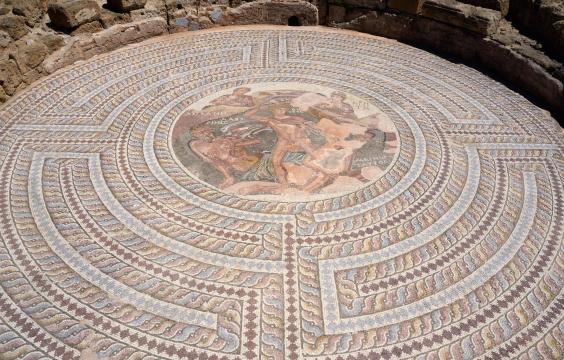
Continue on round the park making sure not to miss more amazing mosaics at the Villa of Theseus, where the depiction of Theseus fighting the Minotaur in the labyrinth is astonishingly well-preserved and vivid. Then pass by the Agora (forum) and semi-circular Odeon theatre, on your way to wander among the arches and columns that are all that remain of the Saranta Kolones fortress, a vast Byzantine castle from the latter days of the Neo Pafos era.

mosaics-at-villa-of-theseus-archeological-park-tombs-of-kings.jpg
The mosaics at the Villa of Theseus are not to be missed

Lunch on the run 

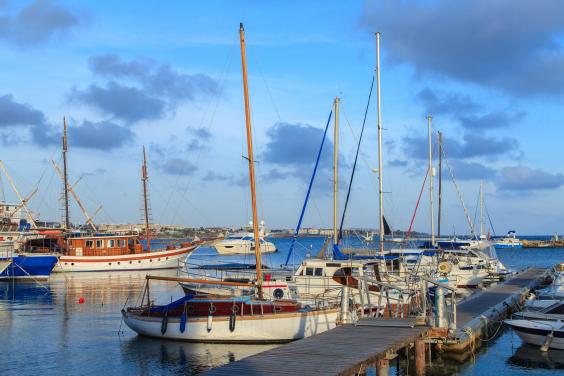
The archaeological park exit is bang next to the harbour. Bag a table at The Pelican (3) on Apostolou Pavlou Ave 102 (00 357 26 952500; no website) by the waterside for a seafood mezze of everything from soft-shell crabs to grilled cuttlefish and freshly-landed swordfish. It is on the pricey side but the setting, looking across to the medieval castle, is unimprovable. 

Window shopping

Duck into the winding Kato Paphos backstreets (4) behind the rows of tat-peddling tourist shops along the harbourside main drag. You’ll find a bewildering amalgam of boutiques selling local jewellery, ceramics and handmade lace, all cheek by jowl with familiar-sounding department stores such as M&S or Debenhams (5). The latter is just behind the stone pillar where St Paul was tied up and whipped for spreading the news about Jesus Christ.

paphos-harbour.jpg
Stop for lunch at The Pelican, overlooking Paphos harbour

The best bargains in Cyprus, however, are for spectacles. Bring your prescription, choose your frames and get a new pair in 24 hours, all for around €50-60 at any of the numerous opticians. 

Some shops are closed on Sundays and on Wednesday afternoons. In summer, some close from 1-4pm for a long lunch, but stay open till 8pm.

Take a view

The Axiotheo Hotel (6), at 2 Ivis Malioti Street (00 357 2693 2866; axiotheahotel.com), set into a hillside above Ktima or 10 minutes by taxi from the harbour, has the standout panorama. You don’t have to be staying here to sip a sundowner cocktail while soaking up views over the town, coastline and Mediterranean beyond.

Dine with the locals

Ktima, the old town, is the place to dilute tourists with Cypriots. Fetta’s (7) at Ioanni Agroti 33 (00 357 2693 7822; no website) is as traditional a taverna as you’ll find anywhere in Paphos, specialising in classic local dishes such as stifad, a rich stew of beef with onions and red wine, and koupepia (various ingredients, meaty or veggie, wrapped in young vine leaves).

  • Read more

Why Manila is Asia's most bonkers capital

There is no attempt at anything fancy or fussy. If you go the whole mezze hog, you’ll find it less fishy than at harbourside eateries. When booking, you can choose a table indoors or outside.

Day two

Sunday morning: out to brunch

Omikron Brunch, in a beautiful renovated old Ktima House (8) at 25 Martio (00 357 2695 5965; no website) will keep you away from the “Full English Served All Day” cafés found round the harbour. Inhale aromas of fresh ground coffee and sip homemade lemonade before poached eggs on muffins served with local twists, such as crumbled feta. It’s very chic and perhaps the only place in Paphos specialising in brunch. Open every day from 7am till 10pm. 

tom-of-the-kings-edit.jpg
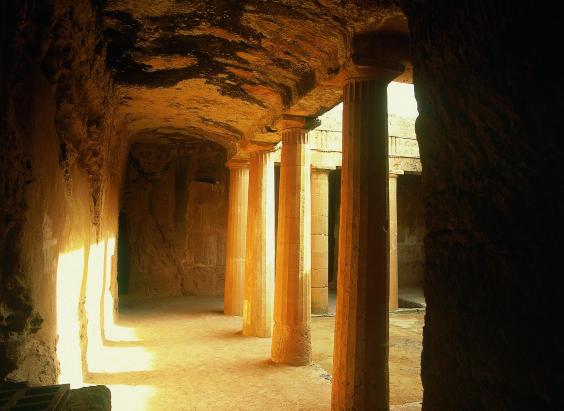
Explore excavated burial chambers at the Tombs of the Kings (Cyprus Tourism Organisation)

A walk in the park

Return to the harbour and follow the coastal path westwards. The scenery becomes increasingly wild with jagged rocks and crashing waves as you swing north round the headland. Make for the lighthouse beach bar (9) about 2km on, before retracing your footsteps. Or stop at one of the pebbly coves for a dip.

Cultural afternoon

The so-called Tombs of the Kings (10) (open 8.30am-7.30pm every day, entry €2.50) is another unmissable expanse of ancient wonders. Slightly confusingly, it forms part of the Paphos Archaeological Park (2), though the pair are separate. Scores of excavated tombs and burial chambers in soft, sandstone caves and pits dug into the ground make up this astonishing necropolis, dating from the 3rd century BC. However, they served as final resting places for local bigwigs, not royalty as the name suggests.

1969247-782621661779588-4150147002797798873-n.jpg
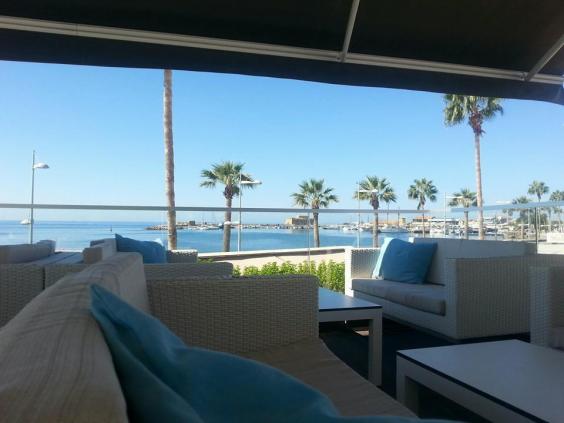
The view from Mare Mare bar, a great spot for pre-dinner drinks (Facebook)

An aperitif

As the sun sets, Cypriots sip Koumantaria, the tawny-coloured local “wine of kings and king of wines” grown in the foothills of the Troodos mountains. It is sweet, so often described as a dessert wine, but to go native try it with nibbles before dinner at Mare Mare bar (11) on Poseidon Avenue (00 357 2693 1987; no website), while watching evening colours dancing on the water.

Getting there

Paphos airport (12) is 8km south west of town. Shuttle bus 612 runs to Paphos harbour, 613 to Ktima (both €1.50 one way). Taxis are metered and cost roughly €30, one way.

Staying there

The quieter, smarter end of Kato Paphos is east of the harbour where there is a string of stylish five-star hotels. It is hard to beat the marble splendour of the Annabelle (13) (annabelle.com.cy), set in lush gardens next to a stony beach right by the waterside. Doubles from €205, including breakfast.

Book Now
10934006-776312009119385-8301085012690282507-n.jpg
Find Dionysos Central Hotel near Paphos Castle (Facebook)

There are plenty of mid-range options around the busier (yes, noisier) harbour area. Three-star Dionysos Central Hotel (14) (dionysoshotelpaphos.com) is moments from the castle and beach, and good value. Doubles from €89, including breakfast. 

Book Now

Family-run Axiothea Hotel (15), at 2 Ivis Malioti Street (axiotheahotel.com), is a traditional little no-frills place in the old town. It makes up for the lack of pool and its distance from the sea with the warmest of welcomes, and a commanding position (see Take a view, above). Doubles from €50, including breakfast.

Book Now

Expert Cyprus operator Sunvil (sunvil.co.uk) also offers three-night and seven-night breaks to Paphos, including accommodation and return flights, from £394 per person.

Thursday, 6 April 2017

Have a Cool Runnings bobsled adventure in Jamaica

It’s been 29 years since the first Jamaican bobsled team competed in the Calgary Winter Olympics, a story that was made into the cult Disney film – Cool Runnings. And the good news is, you don’t need to wait for the sequel, you can have a bobsledding adventure of your very own. Here’s how…

Jamaica has a long list of famous exports, from Usain Bolt and Bob Marley to James Bond and jerk chicken. And of course, there’s Cool Runnings – a nineties Disney classic based on the real-life Jamaican bobsled team who made their bid for Gold at the Calgary Winter Olympics in 1988. Filming took place along the west coast of Jamaica between Negril and Montego Bay, and in Lucea, too. Remember the scene where the team are fundraising for their Olympic bid? That’s outside the Lucea Municipal Building near our Grand Palladium Jamaica Resort and Spa hotel.

You’ll find the original bobsled on display at Montego Bay Airport at the Jamaican Bobsleigh Cafe along with signed memorabilia from the team. And, you can even have your own bobsled race on Mystic Mountain in Ocho Rios. The action-packed adventure park crams in an aerial gondola ride, a bobsledding adventure, 10 zip-lines and even an infinity pool and waterslide. We put it to the test to see how much fun you can have on a mountain in one day…

Sky Explorer

Our adventures on Mystic Mountain started in the most exhilarating way – with an 8-minute gondola ride to the top of the mountain. You might have been on a ski lift before, but have you taken one through the jungle? It’s an entirely different experience. The speedy lift ascends swiftly over the treetops of the rainforest and you’ll take in spectacular views of the bay and sea below, travelling over 700 feet above the Caribbean Sea. Once we got our heads around the height, we were able to enjoy the incredible views (it’s so peaceful up there!) and take a few snaps.

The bobsled

We hopped off at the top and went straight over to the bobsled to get the Cool Runnings experience. The 1,000 metre tree-lined track twists down the mountainside and through rainforest, and best of all, the Jamaican-inspired bobsled looks just like the ones from the films. You can ride on your own, in tandem, or even as a family with all the bobsleds linked together. You just need to make sure you trust your driver at the front, because they can use the handbrake to slow down and take in the pretty surroundings or really crank up the speed. We decided to do what the real Jamaican bobsled team would do, and go full throttle. Because, how fast can it be?

All we were missing was a lucky egg. But thankfully, we made it to the end in one piece. The ride might have started off nice and slowly, but as we plummeted down, we reached an exhilarating speed of around 40 mph and the landscape became a bit of a blur. Once the ride finishes, a lift takes you back to the top of the mountain and you can ride again if you fancy and try to beat your own record.

Museum, hummingbirds and butterflies

Before getting ready for the next adrenaline-packed adventure, there was plenty to see at the top of the mountain. There’s a Butterfly and Hummingbird Attraction Garden which has been designed to attract the creatures in their natural environment. You can spot native species of hummingbird among the plants including Jamaican Mango, Eastern and Western Streamertail and the Vervain Hummingbird which is the second smallest bird in the word. There’s also a small museum which displays bobsledding and sports memorabilia, and a café where you can grab a snack. There’s even an infinity pool and waterslide where you can cool off and get views over Ocho Rios.

Zip-lining

There’s only one way to get down the mountain, and that’s on a zip-line or ten. Ok, well you could take the sky explorer but that’s hardly the most exciting option. There are ten zip-line platforms to cross with increasing difficulty – each one seemed to get longer and higher. You can even see the ocean in the distance from the longest line. The friendly, fun loving guys who run the zip-line tour make the experience even more fun, and entertain you as you go. There were a few apprehensive members of our group, but by the end we were all zip-lining pros.

Fancy having a bobsledding adventure of your very own? Check out our __holidays to Ocho Rios here and book our Mystic Mountain excursion.

How to do Manila in two days: From Trump Tower to huge steaks and the world's weirdest cemetery

Why go now?

The Philippines megacity is back in fashion for the first time since Imelda Marcos stunned the world with her insane shoe collection. Paris Hilton’s team have broken ground on her second Manila beach club, while the arrival of the Milano Residences, a Versace-designed behemoth, marks a giant leap forward for the city’s trend credentials.

They’ll be joined in early 2017 by the ultimate skyline disrupter: Manila’s poutiest new landmark, the US President-elect’s shimmering 57-storey Trump Tower. If you thought the Philippines’ capital was all about chaos and monsoon rains, then think again: it’s undergoing a transformation so bonkers it may as well be screaming “Look at me”.

Get your bearings

Manila is at its sparkling best as seen from 71 Gramercy (1), a fantasy 71st-floor rooftop bar in Makati (115 D Tuazon, 00 63 917 809 4093; 6pm-6am), the city’s hyper-realised business and shopping district and one of Metro Manila’s 16 satellite towns. 

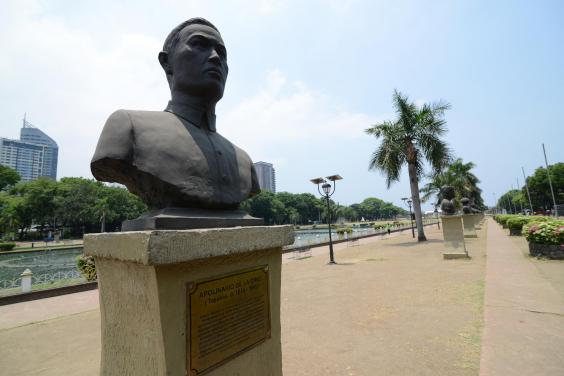
To the north, hidden by towers and the perpetual fug of a traffic-fuelled haze, lies Intramuros (2), the medieval Spanish walled city and historic focal point for government and trade. To the fort’s south, the city’s green lung, Rizal Park (3), is home to ornamental gardens, fountains and a pantheon of national hero statues. Dwarfing them, modern Manila continues to shoot up at pace, the Second World War-battered centre now cradled by wave after wave of concrete shards, residential blocks and unfinished Jenga-like condos.

Day one

Take a hike

Begin a morning stroll in Intramuros (2) when it’s still cool. At this time, the tricycle guides are snoozing and the vintage horse-drawn carriages are tied up, so you won’t get hassled.

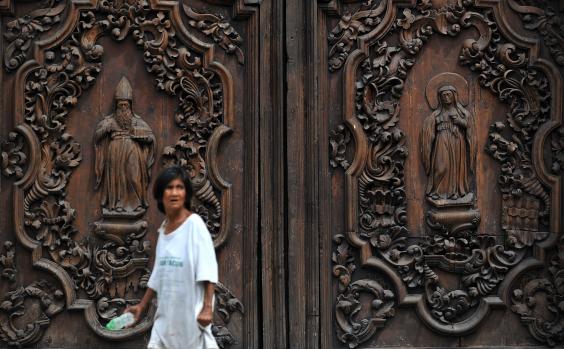
View the distinctive façade of the San Augustin Church (4), originally made of bamboo, then head towards nearby Santa Lucia Street to ogle the likes of Ferdinand Marcos and his cronies at the Philippine Presidents’ Gallery (5). Conspicuous by his absence from the series of outdoor sculptures lined up against the crumbling fort walls is current President Rodrigo “The Punisher” Duterte, who continues to cause international outrage with his hardline crackdown on the drug trade.  

gettyimages-165106199.jpg
The intricately carved doors of San Augustin Church (Getty)

Farther north on Plaza de Roma, you’ll find the eighth reincarnation of Manila Cathedral (6), a church that simply refuses to go quietly. Damaged by fires, destroyed by typhoons and earthquakes, and a casualty of war during the Battle for Manila in 1945, it’s a testament to the dogmatic spirit of Filipinos, one of the most devoutly religious peoples you’ll ever meet. As a reminder you’re still in the tropics, its wrinkled masonry brow is pierced with stone-carved pineapples.

Lunch on the run

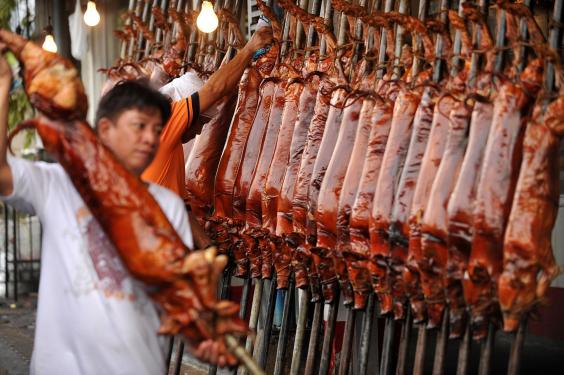
In the Philippines they swear by lechon, one of the world’s unhealthiest national dishes. A fatty suckling piglet soaked in salty soy then barbecued until cherry red, it’s served on street corners throughout the country. For a sleeker, stiff-upper-lip version, drop in to Ilustrado (7) (ilustradorestaurant.com.ph; dishes from £6.50), a restaurant steeped in old-world charm where the speciality is also kare kare, an oxtail and tripe stew drowned in sticky peanut sauce.

gettyimages-107862203.jpg
The Philippines’ favourite street snack is lechon, fatty suckling pig (Getty)

Window shopping

Across the courtyard you’ll find General Luna Street and Si-lahis Arts & Artifacts (8) (silahis.com; 10am-7pm), a colonial townhouse of antiques and local treasures where time seems to have stopped. Spread across its four floors are beautiful masks from the island of Palawan, intricately woven baskets, hand-spun textiles and beady-eye statues, most of which are never going to fit in your suitcase.

An aperitif

To mingle with local millennials, hop in a taxi to the new go-to destination Fort Bonifacio (9) before the city’s unbearable rush hour crush ruins your plans. Here modern Manila shows off its best hipster face, no more so than on Burgos Circle (10), a precinct crammed with US-influenced beer bars, smokehouses and burger joints.

12246856-10153286380112709-9067091364188502922-n.jpg
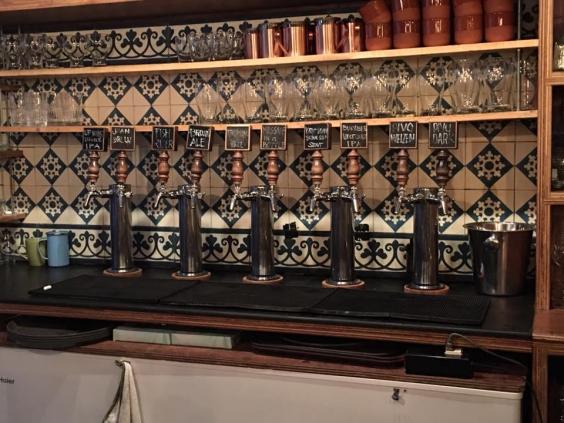
The line-up of craft beer taps at brew bar Big Bad Wolf (Facebook)

Two to try for Filipino beer-food pairings are Big Bad Wolf (11) (Forbestown Rd, 00 63 2 822 5833; 11am-2am) and The Perfect Pint (12) (32nd Street, 00 63 2 823 1320; 10am-2pm). Also highly worth sniffing out are devilishly-good beers from the all-female run Palaweño Brewery, available at both of these bars. 

Dine with the locals

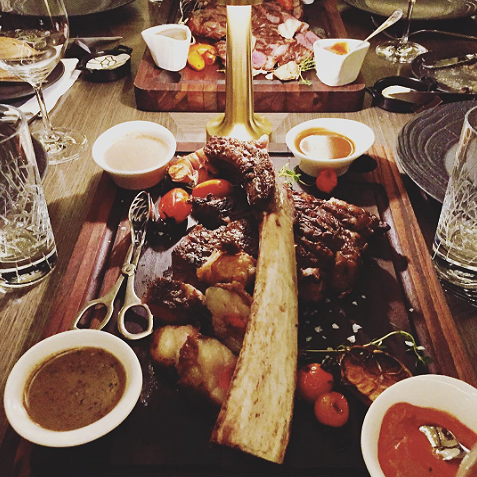
Unlike other South-East Asian capitals weaned on noodles and broth, Manila is all about the meat, preferably when served up in slab-size portions. That explains the wall-to-wall well-heeled Manileños dining at Raging Bull Chophouse and Bar (13) (ragingbullchophouse-fort.com; dishes from £27), a new steakhouse only a short walk along 28th Street. While it firmly has its roots in 1930s New York (cue monochrome tiles, couchette booths, a lamp-lit whisky bar, and art deco fittings), the beef is grain-fed, dry-aged Australian and all kinds of good.

15826274-2207772832782180-8924285862618182374-n.png
A 1.1kg Tomahawk wagyu steak at Raging Bull Chophouse and Bar (Facebook)

Day two

Sunday morning: out to brunch

Swamped with food markets, feng shui shops and faded temples, the neighbourhood of Binondo (14) is said to have been home to the first Chinatown in the world. There is no escape from this on Ongpin Street where the dim sum dumpling is king, so give in to a no-frills teahouse such as Mei Sum Tea House (15) (965 Ongpin Street; dim sum from £1.50) or President Tea House (16) on Salazar Street (mains about £3.50). They’re both survivors from a different era, but few places in the city remain better for a Cantonese blow-out. 

A walk in the park

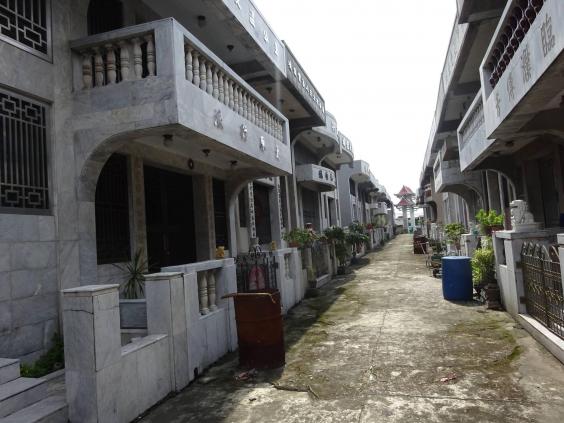
The mind-boggling Chinese Cemetery (17) north of the Pasig River (take the LRT train to R. Papa Station; 7am-7pm) is barmy on two counts: first, the deceased are buried in lavish mausoleums and tombs with every modern convenience imaginable (some even with working toilets, crystal chandeliers and air con units); second, the graveyard has a sizeable population who live side-by-side with their dead relatives in homes within the cemetery. Book with Old Manila Walks (oldmanilawalks.com; £15) for a highly-recommended walking tour to suss out what the heck’s going on. 

11222104-1228913773836040-998040503303398773-o.jpg
Mausoleums at Manila’s boggling Chinese Cemetery (Facebook)

Take a ride

The cobbled backstreets of Intramuros (2) are best explored by bike, especially on one made of bamboo. The brainchild of Filipino-American Bryan Benitez McClelland, Bambikes are made using a sustainable knit of bamboo and abaca twine and he champions fairtrade labour and sustainable building practices (bambike.com; rentals £3.20 per hour; guided tours £20; 10am-12.30pm or 3-5pm). 


Special delivery! #Bambino by @bambike #Bamboobike #handmadeinthephilippines

A photo posted by Bryan Benitez McClelland (@bambryan) on


For the perfect tour, weave through the streets from the Bambikes workshop on Plaza San Luis (18) to Fort Santiago (19) for the backstory on national hero Dr José Rizal (Santa Clara Street; £1.20; 8am-6pm). From here, double-back via the world’s oddest Starbucks (20) inside a disused prison cell built into the city walls (corner of Muralla Street and Magallanes Drive; 9am-9.30pm) for a spritely circuit of the attractions and chess club tournaments of Rizal Park (3).

17106987229-bef3f0ef8f-k.jpg
Indulge in a spot of people-watching at Rizal Park (Jorge Lascak/Flickr/CC BY 2.0)

Cultural afternoon

Manila is characterised by four seasons: hot, hotter, wet, and super wet. Which makes an afternoon wandering the air-con galleries at the Ayala Museum (21) (ayalamuseum.org; £7) in Makati an easy sell. A labour of love for the Zóbel de Ayala family, arguably the richest in the country, it’s dedicated to Filipino culture, ethnography and art. The stand-out exhibit is the Surigao treasure, a dazzling hoard of more than 1,000 pieces of pre-conquest gold.

The icing on the cake

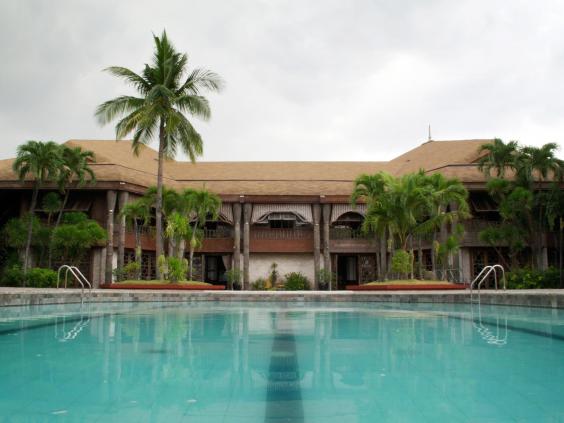
It has to be the crazy-as-cuckoo Coconut Palace (22) overlooking Manila Bay. Built by Imelda Marcos to impress Pope John Paul on his papal visit in 1981, the £30m presidential residence is so fanciful and extreme – everything in it is designed as an homage to the fruit, including a ridiculous 101-coconut-shell chandelier – it did exactly the opposite. The pontiff ended up staying in a far more modest hotel in Intramuros (2), but the palace still endures: a legacy of the crackpot rule of the Marcos family. It opens for erratic tours, so check first with your hotel.

gettyimages-165106101.jpg
Coconut Palace, which proved too over the top for the Pope (Getty)

Travel essentials

Getting there

KLM flies to Manila via Amsterdam from several UK airports, including London, Birmingham, Manchester, Glasgow, Edinburgh and Cardiff (klm.com; returns from £498). Ninoy Aquino International Airport (23) is 12km south from Manila’s historic centre Intramuros (2). 

There is limited public transport to and from the airport, so the only real option is to bundle into a taxi. Fares should cost you no more than £7, with a one-way taxi ride to Makati costing £5. The three LRT and MRT train lines that intersect the city are a little clunky, but can be a handy way to avoid sitting in traffic (30p). Just don’t think about using them during rush hour, which is 6am to 10am and 3pm to 8pm; they become unbearably choked with commuters. 

Staying there

The shiny new Shangri-La at the Fort (24) (00 63 2 820 0888; shangri-la.com) on 30th Street in Fort Bonifacio opened in mid-2016 and fuses high-rise glamour with luxury frills. What’s most impressive is not the army of concierges, heated pools or health clubs, but the views (and free canapés and cocktails) from the executive Horizon Club on the 40th floor. Doubles from £205, B&B.

Book Now
1913695-1248605278502773-50505565171662404-n.jpg
Cool off at Manila’s five-star Shangri-La at the Fort (Facebook)

Celebrating its centennial next year, the Belle Époque-style Luneta Hotel (25) (00 63 2 875 8921; lunetahotel.com) is a grand old dame overlooking Rizal Park (3). Despite the years, there’s no sign of any blips, wear or tear. For sunset romance, take the lift to its rooftop cocktail bar, which overlooks the glory of all that colonial-era Manila madness. Doubles from £68, B&B.

Book Now

Few hostels in the Philippines are as switched-on to budget travellers as Pink Manila (26) (00 63 2 484 3145; pinkmanilahostel.com). It’s heavy on backpacker quirks, but also comes kitted out with penthouse views of the city, a pool and an enviable terrace to laze away the muggy afternoons in a hammock. From £8 for an eight-bed shared dorm.

Book Now

Wednesday, 5 April 2017

Two days in Palma: Why the Mallorcan capital is perfect for an Easter city break

Why go now?

Visit in April to catch the week-long Easter celebrations. Holy Thursday (13 April) is when the most colourful parades take place, including the spectacular La Sang procession, which sees a representation of Christ being carried through the streets. 

'Angel Sunday' (Domingo del Angel) on Easter Sunday includes a procession and music. There's also traditional food to sample in the form of savoury panades, sweet rubiols and crespells (pastries), which can be found in local bakeries and cake shops.

palma-street.jpg
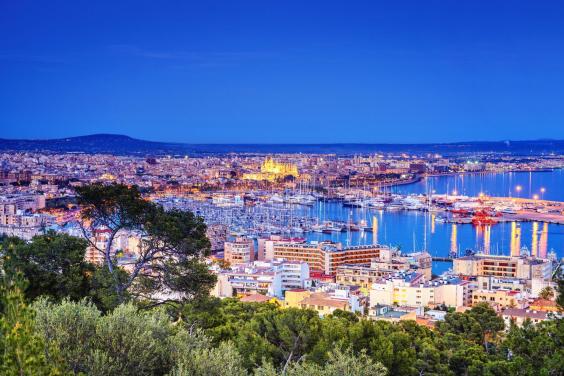
As the island warms up, April's a good time to visit ( iStock/ Lunamarina)

Get your bearings

Located in the south of Mallorca and just 15 minutes by taxi or bus from the airport, Palma is simply laid out in long, straight avenues. The main square is Placa Major (1), and key areas to explore include the old town, Passeig del Born (2), La Rambla (3) and Paseo Maritimo (4), which is next to La Seu cathedral (5), and has a real buzz at night. The harbour starts at the cathedral and borders the west - the promenade runs to the ferry port approximately 3.5km from the old town. The main tourist office is Informacio Turistica de Mallorca (6), at Plaça de la Reina, 2, 07015 (+34 971 173 990; infomallorca.net). It is open 8.30am-8pm Monday to Friday, 8.30am-3pm on Saturday and closed on Sundays.

Current exchange rate: £1 = €1.17

Day One

Window shopping

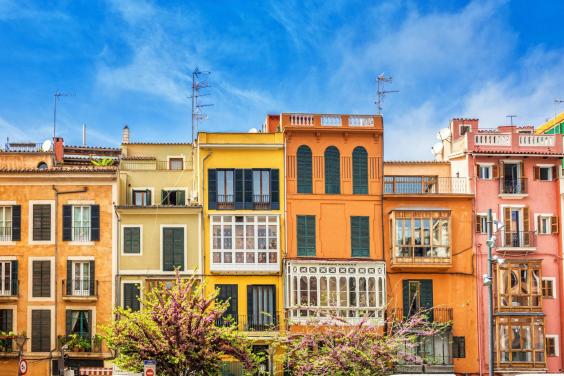
Palma has serious shopping potential with a number of trendy boutiques. However, it’s wise to check opening hours as some close for ‘siesta’ (typically around 2-5pm) and/or are closed on Sundays. The area around Born, Via Roma (7) and Plaça Major has a plethora of shops for all budgets. 

palma-colourful-buildings.jpg
Palma has a vibrant shopping scene ( iStock/ Juergen Sack)

High up on Mallorcan fashionistas’ wishlists are Spanish designer brand Angel Schlesser, at Carrer de Sant Nicolau (8) (+34 971 71 82 73; angelschlesser.com) for women’s clothes, accessories and exclusive fragrance; and Purificacion Garcia at Placa del Mercat (9) (+34 971 71 83 97; purificaciongarcia.com), which caters for stylish men and women with bags to die for. For men, La Principal at Career dels Paraires (10) (+34 971 72 17 67) is all about carefully curated urban styling, with designers including Opening Ceremony, Nudie and Hentsch.

Lunch on the run

Seek out a ‘menu del dia’ lunch deal, or head to Mercat Olivar (11), at Placa de l’Olivar 4 (+ 34 971 720 314 15; mercatolivar.com) where you can pick up a locally produced bite to eat from one of the many food stalls, counters and restaurants serving fish, tapas and even sushi. Try the family-run Bar Paco for homemade tapas or Ostras Cocedero for Manolo’s fresh seafood, including oysters, kipper and cod. The market’s closed on Sundays.

Cultural afternoon

Take a no.3 or no.46 bus from the main bus and train station Estacio Intermodal (12) – just off the Placa d’Espanya – for the half-hour ride to the Joan Miró Foundation (13) (+34 971 70 14 20; miro.palmademallorca.es), a museum in Cala Mayor dedicated to the work of the surrealist artist Joan Miró.

palma-miro.jpg
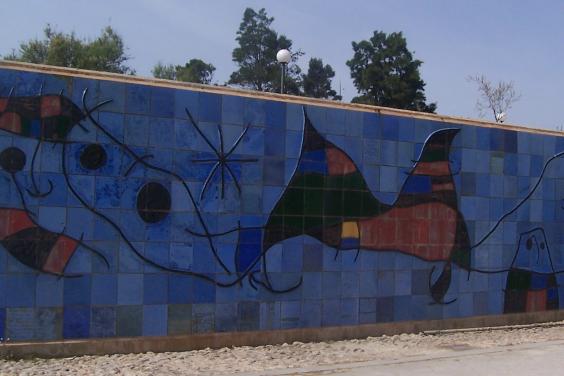
Artist Joan Miro left his legacy on the island, with works including a ceramic wall in Parc del Mar ( Selbst Fotografier)

Wander around the sculpture garden and Miró’s studio and workshop – the collection includes paintings, drawings, sculptures and personal objects. It’s open from 10am until 6pm (winter) and 7pm (summer) Tuesday to Saturday; 10am-3pm on Sundays and holidays all year round. Entry is €7.50 (or free on Saturdays from 3pm and all day on the first Sunday of each month).

An aperitif

Es Baluard Restaurant and Lounge (14) (+34 871 23 49 54; esbaluard.org) in the Es Baluard modern art museum is the perfect sundowner spot, with its views of the bay of Palma and cathedral. Toast the evening with a glass of Hierbas, a Mallorcan aniseed and herb liqueur best served on the rocks. 

palma-harbour.jpg
Visitors can enjoy magnificent views of the harbour over an aperitif ( iStock/ Juergen Sack)

Alternatively, take a 7km cab ride to the glamorous OD Port Portals (15) (+34 971 67 59 56; od-hotels.com) in chic Portals Nous – head up to the Sky Bar for killer cocktails and sunset views akin to those found on Ibiza. It may be a hotel bar but the views make up for it.

Dine with the locals

Fusion food with a twist and uber-stylish decor are on the menu at hip dining destination Balagan by ETOH in hip Santa Catalina (16) (+34 971 22 21 00; balaganbyetoh.com). Chef Emil Bergman Podeur fuses Middle Eastern and Balkan flavours in a menu that’s made for sharing. Order individual plates or the six course set menu for a most agreeable €27.00. 


Day Two

Out to brunch

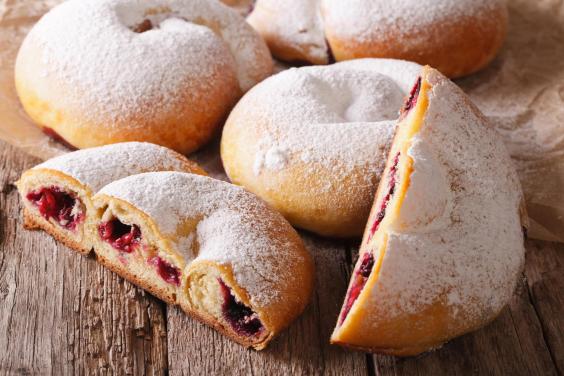
Ensaimadas – pastries, filled with cream, custard, chocolate or apricot – are a typical Mallorcan breakfast. Find them at their best at Ca’n Joan de S’aigo (17) (+34 971 71 07 59; canjoandesaigo.com), where prices also happen to be extremely reasonable – €3 gets you coffee with an apricot ensaimada. It’s open from 8am.

palma-ensaimadas.jpg
Ensaimada pastries are a Mallorcan speciality ( iStock/ Alleko)

Take a hike

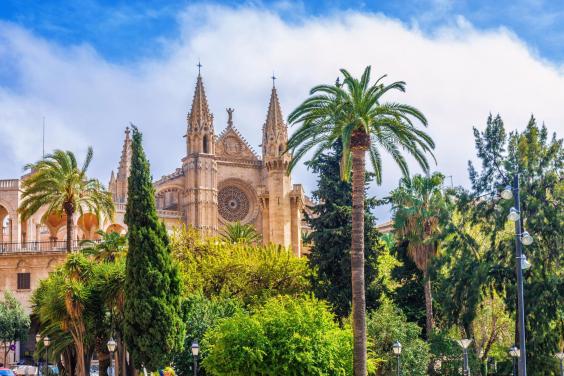
Start at the grand Gothic cathedral La Seu (5) which is a must-see (+34 902 02 24 45, catedraldemallorca.org). Overlooking the harbour, it was built between the 13th and 17th centuries; Catalan architect Antoni Gaudí redesigned parts of the interior in the early 20th century. It’s open 10am-6pm Monday to Friday from June to September; 10am-5.15pm from 1 April to 31 May; and 10am-2pm Saturdays all year round. Entry costs €4.

From there, head next door to the 14th-century palace La Almudaina (18) (+34 971 21 41 34; no web). Dating back to Roman times, these days the King of Spain resides here when on the island. It's open 10am-6pm, entry €7. 

palma-cathedral-palm-trees.jpg
La Seu Cathedral is a must-see attraction in Palma ( iStock/ Juergen Sack)

Turn left for a stroll along the seafront which is the perfect spot for people-watching – while you’re there drop into the La Llonja art space (19) which often has a free installation inside. Finish your walk at the historical landmark Monument a Ramon Llull (20) on Passieg de Sagrera.

A walk in the park

The most central park is Parc del Mar (21). Situated at the foot of the cathedral and a few steps from the Monument a Ramon Llull, there’s a man-made saltwater pond, fountain, tree lined promenade and lawns, plus a children’s playground. If you’re lucky you may even catch an open-air concert or cinema.

Take a ride

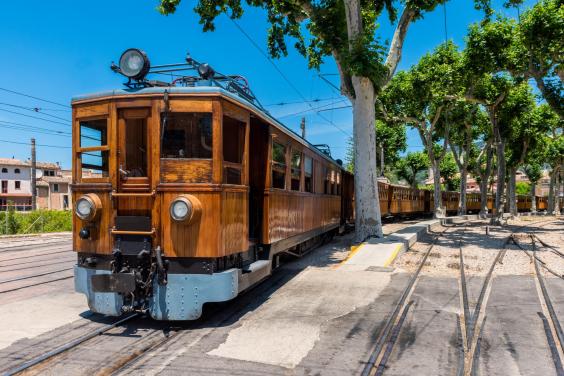
Jump on the vintage Soller train  (+34 971 75 20 51; trendesoller.com) from Plaça de España (22). It's a 7km trip which rises up to 199 metres, crosses several bridges and covers a scenic route from Palma to the beautiful town of Soller (23), via the Mallorcan countryside and the Tramuntana mountains. 

palma-soller-tram.jpg
The vintage Soller train takes passengers on a scenic route from Palma ( iStock/ Allard)

Once you reach your destination, you can also take the Soller electric tram to the Port of Soller (24), a village and beach resort on the west coast of the island.

Travel Essentials 

Getting there

Most budget airlines fly to Palma. Jet 2 (0333 300 0404; jet2.com) operates a year-round service from London Stansted and Birmingham; Easyjet (0843 104 5000; easyjet.com) operates from Belfast, Bristol, Edinburgh, Glasgow, Liverpool, Manchester, Newcastle and all London airports; Flybe (0371 700 2000; flybe.com) flies from Doncaster Sheffield, Exeter, Southampton, Belfast, Dublin, Edinburgh and Glasgow; British Airways (0844 493 0787; ba.com) flies from London, Birmingham, Manchester, Bristol and Edinburgh. 

The city centre is located 8km from the airport (25); bus route 1 runs approximately every 15 minutes and costs €1.85. Taxis are available outside the arrivals area and are charged per kilometre; prices vary depending on time of day and there is also an airport surcharge.

Staying there

Glamorous Boutique Hotel Can Alomar (26) (+34 871 59 20 02; boutiquehotelcanalomar.com) boasts a prime location in a 15th-century listed building. With 16 rooms and suites, there is also a pool, sun terrace and spa. Doubles from €300, room only. 

palma-boutique-hotel.jpg
The Boutique Hotel Can Alomar offers modern luxury housed in a 15th century building (Boutique Hotel Can Alomar)

The boutique 57-room Nakar Hotel (27) (+34 971 72 02 23; nakarhotel.com) has been designed as an authentic Balearic guesthouse and includes a spa, roof sundeck and pool with views of the old town. Doubles from €229, B&B. 

Located off the harbour promenade, Hotel Feliz (28) (+34 971 28 88 47; hotelfeliz.com) has 44 rooms, a roof terrace, sun terrace and plunge pool. Doubles from €129, B&B.

Wednesday, 29 March 2017

Two days in Valencia: Enter this Spanish foodie heaven

Why go now?

Valencia may not immediately spring to mind when thinking about a foodie break, but the city – and indeed the whole Valencia region – is one of the top gourmet destinations in Spain with gastronomic events throughout the year. During Valencia Restaurant Week (valenciacuinaoberta.com), running from 30 March until 9 April, more than 50 restaurants offer three-course lunches for €20 and dinners for €30, with Michelin-starred places charging €35 for lunch and €45 for dinner.

What’s more, there are new flights to get you there. Ryanair started a new route from Glasgow last weekend, and a Monarch flight from Birmingham begins on June 22nd.

Get your bearings

Although Valencia is the third largest city in Spain, the main monuments and shops are walkable in a 20-minute radius around the Plaza del Ayuntamiento (1). You’ll need to get the metro or a bus to the beach – Playa de la Malvarrosa (2) is six kilometres away.  

The main tourist office (3) is at Paz 48 (open 9am-6.50pm Monday to Saturday; 10am-1.50pm (00 34 963 986422; visitvalencia.com). The Valencia Tourist Card (valenciatouristcard.com) is worth getting as it includes public transport plus discounts at museums and sights (€20 for 48 hours; 10% online discount).

Current exchange rate: £1 = €1.15

Day one

Take a view

Climb 207 steps to get to the top of the cathedral belltower (4) on Plaza de la Reina for sweeping views of ochre rooftops and glittering blue-tiled domes. It’s open daily 10am to 7.30pm April to October; admission €2.   

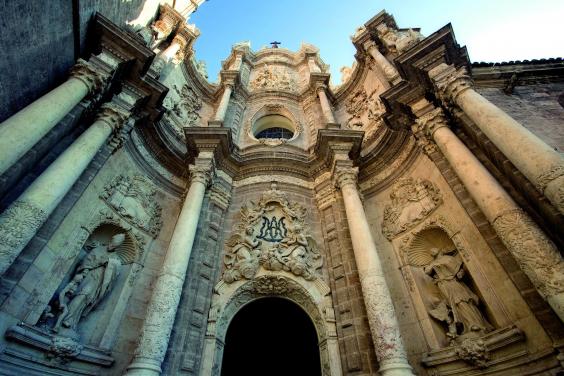
Back at ground level, the cathedral’s swirling mix of Romanesque, Gothic and Baroque architecture is a bit bamboozling to say the least. Inside the church and its museum (museocatedralvalencia.com), there are paintings by artists including Goya and a chalice that’s supposedly the Holy Grail. Open 10.30am to 5.30pm daily except Sunday; admission €7.

valenciacatedral-de-valencia-m.jpg
Valencia's cathedral is as spectacular inside as it is outside (Visit Valencia)

Take a hike

From the Cathedral, walk through the Plaza de la Virgen (5), which is surrounded by monumental buildings, including the Palau de la Generalitat, the grand 15th-century palace that houses the Valencian government.

Walk up Calle Caballeros (6) – a street flanked not only by elegant mansions but also by numerous bars and restaurants – to Plaza del Tossal (7), then turn left down Calle Bolsería until you reach La Lonja (8) in the Plaza del Mercado. The 15th-century silk exchange is one of the best examples of Gothic civil architecture in Europe and has World Heritage status. It’s open 9.30am to 7pm Monday to Saturday, when entry is €2; and 9.30am to 3pm Sunday (free entry).

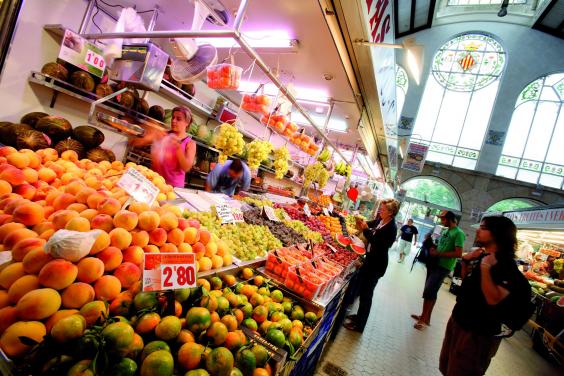
Cross over to the vast Central Market (9) (mercadocentralvalencia.es) – maybe downing a Valencian orange juice at the bar outside. Look up to see the mosaics adorning the domes, then drool at the stalls, piled high with the fruit and vegetables grown in the market gardens around the city. It’s open 7am to 3pm Monday to Saturday.

Lunch on the run

At the market, grab a stool at the Central Bar (stalls 105-131; centralbar.es) and order one of the tasty rolls, such as the Canalla with spicy morcilla sausage (€5.30). The bar is run by Ricard Camarena (ricardcamarena.com), who has a Michelin star at his eponymous restaurant in the trendy Ruzafa district (10) and is also behind Canalla Bistro (11) and Habitual (12) in the city, all of which are taking part in restaurant week.

valenciainterior-mercado-central-m.jpg
Scour the Central Market for foodie treats, then settle down for a quick lunch (Visit Valencia)

Window shopping

Most shops in the centre are open all day (until at least 8.30pm) although smaller places shut from 2pm to 5pm. From the market, head down Calle Trench to the circular Plaza Redonda (13) with stalls selling lace and haberdashery. Around the corner, Nela (14) (0034 963 923023; no web), at San Vicente Mártir 2, stocks exquisite embroidered silk shawls and handmade fans.

Start your search for summer sandals on Calle Colón (15), where shops include El Corte Inglés, Zara, Mango and Camper. For upmarket boutiques, dive off Colón into Calles Sorní, Cirilo Amorós and Jorge Juan streets. Look up at the elaborate decoration on many of the buildings, mostly dating from the turn of the 20th century.

Rest your feet with a coffee or a traditional horchata (tigernut tubers with crushed ice and sugar) at one of the cafés in the Art Nouveau Colón Market (16) (mercadocolon.es) on the corner of Jorge Juan and Cirilo Amarós.

An aperitif

Drop into Café de las Horas (17) (cafedelashoras.com) at Conde de Almodóvar 1, near the cathedral, where cheeky cherubs and swathes of red velvet create a baroque setting for a restorative jug of Agua de Valencia (cava, orange juice, gin and vodka; €10).

Dine with the locals

Slide across the road to Seu Xerea (18) (seuxerea.com), where Mediterranean produce gets a zingy Asian spin. During restaurant week, the special menu includes prawns with red curry and Japanese-style roast beef.

Or book ahead at Casa Montaña (19) (emilianobodega.com) at José Benlliure 69 in the Cabanyal, the old fishermen’s quarter by the sea, which is one of the best gastrobars in Spain. Cockles with seaweed and vermouth foam is one of the intriguing dishes on the restaurant week dinner menu.

valenciaseuzeura.jpg
Pop into Seu Xerea for Mediterranean-Asian fusion food (Seu Xerea/Facebook)

Day two

Out to brunch

The sacred almuerzo tradition in Valencia involves eating a sandwich or a tapa or two to prevent locals from fainting between breakfast and lunch. For a modern version, try La Más Bonita (20) (lamasbonita.com) at Cádiz 61 in Ruzafa, where the brunch menu includes a salmon, avocado and spinach roll (€8.50). Open from 8am daily.

A walk in the park

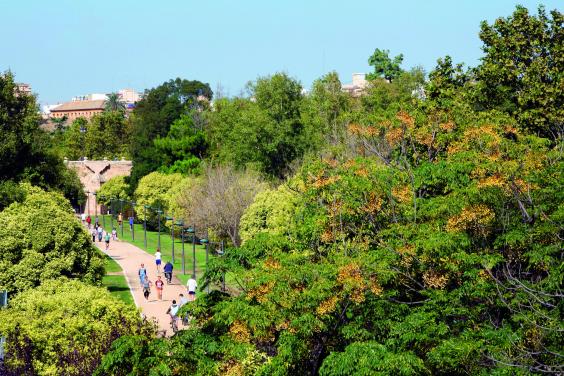
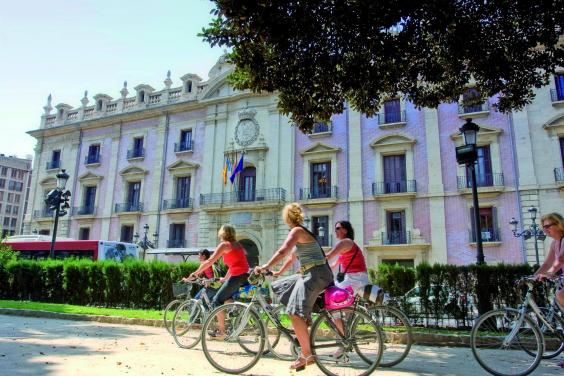
Valencians use the Jardines del Turia (21) like an outdoor gym. The park was created in the curving course of the river that flowed around the city until the 1950s, when it was diverted after severe flooding. If you feel like cycling rather than walking, rent a bike – or tandem – from Valencia Bikes at Passeig de la Petxina 32 (22) (valenciabikes.com; €5 an hour).

valenciajardines-del-turia-1-m.jpg
The Jardines del Turia are the green lung of the city (Visit Valencia)

Cultural afternoon

The City of Arts and Sciences (23) (cac.es), designed by Santiago Calatrava (who was born in Valencia) is a mind-boggling complex of sculptural structures. The planetarium resembles a human eye, while the Príncipe Felipe science museum is a lopsided pavilion of concrete columns. The Palau de les Arts opera house looks like a cycling helmet with a fishbone arching over the top. With swooping parabolic arches, the Oceanogràfic is an elegant aquarium with belugas, walruses and sharks. The complex is open from 10am until dusk (check website for seasonal hours); entry costs €8 per museum or €37.40 for a general pass.

Take a ride

From the City of Arts and Sciences, get a number 19 bus from Plaça d’Europa (24) down to the Mediterranean, where the beach extends north as far as the eye can see, with cafés and restaurants lining the promenade. A single ticket costs €1.50.

valenciacicloturismo-g.jpg
Luckily Valencia's a good place to hire a bike and ride off those food-induced calories (Visit Valencia)

The icing on the cake

You have to eat paella when in Valencia – always for lunch rather than in the evening – and preferably by the sea. “Paella valenciana” includes chicken or rabbit, several varieties of beans and sometimes snails. For a seafood version, order a paella de marisco. On the promenade, the legendary La Pepica (25) (lapepica.com) is where Ernest Hemingway used to hang out when it was simply a shack on the beach (paella from €14.40pp). For something more low-key, keep walking to the family-run Casa Ripoll (26) (casaripoll.com).

Travel essentials

Getting there

British Airways (ba.com) flies to Valencia from Gatwick from £86 return; easyJet (easyjet.com) from Gatwick and Luton from £60 return); Ryanair (ryanair.com) from Stansted, Manchester, East Midlands, Glasgow and Dublin from £40 return. Monarch (monarch.co.uk) starts flying from Birmingham in June from £50 return.

A taxi to the centre takes around 20 minutes and costs about €25.  The metro (metrovalencia.es) takes 20-25 minutes and costs €3.90 – free with a Valencia Tourist Card, which you can buy from a machine at the airport tourist office or collect if you have bought one online in advance.

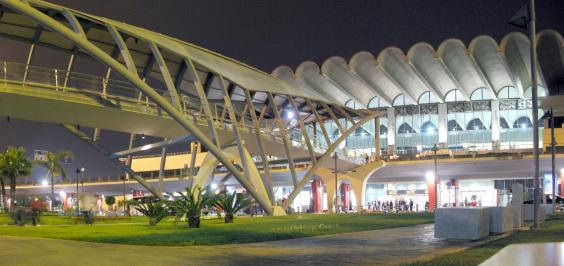
valenciaairport.jpg
Even Valencia's airport is a work of art (Visit Valencia)

Staying there

The five-star Hospes Palau de la Mar (27) (hospes.com), in an elegant 19th-century palace, has soothing minimalist rooms, a superb spa and is close to the Jardines del Turia and the shops. Doubles from €248, B&B.

The pretty Balandret (28) (balandret.com) is right by the beach with 21 rooms in shades of blue and grey and a good restaurant. Doubles from €100, B&B. 

With a handy location on the central Plaza del Ayuntamiento, the Casual Valencia Vintage (29) (casualhoteles.com) has chic rooms – all different and some big enough for families - featuring retro artworks. Doubles from €70, B&B.

Sunday, 26 March 2017

48 Hours in Biarritz: restaurants, hotels and places to visit

Travel essentials

Why go now?

With British Airways re-starting flights from Heathrow this summer, the biggest resort in south-west France is easier than ever to reach. Biarritz has its origins as a fishing port, but in the past couple of centuries it has acquired plenty of style while welcoming the rich and glamorous from France and beyond.

Touch down

BA (0344 493 0787; ba.com) flies from Heathrow; easyJet (0330 365 5000; easyjet.com) from Gatwick; Ryanair (0871 246 0000; ryanair.com) from Stansted; and Flybe (0371 700 2000; flybe.com) from Birmingham and Southampton.

Biarritz airport (1) is just two miles east of the city. Turn left out of the terminal and walk for a few minutes to find the stop for bus 14, which runs approximately half-hourly to the town centre for just €1 (or buy a 24-hour pass for only €2). It terminates close to the tourist office (2), which occupies a peach-coloured mansion beside Square d'Ixelles (00 33 5 59 41 59 41; tourisme.biarritz.fr; 9am-7pm daily in July and August).

By rail, Biarritz is nine or 10 hours from London St Pancras on Eurostar (03432 186 186; eurostar.com), requiring a change of stations from Gare du Nord to Montparnasse. Through fares are typically £250 return in summer.

shutterstock_113915401.jpg
(Shutterstock)

Biarritz rail station (3) is inconveniently located two miles south-east of the city centre; bus 8 covers the ground every 20 minutes or so for €1.

Get your bearings

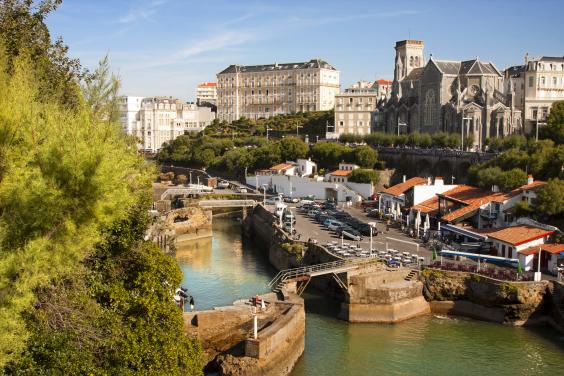
The last big resort in south-west France before the Spanish border, Biarritz decorates a serrated sweep of the Côte des Basques. The main beach is the Grande Plage (formerly Plage de l'Impératrice, until the Second Empire collapsed). Its north-east end is marked by the lighthouse known as the Phare de Biarritz (4). At the south-west end of the beach, a thumb of land sticks out into the Atlantic; this is the oldest part of Biarritz, crowding around the horseshoe-shaped Plage du Port-Vieux (5). Further south, the Plage de la Côte des Basques extends towards the Spanish frontier. 

Inland, Place Georges Clémenceau (6) has the strongest claim to be the hub of the town.

Check in

Wherever you end up staying, you should certainly visit the Hôtel du Palais (7). It occupies a prime tract of seafront real estate at 1 Avenue de l'Impératrice (00 33 5 59 41 64 00; hotel-du-palais.com). It is more than merely one of France's finest hotels; it is also a location with a fascinating history. Napoléon III built a villa on the site for his much-revered wife, Empress Eugénie. It burned down in 1903, and after rebuilding, reopened as a hotel de grand luxe. The price of a double room reflects the four-star quality: around €400-€500 per night double, excluding breakfast.

The small, friendly if slightly cramped three-star Hôtel Palym (8), at 7 Rue du Port-Vieux (00 33 5 59 24 16 56: hotel-palym-biarritz.fr) has double rooms for €93 or less, excluding breakfast.

The two-star Hôtel Le Bellevue (9) at 5 Avenue Edouard VII (00 33 5 59 24 17 07; hotel-bellevue-biarritz.com) has an excellent location by the Grande Plage, which helps explain its fairly high room rates of around €100 double, excluding breakfast.

Day one

Take a view

The best place from which to appreciate the scale and diversity of Biarritz is on the Plateau de L'Atalaye (10), high above the Plage du Port-Vieux. Then walk out across the footbridge to the Rocher de la Vierge (11), an outlying rock that supports a statue of the Virgin Mary and provides an excellent view of the magnificent coastline.

Next, at the art deco Aquarium de Biarritz (12), you can gaze into the world beneath the water (00 33 5 59 22 75 40; aquariumbiarritz.com). The aquarium - formerly the Musée de la Mer - has more than 5,000 creatures and a 40-foot coral reef. Get there at 10.30am (or 5pm) to see the seals being fed. In July and August, it opens 9am-midnight daily, admission €14.50.

Lunch on the run

The main street running inland from the Plage du Port-Vieux (5), Rue du Port-Vieux, is crammed with cafés and restaurants. At no 12, Le Coupe Faim (13) does a roaring trade in salads, sandwiches and crepes, with Basque xurros (churros - swirls of deep-fried dough) if you have room for dessert.

Cultural afternoon

The Musée Historique de Biarritz (14) on Rue Broquedis (00 33 5 59 24 86 28; musee-historique-biarritz.fr) occupies a former Anglican church, St Andrews, built by the British in 1876. It has been transformed into an exhibition space telling the story of the town. The porch alone is a masterpiece, constructed to commemorate the men who fell in south-west France in 1813 and 1814, during the Napoleonic Wars. Inside, it feels like a shrine to Empress Eugénie, though our Royal Family enjoys a strong showing, with an account of Queen Victoria's visit to Biarritz in 1889. It opens 10am-1pm and 2.30-6.30pm from Tuesday to Saturday, admission €4.

retrobiarritz.jpg
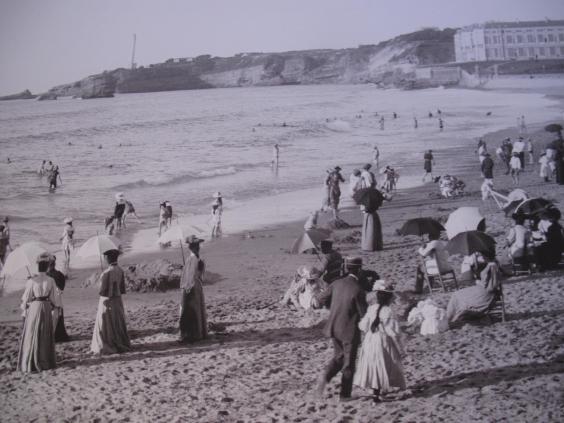
Biarritz was a popular holiday spot for Europe's high society

Go to church

The two most notable churches are open to visitors only on Saturday afternoons. The Chapelle Impériale (15) on Avenue de la Reine opens only 2-6pm, for guided tours that cost €3. Take Rue de l’Université Américaine to the Russian Orthodox Church (16) at 8 Avenue de l’Impératrice. Saturday from 3pm to 6pm is the only time non-worshippers are welcomed inside the church - which is officially named for "Alexander Nevsky and the Protection of the Mother of God".

An aperitif

Biarritz is perfectly placed for a sundowner. On the rooftop bar of the Hôtel Les Baigneuses (17) at 14 Rue du Port-Vieux, where a glass of rosé is a very reasonable €4 and a small beer is even cheaper. 

The Café de la Grande Plage (18) is actually the beach-level floor of the Casino. On the convivial terrace, you can order oysters to accompany your drink - though prices for both are among the highest in town. 

Dine with the locals

The area around Les Halles Centrales (19), the municipal market, is full of appetising options. Book in advance for Le B2 (20) at 5 Rue du Centre (00 33 5 59 24 34 66), where a short menu offers simple, tasty dishes based on locally sourced seafood and meat - such as fillet steak with Basque peppers and mashed sweet potato. Starters are under €10, mains €20.

Day two

Out to brunch

Les Halles Centrales (19) is also the best place to forage for coffee and croissants on the sabbath, with Bar Jean (21) at 5 Rue des Halles opening at 8.30am.

Take a hike

Sunday morning is an excellent time to appreciate the remarkable mix of architecture in Biarritz before the crowds gather. From the east end of Place Georges Clémenceau (6), go north along Avenue Edouard VII, which passes the Casino (18) and a small park on the left also named after the early 20th-century British monarch. The road becomes the Avenue de l’Impératrice, with the Hotel du Palais (7) dominant, and as you head north there are indulgent villas on both sides of the road.

At Mirasol (22), note the startling stained-glass façade on a maritime theme, and bear left along the Sentier des Vagues ( "path of the waves"). The path leads to a flight of steps, and halfway down you round a bend to get a tremendous view of the bay and the rocks scattered in the water – notably the hollowed-out Roche Ronde, resembling the head of a whale emerging from the waves.

A walk by the beach

Descend to the foot of the steps (23) and walk back along the Allée Winston Churchill, which runs beside the Grande Plage. Thread beneath the terrace of the Hôtel du Palais (7), then turn to admire the expansive grounds. Continue along the promenade, past the towering Casino (18) and a scattering of offshore rocks. Wander through the tiered gardens, planted with the city's characteristic fluffy tamarisk trees, to reach the Port des Pêcheurs (24) - a tiny fishing village crammed with crampottes (fishermen's huts).

Window shopping

Art and crafts from the nations of French West Africa are on sale at Le Caméléon Couleur d'Afrique (25) at 3 bis Rue du Port-Vieux, open 11am-10.30pm daily in July and August. At the inland end, Rue du Port-Vieux becomes Rue Mazagran, and a long, meandering thoroughfare of shops begins, stretching along via Place Sainte-Eugénie to Place Georges Clémenceau (6) - venue for the Galeries Lafayette (26) department store. It opens 10.30am-8pm on Sundays, from 9.30am on other days. 

Take a ride

A network of free buses shuttles around Biarritz, but the times are erratic; ordinary buses are more reliable and very cheap (€1 per ride or €2 for 24 hours). Bus 10 or 13 will take you south to the Milady district and the Cité de l’Océan (27) - the spectacular new addition to Biarritz, celebrating the city’s link to the sea. You learn about Basque fishermen’s exploitation of the North Atlantic, from Spitzbergen to Newfoundland, and the transformation of Biarritz into a glamorous resort.

shutterstock_301721753.jpg
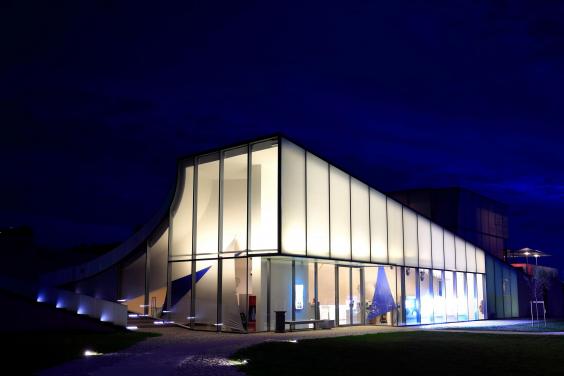
Cité de l’Océan (Shutterstock)

The icing on the cake

For a different perspective on the Côte des Basques, continue south to the fishing port of St-Jean-de-Luz (28), an antithesis to the glitz of Biarritz, with a pleasant central square ideal for a drink and dinner. By public transport from either the city centre or the Cité de l’Océan, take bus 13 to its southern terminus and then walk for about 20 minutes to Guéthary station (29), from which St-Jean-de-Luz is just seven minutes by train.