Thursday, 19 January 2017

Not just Brits and booze: How to do Paphos, Capital of Culture 2017, in two days

Why go now? 

Over the last weekend of January Paphos takes over as joint European Capital of Culture (along with Denmark’s Aarhus). The ancient port, soaked in Greek mythology and legendary birthplace of Aphrodite the goddess of love, is set around one of the most dazzling harbours in the Mediterranean. 

In a sense Paphos has already been a city of culture for more than two millennia. Throughout 2017 it will be a happening place, drawing on its classical and mythological heritage as themes for a year-long "open-air factory of culture". This will be made up of dance, musical and theatrical performances in parks, beaches and on the streets. 

Get your bearings

Paphos is out in the far west of Cyprus where the mountains meet the sea. There are two distinct sectors: Ktima, the stately old town, uphill and inland, where there are elegant colonial houses and several museums; and Kato Paphos, the main tourist area of restaurants, souvenir shops, low-rise apartments and a few British pubs scattered around the harbour.

The resident population is only about 60,000 but numbers are swollen year round by tourists. One reason it was chosen as cultural capital is because it is a 12-month destination; winters are warm, mild and generally sunny with January temperatures often nudging 20C. Summer – the peak beach season – is hot, while spring and autumn are usually cool enough for sightseeing while warm enough to swim. 

Day one

Take a hike

Stroll along the Kato Paphos waterfront (1) towards the harbour and castle, keeping the sea to your left. The east to west direction is important because it leads to the Paphos Archaeological Park (​2) (open 8am-7.30pm every day, entry €4.50) . It will take the rest of the morning to hike round the vast, Med-side ruins of Neo Pafos, an ancient city founded in the 4th century BC and the capital of Cyprus for nearly a millennium.
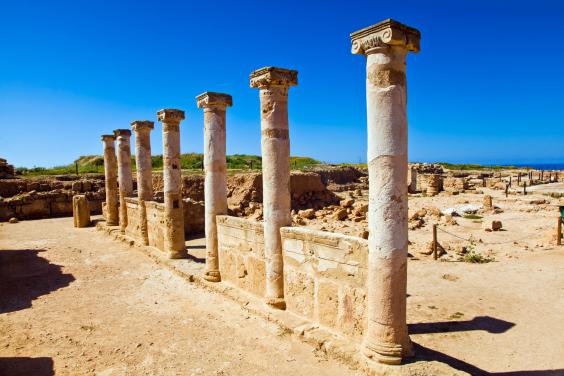
saranta-kolones-fortress-paphos.jpg
Saranta Kolones Fortress was once an impressive castle

Stop at the House of Dionysos and prepare to be mesmerised by glittering mosaic floors depicting stories from Greek mythology. It is worth taking the time to follow some of these, such as the tragic tale of Phaedra and her bizarre love for her stepson Hippolytus.   

Continue on round the park making sure not to miss more amazing mosaics at the Villa of Theseus, where the depiction of Theseus fighting the Minotaur in the labyrinth is astonishingly well-preserved and vivid. Then pass by the Agora (forum) and semi-circular Odeon theatre, on your way to wander among the arches and columns that are all that remain of the Saranta Kolones fortress, a vast Byzantine castle from the latter days of the Neo Pafos era.
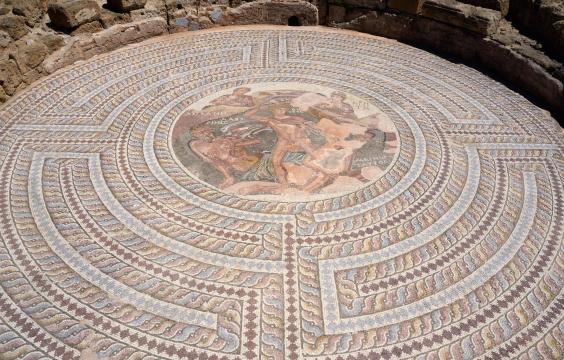
mosaics-at-villa-of-theseus-archeological-park-tombs-of-kings.jpg
The mosaics at the Villa of Theseus are not to be missed

Lunch on the run 

The archaeological park exit is bang next the harbour. Bag a table at The Pelican (3) on Apostolou Pavlou Ave 102 (00 357 26 952500; no website) by the waterside for a seafood mezze of everything from soft-shell crabs to grilled cuttlefish and freshly-landed swordfish. It is on the pricey side but the setting, looking across to the medieval castle, is unimprovable. 

Window shopping

Duck into the winding Kato Paphos backstreets (4) behind the rows of tat-peddling tourist shops along the harbourside main drag. You’ll find a bewildering amalgam of boutiques selling local jewellery, ceramics and handmade lace, all cheek by jowl with familiar-sounding department stores such as M&S or Debenhams (5). The latter is just behind the stone pillar where St. Paul was tied up and whipped for spreading the news about Jesus Christ.
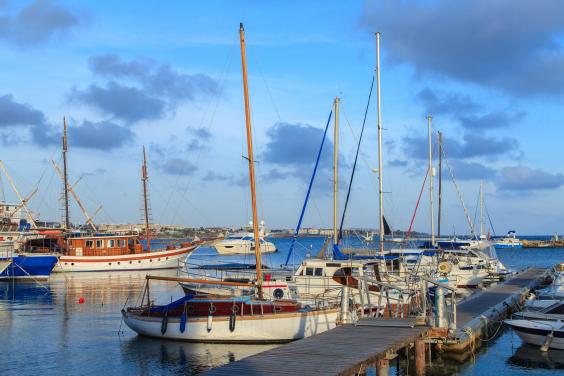
paphos-harbour.jpg
Stop for lunch at The Pelican, overlooking  Paphos harbour

The best bargains in Cyprus, however, are for spectacles. Bring your prescription, choose your frames and get a new pair in 24 hours, all for around €50-60 at any of numerous opticians. 

Some shops are closed on Sundays and on Wednesday afternoons. In summer, some close from 1-4pm for a long lunch, but stay open till 8pm.

Take a view

The Axiotheo Hotel (6), at 2 Ivis Malioti Street (00 357 2693 2866; axiotheahotel.com), set into a hillside above Ktima or 10 minutes by taxi from the harbour, has the standout panorama. You don’t have to be staying here to sip a sundowner cocktail while soaking up views over the town, coastline and Mediterranean beyond.

Dine with the locals

Ktima, the old town, is the place to dilute tourists with Cypriots. Fetta’s (7) at Ioanni Agroti 33 (00 357 2693 7822; no website) is as traditional a taverna as you’ll find anywhere in Paphos, specialising in classic local dishes such as stifad, a rich stew of beef with onions and red wine, and koupepia (various ingredients, meaty or veggie, wrapped in young vine leaves).

  • Read more

Why Manila is Asia's most bonkers capital

There is no attempt at anything fancy or fussy. If you go the whole mezze hog, you'll find it less fishy than at harbourside eateries. When booking, you can choose a table indoors or outside.

Day two

Sunday morning: out to brunch

Omikron Brunch, in a beautiful renovated old Ktima House (8) at 25 Martio (00 357 2695 5965; no website) will keep you away from the ‘Full English Served All Day’ cafés found round the harbour. Inhale aromas of fresh ground coffee and sip homemade lemonade before poached eggs on muffins served with local twists, such as crumbled feta. It’s very chic and perhaps the only place in Paphos specialising in brunch. Open every day from 7am till 10pm. 
tom-of-the-kings-edit.jpg
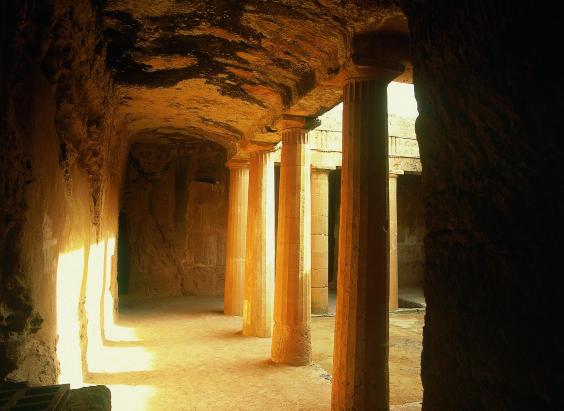
Explore excavated burial chambers at the Tombs of the Kings (Cyprus Tourism Organisation)

A walk in the park

Return to the harbour and follow the coastal path westwards. The scenery becomes increasingly wild with jagged rocks and crashing waves as you swing north round the headland. Make for the lighthouse beach bar (9) about 2km on, before retracing your footsteps. Or stop at one of the pebbly coves for a dip.

Cultural afternoon

The so-called Tombs of the Kings (10) (open 8.30am-7.30pm every day, entry €2.50) is another unmissable expanse of ancient wonders. Slightly confusingly, it forms part of the Paphos Archaeological Park (2), though the pair are separate. Scores of excavated tombs and burial chambers in soft, sandstone caves and pits dug into the ground make up this astonishing necropolis, dating from the 3rd century BC. However, they served as final resting places for local bigwigs, not royalty as the name suggests.
1969247-782621661779588-4150147002797798873-n.jpg
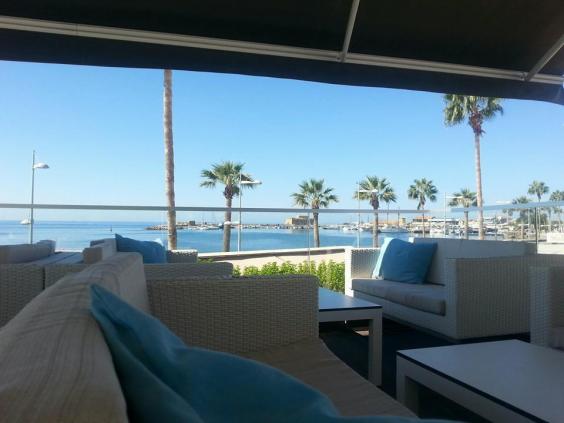
The view from Mare Mare bar, a great spot for pre-dinner drinks (Facebook)

An aperitif

As the sun sets, Cypriots sip Koumantaria, the tawny-coloured local "wine of kings and king of wines" grown in the foothills of the Troodos mountains. It is sweet, so often described as a dessert wine, but to go native try it with nibbles before dinner at Mare Mare bar (11) on Poseidon Avenue (00 357 2693 1987; no website), while watching evening colours dancing on the water.

Getting there

Paphos airport (12) is 8km south-west of town. Shuttle bus 612 runs to Paphos harbour, 613 to Ktima (both €1.50 one way). Taxis are metered and cost roughly €30, one way.

Staying there

The quieter, smarter end of Kato Paphos is east of the harbour where there is a string stylish five-star hotels. It is hard to beat the marble splendour of the Annabelle (13) (annabelle.com.cy), set in lush gardens next to a stony beach right by the waterside. Doubles from €205, including breakfast.
10934006-776312009119385-8301085012690282507-n.jpg
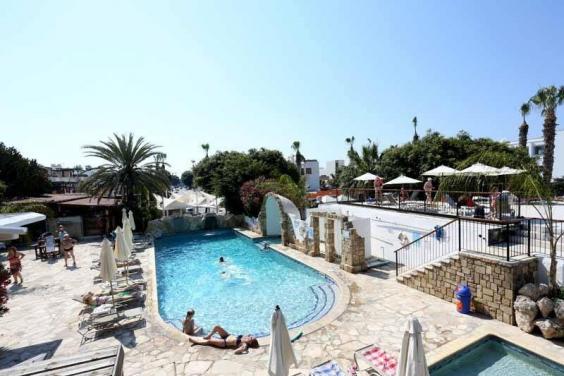
Find  Dionysos Central Hotel near Paphos Castle (Facebook)

There are plenty of mid-range options around the busier (yes, noisier) harbour area. Three-star Dionysos Central Hotel (14) (dionysoshotelpaphos.com) is moments from the castle and beach, and good value. Doubles from €89, including breakfast. 

Family-run Axiothea Hotel (15), at 2 Ivis Malioti Street (axiotheahotel.com), is a traditional little no-frills place in the old town. It makes up for the lack of pool and its distance from the sea with the warmest of welcomes, and a commanding position (see Take a view, above). Doubles from €50, including breakfast.

Expert Cyprus operator Sunvil (sunvil.co.uk) also offers three-night and seven-night breaks to Paphos, including accommodation and return flights, from £394 per person.

Thursday, 12 January 2017

How to do Manila in two days: From Trump Tower to huge steaks and the world's weirdest cemetery

Why go now?

The Philippines megacity is back in fashion for the first time since Imelda Marcos stunned the world with her insane shoe collection. Paris Hilton’s team have broken ground on her second Manila beach club, while the arrival of the Milano Residences, a Versace-designed behemoth, marks a giant leap forward for the city’s trend credentials.

They’ll be joined in early 2017 by the ultimate skyline disrupter: Manila’s poutiest new landmark, the US President-elect’s shimmering 57-storey Trump Tower. If you thought the Philippines' capital was all about chaos and monsoon rains, then think again: it’s undergoing a transformation so bonkers it may as well be screaming, “Look at me”.

Get your bearings

Manila is at its sparkling best as seen from 71 Gramercy (1), a fantasy 71st-floor rooftop bar in Makati (115 D Tuazon, 00 63 917 809 4093; 6pm-6am), the city’s hyper-realised business and shopping district and one of Metro Manila’s 16 satellite towns. 

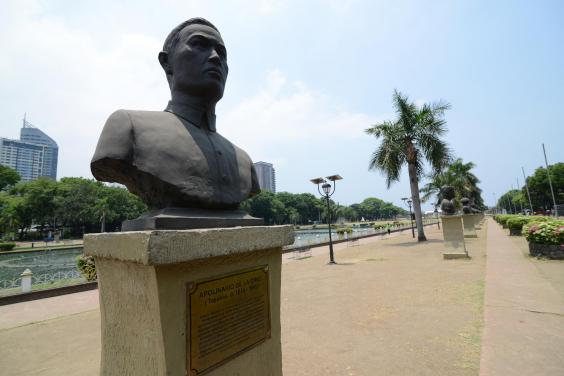
To the north, hidden by towers and the perpetual fug of a traffic-fuelled haze, lies Intramuros (2), the medieval Spanish walled city and historic focal point for government and trade. To the fort’s south, the city’s green lung, Rizal Park (3), is home to ornamental gardens, fountains and a pantheon of national hero statues. Dwarfing them, modern Manila continues to shoot up at pace, the Second World War-battered centre now cradled by wave after wave of concrete shards, residential blocks and unfinished Jenga-like condos.

Day one

Take a hike

Begin a morning stroll in Intramuros (2) when it’s still cool. At this time, the tricycle guides are snoozing and the vintage horse-drawn carriages are tied up, so you won't get hassled.

View the distinctive façade of the San Augustin Church (4), originally made of bamboo, then head towards nearby Santa Lucia Street to ogle the likes of Ferdinand Marcos and his cronies at the Philippine Presidents’ Gallery (5). Conspicuous by his absence from the series of outdoor sculptures lined up against the crumbling fort walls is current President Rodrigo “The Punisher  Duterte”, who continues to cause international outrage with his hardline crackdown on the drug trade.  

gettyimages-165106199.jpg
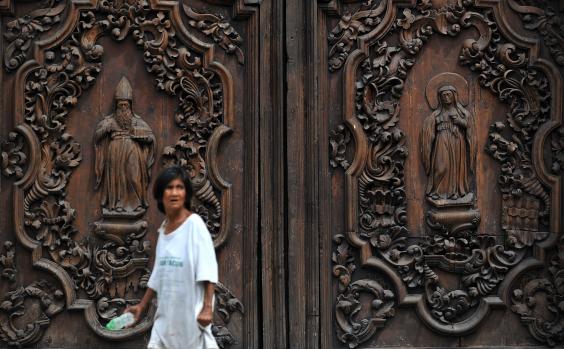
The intricately carved doors of San Augustin Church ( Getty)

Farther north on Plaza de Roma, you’ll find the eighth reincarnation of Manila Cathedral (6), a church that simply refuses to go quietly. Damaged by fires, destroyed by typhoons and earthquakes, and a casualty of war during the Battle for Manila in 1945, it’s a testament to the dogmatic spirit of Filipinos, one of the most devoutly religious peoples you’ll ever meet. As a reminder you’re still in the tropics, its wrinkled masonry brow is pierced with stone-carved pineapples.

Lunch on the run

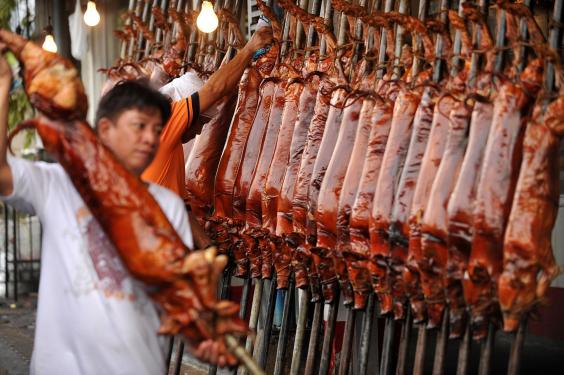
In the Philippines they swear by lechon, one of the world’s unhealthiest national dishes. A fatty suckling piglet soaked in salty soy then barbecued until cherry red, it’s served on street corners throughout the country. For a sleeker, stiff-upper-lip version, drop in to Ilustrado (7) (ilustradorestaurant.com.ph; dishes from £6.50), a restaurant steeped in old-world charm where the speciality is also kare kare, an oxtail and tripe stew drowned in sticky peanut sauce.

gettyimages-107862203.jpg
The Philippines' favourite street snack is lechon, fatty suckling pig ( Getty)

Window shopping

Across the courtyard you’ll find General Luna Street and Si-lahis Arts & Artifacts (8) (silahis.com; 10am-7pm), a colonial townhouse of antiques and local treasures where time seems to have stopped. Spread across its four floors are beautiful masks from the island of Palawan, intricately woven baskets, hand-spun textiles and beady-eye statues, most of which are never going to fit in your suitcase.

An aperitif

To mingle with local millennials, hop in a taxi to the new go-to destination Fort Bonifacio (9) before the city’s unbearable rush hour crush ruins your plans. Here modern Manila shows off its best hipster face, no more so than on Burgos Circle (10), a precinct crammed with US-influenced beer bars, smokehouses and burger joints.

12246856-10153286380112709-9067091364188502922-n.jpg
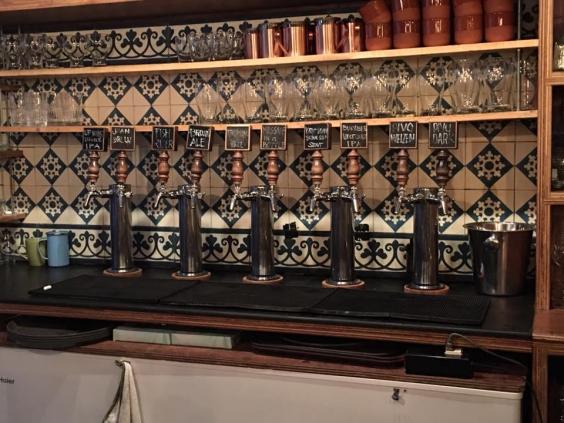
The line-up of craft beer taps at brew bar Big Bad Wolf (Facebook)

Two to try for Filipino beer-food pairings are Big Bad Wolf (11) (Forbestown Rd, 00 63 2 822 5833; 11am-2am) and The Perfect Pint (12) (32nd Street, 00 63 2 823 1320; 10am-2pm). Also highly worth sniffing out are devilishly-good beers from the all-female run Palaweño Brewery, available at both of these bars. 

Dine with the locals

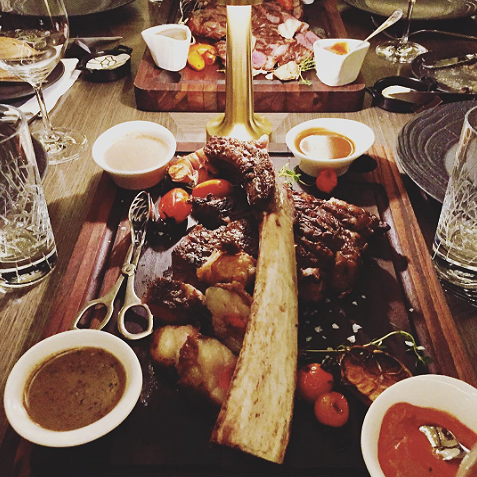
Unlike other South-East Asian capitals weaned on noodles and broth, Manila is all about the meat, preferably when served up in slab-size portions. That explains the wall-to-wall well-heeled Manileños dining at Raging Bull Chophouse and Bar (13) (ragingbullchophouse-fort.com; dishes from £27), a new steakhouse only a short walk along 28th Street. While it firmly has its roots in 1930s New York (cue monochrome tiles, couchette booths, a lamp-lit whisky bar, and Art Deco fittings), the beef is grain-fed, dry-aged Australian and all kinds of good.

15826274-2207772832782180-8924285862618182374-n.png
A 1.1kg Tomahawk wagyu steak at Raging Bull Chophouse and Bar (Facebook)

Day two

Sunday morning: out to brunch

Swamped with food markets, feng shui shops and faded temples, the neighbourhood of Binondo (14) is said to have been home to the first Chinatown in the world. There is no escape from this on Ongpin Street where the dim sum dumpling is king, so give in to a no-frills teahouse such as Mei Sum Tea House (15) (965 Ongpin Street; dim sum from £1.50) or President Tea House (16) on Salazar Street (mains about £3.50). They’re both survivors from a different era, but few places in the city remain better for a Cantonese blow-out. 

A walk in the park

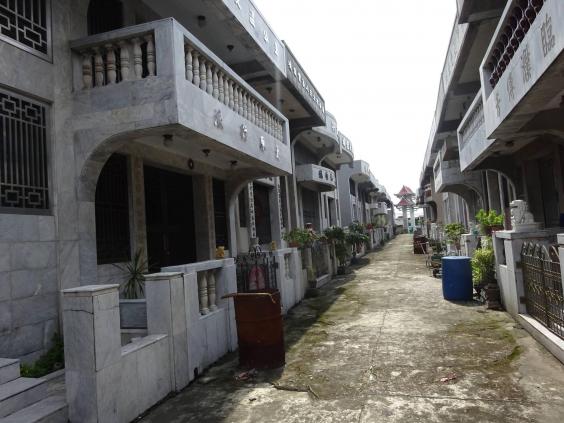
The mind-boggling Chinese Cemetery (17) north of the Pasig River (take the LRT train to R. Papa Station; 7am-7pm) is barmy on two counts: first, the deceased are buried in lavish mausoleums and tombs with every modern convenience imaginable (some even with working toilets, crystal chandeliers, and air con units); second, the graveyard has a sizeable population who live side-by-side with their dead relatives in homes within the cemetery. Book with Old Manila Walks (oldmanilawalks.com; £15) for a highly-recommended walking tour to suss out what the heck’s going on. 

11222104-1228913773836040-998040503303398773-o.jpg
Mausoleums at Manila's boggling Chinese Cemetery (Facebook)

Take a ride

The cobbled backstreets of Intramuros (2) are best explored by bike, especially on one made of bamboo. The brainchild of Filipino-American Bryan Benitez McClelland, Bambikes are made using a sustainable knit of bamboo and abaca twine and he champions fair-trade labour and sustainable building practices (bambike.com; rentals £3.20 per hour; guided tours £20; 10am-12.30pm or 3-5pm). 


Special delivery! #Bambino by @bambike #Bamboobike #handmadeinthephilippines

A photo posted by Bryan Benitez McClelland (@bambryan) on


For the perfect tour, weave through the streets from the Bambikes workshop on Plaza San Luis (18) to Fort Santiago (19) for the backstory on national hero Dr José Rizal (Santa Clara Street; £1.20; 8am-6pm). From here, double-back via the world’s oddest Starbucks (20) inside a disused prison cell built into the city walls (corner of Muralla Street and Magallanes Drive; 9am-9.30pm) for a spritely circuit of the attractions and chess club tournaments of Rizal Park (3).

17106987229-bef3f0ef8f-k.jpg
Indulge in a spot of people-watching at Rizal Park (Jorge Lascak/Flickr/CC BY 2.0)

Cultural afternoon

Manila is characterised by four seasons: hot, hotter, wet, and super wet. Which makes an afternoon wandering the air-con galleries at the Ayala Museum (21) (ayalamuseum.org; £7) in Makati an easy sell. A labour of love for the Zóbel de Ayala family, arguably the richest in the country, it’s dedicated to Filipino culture, ethnography and art. The stand-out exhibit is the Surigao treasure, a dazzling hoard of more than 1,000 pieces of pre-conquest gold.

The icing on the cake

It has to be the crazy-as-cuckoo Coconut Palace (22) overlooking Manila Bay. Built by Imelda Marcos to impress Pope John Paul on his papal visit in 1981, the £30m presidential residence is so fanciful and extreme – everything in it is designed as an homage to the fruit, including a ridiculous 101-coconut-shell chandelier – it did exactly the opposite. The pontiff ended up staying in a far more modest hotel in Intramuros (2), but the palace still endures: a legacy of the crackpot rule of the Marcos family. It opens for erratic tours, so check first with your hotel.

gettyimages-165106101.jpg
Coconut Palace, which proved too over the top for the Pope ( Getty)

Travel essentials

Getting there

KLM flies to Manila via Amsterdam from several UK airports, including London, Birmingham, Manchester, Glasgow, Edinburgh and Cardiff (klm.com; returns from £498). Ninoy Aquino International Airport (23) is 12km south from Manila’s historic centre Intramuros (2). 

There is limited public transport to and from the airport, so the only real option is to bundle into a taxi. Fares should cost you no more than £7, with a one-way taxi ride to Makati costing £5. The three LRT and MRT train lines that intersect the city are a little clunky, but can be a handy way to avoid sitting in traffic (30p). Just don’t think about using them during rush hour, which is 6am to 10am and 3pm to 8pm; they become unbearably choked with commuters. 

Staying there

The shiny new Shangri-La at the Fort (24) (00 63 2 820 0888; shangri-la.com) on 30th Street in Fort Bonifacio opened in mid-2016 and fuses high-rise glamour with luxury frills. What’s most impressive is not the army of concierges, heated pools or health club, but the views (and free canapés and cocktails) from the executive Horizon Club on the 40th floor. Doubles from £205, B&B.

1913695-1248605278502773-50505565171662404-n.jpg
Cool off at Manila's five-star Shangri-La at the Fort (Facebook)

Celebrating its centennial next year, the Belle Époque-style Luneta Hotel (25) (00 63 2 875 8921; lunetahotel.com) is a grand old dame overlooking Rizal Park (3). Despite the years, there’s no sign of any blips, wear or tear. For sunset romance, take the lift to its rooftop cocktail bar, which overlooks the glory of all that colonial-era Manila madness. Doubles from £68, B&B.

Few hostels in the Philippines are as switched-on to budget travellers as Pink Manila (26) (00 63 2 484 3145; pinkmanilahostel.com). It’s heavy on backpacker quirks, but also comes kitted out with penthouse views of the city, a pool and an enviable terrace to laze away the muggy afternoons in a hammock. From £8 for an eight-bed shared dorm.

Monday, 9 January 2017

The Best Places To Travel If You’re Vegan

It’s January, and it’s ice-cold, so we’re assuming you want to book a holiday to escape those dreaded blues. But you’re also vegan, which means that choosing a destination where you’ll get to fully immerse yourself in the cuisine may be tricky…

Veganism is definitely on the up for 2017, though, which means it’s getting much easier for you to travel without having to worry about what you’ll eat. So, in honour of veganuary and making New Year’s resolutions, here’s a list of the most vegan-friendly destinations – from Majorca to Vietnam – to help you plan your next vacay. Some of them might surprise you.

Majorca

Sun, sea and seriously good parties are usually what springs to mind when you first think of Majorca. But what you might not know is that it’s a growing destination for vegans. And with vegetables being the staple ingredient for most dishes, it’s no wonder the vegan-friendly menus are something to shout about.

We think Palma is one of the best places to visit in Majorca if you’re vegan. There are heaps of cafés, tapas bars and Spanish restaurants to choose from here. Why not go for a late brunch at Bagel Café? You’ll get to start the day with croissants, bagels, and pastries – all gluten-free of course – for a reasonable price of two to eight euros. Not to mention it’s a really trendy place, too.

palma

Thailand

You’ll hit the vegan jackpot in Thailand. Did you know being vegan is deeply linked to the practise of Buddhism? This means it’s really easy to find vegan-friendly food in the land of smiles. The base of most dishes are rice and noodles, with lots of vegetables, and absolutely no cheese, butter, or milk. Meat is only a small part of Thai meals, too, so it can easily be removed without affecting the taste of your supper.

When you’re looking for places to eat, all you need to do is look out for a bright red and yellow sign that looks like the number 17 – it’s the national symbol for vegan. You’ll find it plastered outside restaurants, on street stalls and even on the food packaging in 7-Eleven.

The Hill Tribe restaurant in Khao Lak is one of our vegan-friendly favourites. True to its name, it’s an open-air eatery surrounded by a tropical garden. And the menu is nothing short of impressive, either. The menu lists things like vegetable soups, fragrant curries, and banana fritters, to name a few.

There are loads of other vegan-friendly dishes to sample in Thailand, including vegetable spring rolls, tom yum mushroom soup, salads, pad thai and fried tofu.

thailand-pic

Vietnam

Being vegan in Vietnam is a breeze. Similarly to Thailand, a lot of the Vietnamese locals are Buddhist, so vegan food isn’t hard to come by.

Most of the dishes here are packed with fresh herbs, spices and sauces that are completely vegan-friendly. Pho – also known as noodle soup – is the most common meal here. You can eat it at any time of the day, and you can add in as many or little toppings as you wish. Tofu is really popular, too. You might be surprised to learn that it’s used in custard, which is particularly delicious. Eggplant is another really popular ingredient in Vietnam. It usually comes garnished in toasted peanuts, soy sauce and garlic. Banh mi is another national favourite that you won’t miss out on. It’s a baguette-style sandwich packed with loads of vegetables, fried tofu and garlic sauce.

When you’re eating out in Vietnam, a street stall is your best bet for an unforgettable meal. They’re dotted on almost every street corner, plus you can sit with the locals on tiny chairs and tables. Did we mention how cheap it is, too?

vietnam_1

Kuala Lumpur

Kuala Lumpur is home to over 100 vegetarian and vegan restaurants, so it’s a paradise for vegan foodies. The cuisine is really diverse, too. In neighbourhoods like Brickfields, you’ll find everything from Chinese, Indian, Korean, Malaysian and Thai food to nibble on. Plus, there are tonnes of street food stalls as well as high-end restaurants which mean your budget won’t suffer, either.

And in terms of where to eat, we think De Health Paradise Organic – in Taman Desa – is definitely worth a visit or two. The name of the restaurant is a bit of giveaway. All of the ingredients are locally sourced, and the menu is almost completely vegan. Some of the most mouth-watering dishes here include pumpkin with green mango and carrot pickles, all lavished in a sesame and mushroom paste topping. Yummy. The drinks menu is just as intriguing, too. You can pick from vegetable juices, apple cider vinegar drinks and specialty detox teas. And if that didn’t impress you, there are tonnes of events here, including health talks, detox workshops and cooking sessions which you can attend.

kl

Ready to book your vegan-inspired getaway? Check out our First Choice holidays.

Thursday, 5 January 2017

48 Hours in Shanghai: hotels, restaurants and places to visit

Travel essentials

Why go now?

Shanghai is easy to reach and to find your way around, yet reveals many glimpses of life in the People’s Republic. And from this summer, there are more flights than ever from the UK, with 24 departures a week from Heathrow – and countless connections from other airports.

Shanghai is also an excellent stopover for anyone planning a trip to the Far East or Australia; you can now build in a visa-free stay of up to six days, thanks to the 144-hour transit option available for passengers travelling on to another country. This is an excellent way to avoid the high price of a regular tourist visa for China, currently over £150.

Touch down

British Airways flies 10 times a week from Heathrow to Shanghai’s Pudong airport (1), while China Eastern and Virgin Atlantic go daily. The journey takes about 11 hours. The airport is a modern, efficient gateway, and public transport on the 23-mile run from the airport to the city centre is good.

The world's fastest train, the Maglev, runs every 15-20 minutes from the airport’s station to Longyang Road station (2), which is still some distance from the city centre. The 267mph top speed is attained only by a few trains, in mid-morning and mid-afternoon at other times the maximum is 186mph. The one-way fare for the ride is 40 yuan (£4.20), so long as you show a boarding pass for a recently arrived flight.

In terms of hassle, it’s actually a lot easier to __travel the whole distance by Metro line 2, which also has a station at the airport and costs only 7.50 yuan. Even on the Metro you have to change at Longyang Road (2), though it is a cross-platform switch and much simpler than the complicated journey from the Maglev station to the Metro at this junction.

At the time of publication, £1 = 9.50 yuan and $1 US = 6.50 yuan. Yuan is also written CNY (the international code for Chinese yuan) or RMB, the abbreviation for renminbi “people’s money”.

Get your bearings

The Huangpu River a quarter-mile wide, yet a mere tributary of the Yangtse divides the city into Shanghai proper on the west bank and the Pudong district to the east. Most locations of tourist interest are on the western side beginning with The Bund (which rhymes with fund), the waterside boulevard with historic buildings on its western flank.

The main drag west from here, East Nanjing Road, leads to the top end of the vast People’s Square. The continuation, West Nanjing Road, is lined with skyscrapers and shopping malls. To the south-west, the French Concession the district assigned in the 19th century to traders from France is the most chic and European area.

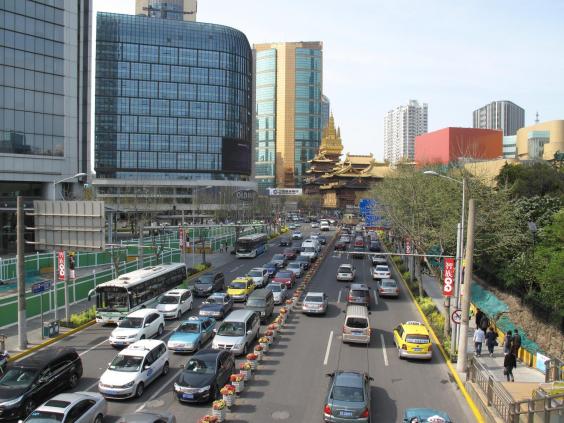
Even though the city is vast, the excellent transport network makes it readily accessible. The Metro system is as extensive and easy to use as the London Underground, though much cheaper: most city-centre journeys cost 4 yuan. The hub of the networks is People’s Square station (3), where lines 1, 2 (for the airport) and 8 converge. 

Taxi drivers are knowledgeable and honest, though it helps to have your destination written down in Chinese characters. A three-mile trip costs around 20 yuan.

ShanghaiHighway
One of the city's main arteries (Simon Calder)

Check in

Compared with other world cities, prices for hotels with heritage in Shanghai are low. The top choice place to stay, for style if not location, is the Moller Villa Hotel (4) a Norwegian-style fantasy in luxuriant grounds at 30 Shaanxi Road (00 86 21 6247 8881; mollervilla.com). A “superior” room costs 1,725 yuan (£180) for a double, excluding breakfast

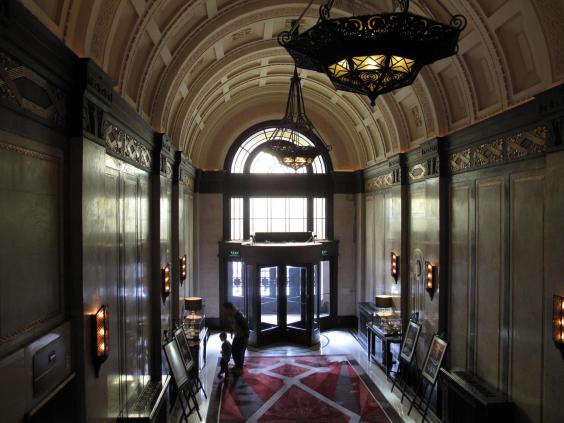
Right at the centre of Shanghai life is the Park Hotel (5) at 170 West Nanjing Road (00 86 21 6327 5225; parkhotelshanghai.cn). The first high-rise in Shanghai, it was designed by the Hungarian architect Ladislau Hudec who was a First World War prisoner in Siberia but escaped and made his way to China. Its four-star rating is ambitious, and the double-room rate of 1,396 yuan excluding breakfast is expensive, but lovers of Art Deco may think it well worthwhile.

A third historic property, right on The Bund, is the Fairmont Peace Hotel (6)  arguably with the best address in town, at 20 Nanjing East Road (00 86 21 6138 6888; fairmont.com). Inside, many of the original 1920s features have been preserved from its days as the Cathay Hotel. Rooms booked independently tend to be expensive, but as part of a package you can get an excellent price. British Airways has a deal in July for £770, including non-stop outbound flights, two nights and a return flight via Hong Kong, based on two sharing (this flight arrangement also enables you to qualify for the visa-free stay). The rooms at the Peace Hotel do not offer space and luxury in abundance, but the sense of history is unbeatable.

ShanghaiPeaceHotel
Fairmont Peace Hotel (Simon Calder)

Day one

Take a hike

… along the bend known as The Bund (and officially as Zhongshan Road), where the merchants of Europe left their mark early in the 20th century. Start at the Peace Hotel (6). Even if you are not a guest, you are welcome to visit the hotel’s small museum on the first floor (it’s difficult to find, so ask for help).

viewfromthebund.jpg
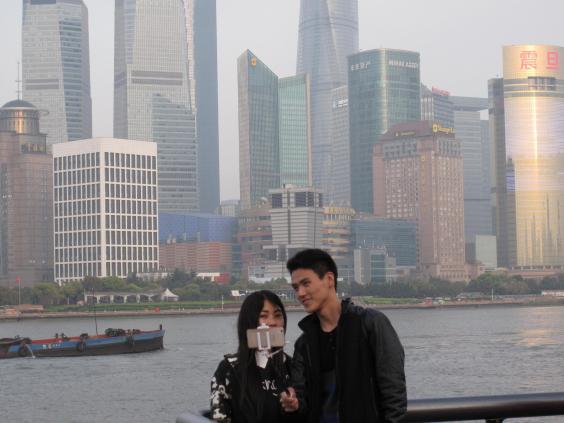
Picture this: The river view from Shanghai's historic bund (Simon Calder)

Follow the curve in the river south, past the 1922 former Chartered Bank  now an upmarket complex known as Bund 18. Just past the corner of Jiujiang Road, the elegant Russo-Asiatic Bank was the first natural stone-built building in Shanghai. The Customs House (7) at number 13 still sets the time for the city, with what was the biggest bell in Asia when it opened in 1927. 

The Hongkong and Shanghai Bank (8) at number 12 is the largest building on The Bund and was regarded, when it opened in 1923, as the most elegant structure between the Suez Canal and the Bering Strait. At the Waldorf Astoria (9) at number 2, walk in the century-old doors, glimpse the Long Bar (though you may find it gloomy and overpriced). Then walk right through the hotel, taking in the 1910 flourishes until you reach the opposite entrance on Sichuan Road.

Lunch on the run

Two blocks north along Sichuan Road, at the corner of Fuzhou Road, Shanghai Grandmother (10) is a Cantonese restaurant whose signature dish is braised pork belly with braised aubergine a lighter alternative. Prices are relatively high for Shanghai, but it is still difficult to spend more than around 40 yuan per person (less than a fiver). 

Cultural afternoon

Follow Fuzhou Road a mile west (or grab a taxi) and you reach People’s Square, whose prime sight is the Shanghai Museum (11) (00 86 21 6372 3500; shanghaimuseum.net). The 20-year-old modern structure is spectacular, with a circular gallery space atop a square base in tune with the ancient Chinese belief in a square earth and a round sky. Its slogan, “Roam Through The World Of Art In Ancient China”, sums up the experience. The collection exceeds one million objects, but fortunately only a small proportion are on display, with the bronze sculptures (ground floor), ceramics (second floor) and calligraphy (third floor) particularly impressive. It opens 9am-5pm (last admission 4pm), but there is a daily limit of 8,000 visitors. Admission is free.

An aperitif

Could the open-air Vue bar on level 33 of the Hyatt on The Bund (12) at 199 Huang Pu Road (00 86 21 6393 1234; shanghai.bund.hyatt.com) have the best view of any hostelry in the world? Even the approach, in a glass-sided lift, is breathtaking. Admission is 100 yuan, which includes a beer, glass of wine or soft drink. You may need to linger over it; the bar opens at 5.30pm, and although the optimum time to be here is sunset, it can be tricky to find a good table if you arrive too close to dusk.

Dine with the locals

Celebrating locals, out-of-town Chinese tourists and Western expatriates congregate at Lao Beijing (13) at 1 South Henan Road  basically a vast Peking duck restaurant concealed inside what looks to be a forbidding Communist monolith. Duck is the speciality, served theatrically by extravagantly costumed waitresses.

For something more economical, the three blocks of South Yunnan Road (14) between Yanan and Huaihai Roads are lined with cheap and cheerful local eateries.

Day two

Sunday morning: Go to temple

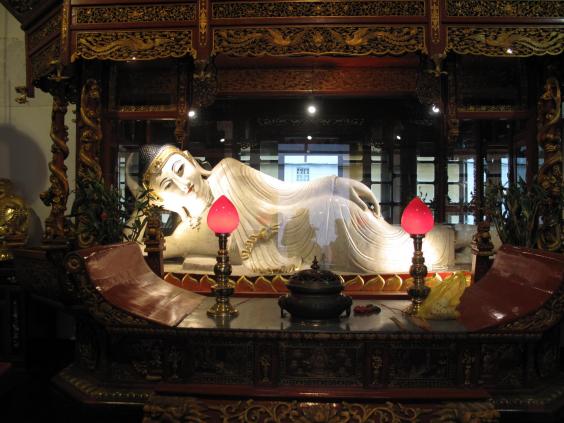
The Jade Buddha Temple (15) is a long way north-west of the centre, but well worth the cab ride to the corner of Jiangning and Anyuan Roads and the 20 yuan admission fee (8am-4.30pm) to witness one of Shanghai’s few vibrant Buddhist places of worship. The visit begins with viewing the exquisitely carved Jade Buddha itself, but the more intriguing sights and smells occur at the back of the complex, in the Incense Burning Area. Ancestors and the recently departed are celebrated with clouds of incense and the ignition of paper lanterns.

JadeBuddhaShanghai
Temple vision: the Jade Buddha (Simon Calder)

Out to brunch

From the temple, walk to Suzhou Creek (also known as Wusong River) and follow the waterway upstream to the M50 Art District (16) at 50 Moganshan Road. The paintings, sculptures and installations in this former textile mill and electrical works are as edgy as you will find anywhere in China. Furthermore there are some good places to eat, including the Bandu Cabin in Building 11, where good, strong coffee accompanies Chinese and Western treats (00 86 21 6276 8267).

A walk in the park

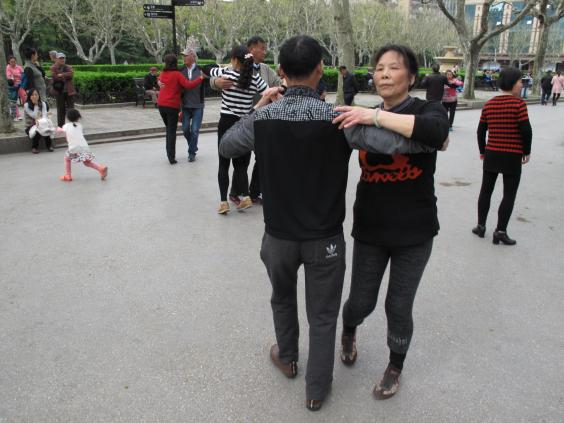
The freeways that carve up Shanghai are best appreciated from a taxi racing north to south down the North Chengdu and South Chongqing Roads to Fuxing Park (17), a swathe of green laid out in a French style  apart from the incongruous giant statue of Marx and Engels (18). You may even catch some outdoor ballroom dancing.

FuxingParkShanghai
Outdoor ballroom dancing in Fuxing Park (Simon Calder)

Just west is the former residence of Sun Yat-sen (19), the first president of republican China, and just south of that stands the handsome former villa of Zhou Enlai (20), first premier of Communist China. Both have opulent grounds, as well as exhibitions that are reverential in tone.

Window shopping

Wander east and you reach Xintiandi (21), where some of the elements of early 20th century Shanghai have been preserved and now form the premises of fashion designers. 

To experience the retail frenzy in full flow, the Flower, Bird, Fish and Insect Market (22) on Middle Xizang Road is especially engrossing.

For many Chinese, Shanghai represents a window to the West most dramatically along East Nanjing Road, the busiest shopping street in China. If you have never ridden on a spiral escalator, take the opportunity at the New World Daimuru mall (23).

Icing on the cake

Sit back in amazement at the Shanghai Acrobatic Troupe, which performs most nights at 7.30pm at the theatre in the Shanghai Centre (24) on West Nanjing Road (shanghaicentre.com). You can buy tickets on the door for 120 yuan. Or try some cut-price karaoke, known in China as KTV. At a venue such as Haoledi (25) on Xizang Road, an hour and a few beers to lubricate the larynx costs around 200 yuan.

48 Hours in San Sebastian: restaurants, hotels and places to visit

Travel essentials

Why go now?

This glamorous resort-city is European Capital of Culture 2016 (alongside Wroclaw in Poland). The honour boosts the style and appeal of San Sebastian, which has also become a gastronomic hub. In addition, the city known as Donostia in Basque gets its first air link from the UK next month, in the shape of flights from Luton.

Touch down

Twice a week from 26 July, Air Nostrum (bookable through Iberia, 0870 609 0500; iberia.com) will link Luton with San Sebastian’s dramatically located airport (1), perched beside the river which marks the Franco-Spanish border, 12 miles east of the city. The airport is connected to the city by a number of buses, of which the E21 is the fastest - it takes the autopista into San Sebastian, in less than half an hour for a fare of just €2.45. It arrives at the city’s well-concealed underground bus station (2).

If the timings or fares from Luton don’t work for you, the most direct route is via Biarritz, across the border in France. You can fly from Birmingham with Flybe (0371 700 2000; flybe.com), Gatwick with easyJet (0330 365 5000; easyjet.com), from Heathrow with British Airways (0344 493 0787; ba.com) or from Stansted with Ryanair (0871 246 0000; ryanair.com). Pesa buses (00 34 902 101 210; pesa.net) link Biarritz airport (3) with San Sebastian's bus station (2) about seven times a day, taking around 45 minutes for a fare of €7 (€13.15 return). For a prettier journey, make the 25-minute walk from the airport to Biarritz railway station (4), take the half-hour train ride to the French border station at Hendaye (5) and the narrow-gauge rail line from there to Amara station (6) in San Sebastian; the trip takes around two hours all in and costs under €10.

A third approach is via Bilbao, 60 miles to the west, which is served from Gatwick by Vueling (0905 078 1000; vueling.com), from Heathrow by BA and from Stansted by easyJet. From Bilbao airport (7), Pesa operates hourly buses from 7.45am to 11.45pm to the bus station (1). The trip takes 85 minutes and costs €17.10.

Get your bearings

The corrugated Basque coastline is punctuated by two towering headlands: Monte Igueldo (8) to the west and Monte Urgull (9) to the east. Between them lies the scallop-shaped bay of La Concha (“The Shell”), offering a long, broad, safe and sandy beach. Santa Clara island (10) stands between the shore and the Bay of Biscay. The tightly knitted and slightly skewed grid of streets comprising the Parte Vieja (Old Town) sits beneath Monte Urgull, and extends east to the Urumea river. At the heart of the Old Town is the Plaza de la Constitucion (11) - a lovely square with predictably good coffee opportunities, and numbers on the upper galleries from the days when it was used as a bullring.

Across the river to the east, the Gros district extends inland from Zurriola beach. To the south of the Old Town, Centro is the main commercial district. Between is the wedge-shaped Alameda del Boulevard, with the tourist office (12) located on the north side at number 8 (00 34 943 48 11 66; sansebastianturismo.com). From this week it opens 9am-8pm daily (10am-7pm on Sundays). 

Check in

The Hotel de Londres y Inglaterra (13) perches haughtily on the seafront at Calle Zubieta 2 (00 34 943 44 07 70; hlondres.com). It was built in 1865 as a summer residence for Queen Isabel II - who had a skin condition that she treated with sea water in San Sebastian. The monarch was chased out in the Glorious Revolution of 1868, leaving the property to serve as casino, hospital and finally a 148-room hotel. It has been upgraded in the past few years and now styles itself a boutique hotel. Advance rates for June are typically €232 double, excluding breakfast. The hotel’s loyalty scheme, which is free to join and gives a 4 per cent discount for direct bookings, is called the Mata Hari Club, after one of the hotel's past guests. Another famous visitor was Toulouse Lautrec.

The Hostal Alemana (14) occupies part of a large, elegant building at Calle San Martin 53 (00 34 943 462 544; hostalalemana.com), and is clean, friendly and comfortable; furthermore, the peak-season double-room rate is a relative bargain at €150 without breakfast.

For lower budgets, there is a good choice of pensiones and hostales in the Old Town and Centro. When San Sebastian fills up, a good option is to the south of the city beside the football stadium. The Hotel Anoeta (15) at Paseo de Anoeta 30 (00 34 943 45 14 99; hotelanoeta.com) is a well-run and comfortable budget option about a half-hour walk from the Old Town. I paid €121 for a twin room without breakfast.

Day one

Take a view

From the north-west corner of the Old Town, beside the fishing port (16), ascend the steps towards Monte Urgull. You reach a path which you follow west to the Paseo de los Curas (17) - an excellent platform for views across La Concha to the city and the hills beyond. Then you can zig-zag up towards the summit. Or continue on a circuit of the headland, passing an old British war cemetery (18) - where some of the servicemen who died in the two-month Siege of San Sebastian in 1813 are buried; the British and Portuguese ejected the French occupiers, but most of the Old Town was destroyed in the aftermath.

Take a hike

At 11am each morning (weekends only in winter), an English-language guided walk called San Sebastian Esencial departs from the tourist office (9), price €10. The fascinating two-hour tour focuses on the Old Town and includes a sneak preview of the San Telmo Museoa (19) (see Cultural Afternoon below).

san-sebastian-old-town.jpg
The Old Town (Shutterstock)

Out to lunch

Just along from the tourist office (9), the historic Brexta market (20) has dozens of stalls selling local produce, from which you could assemble a picnic. Or pull up a stool at the curving counter of the market’s Bar Azkena if you prefer someone else to prepare your lunch. You could have your first taste of pintxos (like tapas, but more substantial) or just order a slice of the excellent tortilla.

Window shopping

Retail central comprises the southernmost three blocks of Calle Loyola, the parallel Calle Fuenterrabia and the perpendicular Calle San Martzial. To reach the area from Alameda, follow Calle de Hernani and its continuation, Loyola, towards the soaring, neo-gothic Catedral del Buen Pastor. Stop at the Mercado San Martin (21), a 21st-century replacement for the old 19th-century market, with a curious mix of major European brands such as Zara and Fnac alongside stalls selling Basque gastronomic delicacies.

Cultural afternoon

A decade ago, the San Telmo Museoa (19) occupied a cloistered 16th-century Dominican convent snuggling up to the base of Monte Urgull at Plaza de Zuloaga 1 (00 34 943 48 15 80; santelmomuseoa.com). Today, it still does - but it has expanded dramatically into a 21st-century exposition of Basque culture. It opens 10am-8pm daily except Mondays, admission €6 (free on Tuesdays).

An aperitif

You could spend a fortnight in San Sebastian and never go out for a proper dinner, thanks to the variety - and value - of pintxos. Calle 31 de Agosto is the street with the highest concentration of options. 

On the corner of Calle Mayor, Atari (22) offers the option of standing at the bar and picking from the pre-prepared plates, or ordering from waiters. Specialities include home-cured (smoked) salmon (€3.50) and cod confit with Basque peppers (€4). To drink, try an aerated glass of txakoli, a very dry, young Basque white wine.

The bar with the densest crowds - attracted by new Basque cuisine - is La Cuchara de San Telmo (23), tucked slightly around the corner on Calle Santa Corda. Through the jostle, try to catch the eye of the bar staff to order bites of steak or tuna in heavenly sauces. Wash it down with a glass of the rough-edged local cider, sagardoa.

Dine with the locals

Back on Calle 31 de Agosto at number 31 is the fiercely red-and-black A Fuego Negro (24) (00 34 650 135 373; afuegonegro.com). The €40 tasting menu - which will generously feed two or three - includes olives with vermouth, crab with avocado and liquorice, and octopus with green apple and violet potato.

Day two

Sunday morning: go to church

The gothic Iglesia San Vicente (25) is the oldest surviving building in San Sebastian - mainly 16th-century, with 12th-century origins. Age is etched on its sandstone exterior, while inside the altar, wood carvings and stained glass are impressive. Bilingual Basque/Spanish masses take place at 10.30am on Sundays. 

Out to brunch

Few places in the Parte Vieja open before noon on a Sunday; one of the exceptions is the Maiatza Cafe (26) at Calle Embeltran 3 (00 34 943 43 06 00), which dishes up excellent coffee and tortillas from 9am. If you prefer to be by the water, the Cafe de la Concha (27) on the seafront (00 34 943 473 600) has some outdoor tables and an appetising morning menu.

Take a ride

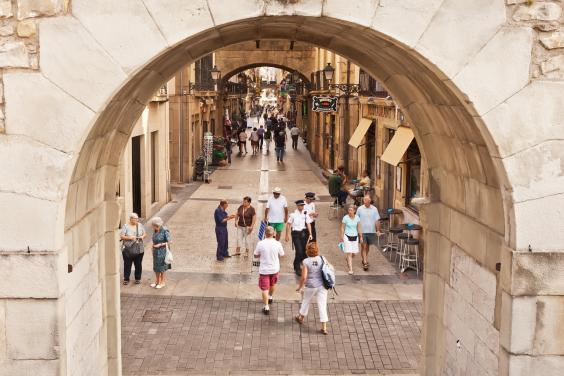
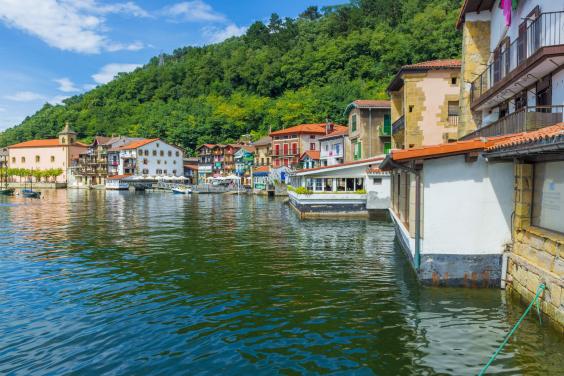
Bus E01 runs half-hourly on Sundays (more frequently during the rest of the week) from a stop on the Alameda close to the tourist office (12) out to Pasai Donibane (28), a remarkable Basque village that clings to a ribbon of flat land beside a fine natural harbour. Besides viewing some impressive architecture, you can visit the one-time home of Victor Hugo, who lived here in 1743; his house is now a museum (00 34 943 341 556), open 9am-2pm and 4-7pm daily (July and August; shorter hours at other times), admission free.

shutterstock_313285394.jpg
The village of Pasai Donibane, or Pasajes de San Juan as it's known in Spanish (Shutterstock)

A walk in the hills

Take the small ferry that shuttles across the harbour mouth to Pasai San Pedro (29). Turn right and follow the well-marked trail across the hills to San Sebastian - a journey of about five miles that takes two to three hours. It is a stretch of the Camino de Santiago, which takes pilgrims to Santiago de Compostela. This portion begins with a steep climb but soon settles into an invigorating ramble through muscular scenery, punctuated with structures such as a lighthouse and a watchtower used to spot whales. The final stretch reveals great views of San Sebastian. 

The icing on the cake

You could cool off at the end the walk by plunging into the sea from Zurriola Beach - but if San Sebastian’s unpredictable weather is inclement, you can watch some swimming rather than taking part. Continue to the Aquarium (30) beside the fishing port at Plaza Carlos Blasco de Imaz (00 34 943 440 099; aquariumss.com). From turtles to sharks, some of the seafood that is not consumed in the city's restaurants is on display in a handsome 1928 structure. The highlight is a walk-through sub-aqua tunnel. The aquarium opens 10am-8pm daily (opening and closing an hour later at weekends), admission €13.

48 Hours in Aix-en-Provence: restaurants, hotels and places to visit

TRAVEL ESSENTIALS 

Why go now?

Starting next week, the city of Paul Cézanne and Emile Zola becomes more accessible as Eurostar steps up its direct trains between London and the south of France from three to five a week. The extra departures, on Thursdays and Sundays, open up options for a weekend in a compact, civilised city as rich in cuisine as it is in culture. 

Touch down

Direct Eurostar trains (0343 218 6186; eurostar.com) run from London St Pancras to Marseille St-Charles (1). At the adjoining bus terminal, bus 50 leaves every 10 or 20 minutes, taking half-an-hour to reach Aix bus station (2) on the edge of the city centre, for a fare of €6. Alternatively, you can take a range of other Eurostar trains to Lille, and change for a high-speed train to Aix TGV station (3) - from which bus 40 runs four times an hour. The bus ride takes 15-18 minutes for a fare of €4.10.

By air, you can fly to Marseille’s Marignane airport (4) from Bristol, Gatwick, Glasgow or Manchester on easyJet (0330 365 5000; easyJet.com); from Heathrow on British Airways (0344 493 0787; ba.com); and from Edinburgh or Stansted on Ryanair (0871 246 0000; ryanair.com). The airport is actually closer to Aix than it is to Marseille, and bus 40 runs half-hourly for a fare of €8.20, taking 33 minutes to Aix bus station (2).

Get your bearings

Aix-en-Provence is 17 miles north of Marseille, where the south-western extremes of the Alpine foothills subside towards the Rhône delta. The centre is a rough diamond shape, and its dominant thoroughfare is the Cours Mirabeau. To the north of this broad and elegant boulevard is Vieil Aix, the Old Town; to the south, the remarkable Mazarin quarter, a grid of handsome 17th- and 18th-century hôtels particuliers - lofty townhouses.

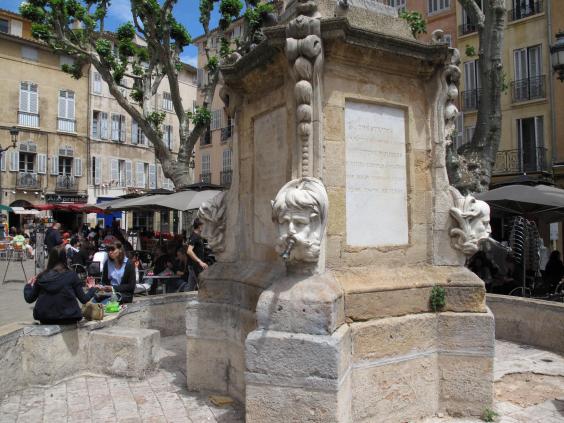
At the western end of the Cours Mirabeau is the circular Place Général de Gaulle (5), with the Fontaine de la Rotonde at its centre; note the three statues in the centre, with Justice looking towards Aix, Fine Arts towards Avignon and Agriculture towards Marseille. Just to the west location for the large and helpful tourist office (6); 8.30am-8pm daily except Sunday (10am-12 noon and 2-6pm). To the south, along Avenue Victor Hugo, is the diminutive Aix Ville railway station (7), now supplanted by the high-speed gare; to the south-west, along the Avenue des Belges, the bus station (2).

aix-en-provence104.jpg
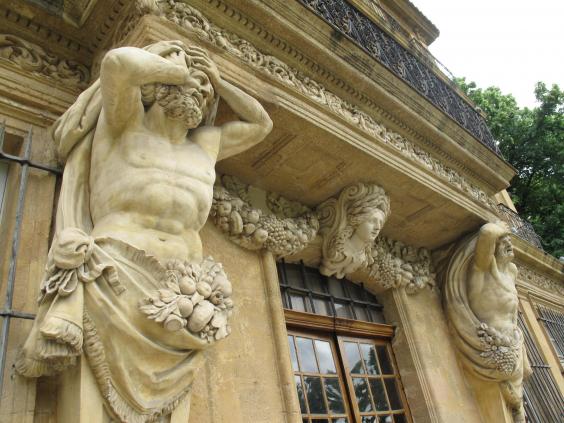
Mighty mansion: the grandiose façade of the Pavillon de Vendôme (Simon Calder)

Check in

The three-star Hôtel Saint-Christophe (8) at 2 Avenue Victor Hugo (00 33 4 42 26 01 24; hotel-saintchristophe.com) has a traditional feel and an excellent location. The exterior is Art Deco, the public areas are elegant and the 67 rooms are well-appointed. This weekend a “comfort” room with a shower is €128 (breakfast €9 extra per person), while a “prestige” room with a bath is €30 more.

Tucked away a minute’s walk from the railway station, the boutique Hôtel Cézanne (9) at 40 Avenue Victor Hugo (00 33 4 42 91 11 11; hotelaix.com) is a four-star with 55 stylish rooms and a beautiful outdoor terrace, plus a Nespresso machine on each floor. The hotel offers a free transfer from Marseille airport or Aix TGV rail station with a minimum two-night stay. A standard double this weekend costs €152.

For lower rates yet an entertainingly bourgeois feel, the two-star Hôtel des Quatre Dauphins (10) is a private mansion at 54 Rue Roux Alpheran (00 33 4 42 38 16 39; lesquatredauphins.fr). With prices this summer rarely more than €100 double, rooms are in high demand, and a two-night minimum stay may be required. 

DAY ONE

Take a hike

The tourist office (6) is the starting point for a self-guided walking tour, “In the steps of Cézanne”. It commemorates the artist who was born in the city in 1839 and died there in 1906. A series of brasses placed in the pavement and marked with a “C” takes you from birth to burial. The tourist office will give you a tour leaflet, or you can find it at bit.ly/AixCez. The tour begins at the statue of the painter adjacent to the tourist office, and leads you past the College Mignet (11) at 41 Rue Cardinale where Paul Cézanne studied and befriended Emile Zola. It has an optional excursion to the St-Pierre Cemetery (12) where he is buried (in lane 6). Next along is Cézanne's birthplace (13) at 18 Rue de l’Opera, followed by his favourite bar, Les Deux Garçons (14) at 53 Cours Mirabeau. The walk ends at St-Saveur Cathedral (15), where his funeral mass took place on 24 October 1906.

An organised walk each Thursday at 10am from the tourist office (6) covers this itinerary, while on Tuesdays and Saturdays at 10am you can join a guided tour of the Old Town; each costs €9. 

Lunch on the run

From the main cathedral door there are dozens of eating options within a few minutes’ walk. Just to the right along Rue Jacques de la Roque, A Casa Bianca (16) (00 33 4 42 23 37 13) is a Corsican restaurant where the Menu Express Corse comprises a plate of charcuterie and a glass of Corsican wine (€20). For something less carnivorous, among the many options along Rue Paul Bert is 60 Degrés (17) (00 33 4 42 23 91 45; 60-degres.com) a “Tisanerie Moderne” that serves fresh vegetarian dishes along with a mug of an Ayurvedic infusion for less than €10.

For something even cheaper, assemble a picnic from the market stalls in Place Richelme (18) and enjoy it on the steps of the fountain in the middle of the square.

aix-en-provence57.jpg
Square meal: the Place Richelme is an excellent location for a picnic (Simon Calder)

Window shopping

For a city of under 150,000 souls, Aix has remarkable retail opportunities. The highest concentration of designer boutiques can be found on Rue Granet (19). Just north, Artisans du Monde (20) at 7 Rue Littéra (00 33 4 42 96 07 47; 10am-7pm from Tuesday to Saturday) is part of a French fair-trade network.

A recent addition to the Place Général de Gaulle is a striking glass cube that houses the Apple Store (21). Running west from here, Rue Giuseppe Verdi is flanked with stores - of which the most intriguing is Nature & Découvertes (22), a French take on National Geographic (natureetdecouvertes.com)

For advice on wine, Cave Conseil Aix (23) at 3 Rue de la Molle (00 33 4 42 96 05 57; cave-conseil.fr) is the place to choose. It opens 9.30am-12.30pm and 3.30-7.30pm daily except Sunday and Monday, and serious buyers are welcome to taste.


An aperitif

Raise a glass of Provencal rosé to Cézanne at his local, Les Deux Garçons (14) at 53 Cours Mirabeau. The venue (commonly abbreviated to “2G”) opened in 1792. Since then it has has hosted celebrities from Pablo Picasso and Edith Piaf to Hugh Grant and George Clooney, though not all at the same time. Pictures of the rich and famous hang in the bar, which trades rather heavily on its reputation. For something less pretentious, try the down-to-earth Café des Negociants (24), just beyond the Old Town at the start of Avenue Pasteur - and nip next door for a look at the Joseph Sec mausoleum, an impressive monument of Revolutionary style.

Dining with the locals

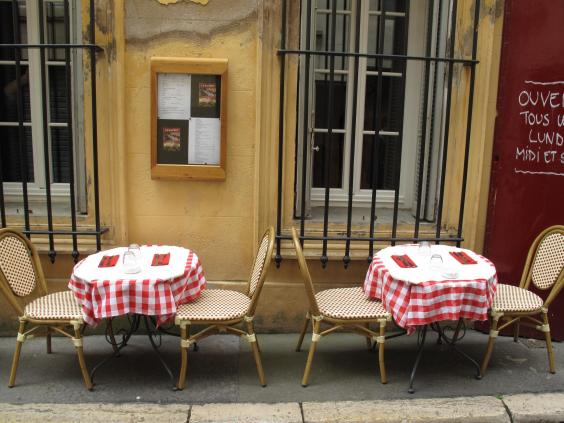
Le Bistrot (25), a classic French restaurant with red-and-white tablecloths, spills out onto the trottoir at 5 Rue Campra (00 33 4 42 23 34 61). Dishes such as home-made terrine and tartare de charolais (steak tartare) are prepared from local ingredients; house wine is inexpensive and excellent; and the ambiance is cheerful and relaxed. 

aix-en-provence70.jpg
Bon appetit: Le Bistrot sources ingredients and wine locally (Simon Calder)

 DAY TWO 

Sunday morning: go to church

St-Saveur Cathedral (15) is a magnificent muddle of architectural styles with a deep history: planted at the former Roman forum of the city of Aquae Sextiae, on the ruins of a temple to Apollo, with eight columns from a Roman basilica in the baptistry (00 33 4 42 23 45 65; cathedrale-aix.net). Construction lasted from the fifth to the 18th century, which helps to explain the Romanesque, Gothic and Baroque styles of the three naves. Look out for the Triptych of the Burning Bush, which is on show to the public only from 20 June to 20 September. The cathedral keeps generous hours (8.15am-8pm on Sundays; other days 8am-7pm), and the main mass on Sunday morning is at 10.30am. 


Out to brunch

Restaurant La Mado (26) at 4 Place des Prêcheurs (04 42 38 28 02; la-mado-aix.fr) is an ever-reliable Sunday stalwart - opening at 11.30am daily. The Salade Cézanne (€19.80) is made from one of the oldest varieties of fromage in France, fourme d’Ambert, together with chard quiche. The restaurant also has a sideline in sushi. Outside, the Sunday morning flower market adds colour to the square.

Cultural afternoon

Ten years ago this summer, the Musée Granet (27) opened. This impressive collection starts with pre-Roman sculpture but gets into its stride with 19th-century art. It includes works by Van Gogh and Monet as well as nine Cézannes, one depicting the author Emile Zola. The venue is a 17th-century priory founded by the Knights of St John at Place St-Jean de Malte (00 33 4 42 52 88 32; museegranet-aixenprovence.fr; 12 noon-6pm daily except Monday; admission €5, or free on the first Sunday of each month).

MuseeGranet.jpg
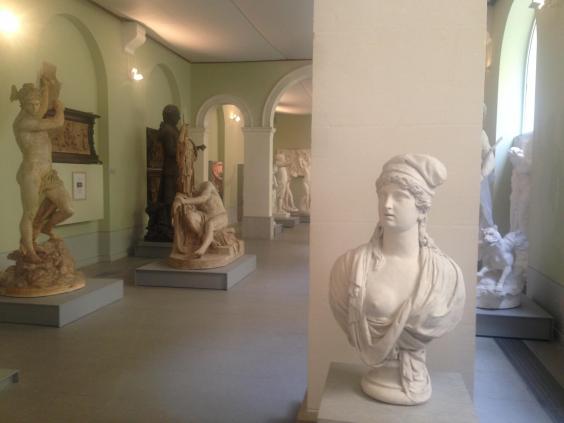
Sculpture club: exhibits at the Musée Granet (Simon Calder)

Your ticket includes admission to the annexe containing the Planque Collection, which occupies the Chapelle des Penitents-Blancs (28). In 2013 the church was transformed into a home for the works amassed by Jean Planque, a Swiss art dealer and amateur painter. Picasso leads the roll-call of 20th-century artists.

Inside a pretty, walled garden west of the city centre, the cultural theme continues at the Pavillon de Vendôme (29), a small 1665 chateau with a grandiose façade (00 33 4 42 91 88 75; 10am-12 noon and 1.30-5.30pm; €5). Inside, the house shows how the 19th-century aristocracy lived.

A walk in the park

South of the city centre, the hilly Parc Joseph Jourdan (30) is in the shape of a rough arrowhead pointing south. Climb the monumental staircase to the sharp end to contemplate the landscapes that inspired artists and writers, notably Cézanne and Zola. The latter gets his own bust.

Icing on the cake

Enjoy one final gastronomic treat at Aux Petit Oignons (31) at 2 Rue Peyresc. It opens at 7.30pm on Sundays and every other evening except Monday and Tuesday, dispensing crepes and gourmet burgers with a Provençal twist, plus exquisite desserts such as the summer special: meringue floating in a strawberry soup.

Wednesday, 4 January 2017

48 Hours in Biarritz: restaurants, hotels and places to visit

Travel essentials

Why go now?

With British Airways re-starting flights from Heathrow this summer, the biggest resort in south-west France is easier than ever to reach. Biarritz has its origins as a fishing port, but in the past couple of centuries it has acquired plenty of style while welcoming the rich and glamorous from France and beyond.

Touch down

BA (0344 493 0787; ba.com) flies from Heathrow; easyJet (0330 365 5000; easyjet.com) from Gatwick; Ryanair (0871 246 0000; ryanair.com) from Stansted; and Flybe (0371 700 2000; flybe.com) from Birmingham and Southampton.

Biarritz airport (1) is just two miles east of the city. Turn left out of the terminal and walk for a few minutes to find the stop for bus 14, which runs approximately half-hourly to the town centre for just €1 (or buy a 24-hour pass for only €2). It terminates close to the tourist office (2), which occupies a peach-coloured mansion beside Square d'Ixelles (00 33 5 59 41 59 41; tourisme.biarritz.fr; 9am-7pm daily in July and August).

By rail, Biarritz is nine or 10 hours from London St Pancras on Eurostar (03432 186 186; eurostar.com), requiring a change of stations from Gare du Nord to Montparnasse. Through fares are typically £250 return in summer.

shutterstock_113915401.jpg
(Shutterstock)

Biarritz rail station (3) is inconveniently located two miles south-east of the city centre; bus 8 covers the ground every 20 minutes or so for €1.

Get your bearings

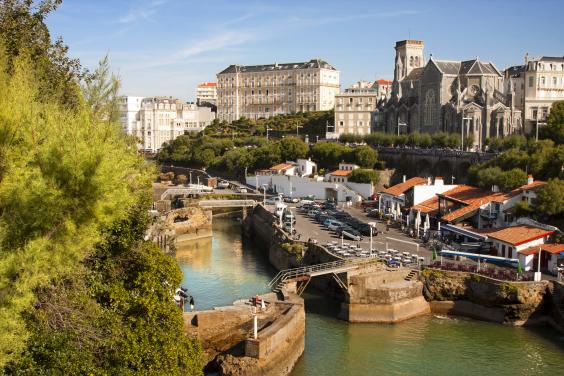
The last big resort in south-west France before the Spanish border, Biarritz decorates a serrated sweep of the Côte des Basques. The main beach is the Grande Plage (formerly Plage de l'Impératrice, until the Second Empire collapsed). Its north-east end is marked by the lighthouse known as the Phare de Biarritz (4). At the south-west end of the beach, a thumb of land sticks out into the Atlantic; this is the oldest part of Biarritz, crowding around the horseshoe-shaped Plage du Port-Vieux (5). Further south, the Plage de la Côte des Basques extends towards the Spanish frontier. 

Inland, Place Georges Clémenceau (6) has the strongest claim to be the hub of the town.

Check in

Wherever you end up staying, you should certainly visit the Hôtel du Palais (7). It occupies a prime tract of seafront real estate at 1 Avenue de l'Impératrice (00 33 5 59 41 64 00; hotel-du-palais.com). It is more than merely one of France's finest hotels; it is also a location with a fascinating history. Napoléon III built a villa on the site for his much-revered wife, Empress Eugénie. It burned down in 1903, and after rebuilding, reopened as a hotel de grand luxe. The price of a double room reflects the four-star quality: around €400-€500 per night double, excluding breakfast.

The small, friendly if slightly cramped three-star Hôtel Palym (8), at 7 Rue du Port-Vieux (00 33 5 59 24 16 56: hotel-palym-biarritz.fr) has double rooms for €93 or less, excluding breakfast.

The two-star Hôtel Le Bellevue (9) at 5 Avenue Edouard VII (00 33 5 59 24 17 07; hotel-bellevue-biarritz.com) has an excellent location by the Grande Plage, which helps explain its fairly high room rates of around €100 double, excluding breakfast.

Day one

Take a view

The best place from which to appreciate the scale and diversity of Biarritz is on the Plateau de L'Atalaye (10), high above the Plage du Port-Vieux. Then walk out across the footbridge to the Rocher de la Vierge (11), an outlying rock that supports a statue of the Virgin Mary and provides an excellent view of the magnificent coastline.

Next, at the art deco Aquarium de Biarritz (12), you can gaze into the world beneath the water (00 33 5 59 22 75 40; aquariumbiarritz.com). The aquarium - formerly the Musée de la Mer - has more than 5,000 creatures and a 40-foot coral reef. Get there at 10.30am (or 5pm) to see the seals being fed. In July and August, it opens 9am-midnight daily, admission €14.50.

Lunch on the run

The main street running inland from the Plage du Port-Vieux (5), Rue du Port-Vieux, is crammed with cafés and restaurants. At no 12, Le Coupe Faim (13) does a roaring trade in salads, sandwiches and crepes, with Basque xurros (churros - swirls of deep-fried dough) if you have room for dessert.

Cultural afternoon

The Musée Historique de Biarritz (14) on Rue Broquedis (00 33 5 59 24 86 28; musee-historique-biarritz.fr) occupies a former Anglican church, St Andrews, built by the British in 1876. It has been transformed into an exhibition space telling the story of the town. The porch alone is a masterpiece, constructed to commemorate the men who fell in south-west France in 1813 and 1814, during the Napoleonic Wars. Inside, it feels like a shrine to Empress Eugénie, though our Royal Family enjoys a strong showing, with an account of Queen Victoria's visit to Biarritz in 1889. It opens 10am-1pm and 2.30-6.30pm from Tuesday to Saturday, admission €4.

retrobiarritz.jpg
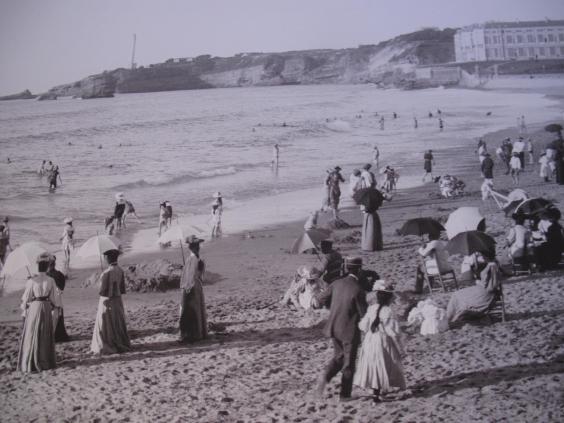
Biarritz was a popular holiday spot for Europe's high society

Go to church

The two most notable churches are open to visitors only on Saturday afternoons. The Chapelle Impériale (15) on Avenue de la Reine opens only 2-6pm, for guided tours that cost €3. Take Rue de l’Université Américaine to the Russian Orthodox Church (16) at 8 Avenue de l’Impératrice. Saturday from 3pm to 6pm is the only time non-worshippers are welcomed inside the church - which is officially named for "Alexander Nevsky and the Protection of the Mother of God".

An aperitif

Biarritz is perfectly placed for a sundowner. On the rooftop bar of the Hôtel Les Baigneuses (17) at 14 Rue du Port-Vieux, where a glass of rosé is a very reasonable €4 and a small beer is even cheaper. 

The Café de la Grande Plage (18) is actually the beach-level floor of the Casino. On the convivial terrace, you can order oysters to accompany your drink - though prices for both are among the highest in town. 

Dine with the locals

The area around Les Halles Centrales (19), the municipal market, is full of appetising options. Book in advance for Le B2 (20) at 5 Rue du Centre (00 33 5 59 24 34 66), where a short menu offers simple, tasty dishes based on locally sourced seafood and meat - such as fillet steak with Basque peppers and mashed sweet potato. Starters are under €10, mains €20.

Day two

Out to brunch

Les Halles Centrales (19) is also the best place to forage for coffee and croissants on the sabbath, with Bar Jean (21) at 5 Rue des Halles opening at 8.30am.

Take a hike

Sunday morning is an excellent time to appreciate the remarkable mix of architecture in Biarritz before the crowds gather. From the east end of Place Georges Clémenceau (6), go north along Avenue Edouard VII, which passes the Casino (18) and a small park on the left also named after the early 20th-century British monarch. The road becomes the Avenue de l’Impératrice, with the Hotel du Palais (7) dominant, and as you head north there are indulgent villas on both sides of the road.

At Mirasol (22), note the startling stained-glass façade on a maritime theme, and bear left along the Sentier des Vagues ( "path of the waves"). The path leads to a flight of steps, and halfway down you round a bend to get a tremendous view of the bay and the rocks scattered in the water – notably the hollowed-out Roche Ronde, resembling the head of a whale emerging from the waves.

A walk by the beach

Descend to the foot of the steps (23) and walk back along the Allée Winston Churchill, which runs beside the Grande Plage. Thread beneath the terrace of the Hôtel du Palais (7), then turn to admire the expansive grounds. Continue along the promenade, past the towering Casino (18) and a scattering of offshore rocks. Wander through the tiered gardens, planted with the city's characteristic fluffy tamarisk trees, to reach the Port des Pêcheurs (24) - a tiny fishing village crammed with crampottes (fishermen's huts).

Window shopping

Art and crafts from the nations of French West Africa are on sale at Le Caméléon Couleur d'Afrique (25) at 3 bis Rue du Port-Vieux, open 11am-10.30pm daily in July and August. At the inland end, Rue du Port-Vieux becomes Rue Mazagran, and a long, meandering thoroughfare of shops begins, stretching along via Place Sainte-Eugénie to Place Georges Clémenceau (6) - venue for the Galeries Lafayette (26) department store. It opens 10.30am-8pm on Sundays, from 9.30am on other days. 

Take a ride

A network of free buses shuttles around Biarritz, but the times are erratic; ordinary buses are more reliable and very cheap (€1 per ride or €2 for 24 hours). Bus 10 or 13 will take you south to the Milady district and the Cité de l’Océan (27) - the spectacular new addition to Biarritz, celebrating the city’s link to the sea. You learn about Basque fishermen’s exploitation of the North Atlantic, from Spitzbergen to Newfoundland, and the transformation of Biarritz into a glamorous resort.

shutterstock_301721753.jpg
Cité de l’Océan (Shutterstock)

The icing on the cake

For a different perspective on the Côte des Basques, continue south to the fishing port of St-Jean-de-Luz (28), an antithesis to the glitz of Biarritz, with a pleasant central square ideal for a drink and dinner. By public transport from either the city centre or the Cité de l’Océan, take bus 13 to its southern terminus and then walk for about 20 minutes to Guéthary station (29), from which St-Jean-de-Luz is just seven minutes by train.