Monday, 3 October 2016

48 Hours In Chania: hotels, restaurants and places to visit in Crete's second largest city

Travel essentials

Why go now?

Summer arrives earlier on the largest Greek island than elsewhere in the Med, and this year the lovely western city of Chania is easier to reach than ever - with British Airways launching flights from Heathrow on the last day of April.

New arrivals will find little changed from 70 years ago, when the local author Nikos Kazantzakis published Zorba the Greek. Crete’s historic former capital is still steeped in Minoan, Venetian, Ottoman and Greek history. The main difference is a blossoming of great places to eat, drink and sleep.

Touch down

BA from Heathrow (ba.com) competes to Chania against easyJet (easyJet.com) and Norwegian (norwegian.com) from Gatwick; and Ryanair (ryanair.com) from Bristol, East Midlands, Glasgow, Leeds/Bradford, Manchester and Stansted. 

The airport is 10 miles north-east of the city centre. The public bus from the airport into town costs €2.50; buy your ticket from the KTEL kiosk across the road from arrivals. It takes half-an-hour to reach the bus station (1). Departures are sporadic, at intervals of anything from 30 minutes to two hours, so you may prefer to share a taxi with other travellers; the standard fare to the city centre is €20.

chania_harbour2.jpg
Chania Harbour (Simon Calder)

Get your bearings

Chania is in the far west of Crete, about 100 miles west of the island’s capital, Heraklion. Its bay is protected by a pair of peninsulas: Rodhopou to the west, Akrotiri to the east. The old city walls more or less define the area of interest to visitors. The inner core, known as Kastelli, includes Minoan ruins. Just to the east, Splanzia is the former Turkish quarter. A harbour arm wraps around from the north-east corner of this district.

The main thoroughfare, Halidon, runs south from Venizelos Square (2). At its southern end it meets the main east-west road, which takes on a succession of names - Yiannari for its central part.

The tourist office (3) at 29 Kydonias (00 30 28213 41665/6; chaniacrete.gr) closes at weekends, and opens only 9am-3pm from Monday to Friday - though these hours may be extended in the height of summer.

Check in

The Hotel Splanzia (4) at 20 Daskalogianni (00 30 28210 45313; splanzia.com) fills an impressive townhouse that was formerly the home of the Turkish mayor during the Ottoman era and is now an elegant boutique hotel with a lovely courtyard. A double room costs €67, with breakfast an extra €6 per person.

Casa Delfino (5) is a 17th-century Venetian mansion reinvented as a luxury hotel at 9 Theofanus (00 30 28210 87400; casadelfino.com). The roof terrace offers a breathtaking view across the city and harbour. A double room costs €166, including breakfast.

Day one

Take a view

The Venetians consolidated the harbour, and built the sea wall that defends it against Mediterranean storms. The lower part of the lighthouse (6) at the end was built over 400 years ago, and has been embellished since. From all along the sea wall there are marvellous views, best at the start or end of the day. Across the water, the prominent Mosque of the Janissaries (7) was the first act of the Ottomans when they seized control of Chania in 1645.

Take a hike

From the lighthouse (6), walk back along the arm of ancient stones. Where it connects with the mainland, walk past Chania Yacht Club (8) and cut across the car park. On the far side a slope rises to the bastion (9) which provides a panorama of the eastern bay.

Head south down Minoos, on the inside of the city walls. Take the second right, an unlikely looking alley, and thread through to Vourdouba. This leads past ancient cloisters on the right to 1821 Square (10), with the handsome and interesting Agios Nikolaos church on your left and a tempting location for coffee adjacent to it. On the corner is a crumbling Venetian chapel. Turn right onto Daskalogianni and pause at the Ride Cycle Cafe (11)

The northward street becomes Arheleon. Turn left along Kanevaro for the Minoan excavations known as Ancient Kydonia (12), which extend back five millennia - Chania is one of the oldest continuously occupied cities in the world. Continue west to Venizelos Square (2), and turn right at Starbucks along Zampeliou - filled with souvenir shops and places to eat.

Lunch on the run

Hammam (13), the cafe at 43 Zampeliou, is an excellent bakery serving spanakopitas, spinach-filled pastries, at just €1.60 each - with a beer for an extra €2. For a more substantial meal, a few doors further west, Tamam occupies the old Ottoman baths and serves reliably good Cretan cuisine.

Window shopping

Just along Zampeliou, the Exantos Art Space (14) is full of works that distil the local colour. Across the city centre in Splantzia, the Vineria delicatessen (15) at 70 Daskalogianni (00 30 28210 27068) hosts tastings of wine and other local produce. Stores tend to open 10am-3pm and 6-9pm in summer.

Chania’s market (16), on the site of the ancient Agora, has been a raucous retail venue for centuries; the current edition, was modelled on the main marché in Marseille and takes in the shape of a cross. It opened in 1913, the same year that Crete was united with Greece. The hours are roughly 7am-9pm daily except Sunday.

An aperitif

As the sun dips, the harbourside bars and restaurants begin to sparkle. At the venues around the horseshoe-shaped outer harbour tourists may feel coerced into taking a table, but politely decline and continue around the waterfront towards the inner harbour - where you can join the locals as they drink in the scenery. At Pallas (17), you can sip an island-brewed Septem India Pale Ale, its name derived from the 7 per cent alcoholic strength. Then wander further along to the Chania Yacht Club (8) at the eastern end of the Inner Harbour, where the outdoor tables catch the last rays of sunshine.

Dine with the locals

Away from the waterfront, the highest concentration of restaurants is along Chatzimichali Daliani. For excellent salads, grilled meat and homemade panacotta, try Mesogiako (18) at number 36 (00 30 28210 57992; mesogiako.com); a feast for two, including wine, should come in at around €35.

Day two

Sunday morning: go to church

The Orthodox Cathedral (19) was completed in 1860, during Ottoman rule - when Christian worship was tolerated by the Islamic occupiers. From outside, with its lop-sided facade it looks oddly Latin American - in contrast with the intensely atmospheric interior. 

Out to brunch

Theotokopoulou is a handsome Venetian street, and the Kormoranos Bakery Café (20) at number 46 (00 30 6974 714226) serves fresh croissants, yoghurt and fruit, omelettes and toasted sandwiches from 8am each day.

Cultural afternoon

The Archaeological Museum (21) on Halidon (00 30 28210 90334; culture.gr) is housed in the former church of San Francisco, which was later a mosque and then served as Chania’s first cinema. The contents are from excavations at sites in the west of Crete, ranging from Minoan relics to an impressive third-century AD mosaic floor decorated with a representation of Dionysos and Ariadne. It opens 8am-8pm daily, admission €4.

Further down Halidon, the Municipal Art Gallery (22) at number 98 (00 30 28210 92294; pinakothiki-chania.gr) displays paintings, engravings and sculpture of local and Greek artists from the 18th century. It opens 10am-2pm on Sundays, additionally 6-9pm on other days, admission €2.

Take a ride

Chania has one of the best-value bike-share schemes in Europe. Register in advance at www.chania.gr/bikes, pay a fee of €1 and you can use a bike for up to three hours without extra charge.

A walk in the park

For the ideal cycling target, go east out of town following the signs for the airport - but after a steep, swerving climb, turn off when you see a sign for the Venizelos Tombs. This leads you to an area of parkland that includes the impressive tomb of Eleftherios Venizelos (23), one of the most long-standing Greek premiers. There are excellent views back across the bay to Chania; for the very best position, get a table on the open terrace at the adjacent Koukouvaya restaurant (koukouvaya.gr).
stavrosbeach1.jpg
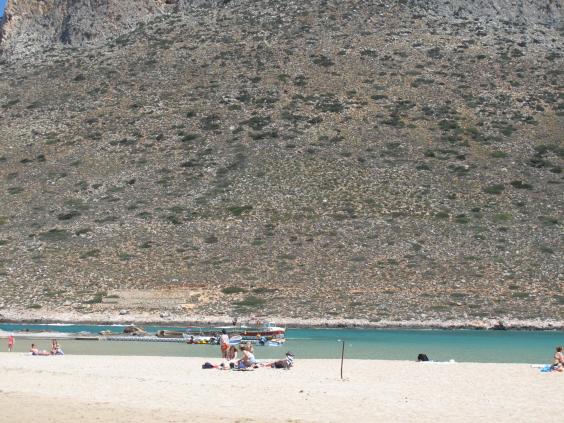
Stavros Beach (Simon Calder)

The icing on the cake

Before your flight home, explore some of the Akrotiri peninsula — in particular, the village of Stavros (24) at the northern tip. It has an excellent beach and a few bars, but crucially also a place in movie history. Beneath the 1,000ft-high slab of limestone that dominates it,  the closing scene of Zorba the Greek was filmed - with Alan Bates and Anthony Quinn dancing the Sirtaki. The best plan is to get a taxi to Stavros, and ask the driver to wait before taking you on to the airport; you should be able to negotiate a fare of around €40.

48 Hours in Florence: where to go and what to see

Travel essentials

Why go now?

Springtime in Florence. What could be better? Though there’s a never a bad time to visit Tuscany’s cultured and compact capital, it’s particularly alluring at this time of year, before the crowds and high temperatures of summer arrive.

Later this month, the city holds one of its most poignant annual events. Liberation Day, a national holiday commemorating the end of Nazi occupation, takes place on 25 April and includes a procession of people dressed in period costumes from the days of the Florentine Republic as well as an open air concert in Piazza Signoria (1).

Touch down

Peretola airport, located 4km to the north-west of the city, is the most convenient hub, served from Gatwick by Vueling (0905 078 1000; vueling.com), and from London City by both British Airways (0344 493 0787; ba.com) and CityJet (0871 405 2020; cityjet.com).

The airport shuttle bus departs roughly every 30-60 minutes between 5.30am and 12.30am and terminates at Via Santa Caterian da Siena near Santa Maria Novella rail station (2). The journey takes 25 minutes and a one-way tickets costs €6. A taxi will take 15 minutes and cost around €22.

A wider range of flights from the UK land at Pisa’s Galileo Galilei airport, 80km west of Florence. BA flies from Heathrow, easyJet (0843 104 5000; easyjet.com) from Gatwick and Manchester, Jet2 (0800 408 1350; jet2.com) from Manchester, while Ryanair (0871 246 0000; ryanair.com) offers services from Stansted, Liverpool and Edinburgh.

From Pisa airport, catch the Terravision bus (terravision.eu), which offers one-way tickets from €5. The journey time to Santa Maria Novella station (2) is 70 minutes. 

an91507391the_old_bridge_in.jpg
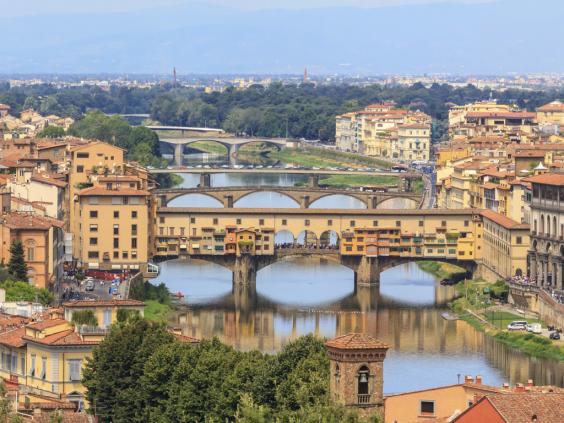
Ponte Vecchio (iStockphoto)

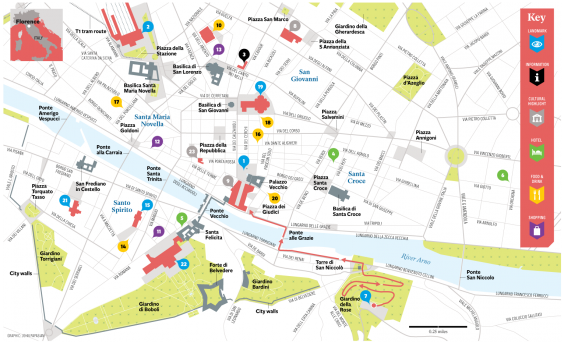
Get your bearings

Florence has, over the centuries, been an arena for some of Europe’s greatest minds and visionaries, most notably Michelangelo and Dante. But its origins are shrouded in uncertainty. Many believe Julius Caesar laid the first foundations but some historians disagree, believing that Etruscans settlers preceded him by a century.

Whoever is responsible, they set about creating one of Europe’s finest cities. The city is bisected by the River Arno, its historic heart on north bank - while it may be small, it’s big on history. You’ll spend the majority of your time on this side of the river, home to most of the attractions but other side – Oltrarno, formerly a poor district known for its sandstone quarries - is also worthy of exploration.

The tourist information centre (3) is at Via Cavour 1 (00 39 055 212245; firenzeturismo.it; 9am-7pm Monday-Saturday, to 2pm Sundays).

Check in

For centrally located luxury, book a room at the Relais Santa Croce (4) at Via Ghibellina 87 (00 39 055 234 2230; baglionihotels.com), an 18th-century building-turned-five-star hotel that’s walking distance from all the main points of interest. The Guelfi & Ghibellini restaurant serves a mean Florentine steak. Doubles from €280, including breakfast.

Hotel La Scaletta (5) at Via de Guicciardini 13 (00 39 055 283028; hotellascaletta.it) is a charming and well-maintained three-star hotel with a rooftop terrace overlooking the city. Doubles from €119, including breakfast.

Budget travellers can expect clean, comfortable rooms and value for money at Hotel Orcagna (6) at Via Orcagna 57 (00 39 055 669959; hotelorcagnaflorence.com). Doubles from €48, including breakfast.

florence48hrs.png
(John Papasian)

Day one

Take a view

The city’s best vantage point is from hilltop Piazzale Michelangelo (7). Dating back to 1869, it was designed by local architect Giuseppe Poggi and offers soul-stirring views across the city’s rooftops, belltowers and domes and beyond to the Tuscan hills and distant mountains. Taking pride of place in the square below is a replica statue of David, Michelangelo’s most celebrated sculpture. The real thing can be seen in the Accademia Gallery (8) at Via Ricasoli 58/60 (00 39 055 238 8609; accademia.org; 8.15am-6.50pm Tuesday to Sunday; €8).

Take a hike

From Piazzale Michelangelo (7), take the winding walking trail that leads down towards the river. You’ll eventually emerge at the foot of the Porta San Niccolo watchtower, once part of the city’s defence walls. Stroll west along Lungorno Serristori, admiring the handsome buildings, former palaces and small squares.

Turn right and cross Ponte alle Grazie. It’s not one of the city’s more beautiful bridges but it does offer good views of its most famous one: Ponte Vecchio to the west. Erected in 1345, this Roman arched bridge, lined with shops, was the only crossing not to be destroyed be fleeing Germans in the Second World War.

Turn left on Jungarno delle Grazie until you reach the ancient columns of Piazza di Giudici. Finish at the Uffizi (9) (00 39 055 238 8651; uffizi.org; 8.15am-6.50pm Tuesday to Sunday; €8, advance booking recommended), the finest gallery in the city with works by Leonardo Da Vinci and The Birth of Venus by Botticelli.

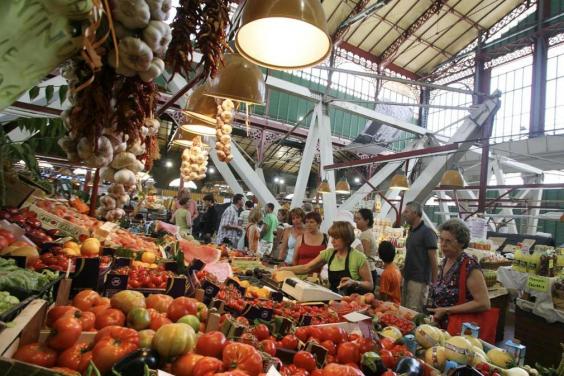
an95272983mandatory_credit_.jpg
Mercato Centrale (Rex Features)

Lunch on the run

Far more than just a food court, the first floor of the Mercato Centrale (10) at Via del Ariento (00 39 055 239 9798; mercatocentrale.it; 10am-midnight, closed Sundays) is a treasure trove for foodies. Under its wrought iron roof are 26 splendid stalls serving everything from delicious pizzas topped with Italian sausage and turnip greens (€11) to hearty bowls of tagliatelle drizzled with truffle oil (€4). Make your selection and wash down with a glass of Tuscan red wine (€4).

Window shopping

Prepare to splash some serious cash. Florence is filled with top-quality independent retailers, and the sidestreets around Palazzo Pitti have some of the most interesting. Stroll down Oltrarno’s Sdrucciolo dei Pitti (11) for a mix of fashion and antiques. On the other side of the Arno, Via di Parione (12) is known for high-end designers while the souk-like San Lorenzo Market (13) at Piazza San Lorenzo specialises in leather goods. Typical opening hours are 10am-7pm, and most stores are closed on Sundays.

An aperitif

Order a glass of prosecco (€5) at Ricchi (14), Piazza di Santo Spirito 8 (00 39 055 280830; ristorantericchi.com; open 7am-10pm daily) and savour the views of the 15th-century Basilica di Santo Spirito (15) from an outdoor table.

Mounted on the walls inside, meanwhile, are dozens of framed entries from a recent competition to redesign the façade of the landmark church. The creative efforts include a starry night sky and a bold rainbow motif.

Dine with the locals

Typical Tuscan fare awaits at blink-and-miss-it Ristorante Il Pennello (16) at Via Dante Alighieri 4 (00 39 055 294848; ristoranteilpennello.it; 7-10pm daily). Dishes include wild boar with polenta and peposo – beef cooked for three hours in red wine. Mains from €9.

Dating from 1869, Trattoria Sostanza (17) at Via della Porcellana 25 (00 39 055 212691; 7.30pm-10.30pm daily) is a rustic spot popular for its Florentine steak. 

Save room for a scoop of tiramisu gelato from Grom (18), at Via del Campanile 2 (00 39 055 216158; grom.it; 10.30am-11pm daily). From €2.50.

Day two

Sunday morning: go to church.

It’s got to be the Duomo (19) at Piazza del Duomo (00 39 055 215380; duomofirenze.it; 1.30pm-4.45pm Sunday, 10am-4pm other days; free). Built on the site of a 7th-century church and dedicated to Santa Maria del Fiore, the cathedral is a masterpiece of Italian gothic architecture that was completed in the 1400s after 200 years of work.

Stand under Brunelleschi’s dome or climb the 436 steps to the top for a closer look at Vasari’s fresco of the Last Judgement. Visitors are welcome to attend Sunday mass, which takes place at 9am and noon. 

Out to brunch

Be prepared to queue at All’ Antico Vinaio (20) at Via dei Nevi 76 (00 39 055 238 2723; allanticovinaio.com; 11am-10.30pm daily), but the sandwiches are well worth the wait. This no-frills eatery feeds a steady stream of hungry locals throughout the day, as it has for a century. Expect Tuscan treats on steaming focaccia straight out the oven; the most popular is La Favolosa (The Fabulous One) with salami, pecorino cheese, aubergine and artichoke cream. Sandwiches from €5.

Cultural afternoon

In addition to the Uffizi (9) and the Accademia (8), there are a number of lesser-known cultural spots that are well worth a look. Get a taste of the early Renaissance period at the Cappella Brancacci inside the church of Santa Maria del Carmine (21) at Piazza del Carmine (00 39 55 276 8224; museiciviciflorentini.comune.fi.it; 1-5pm Sunday, 10am-5pm other days; €6). The walls of this tiny chapel are decorated with accomplished frescos by Masolino da Panicale and Filippino Lippi that depict the life of St Peter and were sketched throughout the 1400s.

A walk in the park

Dotted with Roman statues and sculptures from the 16th and 17th centuries, the sublime Boboli Gardens form part of the Pitti Palace (22) (00 39 055 229 8732; 8.15am-4.30pm daily; €7). This was once the private escape of the Grand Duke of Tuscany. These days, its landscaped lawns and fanciful fountains are open to all.

Icing on the cake

Once home to the wealthy Davizzi family in the mid-14th century, the Palazzo Davanzati (23) at Via Porta Rossa 13 (00 39 055 238 8610; 8.15am-13.50pm daily; €2) has been meticulously restored. It offers a wonderful insight into a grand old Florentine home. Inside the medieval tower are opulent reception rooms and bedrooms filled with furniture and art from the period.

48 Hours in Taipei: Hotels, restaurants and places to visit in the World Design Capital

Travel essentials

Why go now?

Taiwan’s capital has bags of style, with small boutiques and big department stores alike stocking the latest products from the city’s many independent designers. And this year Taipei's creative credentials have been bolstered by the city's title of World Design Capital; it's hosting a number of events to mark the occasion (wdc2016.taipei). And spring is the best time to visit, before the sweltering summer heat and humidity kicks in.

Touch down

There are no non-stop flights between the UK and Taipei. I flew via Amsterdam with KLM (0870 243 0542; klm.com), which operates from half a dozen UK airports including Heathrow and Manchester. Eva Air (020 7380 8300; evaair.com) flies direct from Heathrow with a stop in Bangkok, while other indirect services to Taoyuan airport include Emirates (0844 800 2777; emirates.com), China Southern (0844 482 2362; csair.com) and Cathay Pacific (020 8834 8888; cathaypacific.com) via their hubs.

The opening of the rail link between the airport and the capital has been delayed, so for now the bus is your best bet. Follow the signs for “Buses to city”, to where each bus company has a ticket booth. Kuo-Kuang Motor Transportation Co’s 1819 bus operates every 15-20 minutes round the clock, and will take you to Taipei Main Station (1) in about 45 minutes for NT$125. A taxi will cost roughly NT$1,200 (£1 = NT$46; US$1 = NT$32).

Get your bearings

The Tamsui River runs along the western edge of Taipei City, separating it from New Taipei City, a smattering of suburbs, countryside and lush hills encircling the heart of the capital. 

Taipei City proper stretches out from the central artery of Keelung Road, along which the blue metro line runs. Xinyi district, to the south, is full of posh malls, hotels and bars, and the tallest buildings in town - including Taipei 101 (2). Neighbouring Da’an is home to a large park (3) and three universities, plus restaurants and nightlife catering to students. Go north, to Songshan for cool cafés and boutiques – as well as Songshan airport (4), which is served by short-haul flights.

The MRT (metro) has five lines. Single fares range from NT$20 to NT$65 – tokens can be bought from the machines at the stations. Alternatively, contactless EasyCards cost NT$100 from metro stations and convenience stores, where you can also top them up.

Long roads are often divided into numbered sections (building numbers will repeat themselves, so make sure you have the right section) while side roads are called lanes or alleys, and also tend to be numbered.

There are several tourist offices, including at Taoyuan airport (7am-11.30pm daily) and Taipei Main Station (1) (8am-8pm daily). For more information visit go2taiwan.net.

Check in

The W hotel (5) at 10 Zhongxiao East Road Section 5 (00 886 2 7703 8888; wtaipei.com) is perhaps the city’s most stylish address. Rooms are modern and spacious, while the bar attracts a cool young crowd. There’s also an outdoor pool. Doubles from £218, room only.

You can’t get a room much closer to the Taipei 101 (2) than the Grand Hyatt (6), across the street at 2 Songshou Road (00 886 2 2720 1234; taipei.grand.hyatt.com). The marble lobby is ultra-opulent, the terrace pool has great skyscraper views, and though the rooms are a little corporate, they’re smart and well-appointed thanks to a refurb last year. Doubles from NT$18,480, room only.

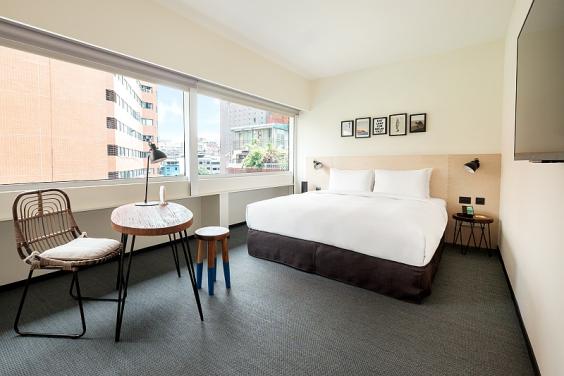
A more budget-friendly option is Amba Taipei Zhongshan (7) at 57-1 Zhongshan North Road Section 2 (00 886 2 2525 2828; amba-hotels.com), the second in a home-grown design hotel mini-chain (a third is due to launch this summer). Rooms are compact but chic, with white walls and retro furniture, plus nice touches such as take-home flip-flops and a map detailing the area’s best cafés and design shops. Doubles from NT$3,350, room only.

amba_room.jpg
Amba Taipei Zhongshan

Day one

Take a view

Get up early to beat the Crowds at Taipei 101 (2). For five years until 2009 it was the world’s tallest building, and while you can’t go to the top (101st) storey, there’s an observation deck on the 89th (entrance at 7 Xinyi Road Section 5; taipei-101.com.tw; NT$500) from which you can look out over the city and hills beyond. Inside you can see the huge spherical tuned mass damper that counterbalances the weight of the building during earthquakes. Open 9am-10pm daily, last entry 9.15pm.

Take a hike

Leave the 101 (2) and turn right on to City Hall Road, passing the Lego-like World Trade Center and Grand Hyatt (6) before crossing diagonally the patch of green to your left. Bear left on to Ren’ai Road and you’ll come to Sun Yat-Sen Memorial Hall (8) (yatsen.gov.tw). Dedicated to the founder of modern China, it hosts free exhibitions and cultural events, but the main attraction is the changing of the guard (hourly, 9am-5pm).

From the back of the Memorial Hall go right on Keelung Road. The first left turn brings you to Songshan Cultural and Creative Park (9) (songshanculturalpark.org). This converted tobacco factory hosts a bookstore and exhibition spaces, including the compact but informative Taiwan Design Museum (NT$50; 9.30am-5.30pm Tuesday to Sunday, closed Monday).

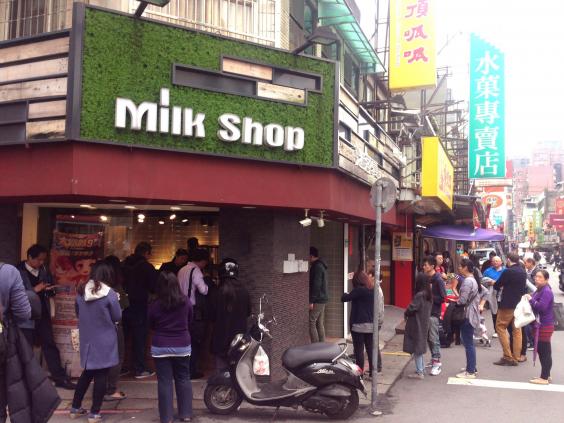
milk-shop-taipei.jpg
Milk Shop

Head down Lane 172 and across Keelung Road to Songlong Road, before turning right on to Lane 147. Meander eastwards along the alleys and lanes, joining the queue at Milk Shop (10) at 114 Lane 30, Yongji Road (on the corner of Alley 118) for the city’s most delicious bubble tea – cold, milky, sweetened tea with tapioca “bubbles” you suck up through a straw. When you reach Hulin Street, turn left and walk through the market to …

Lunch on the run

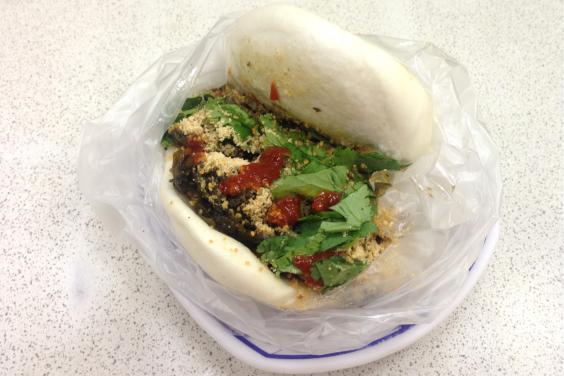
Songshan Guabao (11) at 179 Songshan Road specialises in – the clue is in the name – guabao. Known as “Taiwanese hamburgers”, these are deliciously fluffy steamed buns filled with braised pork belly, mustard greens, coriander and peanut powder (T$50).

Taipei Eats (taipeieats.com) runs excellent three-hour walking tours, which visit Songshan Guabao as well as Hulin Street market for spring onion-filled “thousand layer big bread” and truly pungent stinky tofu. Tours 11am Tuesday, Wednesday, Friday and Saturday; US$70; booking essential.

songshan-guabao.jpg
Songshan Guabao (Nicola Trup)

Window shopping

Huashan 1914 Creative Park (12) at 1 Bade Road Section 1 (huashan1914.com), is a converted wine factory that’s home to boutiques stocking designs from the city’s young creatives; the accessories are particularly eye-catching. Though the building is open 24 hours, shop opening hours vary; usually from 10am or 11am.

Alternatively, for one-off gifts and homeware, head to the lanes around Chifeng Street (13). In between the old car repair shops you’ll find highlights such as Cou Cou Living Shop and De Stijl (vintage jewellery) on Lane 33, and Natural Kitchen on Lane 3.

An aperitif

You'll find the hidden door to Ounce (14) (00 886 2 2708 6885; ouncetaipei.com) at the back of Relax café (40 Lane 63, Dunhua South Road Section 2); press the buzzer next to the wood-panelled wall. There’s no menu; bartenders can mix any classic cocktail or create something new just for you – sit at the bar to watch them at work. A round of three drinks cost me about NT$1,300. Open 7pm-2am Monday-Saturday, closed Sunday.

Dine with the locals

Raohe Street (15) is Taipei’s oldest night market, lined with stalls, shops and restaurants. I enjoyed the fried rice at Running Spoons (No 197), though the pepper pork buns sold by the market entrance also come highly recommended. Open 4pm-1am daily.

Day two

Out to brunch

Part-café, part lifestyle shop, Good Cho’s (16) at 54 Songqin Street (00 886 2 2758 2609) sells homemade bagels with a Taiwanese twist. Costing about NT$45-60 each, look out for the ones stuffed with sweet sesame paste or locally made cheese. The biggest selection is available at weekends, when the store also hosts a farmer’s market. Open 10am-9.30pm weekdays, 9am-6.30pm weekends.

A walk in the park

Da’an Forest Park (3) is Taipei’s equivalent of Central Park, with a network of paths between the ponds, pavilions and playground. There’s also a jogging loop and an amphitheatre that hosts free performances during Chinese New Year and other festivals. Open 24 hours.

Cultural afternoon

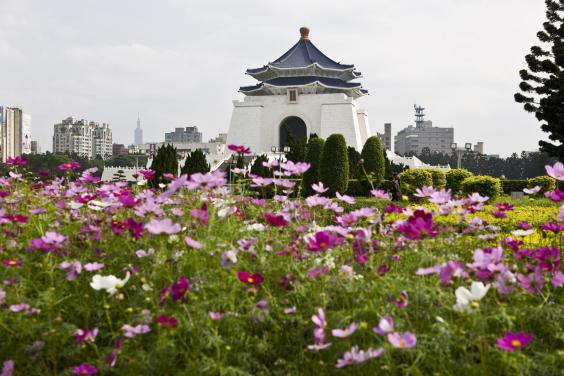
Chiang Kai-Shek Memorial Hall (17) at 21 Zhongshan South Road (00 886 2 2343 1100; cksmh.gov.tw; free) was built in honour of the man who ruled Taiwan for almost 50 years. There’s a (naturally rather biased) exhibition downstairs - including some amusingly bad paintings of Chiang with various foreign dignitaries - while upstairs there’s a statue in front of which an hourly changing of the guard takes place. The huge white beast of a building may not be to everyone’s taste, but it’s impressive nonetheless. Open daily, 9am-6pm.

chiang_kaishek_memorial_hall_3.jpg
Chiang Kai-Shek Memorial Hall

The National Palace Museum (18) at 221 Section 2 Zhishan Road (00 886 2 2881 2021; npm.gov.tw; NT$250) may be on the outskirts of town, but its vast collection of Chinese art, lacquer ware, calligraphy and more makes it the world’s sixth most visited museum. Open 8.30am-6.30pm.

More to my taste is the Taipei Fine Arts Museum (19) at 181 Zhongshan North Road Section 3 (00 886 2 2595 7656; tfam.museum; NT$30). It specialises in modern art and currently has a brilliantly fun exhibition of kinetic installations called The Way Things Go (to 17 April) – look out for the room of moving buckets. Open Tuesday-Sunday 9.30am-5.30pm, to 8.30pm Saturday.

Icing on the cake

Take the metro to Taipei Zoo station, at the end of the brown line. From there, a half-hour cable car journey (tickets NT$240 return) carries you over forests and tea fields up to Maokong (20), a hill village full of tea shops serving a range of blends. Go on a sunny day for the best views. The gondola operates 9am-9pm Tuesday-Thursday, to 10pm Friday, 8.30am-10pm Saturday and 8.30am-9pm Sunday; closed Monday; public holiday times vary.

48 Hours in Toronto: hotels, restaurants and places to visit in Canada's largest city

Travel essentials

Why go now?

Despite a brief flurry of snow in mid-May, the people of Toronto are enjoying the onset of summer. The city wears shirtsleeves from June to September, and celebrates its astonish cultural diversity with events such as Taste of Toronto (23-26 June, tasteoftoronto.com) – in which top chefs conduct cooking classes and demonstrations. For British visitors, reaching Canada’s biggest metropolis has never been cheaper nor easier, with intense competition from budget airlines. 

Touch down

Air Canada Rouge, the budget offshoot of Air Canada (0871 220 1111; aircanada.com), has just launched flights from Gatwick to Toronto. The airline competes on the route with both Air Transat (020 7616 9187; airtransat.com) and WestJet (00800 5381 5696; westjet.com). Fares as low as £300 return are available in the next few weeks. All three airlines also compete from Glasgow. 

Flights from Birmingham (Air Transat), Edinburgh (Air Canada Rouge), Heathrow (Air Canada and British Airways; 0344 493 0787; ba.com) and Manchester (Air Canada Rouge and Air Transat) are more expensive.

Toronto Pearson airport (1) is the busiest in Canada, and has three terminals. Transport links are easiest from Terminal 1. The UP Express runs every 15 minutes to Union Station (2); UP stands for “Union Pearson”. The one-way fare is C$12. 

A cheaper, slower alternative is to catch the Rocket bus from the airport to Kipling station (3), a journey of around 20 minutes with departures every eight minutes. The fare of C$3.25 includes a transfer to the Subway system, known as TTC. The trip to downtown Toronto takes about half-an-hour more. You can then transfer to a bus or streetcar (tram) if your journey requires it. 

Get your bearings

The area of Toronto chiefly of interest to visitors comprises a ragged square about two miles across, between Bloor Street to the north and the waterfront to the south – though downtown is cut off from Lake Ontario by the hideous Gardiner Expressway.

The chief landmarks include Union Station (2); the CN Tower (4), a thin needle piercing the skyline; St Lawrence Market (5); the Ontario Parliament at Queen’s Park (6); and the Royal Ontario Museum (7). But the great appeal of Toronto resides in its neighbourhoods. For example, the biggest of several Chinatowns is centred on Spadina Avenue and Dundas Street West. It merges with the faintly hippie Kensington Market area on Baldwin Street and Augusta Avenue, while Little Italy takes over to the north-west along College Street.

shutterstock_371774542.jpg
The colourful Kensington Market neighbourhood (Shutterstock)

Toronto has a Subway (a mostly underground railway), but it is weird. The main line, number 2 (coloured green), runs for many miles east-west through the north of the city, along the line of Bloor Street. It intersects at three stations with line 1 (yellow). This is a very odd line, in the shape of a narrow U, whose base is at Union Station (2). 

There are a couple of suburban offshoots to lines 1 and 2 that are unlikely to trouble the visitor. The system runs 6am-1.30am, except on Sundays when things don’t get going until 9am.

More appealing to the tourist are the streetcars (trams), of which Toronto has an impressive network. They tend to run either east-west or north-south, and stop every couple of hundred yards. 

The payment system is straightforward. You can pay C$3.25 in cash, or buy tokens (minimum three) at C$2.90 each. When you put the money in the slot on a streetcar or into the Subway gates you should pick up a transfer, which is both your proof of purchase and ticket to further travel in the same general direction within a “reasonable” time.

There are also buses, which take part in the same transfer system.

Check in

In summer the budget accommodation stock increases, because many student residences are let out to short-term visitors. I paid C$131 including breakfast for a double room at College Backpackers Inn (8), at 280 Augusta Avenue (001 416 929 4777; collegebackpackers.ca), a fairly basic but friendly and comfortable hostel.

At weekends, when business travel declines, there are plenty of deals at upmarket properties. For example, the Westin Harbour Castle (9) on the waterfront (001 416 869 1600; westinharbourcastletoronto.com) has rooms in June for Saturday and Sunday night for around C$240 per double, excluding breakfast.

The grande dame venue is the Royal York (10), facing Union Station (2) (001 416 368 2511; fairmont.com), where a double room typically costs around C$400 excluding breakfast.

Day One

Take a view

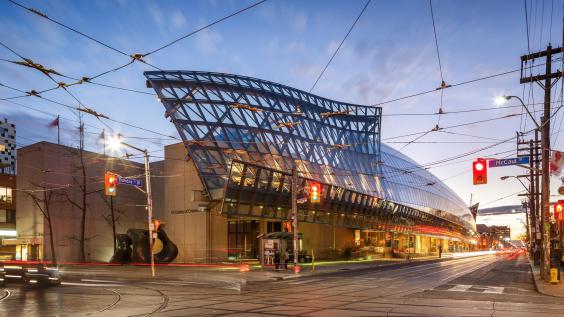
… on, and from, Frank Gehry’s first work in Canada: the Art Gallery of Ontario (11) at 317 Dundas Street West (001 416 979 6648; ago.net; open at 10.30am daily except Monday, to 5.30pm at weekends, to 5pm on Tuesday and Thursday, to 9pm on Wednesday and Friday; C$19.50). Inside Gehry’s mighty reinvention of the original building, you find two millennia of Canadian culture from early Inuit art to the Thomson Collection – donated by Ken Thomson, part of the Thomson media and travel dynasty. Rubens, Rodin, Monet, Picasso and Van Gogh are represented, along with the world’s largest public collection of works by Henry Moore.

single_column_figure32x-16.jpg
Art Gallery of Ontario

Take a hike

From St Patrick Subway station (12), walk south along University Avenue. Almost at once, on the right, the Royal Canadian Military Institute is an officers’ club with a difference: the ground floor is a replica of the neo-classical original, topped with a brand-new 42-storey apartment block. Continue south, then turn left at the McMurtry Fountains (13) to head past the Superior Court of Justice, decorated with sculptures celebrating human rights. Then walk across Nathan Phillips Square (14), which includes a Peace Garden and a pool in which a giant, three-dimensional TORONTO sign is reflected.

Across the square, the handsome, red-brick Old City Hall (15) is dwarfed by the surrounding skyscrapers. It faces south down Bay Street, and so should you. In the block between Adelaide and King Street, look for three handsome financial institutions: the Canadian Permanent (16) and the Bank of Montreal, facing the Bank of Nova Scotia. The Design Exchange (17) at 234 Bay Street (001 416 363 6121; designexchange.org; noon-4.30pm at weekends, 9am-5pm Tuesday-Friday; free) celebrates 20th-century Canadian design, including a preponderance of plastic chairs.

Turn right into Wellington Street, and at the Royal Bank Plaza sign climb to the walkway and head south into a swarm of mobiles. Descend the stairs and dip into the Royal York Hotel (10) to gaze at the extravagant Fairmont Imperial Room.

From the hotel’s main entrance, admire the heroic facade of Union Station – at present a massive building site.

Window shopping

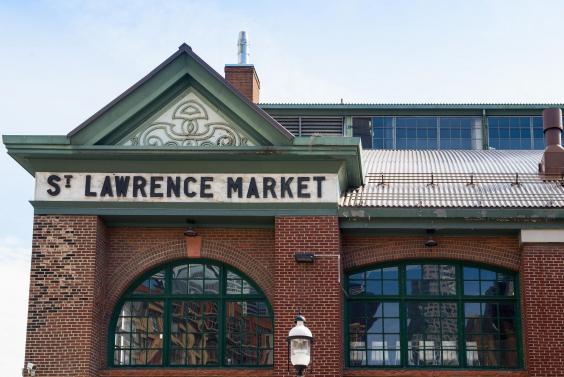
Just along Front Street East, St Lawrence Market (5) overflows with fresh produce, colour and clamour on two storeys. It also has an exhibition about its history on the lower level on the north side (5am-5pm on Saturday, 8am-6pm from Tuesday to Thursday, 8am-7pm on Fridays; stlawrencemarket.com).

shutterstock_410534476.jpg
St Lawrence Market (Shutterstock)

Lunch on the run

The Paddington Pump at St Lawrence Market has all-day breakfasts. Alternatively, Alexandro’s (18) at 5 Bay Street East (001 416 367 0633), serves the best pork and chicken gyros (kebabs) in town from a tiny shack for around C$6. Officially open 11am-4pm daily, often closing much later.

Take a ride

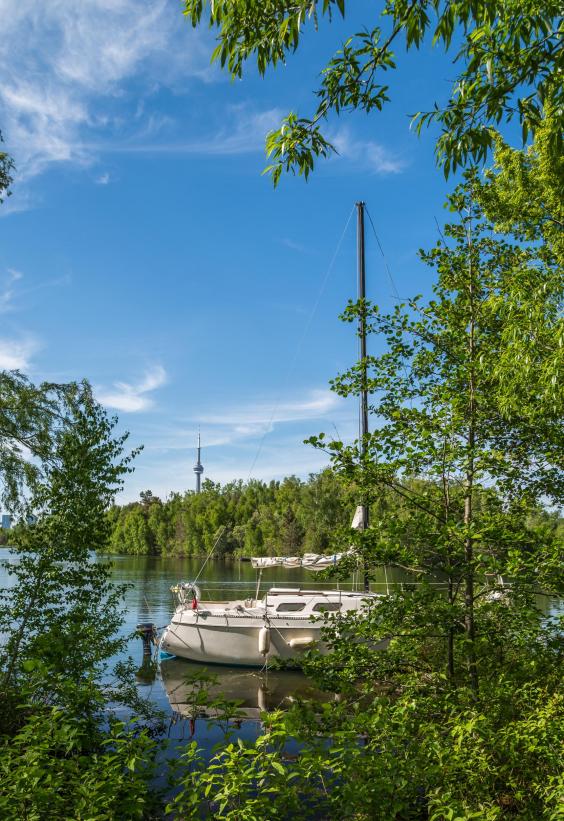
The car-free Toronto islands, just offshore, provide a great summer escape from the city, with bikes to rent and trails to explore (as well, at the western end, as an airport). From the Jack Layton Ferry Terminal, in the shadow of the Westin Harbour Castle (9), a C$7.50 return ticket takes you to Centre Island (19), Hanlan's Point (20) and Ward's Island (21), all of which are interconnected (bit.ly/TorontoIs).

shutterstock_259926443.jpg
Centre Island (Shutterstock)

An aperitif

When you return, take the lift to the Toulà Restaurant & Bar at the top floor of the Westin Harbour Castle (9). A glass of the local Ontario riesling is C$12, and ideal to sip as you drink in an excellent panorama of the city. 

Dining with the locals

You can barely walk 10 yards in Toronto without stumbling upon a good restaurant, and the city has immense diversity in cuisine as well as culture. Templeton's Cafe (22) – also known as “The Temp” – at 319 Augusta Ave (001 416 922 7423) offers Canadian-Asian fusion, with a shabby chic interior enlivened with carvings from Indo-China and everything from burgers to Pad Thai on offer in generous quantities.

Day Two

Sunday morning: go to church

The Church of the Holy Trinity (23), concealed in the middle of downtown, was built by Mary Lambert Swale of Settle in North Yorkshire, on the stipulation that all pews must be free and unreserved. Its interior is austere,  but the church is notable for its social activism. The Toronto Homeless Memorial on the south side remembers the many hundreds who have died on the streets since 1987. Visitors are invited to “Stop, Pause, and remember all these people.” Open 8am-4pm on Sunday (11am-3pm from Monday to Friday).

Out to brunch

Kensington Market is bustling on Sundays, and Our Spot (24) at 80 Baldwin Street (001 647 349 7767; 8am-3pm on Sundays) has the busiest tables in town for Greek-Canadian dishes: a bumper breakfast of fruit, eggs and salad for just C$4.50, or a Greek feta potato omelette (C$7.95).

A walk in the park

Queen’s Park (6) is a well-kept oasis just north of downtown, and home to the Ontario Parliament as well as some impressive Imperial statues. Just west, the original St George campus of the University of Toronto is open to the public and features the Philosophers’ Walk (25), which meanders north to Bloor Street – the main east-west axis through the northern part of the city. 

Cultural afternoon

From University Avenue, the Royal Ontario Museum (7) looks a prim, formal Victorian venue (001 416 586 8000; rom.on.ca; 10am-5.30pm daily, to 8.30pm on Fridays; C$17). But when you round the corner into Bloor Street, the building erupts in a crystalline series of cubes. The collection is themed on eight “Centres of Discovery” from ancient civilisation to contemporary Canada.

Directly opposite, the Gardiner Museum (001 416 586 8080; gardinermuseum.on.ca; 10am-5pm at weekends, to 6pm other days, C$15) is Canada’s ceramics museum, with more than 3,000 pieces and a mission to “inspire and connect people, art and ideas through clay, one of the world’s oldest art forms.”

edgewalk08.jpg
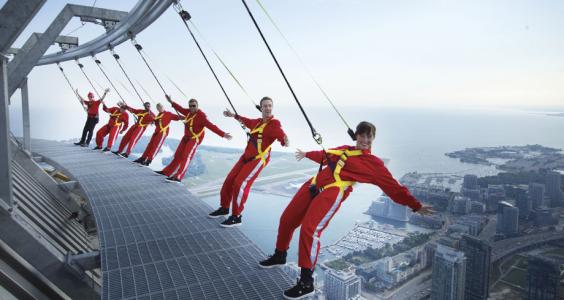
EdgeWalk at the CN Tower

Icing on the cake

One of the world’s newest art forms is the EdgeWalk from the CN Tower (4). While it is no longer the tallest free-standing structure on the planet, it does offer “the world’s highest full-circle hands-free walk.” A quarter-mile above the city, a 5ft-wide ledge encircling the visitor centre. You are hooked on via an elaborate and safe harness system, and a guide invites you to lean back over the city. If the weather is inclement, or you prefer not to spend C$195 on the experience, then content yourself with the C$35 visit to the observation platform; the glass floor might be quite enough of a thrill (001 416 868 6937; cntower.ca; open 9am-11pm daily in summer).

At the time of writing, C$1 = £0.55 / US$0.80

48 Hours in Shanghai: hotels, restaurants and places to visit

Travel essentials

Why go now?

Shanghai is easy to reach and to find your way around, yet reveals many glimpses of life in the People’s Republic. And from this summer, there are more flights than ever from the UK, with 24 departures a week from Heathrow – and countless connections from other airports.

Shanghai is also an excellent stopover for anyone planning a trip to the Far East or Australia; you can now build in a visa-free stay of up to six days, thanks to the 144-hour transit option available for passengers travelling on to another country. This is an excellent way to avoid the high price of a regular tourist visa for China, currently over £150.

Touch down

British Airways flies 10 times a week from Heathrow to Shanghai’s Pudong airport (1), while China Eastern and Virgin Atlantic go daily. The journey takes about 11 hours. The airport is a modern, efficient gateway, and public transport on the 23-mile run from the airport to the city centre is good.

The world's fastest train, the Maglev, runs every 15-20 minutes from the airport’s station to Longyang Road station (2), which is still some distance from the city centre. The 267mph top speed is attained only by a few trains, in mid-morning and mid-afternoon at other times the maximum is 186mph. The one-way fare for the ride is 40 yuan (£4.20), so long as you show a boarding pass for a recently arrived flight.

In terms of hassle, it’s actually a lot easier to __travel the whole distance by Metro line 2, which also has a station at the airport and costs only 7.50 yuan. Even on the Metro you have to change at Longyang Road (2), though it is a cross-platform switch and much simpler than the complicated journey from the Maglev station to the Metro at this junction.

At the time of publication, £1 = 9.50 yuan and $1 US = 6.50 yuan. Yuan is also written CNY (the international code for Chinese yuan) or RMB, the abbreviation for renminbi “people’s money”.

Get your bearings

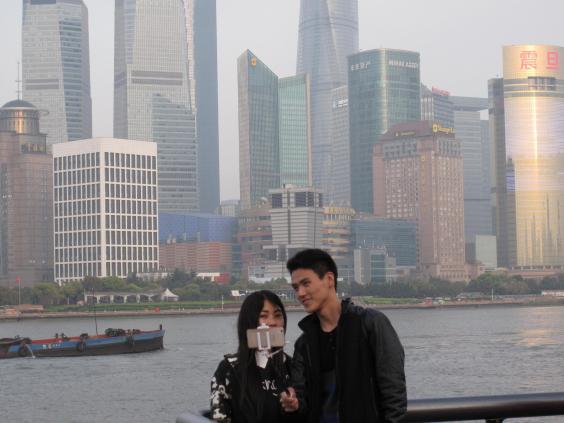
The Huangpu River a quarter-mile wide, yet a mere tributary of the Yangtse divides the city into Shanghai proper on the west bank and the Pudong district to the east. Most locations of tourist interest are on the western side beginning with The Bund (which rhymes with fund), the waterside boulevard with historic buildings on its western flank.

The main drag west from here, East Nanjing Road, leads to the top end of the vast People’s Square. The continuation, West Nanjing Road, is lined with skyscrapers and shopping malls. To the south-west, the French Concession the district assigned in the 19th century to traders from France is the most chic and European area.

Even though the city is vast, the excellent transport network makes it readily accessible. The Metro system is as extensive and easy to use as the London Underground, though much cheaper: most city-centre journeys cost 4 yuan. The hub of the networks is People’s Square station (3), where lines 1, 2 (for the airport) and 8 converge. 

Taxi drivers are knowledgeable and honest, though it helps to have your destination written down in Chinese characters. A three-mile trip costs around 20 yuan.

ShanghaiHighway
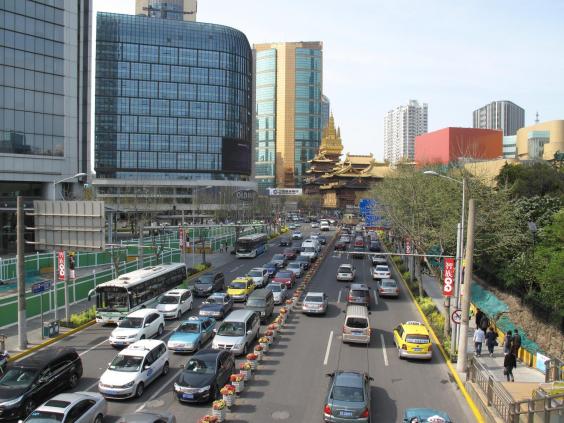
One of the city's main arteries (Simon Calder)

Check in

Compared with other world cities, prices for hotels with heritage in Shanghai are low. The top choice place to stay, for style if not location, is the Moller Villa Hotel (4) a Norwegian-style fantasy in luxuriant grounds at 30 Shaanxi Road (00 86 21 6247 8881; mollervilla.com). A “superior” room costs 1,725 yuan (£180) for a double, excluding breakfast

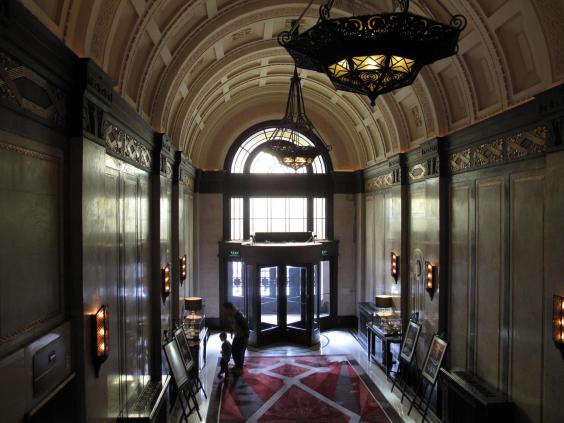
Right at the centre of Shanghai life is the Park Hotel (5) at 170 West Nanjing Road (00 86 21 6327 5225; parkhotelshanghai.cn). The first high-rise in Shanghai, it was designed by the Hungarian architect Ladislau Hudec who was a First World War prisoner in Siberia but escaped and made his way to China. Its four-star rating is ambitious, and the double-room rate of 1,396 yuan excluding breakfast is expensive, but lovers of Art Deco may think it well worthwhile.

A third historic property, right on The Bund, is the Fairmont Peace Hotel (6)  arguably with the best address in town, at 20 Nanjing East Road (00 86 21 6138 6888; fairmont.com). Inside, many of the original 1920s features have been preserved from its days as the Cathay Hotel. Rooms booked independently tend to be expensive, but as part of a package you can get an excellent price. British Airways has a deal in July for £770, including non-stop outbound flights, two nights and a return flight via Hong Kong, based on two sharing (this flight arrangement also enables you to qualify for the visa-free stay). The rooms at the Peace Hotel do not offer space and luxury in abundance, but the sense of history is unbeatable.

ShanghaiPeaceHotel
Fairmont Peace Hotel (Simon Calder)

Day one

Take a hike

… along the bend known as The Bund (and officially as Zhongshan Road), where the merchants of Europe left their mark early in the 20th century. Start at the Peace Hotel (6). Even if you are not a guest, you are welcome to visit the hotel’s small museum on the first floor (it’s difficult to find, so ask for help).

viewfromthebund.jpg
Picture this: The river view from Shanghai's historic bund (Simon Calder)

Follow the curve in the river south, past the 1922 former Chartered Bank  now an upmarket complex known as Bund 18. Just past the corner of Jiujiang Road, the elegant Russo-Asiatic Bank was the first natural stone-built building in Shanghai. The Customs House (7) at number 13 still sets the time for the city, with what was the biggest bell in Asia when it opened in 1927. 

The Hongkong and Shanghai Bank (8) at number 12 is the largest building on The Bund and was regarded, when it opened in 1923, as the most elegant structure between the Suez Canal and the Bering Strait. At the Waldorf Astoria (9) at number 2, walk in the century-old doors, glimpse the Long Bar (though you may find it gloomy and overpriced). Then walk right through the hotel, taking in the 1910 flourishes until you reach the opposite entrance on Sichuan Road.

Lunch on the run

Two blocks north along Sichuan Road, at the corner of Fuzhou Road, Shanghai Grandmother (10) is a Cantonese restaurant whose signature dish is braised pork belly with braised aubergine a lighter alternative. Prices are relatively high for Shanghai, but it is still difficult to spend more than around 40 yuan per person (less than a fiver). 

Cultural afternoon

Follow Fuzhou Road a mile west (or grab a taxi) and you reach People’s Square, whose prime sight is the Shanghai Museum (11) (00 86 21 6372 3500; shanghaimuseum.net). The 20-year-old modern structure is spectacular, with a circular gallery space atop a square base in tune with the ancient Chinese belief in a square earth and a round sky. Its slogan, “Roam Through The World Of Art In Ancient China”, sums up the experience. The collection exceeds one million objects, but fortunately only a small proportion are on display, with the bronze sculptures (ground floor), ceramics (second floor) and calligraphy (third floor) particularly impressive. It opens 9am-5pm (last admission 4pm), but there is a daily limit of 8,000 visitors. Admission is free.

An aperitif

Could the open-air Vue bar on level 33 of the Hyatt on The Bund (12) at 199 Huang Pu Road (00 86 21 6393 1234; shanghai.bund.hyatt.com) have the best view of any hostelry in the world? Even the approach, in a glass-sided lift, is breathtaking. Admission is 100 yuan, which includes a beer, glass of wine or soft drink. You may need to linger over it; the bar opens at 5.30pm, and although the optimum time to be here is sunset, it can be tricky to find a good table if you arrive too close to dusk.

Dine with the locals

Celebrating locals, out-of-town Chinese tourists and Western expatriates congregate at Lao Beijing (13) at 1 South Henan Road  basically a vast Peking duck restaurant concealed inside what looks to be a forbidding Communist monolith. Duck is the speciality, served theatrically by extravagantly costumed waitresses.

For something more economical, the three blocks of South Yunnan Road (14) between Yanan and Huaihai Roads are lined with cheap and cheerful local eateries.

Day two

Sunday morning: Go to temple

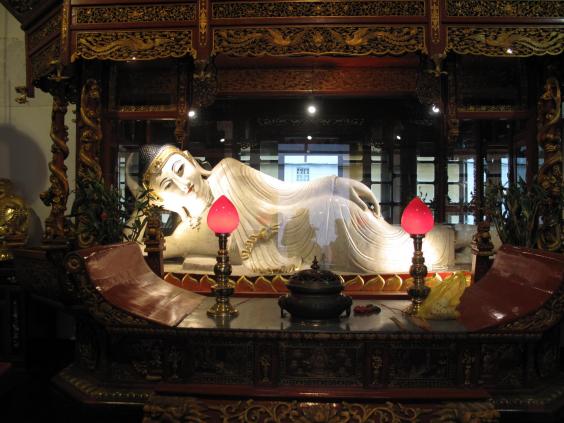
The Jade Buddha Temple (15) is a long way north-west of the centre, but well worth the cab ride to the corner of Jiangning and Anyuan Roads and the 20 yuan admission fee (8am-4.30pm) to witness one of Shanghai’s few vibrant Buddhist places of worship. The visit begins with viewing the exquisitely carved Jade Buddha itself, but the more intriguing sights and smells occur at the back of the complex, in the Incense Burning Area. Ancestors and the recently departed are celebrated with clouds of incense and the ignition of paper lanterns.

JadeBuddhaShanghai
Temple vision: the Jade Buddha (Simon Calder)

Out to brunch

From the temple, walk to Suzhou Creek (also known as Wusong River) and follow the waterway upstream to the M50 Art District (16) at 50 Moganshan Road. The paintings, sculptures and installations in this former textile mill and electrical works are as edgy as you will find anywhere in China. Furthermore there are some good places to eat, including the Bandu Cabin in Building 11, where good, strong coffee accompanies Chinese and Western treats (00 86 21 6276 8267).

A walk in the park

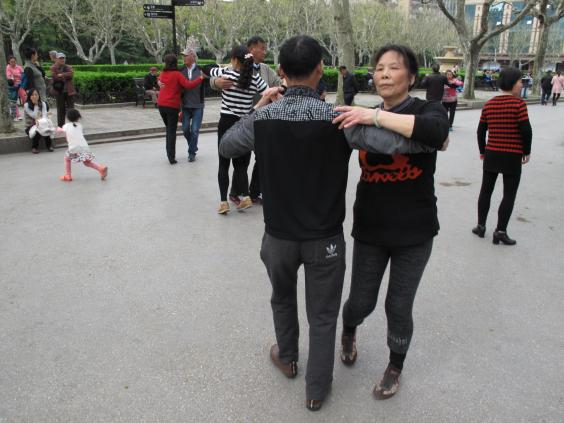
The freeways that carve up Shanghai are best appreciated from a taxi racing north to south down the North Chengdu and South Chongqing Roads to Fuxing Park (17), a swathe of green laid out in a French style  apart from the incongruous giant statue of Marx and Engels (18). You may even catch some outdoor ballroom dancing.

FuxingParkShanghai
Outdoor ballroom dancing in Fuxing Park (Simon Calder)

Just west is the former residence of Sun Yat-sen (19), the first president of republican China, and just south of that stands the handsome former villa of Zhou Enlai (20), first premier of Communist China. Both have opulent grounds, as well as exhibitions that are reverential in tone.

Window shopping

Wander east and you reach Xintiandi (21), where some of the elements of early 20th century Shanghai have been preserved and now form the premises of fashion designers. 

To experience the retail frenzy in full flow, the Flower, Bird, Fish and Insect Market (22) on Middle Xizang Road is especially engrossing.

For many Chinese, Shanghai represents a window to the West most dramatically along East Nanjing Road, the busiest shopping street in China. If you have never ridden on a spiral escalator, take the opportunity at the New World Daimuru mall (23).

Icing on the cake

Sit back in amazement at the Shanghai Acrobatic Troupe, which performs most nights at 7.30pm at the theatre in the Shanghai Centre (24) on West Nanjing Road (shanghaicentre.com). You can buy tickets on the door for 120 yuan. Or try some cut-price karaoke, known in China as KTV. At a venue such as Haoledi (25) on Xizang Road, an hour and a few beers to lubricate the larynx costs around 200 yuan.

48 hours in Ottawa: hotels, restaurants and places to visit

Why go now?

Canada’s capital was chosen in 1857 as “the least objectionable place” to locate the seat of government. Today, few cities are blessed with the superb location and sheer good looks that Ottawa enjoys. Autumn is the ideal time to visit: the summer heat is cooling, and tinges of red and gold are starting to colour the great outdoors in which the city is set.

The nation’s parliament returns on Monday 19 September, and as Ottawa gets back to work, the cultural pulse of the city quickens – with the One World Film Festival (oneworldfilmfestival.ca) running 29 September to 2 October.

Get your bearings

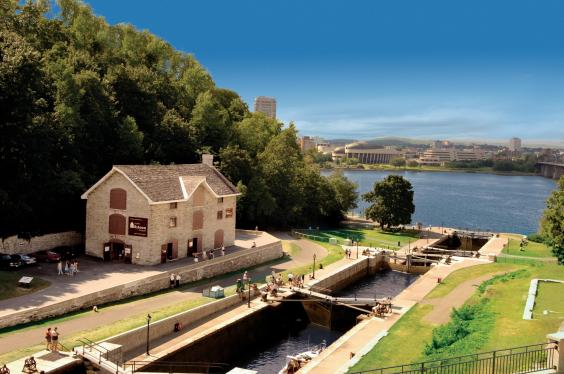
The capital is defined by two waterways. The broad Ottawa River marks the north-western edge of the city, with national institutions on the high bluff above the water. Just below Parliament Hill, the Rideau Canal meets the river at the Ottawa Locks (1). The canal cuts south-east through the city. The commercial hub is clear from the huddle of skyscrapers that populates the area south and west of the canal.

bytown-museum-and-rideau-canal-locks-credit-ottawa-tourism.jpg
Bytown Museum and the Ottawa Locks (Ottawa Tourism)

The Capital Information Kiosk (2) at 90 Wellington Street opens 9am-5pm daily (001 844 878 8333; ottawatourism.ca). It is more grand than the name suggests: it formerly a branch of Molson’s Bank, as the ornate mosaic on the floor testifies.

Congestion in and around the city centre can be intense, due to the construction work expanding the light-rail system, the O-Train. The network should be complete in 2018.

Currently C$1 = £0.57 or US$0.76.

Day one

Take a view

Nepean Point (3), overlooking the Ottawa River,  provides an excellent overview of the city and its verdant surroundings. It also looks back to the early days of European occupation, in the shape of an equestrian statue of Samuel de Champlain, who founded New France in 1608.

Take a hike

An enlightening two-mile hike begins from just below Nepean Point (3). The Trans-Canada Trail, which runs through the capital, leads you along the south bank of the Ottawa River, beneath the main structures of government on Parliament Hill. Leave the trail and aim for the steps that take you up to the Library and Archives (4) at 395 Wellington Street. The ground floor level is open 10am-6pm at weekends (6am-11pm on weekdays). It contains emblems of nationhood – including a statue, donated by Iceland, representing the first Europeans in Canada – as well as a new exhibition, Icons of Knowledge, which opens on Thursday 22 September.

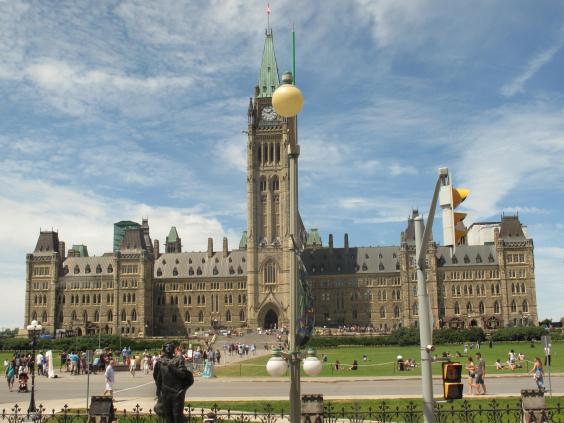
Wellington Street leads you past the Supreme Court (5), the Confederation Building (6) and Parliament (7). To visit the Parliament, call in at the Capital Information Kiosk (2) for a free ticket. With summer over, you may be able to get a space on an imminent guided tour, lasting 40 minutes, of the interior. Or just pick up a ticket for the Peace Tower, Ottawa’s answer to Big Ben (which is also open to visitors on guided tours).

canada-parliament-ottawa.jpg
The Parliament building (Simon Calder)

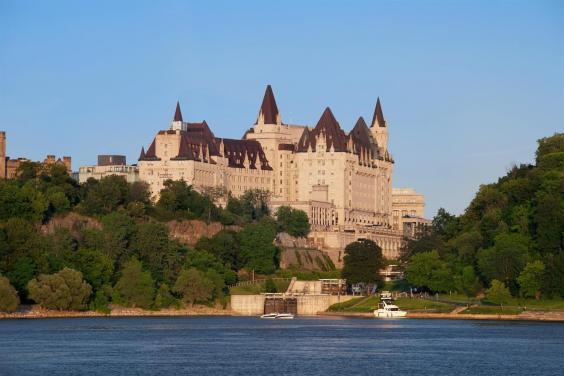
One more impressive monument remains: the French gothic Chateau Laurier (8), a grand hotel built to host passengers arriving on the Canadian Pacific Railway (the station used to be in the city centre, but the trains have since moved several miles out). It is named for Sir Wilfred Laurier, the nation’s first French-Canadian, bilingual Prime Minister, who helped secure permission to build it on a patch of parkland. There's a gallery on the ground floor depicting the hotel’s colourful history.

Read more

  • Travel guide to fly-drive Canada: how to plan a road trip to North America's wildest corners
  • Do I need a visa for Canada now?
  • 48 Hours in Toronto: hotels, restaurants and places to visit in Canada's largest city

Lunch on the run

The hike ends on the edge of ByWard Market, the entertainment and dining district. Lt-Col John By, who laid out the area in 1826, specified that George Street and York Street should be extra wide to allow for market stalls – which sell fresh produce daily except in the depths of winter. 

You could pick up the ingredients for a picnic, or choose one of the many competing lunch options. If you’re happy to splash out, the small plates at Play (9) at 1 York Street (001 613 667 9207; playfood.ca) are always tempting; you can order two for C$22 (£12.57) at lunchtime. 

Take a ride 

Take southbound bus 1 or 7 (fare C$3.65, cash only), and you get an excellent tour of the city thrown in. From the top deck, you get a fresh perspective on Wellington Street – note the banners showing flowers from each of the Canadian provinces. Then the bus turns south, and cuts through the layers of commerce and culture along Bank Street. Once you get beyond Highway 417 (the motorway to Montreal), you reach The Glebe – with the highest concentration of independent (and sometimes weird) stores in Ottawa. 

Window shopping

Start at the junction with First Street. The Great Glebe Emporium (10) at 724 Bank Street has an eclectic selection of arty gifts, while at the junction of Third Street, at No 791, Delilah in the Glebe (11) turns local designs into retro fashion. In the next block on the other side of the road, The Flag Shop (12) at No 838 (ottawa.flagshop.com) offers possibly the widest range of national banners you have ever seen.

The area is interspersed with places to pause, such as Wild Oat Bakery (13), at No 817, where you can sip a mango lassi. Where Bank Street broadens on its way south, a bunch of newer stores bring more recognised brands – but for Ottawa’s best selection of “respectable retail”, the Rideau Centre (14), at 50 Rideau Street, re-opened in the heart of the city last month after some dramatic remodelling. 

An aperitif

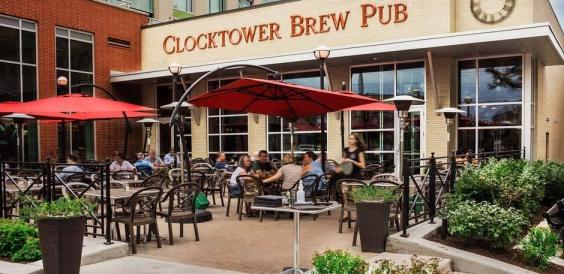
Late September in Ottawa often features warm evenings, and several locations on Bank Street in The Glebe offer outdoor tables on terraces: try the Clocktower Brew Pub (15) close to the freeway (001 613 724 4561​; clocktower.ca), or the FarmTeam Cookhouse (16) at 683 Bank Street (001 613 680 3324; farmteamcookhouse.ca). Both offer local beers such as Beau’s Lug Tread and St Ambroise Apricot Wheat Ale.

12651198-1116350605091236-1516151055613024216-n.jpg
Indulge in an al-fresco beer ( The Clocktower Brew Pub/Facebook)

For a view of the water rather than the traffic, return to the city centre and visit the Mill Street Brew Pub (17) at 555 Wellington Street (001 613 567 2337; millstreetbrewery.com) overlooking one of the veins of the Gatineau River just across from Portage Bridge.

Dine with the locals

Still in The Glebe? Try the “gourmet burger bistro” known as The Works (18) at 580 Bank Street (001 613 247 0406; worksburger.com), which spawned sister restaurants in other Canadian cities.

For something significantly more sophisticated, return to ByWard Market. E18hteen (19) at 18 York Street (001 613 244 1188; restaurant18.com) has a five-course Tasting Menu for C$95 (£54.30), offering the best of its meat and seafood options.

12916769-10153923707465465-5137532544007724469-o.jpg
E18hteen serves sophisticated meat and seafood dishes ( E18hteen/Facebook)

Day two

Sunday morning: out to brunch

If jet-lag has woken you early, Zak’s Diner (20) at 14 Byward Market Square (001 613 241 2401; zaksdiner.com) is the answer; it’s open 24 hours a day, serving a massive Lumberjack’s Breakfast (egg, bacon, cheese, homefries, toast…) for $15.49 (£9).

A walk by the canal

The Rideau Canal is an extraordinary waterway created as a British military supply route, following an ancient Indian canoe route to connect the Navy Yards at Kingston on Lake Ontario with the Ottawa River. It rises from the river in a magnificent flight of eight locks. The stone cottage halfway up houses the Bytown Museum (21), which tells the story of settlement from the early 19th century; the ground floor (with free access) offers an overview of the history of the waterway (001 613 234 2570; bytownmuseum.ca; 9am-4pm daily except Monday).

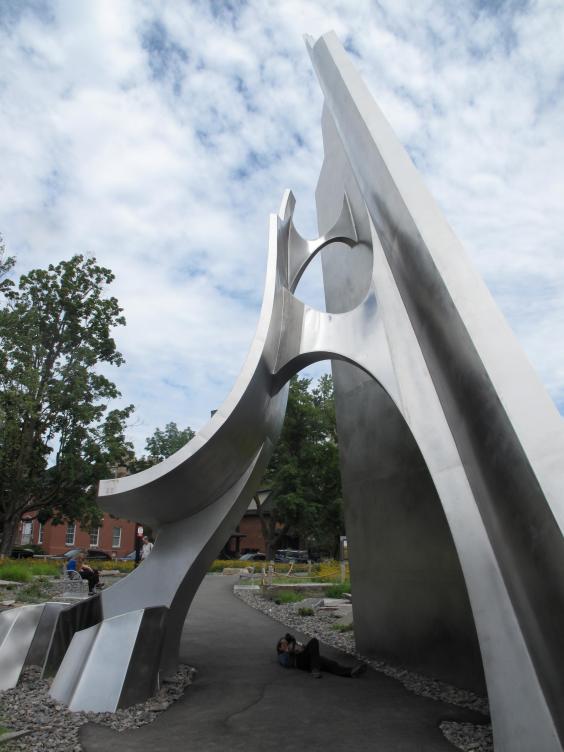
Heading south, the canal's tree-lined banks provide a verdant antidote to the city streets. Just before it reaches the freeway, bear right along Argyle Avenue to the Canadian Museum of Nature (22) – which has a brand new shard of steel this autumn, in the shape of Bill Lishman’s study of an iceberg. It soars skyward from terrain intended to represent the Arctic tundra in the north of Canada.

The museum, formerly the Victoria Memorial Museum, served as Canada’s parliament following a ferocious fire a century ago; 9am-5pm daily except Monday, with late opening to 8pm on Thursdays; admission C$13.50 (£11.15) (nature.ca).

icebergsculpture3.jpg
Bill Lishman’s iceberg sculpture (Simon Calder)

Cultural afternoon

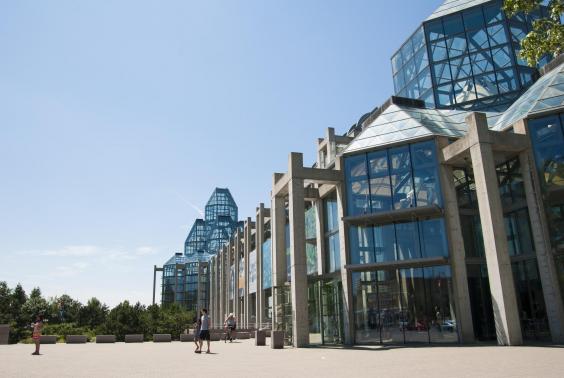
Ottawa is extremely rich in culture. The shiny National Gallery of Canada (23) at 380 Sussex Drive (001 613 990 1985; www.national.gallery.ca) is prefaced by a giant spider, Maman. Once inside you can discover some remarkable Inuit art on the ground floor, which has the nation’s best collection of carvings from the Arctic world. You can also inspect a reasonable collection of European Old Masters, but the architecture is equally impressive – especially the Keorner Family Atrium. The Gallery also contains the Rideau Chapel, which was rescued from destruction and is now buried in the heart of the building. It opens 10am-5pm daily except Monday (to 8pm on Thursdays), admission C$12 (£6.85). 

national-gallery-of-canada-ngc-exterior-people-summer-credit-ottawa-tourism.jpg
National Gallery of Canada (Ottawa Tourism)

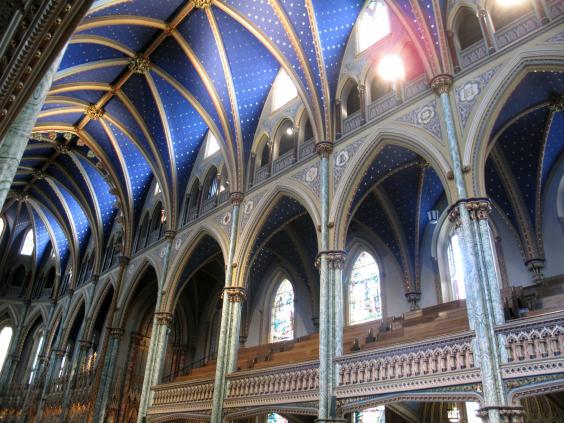
Almost next door to the Gallery stands the Notre Dame Cathedral Basilica (24) at 375 Sussex Drive. Inside, the cathedral is spacious and ornate, its blue ceiling covered with gold stars. It opens 8am-8.15pm on Sunday, 11.30am-6pm on Monday, 7.30am-6pm Tuesday-Saturday.

ottawa-cathedral1.jpg
Notre Dame Cathedral Basilica (Simon Calder)

The crowning cultural attraction is across the river in Gatineau: the Canadian Museum of History (25), whose entrance is close to the north end of Alexandra Bridge (001 819 776 7000; historymuseum.ca; 9.30am-5pm daily; Thursdays to 8pm; $15/£9). The country’s story, from First Nations people through early European exploration to the modern Canada, is told with some spectacular exhibits, such as the totem poles on the ground floor. 

Icing on the cake

“Indulgent moments since 1978” is the boast of the BeaverTails kiosk (26) at 69 George Street, in ByWard Market (beavertails.com), where deep-fried spears of dough are available with a variety of toppings including cinnamon, sugar and lemon (C$4.75/£2.70), chocolate and hazelnut (C$5.75/£3.30) and cheesecake (C$6.25/£3/60).

Travel essentials

Getting there

Air Canada (0871 220 1111; aircanada.com) flies from Heathrow to Ottawa with a stop in Halifax, while WestJet (00800 5381 5696; westjet.com) flies from Gatwick to Ottawa with a stop in St John’s. 

The airport (27) is nine miles south of the city centre. Bus 97 departs from outside the level 1 arrivals area (pillar 14) for central Ottawa. The journey of 30-40 minutes costs C$3.65. A taxi costs around C$40 (£22.86) and takes 20 minutes.

Montreal’s Trudeau airport has many more flights from the UK, including services on Air Transat and British Airways as well as Air Canada and WestJet. Frequent buses run direct from Montreal airport in around two hours to Ottawa’s modest bus station (28).

Staying there

Now part of the Fairmont brand, the Chateau Laurier (8) at 1 Rideau Street (001 613 241 1414; fairmont.com) is the grande dame of Ottawa hotels. The typical rate for a double room is C$429 (£245), though cheaper deals are available at weekends. Join the President’s Club loyalty programme (no fee) to qualify for free wi-fi and use of the bikes that are kept by the concierge.

clh-v-100-478164-med.jpg
Fairmont Chateau Laurier

The Swiss Hotel (29) at 89 Daly Avenue (001 613 237 0335; swisshotel.ca) is a small, family-run property just away from the hub of the city. It might not be quite the boutique hotel it claims, but the two-night-minimum stay rate of C$173 (£99), without breakfast, is good value. The adjacent Barefoot Hostel (30), which has the same owners, has just become an all-female hostel, with beds from C$34 (£19.50).

The Ottawa Jail Hostel (31) at 75 Nicholas Street (001 613 235 2595; hihostels.ca/ottawa) was established in 1862 as the Carleton County Gaol prison, and offers the chance to stay in an unreconstructed small cell. “A truly once-in-a-lifetime experience not available anywhere else in the world without actually breaking the law” is promised The rate is C$45 (£25.75), including breakfast; standard dorm beds and private rooms are also available.

48 hours in Dublin: hotels, restaurants and places to visit

Travel essentials

Why go now?

This time of year sees a number of festivals and events taking place in the capital. Many of the country’s historic properties fling open their doors with special events for National Heritage Week (heritageweek.ie), from 20 to 28 August. Microbreweries have been riding a wave of popularity all over the country, so much so, there’s now a festival dedicated to it. The Irish Craft Beer Festival (irishcraftbeerfestival.ie) takes place from 8 to 10 September at The Royal Dublin Society (1) and is a chance to sample a vast array and meet the makers. Tickets cost €10. And finally, Ireland’s theatrical credentials are well known the world over. The Tiger Dublin Fringe Festival (fringefest.com) takes place from 10 to 25 September with more than 300 performances over its run. 

Touch down 

There are numerous flights from the UK to Dublin with airlines including Ryanair (0871 246 0000; ryanair.com), Aer Lingus (0871 718 5000; aerlingus.com), CityJet (0871 666 5050; cityjet.com), Flybe (0871 700 2000; flybe.com) and British Airways (0344 493 0787; ba.com). There are also ferries to Dublin with Stena Line (0871 244 1545; stenaline.co.uk) and Irish Ferries (08717 300 400; irishferries.com) from around 190 return. 

Dublin Airport (2) is 12km north of the centre. There is no rail link but the 24-hour Aircoach shuttle (00 353 1 844 7118; aircoach.ie) provides a handy alternative, which runs every 10 minutes at peak times and stops throughout the city; €7 one-way, €6 if booked in advance online.

Dublin Bus (00 353 1 873 4222; dublinbus.ie) also operates the 747 Airlink to the Central Bus Station (3) priced at €6 one-way, and has just introduced a new 757 route - useful if you are staying on the south side of the Liffey with stops at Grand Canal Dock (4), Merrion Square (5) and St Stephen’s Green (6). A taxi will cost about €25 one-way.

Get your bearings

Dublin’s natural dividing line is the River Liffey, which flows languorously out towards Dublin Bay. O’Connell Street is the city’s spiritual heart and its monumental General Post Office (7) was where the main events of the Easter Rising took place 100 years ago, changing the course of Irish history forever.

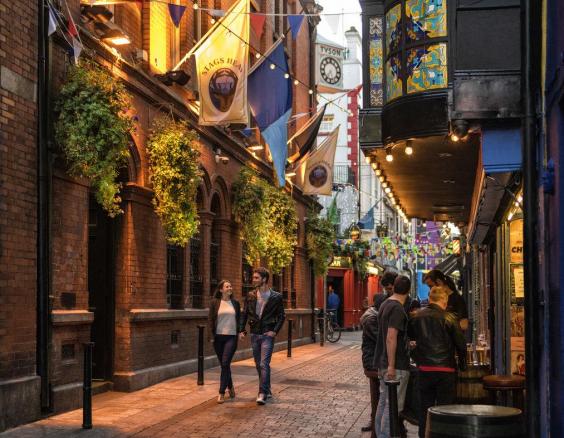
South of the river is the cobblestoned streets of Temple Bar (8), Trinity College (9) and a mostly intact Georgian streetscape around St Stephen’s Green (6), Merrion (5) and Fitzwilliam Squares (10). Further east is the city’s regenerated Docklands area (11).

The Discover Ireland Centre (12) is set in the former Church of St Andrew on Suffolk Street (00 353 1 605 7700; visitdublin.com). It opens 9am-5.30pm Monday to Saturday, Sundays 10.30am-3pm.

medium-rdp-20140909-00457.jpg
Temple Bar is known for its lively nightlife and is a favourite spot for savouring a Guinness (Rob Durston)

Check in

The Merrion (13) on Upper Merrion Street (00 353 1 603 0600; merrionhotel.com) offers a glimpse into the grandeur of Georgian era Dublin - albeit with more modern luxuries - and spans four stately mansions opposite Ireland’s seat of parliament, known as The Dail (14). Doubles cost from €295 per night, B&B.

With rooms like Mod Pod and Punk Bunk, there’s a hip, youthful vibe at The Dean (15), 33 Harcourt Street (00 353 1 607 8110; deandublin.ie), a design-conscious spot carved from a terrace of Georgian townhouses. There’s a great cityscape from the rooftop Sophie’s Bar and Restaurant. Doubles from €155, room-only.

The Generator (16) on Smithfield Square (00 353 1 901 0222; generatorhostels.com) is one of the best budget options - with private rooms costing from €65 per night, B&B. 

Day one

Take a hike

Start on the northside of the River Liffey and cross via its main point, O’Connell Bridge (17), for fine views in both directions. Continue along Westmoreland Street and soon you will arrive at College Green (18); to your right is the imposing Bank of Ireland Building (19), the erstwhile seat of power under British rule.

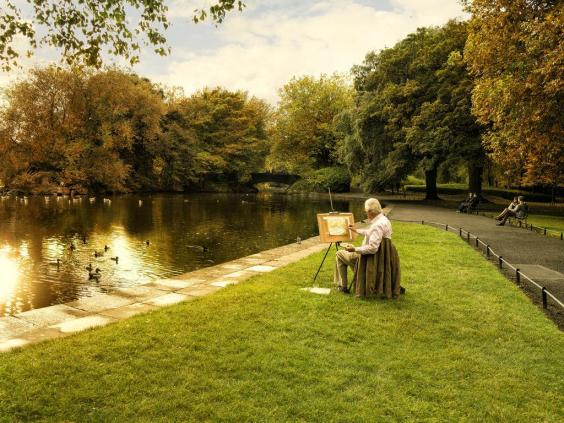
Bear left and pass under the landmark arch of one of Ireland’s most influential seats of learning, Trinity College (9). Cross the quad and pass the college’s leafy lawns and playing fields, exiting at Lincoln Place. Continue along Clare Street and bear right onto Merrion Square (5), bordered on all sides by elegant Georgian townhouses. To your left is the National Gallery of Ireland (20) and on Upper Merrion Street, The Dail (14). Bear right down Merrion Row and you will emerge onto St Stephen’s Green (6), Europe’s largest city square. 

medium-rdp-20140930-08073.jpg
St Stephen's Green is reputed to be the largest city square in Europe (Rob Durston)

Lunch on the run

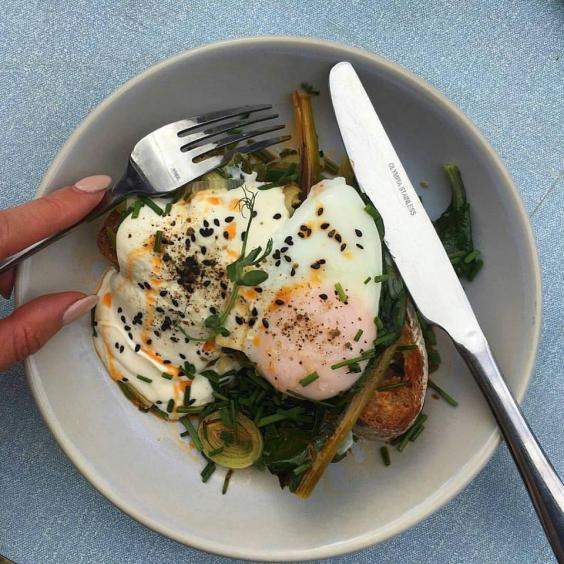
Named after a Bob Dylan lyric, the recently opened Meet Me in the Morning (21) (50 Pleasants Street, find them on Facebook), has swiftly risen to the top of foodies’ lists, garnering wild praise for its winning formula of interesting food and specialty coffee served up in friendly surroundings. The 'egg and greens' has already become a staple, while gazpacho with black kale on toast is another to try if it’s on the menu. From €10. 

Window shopping

Grafton Street is the city’s main upmarket retail row. Browse designer department stores Brown Thomas (22) at 88-96 Grafton Street (00 353 1 605 6666; brownthomas.ie) and Avoca (23), on neighbouring Suffolk Street (00 353 1 677 2451; avoca.ie). There's also a burgeoning scene of independent small boutiques on Drury Street (24)

An aperitif

Dublin has its fair share of urbane cocktail and wine bars, but for most people a highlight of any visit is the opportunity to sip a pint of Guinness in one of the many traditional pubs dotting the city. Try Grogans Castle Lounge (25) at 15 William Street (00 353 1 677 9320; groganspub.ie), a one-time haunt of literary giants like Patrick Kavanagh, J.P Donleavy and Flann O’Brien, who immortalised it in 1939 novel At Swim-Two-Birds

egg1.jpg
The egg and greens has become a staple dish at relaxed specialty coffee and food cafe Meet Me in the Morning (Meet Me in the Morning)

Dine with the locals

The just opened Charlotte Quay (26) at swish Millennium Tower (00 353 85 757 9198; charlottequay.ie) is Dublin’s latest must-dine. Slightly off the beaten path with a pleasant waterside location, it’s the latest venture from the team behind the city centre’s hopping Coppinger Row. A buzzy, casual atmosphere prevails and the menu looks towards the Middle Eastern for inspiration. Main meals here can nudge up to €30.

Or join the queue for a place at tiny Forest & Marcy (27), 126 Leeson Street Upper (00 353 1 660 2480; forestandmarcy.ie), an offshoot of Forest Avenue around the corner. It serves innovative sharing plates, like fermented potato bread with bacon and cabbage, and an impressive list of small-producer wines. Small plates cost anything between €4 and €20.

Day Two 

Sunday morning: a quick history lesson

This year Ireland celebrated the 100th anniversary of the Easter Rising - the armed insurgence of Irish republicans determined to end British rule in April 1916. While the uprising failed, it won more public support for republicanism and reset the course of Irish history. Richmond Barracks (28), off Bulfin Road in Inchicore (00 353 222 8400; richmondbarracks.ie), was where many of the insurgents were held before being moved to Kilmainham Gaol, and in June it opened an exhibition dedicated to their stories. It opens on weekdays from 10am to 4pm and on Saturdays and Sundays at 11am (access is only by pre-booked guided tours at the weekend). Admission and tour costs €8 total per adult. 

Ireland’s globetrotting diaspora is the subject of one of the city’s latest attractions, EPIC (29), at The chq Building, Custom House Quay (00 353 1 531 3688; epicirelandchq.com). The museum tells the story of the Irish abroad, revealing surpising insights into some well-known figures’ Irish ancestry - like Charles de Gaulle and Billy the Kid. It opens daily from 9am to 6pm and admission costs €16, advance booking recommended. 

medium-rdp-20141002-05018.jpg
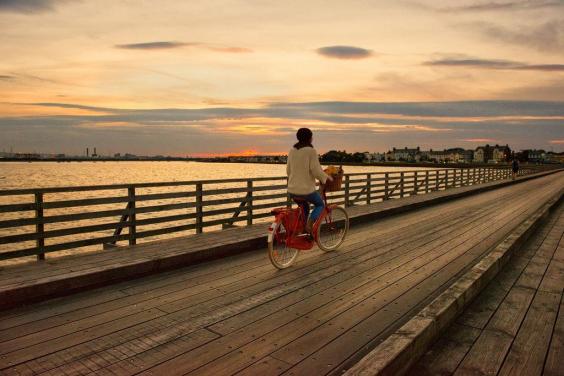
Cycling Dublin's sea walls is a lovely way to admire Dublin Bay. Pictured here is Bull Wall, which faces the longer Great South Wall (Rob Durston)

Out to brunch

Breakfast is a relaxed affair at The Fumbally (30) (00 353 1 529 8732; thefumbally.ie), which occupies a bright space on the busy Clanbrassil Street. Try Fumbally Eggs, €6, lightly scrambled with Gubbeen cheese on brioche. They also make a mean latte.

A walk in the park

The National Botanic Gardens (31) in Glasnevin (00 353 1 857 0909; botanicgardens.ie), just 3km from the city centre, are well worth a wander. Established in 1795, there are over 17,000 different plants cultivated here from all over the world, including six that are already extinct in the wild. Admission is free and guided tours are free on Sundays. From March to October it opens weekdays from 9am to 5pm, and at 10am to 6pm on Saturdays and Sundays. 

On your bike

Hire one of the bicycles from sharing scheme "dublinbikes" (dublinbikes.ie) and cycle along the sturdy granite flagstones of the Great South Wall (32). Extending for 4km into Dublin Bay, it's one of the longest sea walls in Europe. At the end is the distinctive Poolbeg Lighthouse, painted red to indicate portside for ships entering Dublin port, and there are sweeping views of Dublin Bay and its suburbs. 

medium-rdp-20140929-8232.jpg
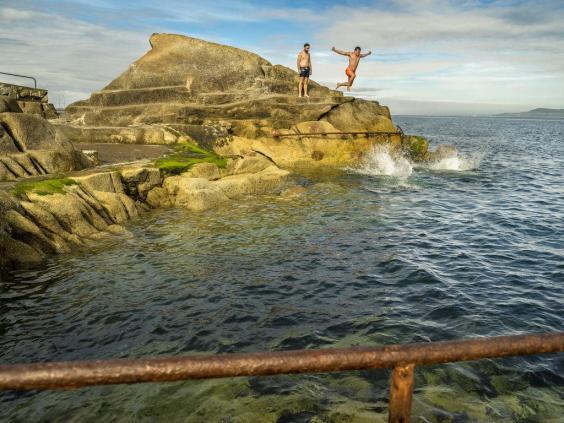
For a proper Dublin experience, take a dip at The Forty Foot, a favourite bathing spot in Sandycove (Rob Durston)

The icing on the cake

One of Dublin’s most alluring traits is the ease with which you can leave behind the urban streets and escape to the seaside. Pack your swimming costume and take the DART (Dublin Area Rapid Transit) from Pearse Street Station (33) to Sandycove (a single to Sandycove is €3.25 for an adult). From there, it’s a short stroll to The Forty Foot, one of Dublin’s enduring bathing spots, mentioned in the opening chapters of James Joyce's Ulysses. Once the preserve of male bathers, now everyone takes the plunge together come rain or shine.