Saturday, 25 March 2017

48 Hours in Montpellier: hotels, restaurants and places to visit in the capital of Languedoc-Roussillon

Travel Essentials

Why go now?

Bastille Day is just around the corner and the Tour de France (letour.com) also rolls into town on 13 and 14 July. 

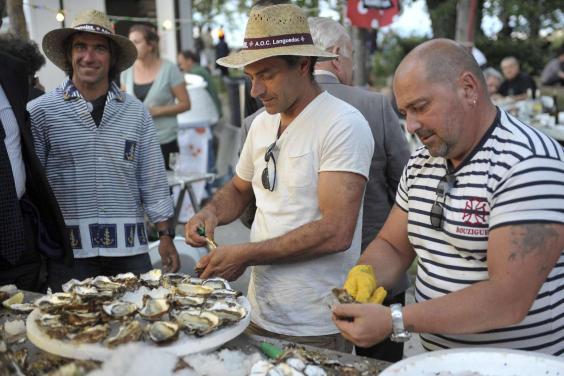
Between 8 July and 26 August, from 6-11.30pm every Friday, over 160 local wine makers from the surrounding vineyards of the Languedoc Roussillon set up stalls along the L’Esplanade Charles de Gaulle (1) for les Estivales de Montpellier (montepellier.fr) to showcase their wines. Two wine tastings cost €5. 

What began as a classical music festival now extends to many different genres, with over 200 performances around the city during the Festival Radio France Montpellier et Languedoc Roussillon (festivalradiofrancemontpellier.com), from 11 to 26 July. 
estivales-huitres-hommes-maillot-raye_free_format.jpg
Oyster stall at the Estivales de Montpellier 

Touch down

Montpellier airport (2) (montpellier.aeroport.fr) is just 8km south east of the city centre; easyJet (0843 104 5000; easyJet.com) flies from Gatwick and Luton and Ryanair (0871 246 0000; ryanair.com) from Leeds Bradford. Aer Lingus (03333 006 6920; aerlingus.com) also launched a new route from Dublin to Montpellier this summer. 

The airport shuttle bus 120 departs from outside the airport terminal on the hour every hour and takes about 15 minutes to the Place de L’Europe (3). Single fares cost €1.60. A taxi to the centre costs about €25 one-way.

Return rail travel from London St Pancras to Montpellier costs around £130 return and is a seven to eight hour journey with a change in Lyon, Lille or Paris (08432 186 186; eurostar.com). Montpellier’s St-Roch station (4) is close to the Old City.  

Get your bearings 

Set about 10km from the Mediterranean, the capital of the Languedoc-Roussillon is a city of both the very old and very new. The shield-shaped medieval Old Town is a tangle of mellow, cobble stoned streets dating from the 10th century. Its spiritual heart is the Place de la Comédie (5), one of the largest pedestrianised squares in Europe. To the southeast, bordered by the Lez river, are Montpellier’s more contemporary quarters; the neo-classical inspired Antigone designed in 1978 by Catalan architect Ricardo Bofill and Port Marianne, dotted with striking architecture such as the Hôtel de Ville (6), designed by Jean Nouvel and François Fontès and Philippe Starck’s fitness centre, bar and café, The Cloud (7) (lenuage.fr).

Montpellier’s main tourist office (8) is at 30 Place de la Comédie (00 33 4 67 60 19 27; montpellier-france.com). It opens Monday to Saturday from 9.30am- 6pm and Sunday 10am-5pm. 

Check in

Right on the Place de la Comédie is the newly restored Grand Hôtel du Midi (9), 22 Boulevard Victor Hugo (00 33 4 67 92 69 61; chateauxhotels.com) with 44 rooms and a Jazz-era tone to interiors. Doubles start at €180 including breakfast. 

Le Guilhem (10) 18 rue Jean Jacques Rousseau (00 33 4 67 52 90 90; leguilhem.com) is a 16th-century building with simple rooms tucked in one of the most atmospheric parts of the Old Town, close to the Place de la Canorgue. Doubles from €84, room-only. 

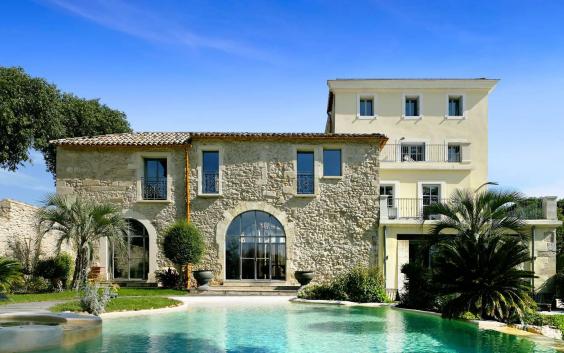
Surrounded by vineyards, 10 minutes from the centre, Domaine de Verchant (11), Boulevard Philippe Lamour, Castelnau le Lez (00 33 4 67 07 26 00; domainedeverchant.com) is a refined, 16th-century mansion with 26 contemporary furniture-filled rooms, three pools and gorgeous spa. Doubles start at €330, room-only.
domainedeverchant.jpeg
Domaine de Verchant

Day One

Take a hike

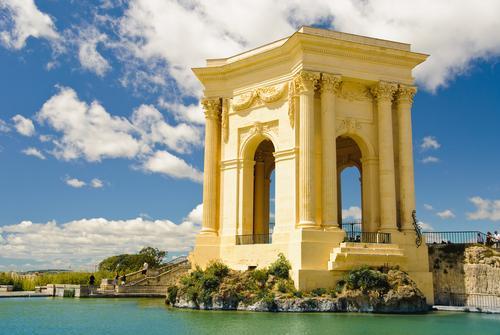
Start at one of the locals’ favourite places to rendezvous, the Fountain of the Three Graces on the Place de la Comédie (5). If it reminds you of Paris, that’s because it was remodelled in the 19th century in the same Haussmann-esque style as the capital. Bear right onto the cobblestoned Rue Jacques Couer and continue along the Embouque d’Or. Poke your head into the medieval style Gothic courtyard of the Hôtel de Varennes (12), one of 80 private mansions dotted around the Old City built between the 17th and 19th centuries. Bear left along la Petite Lodge to Place Jean Jaurès and continue up Rue de la Lodge, cross Rue Roch and along Rue de la Barralerie. Bear left onto Rue Montgolfier and then back on to the Rue Foch – on your right is the 19th-century, neoclassical-style Palais du Justice (13). Pass under the Arc de Triomphe (14), a 17th-century copy of the Parisian original built in honour of Louis XIV. You will arrive at the Place Royale du Peyrou (15); in front is the imposing Château d’eau monument (16) and stretching out in front of you, the Aqueduct Saint-Clement (17), built in 1754.
shutterstock_91666832_low_nwm_1.jpg
The Château d'eau (Shutterstock)

Lunch on the run

Join the queue outside Des Rêves et du Pain (18),10 Eugène Lisbonne (00 33 4 67 91 21 15; closed Sundays and Mondays) for one of its many delicious creations – it is considered to be one of the best bakeries in France. Or, order a cheese and charcuterie plate (€15) at specialist cheese shop La Fine Mouche (19), 12 rue Sainte Anne (00 33 4 67 54 70 47; lafinemouche.fr) and tuck in on the small square opposite. 

Window shopping

The Grand Rue Jean Moulin (20) is where you will find most of the big brand names. Rue Jacques Couer (21), Rue de l’Ancien Courrier (22) and the Rue Foch (23) are lined with small, interesting boutiques. Meanwhile, the shelves of Le Panier d’Aimé (24), 6 rue du Plan du Palais (00 33 9 83 2998 62; lepanierdaime.fr) are stacked with local specialities; honey, wine, cheese and confectionary, including local sweets Grisettes de Montpellier flavoured with honey or liquorice. 

An aperitif

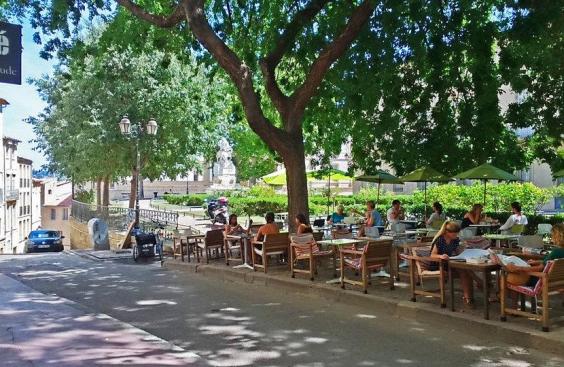
A glass of the local Languedocienne wine should be your preferred tipple and there are few more picturesque places to enjoy one than sitting at one of the outdoor tables overlooking the Place de la Canourgue, Montpellier’s oldest and most beautiful square. You can choose from a list of 32 wines from the local area and beyond at L’Atelier de la Canourgue (25), 3 Place de la Canorgue (00 33 4 67 55 06 65; latelierdelacanourgue.fr). €5. 
2-place-canourgue-marieh-3-.jpg
Place de la Canourgue

Dine with the locals

Le Petit Jardin (26) 20 rue Jean Jacques Rousseau (00 33 4 67 60 78 78; petit-jardin.com) has a magical courtyard garden and choice of two restaurants; a more formal affair and a casual bistro serving simpler dishes with salads, burgers and fish (€45). 

You can sit outside on the narrow street or in the small rustic dining room at Le Pastis (27) 3 rue Terral (00 33 4 67 66 37 26; pastis-restaurant.com). The short but delicious menu here is dictated by what the chef finds on his regular market trips (€50) such as marinated mackerel, peas, pickled shallots, mint and coriander. 

Day Two

Sunday morning: go to church

Montpellier has no shortage of beautiful churches, many of which are hewn from mellow, honey coloured stone. However, the fortress-like proportions of the Gothic-style Cathédrale Saint-Pierre (28), 1 rue Saint Pierre (00 33 4 67 66 04 12; cathedrale-montpellier.fr) is the most imposing. Its origins lie in a monastery and church built in 1364 by Pope Urban V. Mass is celebrated at 10.30am on Sundays. It opens daily from 9.30am-noon and 2.30-6.30pm and Sundays from 9am-noon.

Out to brunch

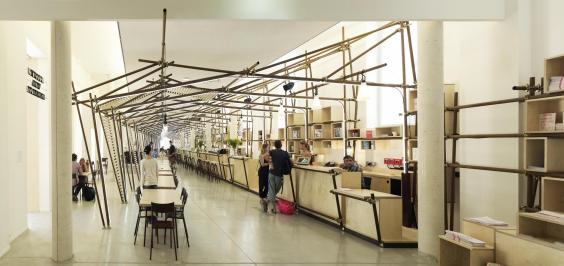
Set in the old Medical Royal College (29), La Panacée, 14 rue de l’École de Pharmacie (00 33 4 34 88 79 79; lapanacee.org) is an exhibition space and cultural centre dedicated to all things contemporary. It’s also home to a good café (lecafedelapanacee.com) that serves an extensive buffet brunch on Sundays from 10am (€18).
cafelapanacee.jpg
Café de la Panacée

A walk in the park

Montpellier’s shady Botanical Garden (30), 1 Boulevard Henri IV (00 33 4 34 43 36 20; umontpellier.fr) is one of the oldest in Europe, created in 1593 for Pierre Richer de Belleval – it was the blueprint for many that followed all over France including Paris. It’s now part of Montpellier University, but the botanists share its verdant avenues and greenhouses – filled with over 2,000 plants – with the general public six days a week. It opens Tuesday to Sunday noon-8pm, admission free. 

Take a ride

Montpellier has an extensive transport system with four tramway lines and a network of buses. The city also has over 120km cycle paths – you can easily pedal off to the seaside. The Vélomagg (00 33 9 69 39 00 99; tam-voyages.com) is the city’s rent-it-here, leave-it-there bike service with 56 stations dotted around the city. The first hour costs 50 cents and 50 cent per hour after that.

Cultural afternoon

The Musée Fabre (31), Boulevard Bonne Nouvelle (00 33 4 67 14 8300; museefabre.fr) is the city’s leading cultural institution, established in 1825 by the Montpellier-based painter François-Xavier Fabre. Its walls are hung with a rich collection of Flemish, Dutch, Italian, Spanish and French masters as well as temporary exhibitions. From now until 16 October it is staging a special exhibition dedicated to the work of Impressionist, Frédéric Bazille. It opens Tuesday to Sunday, 10am to 6pm, closed Mondays. Admission €7.  

François Rabelais and Nostradamus were just two of the distinguished former students of Montpellier University’s Faculty of Medicine (32) 1 rue de l’Ecole de Médecine. It was established in 1180 by Lord Guilhem VIII with an edict that anyone, regardless of their religion or nationality, could teach medicine at the school, which is the oldest continuously operating faculty in Western Europe. The adjoining Conservatory of Anatomy is an exceptional cabinet of curiosities with a collection of over 5,600 anatomical parts. Entry is only possible with a two-hour a guided tour booked through the tourist office (montpellier-france.com). Admission €12. 
1-entree.jpg
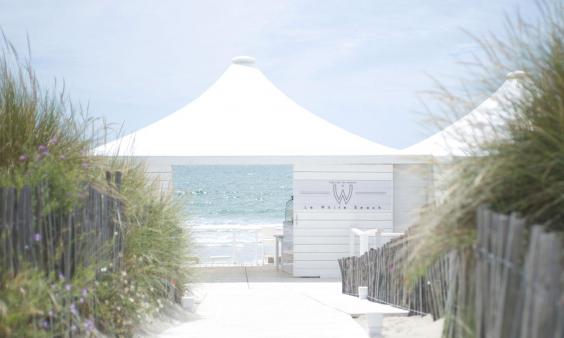
Le White Beach

Icing on the cake 

Montpellier lies just 11km from Mediterranean. In just 15 minutes you can be sunning yourself on one of the nearby beaches like Le Grand Motte. The White Beach (33) is a chic, private beach club with a restaurant and sun loungers for €19 per day (00 33 4 67 57 4098; lewhitebeach.fr). 

Friday, 24 March 2017

48 Hours in Cartagena: restaurants, hotels and places to visit

TRAVEL ESSENTIALS 

Why go now?

Celebrate Spain’s Año del Modernismo 2016, the Year of Modernism, in a little-visited city with some prime some examples of early 20th-century architecture. But that is just the start. After the Spanish navy moved out of this magnificent deep-water Murcian port, the archaeologists moved in. Since then, the former naval base has been dramatically revived as a tourist hub that reveals the city’s history with a series of imaginative new attractions. The heritage of “New Carthage” makes Cartagena an ideal weekend escape, with easy access from the UK a bonus.

Touch down

Murcia San Javier airport (1) is only 20km north of Cartagena. You can fly in on easyJet (0330 365 5000; easyJet.com) from Bristol and Gatwick; on Jet2 (0800 408 1350; jet2.com) from Belfast, Leeds/Bradford, Manchester and Newcastle; and on Ryanair (0871 246 0000; ryanair.com) from Birmingham, Bournemouth, East Midlands and Manchester.

There is no direct bus from the airport to Cartagena. The main Murcia-Cartagena highway, which is served by bus, is 3km away. Otherwise a taxi will cost around €25.

If the fares to Murcia look too high, then consider Alicante and Madrid as alternative gateways; public transport from both is good, and you will arrive at either the handsome old railway station (2) or the distinctive bus station (3), topped with a tower that resembles a lighthouse. 

shutterstock_221565004_low_nwm.jpg
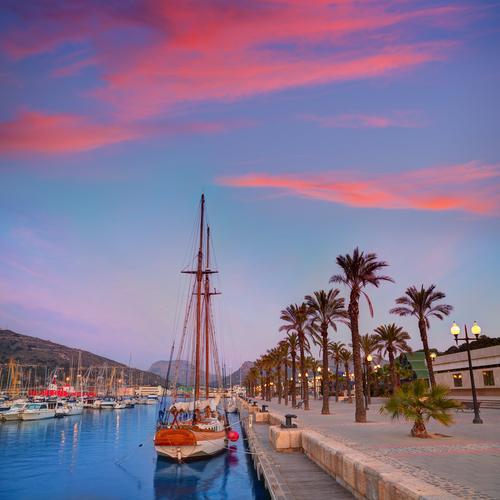
The port at sunrise (Shutterstock)

Get your bearings

Cartagena is poised between the Mediterranean and the Mar Menor, an “inland sea” on Spain's south-east coast

Most places of interest to the visitor are contained in an area enclosed by the city walls – long stretches of which are still intact. Wrapping around the old city are the broad Paseo de Alfonso XIII to the north, a strip of parkland and crooked avenue to the east, the seafront (and cruise terminal) to the south and the former naval docks to the west. 

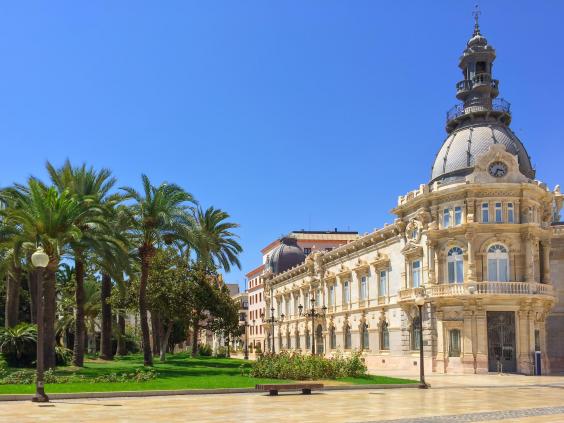
The eastern tourist office (4) (cartagenaturismo.es) is built into the city walls on the Plaza Bastarreche. The western tourist office is part of the City Hall (5) on the Plaza del Ayuntamiento, Both open 10am-2pm and 5-7pm daily except Sundays (with the lunch break beginning at 1.30pm on Sundays); the western office also opens 10am-1.30pm on Sundays. 

Check in

Until the NH Cartagena (6) opened on the Plaza Héroes de Cavite (00 34 968 1209 08; nh-hotels.com), the city was short of an outstanding place to stay. The property brings boutique touches to an old naval building. Doubles typically cost €100-120, or a little more for a sea view. 

The three-star Hotel Los Habañeros (7), commemorating the port’s link with the Cuban capital, is close to the city’s eastern wall at Calle San Diego 60 (00 34 968 50 52 50; hotelhabaneroscartagena.com). Premium doubles cost €85, excluding breakfast.

The two-star Pensión Balcones Azules (8) is ideally located in the old city on the corner of Calle Balcones Azules and Calle Ignacio García (00 968 500 042; email pensionbalconesazules@hotmail.es). The clean and simple rooms are available for around €60, excluding breakfast.

DAY ONE

Take a hike

Calle Mayor and its continuations, Puerta de Murcia and Carmen, extend for barely more than a kilometre north-west from the Plaza de Ayuntamiento, but are full of interest. Start at the handsome City Hall (5), then note the Casa Cervantes (9) on the same side of the street a short way up - Víctor Beltrí began work on it in 1900, one of his earliest commissions in the city. The Capitanía General (10) is the opulent former naval headquarters, dating from 1738, while just across the Plaza San Sebastían the old Gran Hotel (11) - another work by Beltrí - is the city's the most lavish Modernista monument. HIs early 20th-century work continues in Casa Pedreño (12), with a final example of the city’s devotion to fine architecture in the neo-baroque flourishes of the Casa Dorda (13).

shutterstock_310793429.jpg
The Modernist City Hall (Shutterstock)

Window shopping

La Chinata (14), just back along Calle Carmen at number 33, is a delicatessen with a strong suit in extra virgin olive oil and sidelines in cosmetics. South of the muscular Artillery Headquarters (15), Calle San Fernando has some interesting gourmet locations – such as El Rincón Manchego (16) at number 34 (el-rincon-manchego.com).

The main produce market, Mercado Gisbert (17), is on Calle Gisbert. While it closes on Sundays, many other stores are open on the Sabbath so long as a cruise ship with more than 300 passengers is tied up in Cartagena.

Lunch on the run

You could assemble a picnic and enjoy it in one of the lovely squares, such as the Plaza de La Merced (18). But Cartagena has plenty of tempting lunch options, many of them offering a good-value menu del dia for €10-€12. Tucked away from the main drag at Calle Balcones Azules 12, the Cafetería El Molinete (19) offers something of the ambiance of the city before it was gentrified, and offers good-value seafood and meat dishes.

If you are happy to pay a little more, the Cibus gastrobar at the NH Cartagena (6) has an €18 menu including gazpacho, bacalao (cod) and dessert. 

Read more

  • Cordoba travel tips: Where to go and what to see in 48 hours
  • Malaga travel tips: Where to go and what to see in 48 hours
  • Menorca travel tips: what to see and do in 48 hours
  • 48 Hours in San Sebastian: restaurants, hotels and places to visit

Cultural afternoon

Cartagena’s history stretches back well before the birth of Christ. Carthago Nova became part of the Roman empire in 209BC, and was raised to a colony in 54BC – at which point investment poured in to create a forum and the amphitheatre. The layers are only slowly being peeled back, with some superb new attractions opening in the past decade. The fascinating Roman Theatre Museum (20), whose entrance is on the Plaza de Ayuntamiento provides an excellent preview for the amphitheatre (00 34 968 50 82 07; teatroromanocartagena.org). You wander from street level into a visitor centre designed by the leading architect, Rafael Moneo. It opens 10am-8pm from Tuesday to Saturday, 10am-2pm on Sunday, closed Monday; €6.

If Cartagena needed one more attraction to put it on the map, it has arrived in the ship-like shape of ARQVA (21), the Museum of Underwater Archaeology. Its half-submerged bulk occupies a stretch of the southern waterfront, just outside the walls (00 34 968 12 11 66; museoarqua.mcu.es). Highlights include remnants of a 7th-century BC wreck of a Phoenician ship, an Islamic serving dish depicting a ship and part of the cargo of the wrecked frigate, Nuestra Señora de las Mercedes - which sank in 1804 but whose treasure the Spanish government successfully claimed back from the US in 2012. It opens 10am-9pm from Tuesday to Saturday, 10am-3pm on Sundays, closed Mondays. Admission is free on Saturday afternoons (from 3pm) and Sundays; on other days, it’s €3.

An aperitif

Cartagena has only recently started to celebrate its waterfront, but since the marina was completed a string of bars has opened up along the shore - with Coyote (22) in the middle the most popular, if not the most authentic. For a more traditional tapas bar, just wander along Calle Mayor, where Cerverceria La Mejillonera (23) at number 4 (00 34 968 52 11 79) is among the best-value choices.

dsc_0016.jpg
El Encuentro

Dine with the locals

Infiltrating the old colonnade at Calle del Parque, 2, Taberna A La Brasa (24) offers a €20 tasting menu that includes salad, paella, a mixed grill and a drink. El Encuentro (25), on the corner of Calle Canón and Principe de Vergara, offers squid (€11) and a range of paellas, as well as the best steaks in town (elencuentrocartagena.com).

DAY TWO 

Sunday morning: go to church

At the Centre for the Interpretation of the Punic Rampart (26), an imaginatively conceived structure has been placed over excavations of a stretch of Carthaginian city wall created that predates the Roman era. You can roam around the structure - and discover the crypt of a late 17th-century Christian hermitage that nests within the rampart, complete with burial niches. It opens 10am-8pm daily, admission €3.50.

Take a view

On Calle Gisbert, an elevator (27) will lift you for a fare of €1 to the Castillo de la Concepción (28) – but before you explore the castle, take time to appreciate the view to the east from the top station of the lift, which includes the old bullring.

Walk up the zig-zagging path to the castle, which opens 10am-8pm daily, admission €3.75. The highest point in the city was originally the location for a Roman temple dedicated to the god of health, Asklepio, a Moorish citadel and, after the reconquest, the 13th-century castle bullt by Alfonso X. Climb to the top, both to admire the engineering prowess and more particularly the outstanding panorama – including the mighty headlands that protect the harbour, and which attracted waves of colonisers. During the Spanish Civil War, the air-raid siren was sounded from here (an air-raid shelter is adjacent to the ground station of the elevator).
Then walk west along the path that winds past the Roman Theatre (18), yielding even more views, and descend the steps to ground level.

Out to brunch

You emerge close to Plaza de Ayuntamiento, where the Chocolatería Valor (29) offers the indulgence of chocolate and churros (chocolateriasvalor.es). The best location for this Spanish treat, thought, is Churrería Tofi (30), on the corner of Calle Angel Bruna and Muralla de Tierra (churreriatofi.es). Note that it takes a break between 12.15-5.15pm each afternoon.
lighthouse.jpg
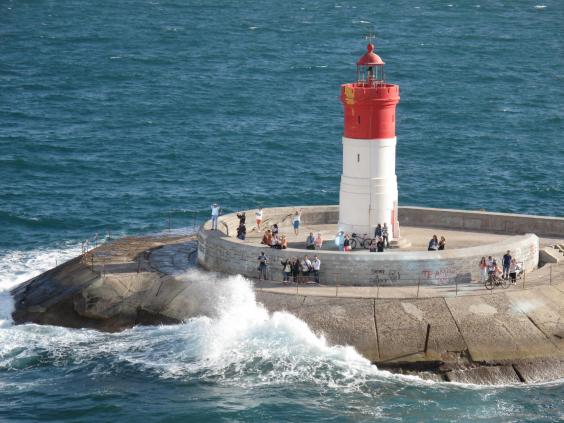
The lighthouse (Simon Calder)

Take a ride

The Barco Turístico departs from the waterfront (31) each hour from 11am to 3pm, then half-hourly from 4.30-7.30pm for a trip around the harbour, providing a fresh dimension on the city and the chance to see the old submarine pens and the historic lighthouse (32) that guards the approach to Cartagena; fare €5.57 (cartagenapuertodeculturas.com). 

A walk in the park

The Molinete Archeological Park (33) is a 2012 addition to the cultural repertoire (00 34 968 50 00 93; cartagenapuertodeculturas.com). From the entrance on Calle Paraíso, you can roam across a hillside than includes relics of the Roman sanctuary, then study the meticulous archaeology that has laid bare the forum. The archaeological park has a canopy over the skeleton of the thermal baths and the atrium, together with some outstanding mosaics. It opens 10am-7pm daily except Tuesday,

whaletailfin.jpg
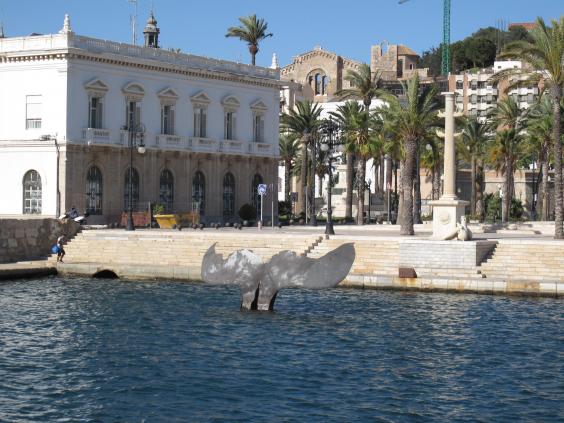
The whale tail fin (Simon Calder)

Icing on the cake

Impressive street sculptures and military monuments are strewn around the city, including an old fighter plane on the eastern side, the Casa de Mar (34) to the south-east and a monument to Spanish struggles in Cuba in the Plaza Héroes de Cavite (35). The theme continues out into the water from here, in the shape of the tail fin of a whale.

Click here to view Spanish tours and holidays, with Independent Holidays.

Thursday, 23 March 2017

Why Bristol is the best place in the UK to spend a weekend

Why go now?

Bristol has just been voted the UK's best place to live in 2017 by The Sunday Times – for the third time in four years. It’s also been named the best place to study, one of the top five most inspiring cities, and even one of the top 10 cities in the world in the past. No wonder Bristolians are so fiercely proud of their big little city.

They’re also proud of their independence: this is a city with its own elected mayor and even its own currency, the ‘Bristol pound’, to support the local economy. The entrepreneurial spirit is alive and well here, cultivating a host of independent shops, restaurants, cafe and bars.

bristol-balloon-fiesta-morninglaunch-credit-gary-newman.jpg

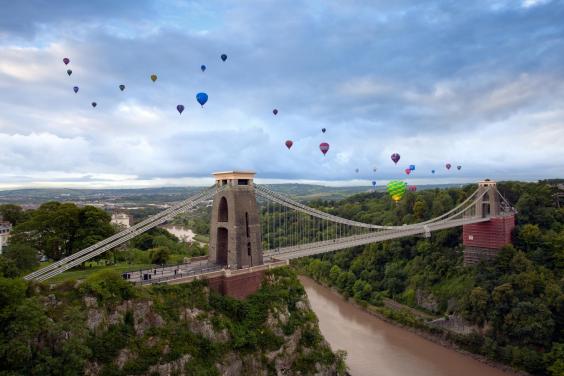
You may not be there for the Balloon Fiesta, but a hot air balloon ride is the best way to see the Clifton Suspension Bridge (Gary Newman)

Get your bearings

Bristol is a roughly circular city, caught in the angle made by the M4 and M5 motorways. The M32 runs directly into the centre, leading you towards the historic Old City and Harbourside districts – both north of the floating harbour that branches off the River Avon and separates out the area of Spike Island. Head north west to the West End, Clifton and Clifton Village for leafy elegance, or north east to the central shopping district of Broadmead and onto bohemian Stokes Croft. If you get lost, don’t be afraid to ask someone for directions: Bristolians are notoriously friendly.

Day one

bristolbanksy-mild-mild-west-credit-morgane-bigault.jpg
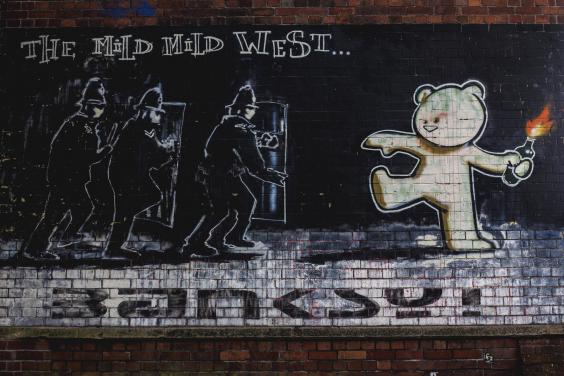
Banksy's Mild Mild West in boho Stokes Croft ( Morgane Bigault)

Take a hike

Start at the top of Gloucester Road (1), a long stretch of independent shops, cafes and bars, and head south towards the city centre, stopping off for a coffee at Bakers and Co (2) (0117 942 9933; bakersbristol.co.uk). Continue down Cheltenham Road (3) and into the bohemian Stokes Croft neighbourhood to see some of Bristol’s famous graffiti, which is everywhere you look. Keep an eye out for Banksy’s Mild Mild West artwork, situated next to The Canteen (4) and best seen from the junction of Jamaica Street. While you’re on Jamaica Street, pop into the People’s Republic of Stokes Croft (0117 944 4540; prsc.org.uk) (5) to pick up an unusual souvenir, then finish your walk at the newly revamped Bearpit (a park-like community space inside a roundabout) (6), where you can have a quick look at the famous black and white bear statue.

bristolwoky.jpg
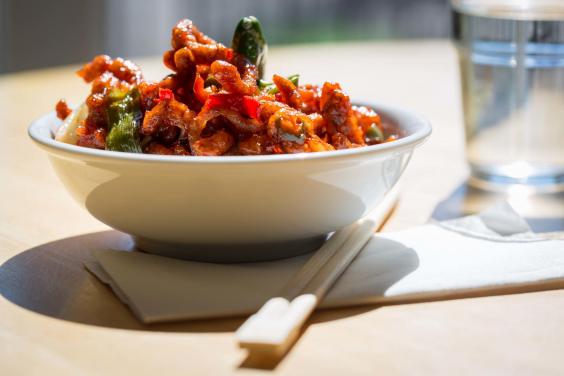
Masterchef alumnus Larkin Cen is behind Woky Ko ( Woky Ko)

Lunch on the run

Take a quick taxi ride across the city centre to the newly developed Wapping Wharf neighbourhood where you’ll find a choice of independent eateries catering for pretty much any taste. Woky Ko (7) (no phone; woky.co) is a casual Asian dining venue run by Masterchef finalist Larkin Chen. Try one of the incredible steamed buns filled with things like crispy duck, Peking sauce, leeks and cucumber or braised pork, Hoi Sin ketchup, apple and peanut powder for just £3.95 a pop. There are also Xiao sharing plates from £4.45, plus hearty noodle and rice dishes from £7.45 if you’re feeling hungry.

bristolm-shed-cranes-harbour-view-credit-visit-england.jpg
The M Shed sheds light on Bristol's shipping past (Visit England)

Cultural afternoon

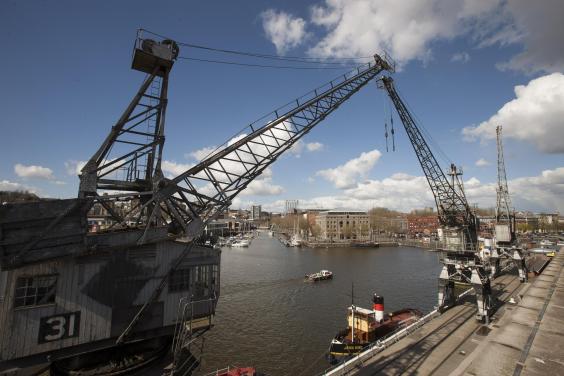
Explore the historic Bristol docks, and stop in at the M-Shed (8) (0117 352 6600; bristolmuseums.org.uk), an unusual – and free – museum that documents Bristol’s story via film, photographs, personal stories and objects. Some of the biggest exhibits are actually outside the main building, including a locomotive engine, industrial crane and 19th century tug boat (rides are available on special weekends). It’s closed Mondays.

bristolcabotcreditdestinationbristol.jpg
Climb 100 steps to the top of the Cabot Tower for a view over the city (Destination Bristol)

Take a view

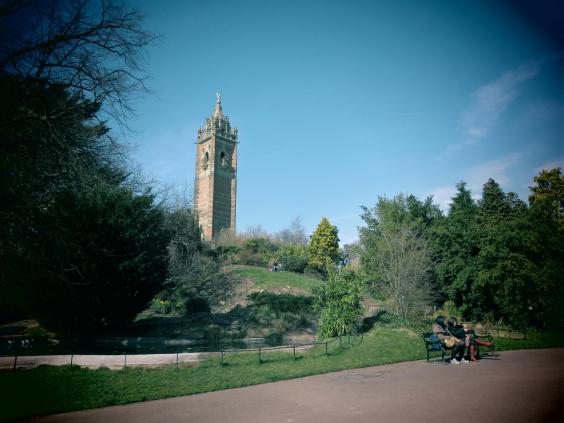
To get a wider view of the city, head away from the harbourside up Park Street and climb the 100 or so steps to the top of Cabot Tower (9), situated a stone’s throw from the shops in Brandon Hill (10), Bristol’s oldest park. Built in the 1890s to celebrate the 400th anniversary of John Cabot’s historic trip to what we now call Canada, the 32m tower was restored between 2007 and 2011 and is free to visit.

bristolmilk-thistle-045.jpg
Milk Thistle is the place to be on a Friday night (Destination Bristol)

An aperitif

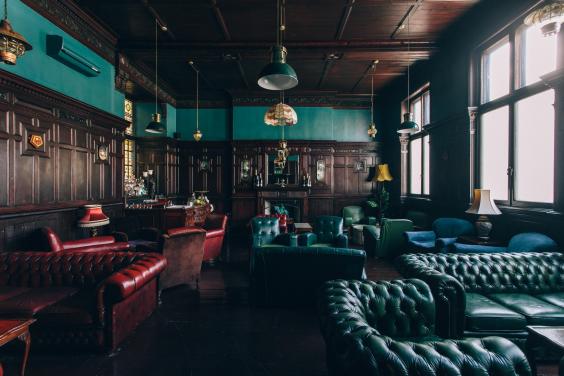
Tucked away in one of Bristol’s historic harbourside buildings is Milk Thistle (11) (0117 929 4429; milkthistlebristol.com), a swish Prohibition-style bar spread over four decadent floors. The cocktail menu here is constantly updated and full of imaginatively named mixes such as the Coffin Dodger, Salt & Patience and Milk Thistle Daisy (all around £9.50). This is a very popular venue, so be sure to phone ahead to ensure you’re not disappointed.

bristolpacotapaas.jpg
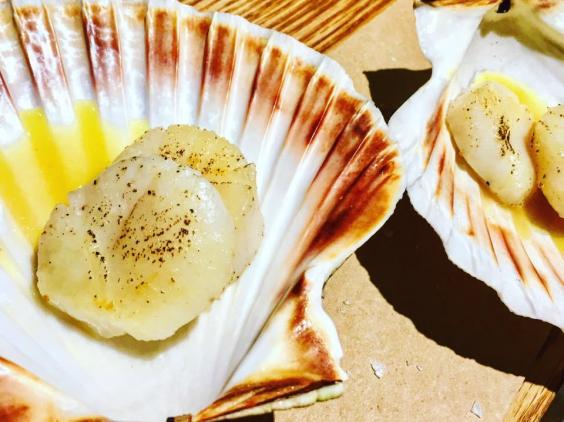
Cornish scallops at Paco Tapas (Facebook)

Dinner with locals

Bristolians are rightly proud of the city’s foodie offerings, especially the Michelin-starred Casamia (12) (0117 959 2884; casamiarestaurant.co.uk), which has recently moved to more central premises. The family behind the restaurant has been diversifying too, with a pizza place at Pi Shop (13) (01179 256 872; thepishop.co.uk) and a very new tapas offering at Paco (14) (0117 925 7021; pacotapas.co.uk). Blending the ingredients of the West Country with the heart and soul of historic Spain, Paco offers an elevated dining experience well worth the price tag. Dishes range from marinated olives or fried almonds at £3 to stuffed quail, sobrasada and dates at £16.50 and Canary Island prawns at £22 each. If you’re feeling flush, try the 780g Galacian steak at £80.85.

Day two

Out to brunch

On your second day, head west to experience the famous all-you-can-eat ‘Bottomless Brunch’ at Brace & Browns (15) (0117 973 7800; braceandbrowns.co.uk) on Whiteladies Road. Featuring such delicacies as pulled pork breakfast hash with poached egg, smoked mackerel and guacamole bagel, and American pancakes with banana & rum syrup – not to mention as much fizz as you can drink – it’s well worth the £28 for a two-hour sitting (a booze free option is available for £20). It’s also incredibly popular, so book well in advance.

bristolclifton-credit-destination-bristol.jpg
Genteel Clifton is ripe for a stroll (Destination Bristol)

Window shopping

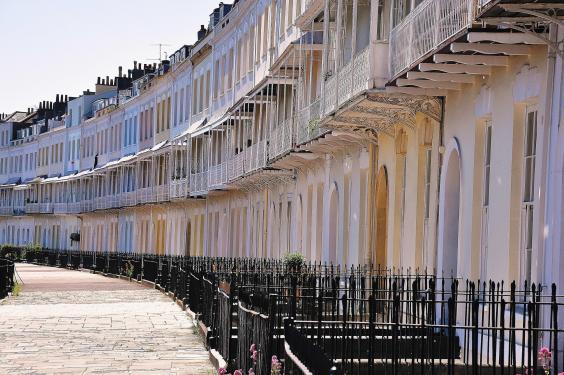
Not far from Whiteladies Road is Clifton Village, an upmarket neighbourhood famed for its Victorian and Georgian architecture and genteel shops – not to mention its views of the Avon gorge and Clifton Suspension Bridge. Spend time browsing antiques at Focus on the Past (16) (01179 738 080; focusonthepast.org), top-end stationery and magazines at Papersmiths (17) (01173 296 347; papersmiths.co.uk), foodie fare at the award-winning Arch House Deli (18) (01179 741 166; archhousedeli.com) and much more besides. Don’t miss the two-storey Clifton Arcade (19) (cliftonarcade.co.uk), built in 1878.

Take a ride

Bristol is a proudly green city – it was the European Green Capital in 2015, after all – and you’ll see plenty of locals making their daily commute by bike. Join the fun and hire a tandem from Bristol Tandem Hire (07470 311 592; bristoltandemhire.co.uk), which has a range of British made Circe Helios bikes available, plus child seats so the whole family can get involved. There’s a pick up point just off Queen’s Square at Club Haus Cafe (20), and you can ride all the way from the city centre to Bath on the cycle path, but for today, try the route from the docklands to Arnos Vale. 

bristolarnos.jpg
Not your average park: Arnos Vale ( Getty)

A walk in the park

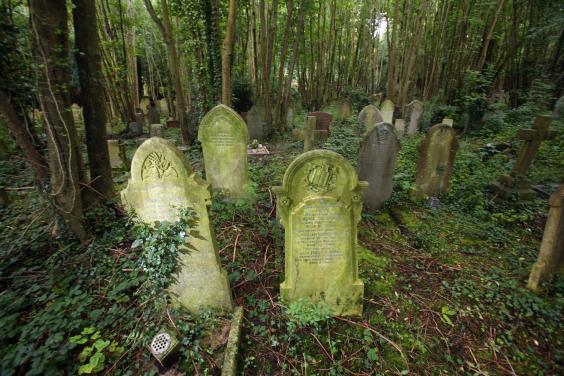
Arnos Vale (21) (01179 719 117; arnosvale.org.uk) is actually a 45-acre Victorian garden cemetery. Pick up a free Discovery Trail leaflet and explore this gem on one of the self-guided routes or look out for the periodic guided tours. There are regular exhibitions at the West Lodge and Spielman Crypt to look out for, plus a war memorial and ‘sailors’ corner’, where nearly 200 service personnel who died in Bristol hospitals from battle injuries are buried. Finish at the new Kate’s Kitchen cafe, which opened last September and serves seasonal, high-quality snacks and meals.

The icing on the cake

If there’s one thing that truly represents Bristol, it’s a hot air balloon rising over the Clifton Suspension Bridge (22). The sight of these colourful spheres drifting across the sky is a sure sign that summer is on its way, getting locals excited about the annual Bristol Balloon Fiesta, held every August at Ashton Court (23). Bristol Balloons (01179 471 030; bristolballoons.co.uk) was one of the first companies to be awarded a British Civil Aviation Authority Certificate for passenger flying in 1978, and today offers both group and exclusive flights. Treat yourself to a champagne flight and raise a glass to an unforgettable Bristol visit as you see it from above in all its glory. Flights last for around an hour and cost from £125 for group flights; the meeting point is Ashton Court.

bristolacc-hot-number-38-clifton-5.jpg
Live it up at Number 38 Clifton (Destination Bristol)

Getting there

Bristol is serviced by two railway stations, Bristol Temple Meads (24), which is more central, and Bristol Parkway (25). Travel from London, Wales and the South with GWR or from further north with Crosscountry. National Express coaches finish up at the central coach station (26) in the city centre between Stokes Croft and Broadmead, and Megabus goes to Colston Street (27) in the Old City. There is ample parking throughout Bristol for drivers, though it’s not cheap and you will need to be aware of residents-only parking areas, not to mention the many 20mph zones.

Staying there

Located at the top of Gloucester Road, about 2 miles from the city centre, Norfolk Guest House (28) (01179 513 191; norfolkguesthouse.co.uk) has been run by the same Bristolian family for the last 30 years. Doubles from £70, B&B.

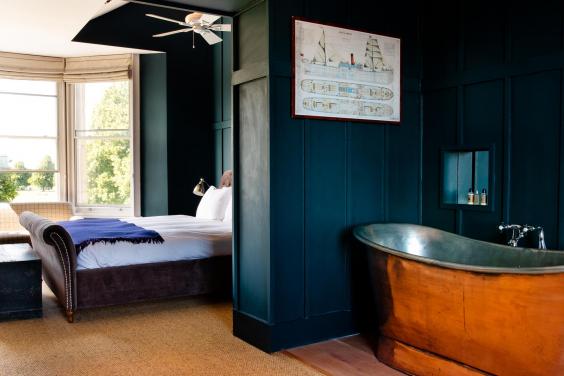
The award-winning Number 38 Clifton (29) (01179 466 905; number38clifton.com) is the closest most of us will get to living in a luxurious townhouse in this swanky area, and makes an ideal base for exploring the West End of the city. Doubles from £125, B&B.

bristol-berwick.jpg
Sample the country house life at Berwick Lodge 

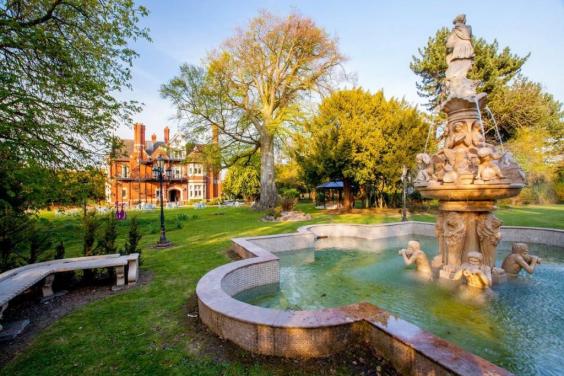
For a country house experience, head towards the outskirts and Berwick Lodge (30) (01179 581 590; berwicklodge.co.uk), owned and run by Sarah Ariken, a born and bred Bristolian. The 19th-century property is set in 18 acres of beautiful parkland with a 2AA Rosette restaurant. Doubles from £155 room only, or £185 B&B (based on two people sharing).

More information

visitbristol.co.uk

The All Inclusive experience comes to the LEGOLAND® Windsor Resort

Ice creams, cocktails and activities aplenty – there’s nothing quite like All Inclusive. But how do you keep that All Inclusive feeling when you get back from your holiday? LEGOLAND Windsor has the answer…

Here at First Choice, we know a thing or two about holiday excitement, which is why we’ve partnered with the LEGOLAND Windsor Resort to bring you that All Inclusive holiday feeling, even when you’re not abroad. So, whether you’ve just returned from your break and want to get back some of that holiday magic, or you’re building up to the excitement of your next trip, we’ve got the solution for you.

The LEGOLAND Windsor Resort goes All Inclusive

First Choice are all about helping you get great value for money, and not just on holiday, but all year round. And, our First Choice All Inclusive LEGOLAND ticket helps you do just that. The package includes your entry tickets, a drinks cup that you can refill all day for free, and lunch at either Pirate Burger Kitchen, Harbourside Fish and Chips, or FarmerJoe Chicken Company. Altogether, you’ll save around 15% off the full costs combined, and just like a First Choice holiday, you only need to pay one upfront cost, and the rest is taken care of. Click here to go All Inclusive with LEGOLAND and First Choice.

Batman joins in the fun

From now until the 31st of March, you can experience LEGO® Batman Movie days when you visit the park. This celebration of Gotham City’s caped crusader lines up special events and activities including a Miniland scavenger hunt, LEGO® build activities, giveaways and meet and greets with the main man himself.

You can download the full event guide here and plan your visit.

From May 2017, you’ll also be able to visit Drench Towers, which is the largest outdoor water play structure in the UK and sponsored by First Choice. This water play area includes a Splash Safari for little ones and waterslides for the big kids.

Want to know more about the LEGOLAND® Windsor Resort? Read our First Choice blogger’s review.

Tickets giveaway

We’ve got tonnes of tickets to give away and will be hosting competitions across our First Choice social media sites. So follow and keep an eye on our First Choice Facebook and First Choice Twitter pages to be in with a chance of getting your hands on those tickets.

Browse our All Inclusive __holidays or book your LEGOLAND® Windsor Resort tickets today.

Thursday, 16 March 2017

Move over hygge, it's time for gemütlichkeit: How to spend a winter weekend in Berlin

Why go now?

Berlin suffered a tragedy in the run-up to Christmas, but here at The Independent we believe the best response to such incidents is to keep on travelling. The German capital remains one of the most culturally vibrant in Europe and comes into its own in winter time – the Scandinavians might have their hygge but the Germans have their own special take on that warm, cosy feeling: gemütlichkeit. In these last frosty gasps of winter, gemütlichkeit is very much in evidence in the city's cosy cafés and cool design shops.

Get your bearings

Though it’s no longer divided by a wall, Berlin is still a city of two halves, with two transport hubs and commercial centres, and even two zoos. The eastern half, which has districts such as Mitte and Prenzlauer Berg, has most of the landmarks, museums and nightlife, though the latter still has fine shops and sights. Two roughly parallel waterways, the River Spree and Landwehr Canal, frame the centre.

The transport network is divided into three zones; A, B and C. A single journey costs €2.70 in Zones A and B or €3.30 to Zone C. A day ticket costs €7, or €7.70 for all three zones. A Berlin Welcome Card combines a travel pass with discounts for attractions and tours and costs €19.50 for 48 hours.

  • Read more

Why we should still travel to Berlin, Nice and Brussels

Visit Berlin has a number of outpost dotted around the city, including a tourist office (1) by the Brandenburg Gate (2). It opens daily from 9.30am to 6pm. 

Day one

Take a view

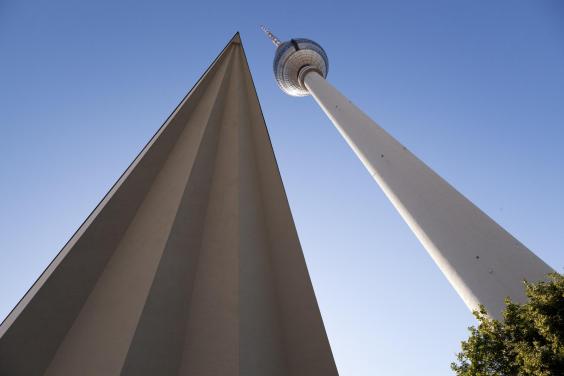
Almost as potent a symbol of the city as the Brandenburg Gate (2), the futuristic looking ball-topped spire of Berlin’s 1960s Fernsehturm (3) can be seen from all over. Pay a visit to the observation deck for a view of the city. Admission €13.

8413922218-3d350da39c-o.jpg
The space-age Fernsehturm (Philip Koschel/visitBerlin)

Take a hike

Start outside the magnificent, Baroque-style Berlin Cathedral (4) the city’s biggest Protestant church, whose crypt contains several tombs of members of the powerful Hohenzollern dynasty. Cross over the River Spree and you’ll find yourself on Berlin’s best known promenade, “Unter den Linden”, immortalised in the song by Marlene Dietrich. As the name suggests, it’s shaded by linden trees, and it’s also lined with historic buildings such as the Deutsches Historisches Museum (5) and the State Opera House (6).

Continue until you reach Pariser Platz and the Brandenburg Gate (2), completed in 1791, which has been the backdrop for many momentous occasions in the city’s history.

Walk underneath then turn right and bear left on to Scheidemannstrasse until you arrive at Platz der Republik and the Reichstag (7). In 1999 British architect Lord Foster transformed the building and added its impressive glass dome.

4554958984-21708e26e6-o.jpg
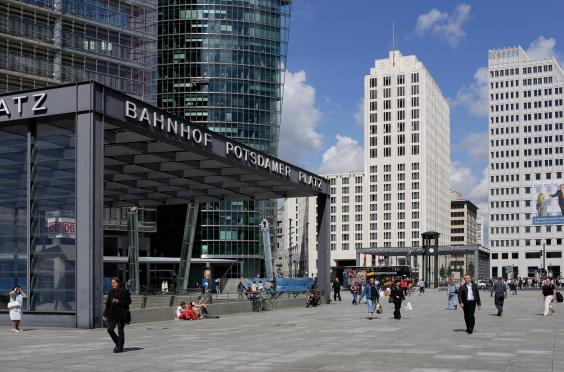
Glossy Potsdamer Platz (Wolfgang Scholvien)

Retrace your steps past the Brandenburg Gate (2) and continue along Ebertstrasse; the Tiergarten (8) is on your left and to your right, the 2,711 concrete pillars of the Memorial to the Murdered Jews of Europe (9). Finish at the ultra-modern Potsdamer Platz (10) – once a bombed-out wasteland, it has been transformed since the fall of the wall, with glossy contemporary buildings and a shopping arcade.

  • Read more

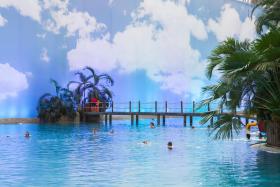
Holiday in a tropical paradise inside a Berlin aircraft hangar

Lunch on the run

Invented in Berlin in 1949, currywurst is the ultimate local fast food: steamed and fried pork sausage slathered in a sauce made with ketchup and curry powder. The best currywurst is a hotly debated topic, but Bier’s Kudamm195 (11) has had a loyal following since it opened in 1965 and still draws crowds (€3.20).

Window shopping

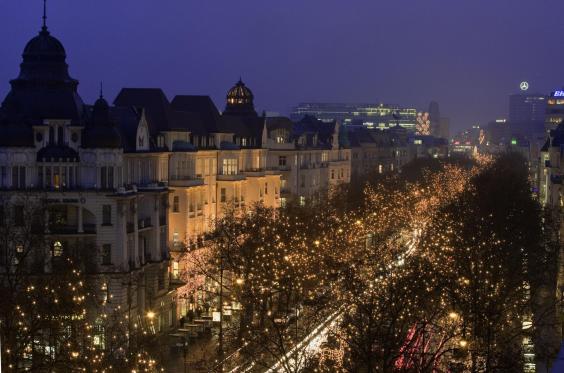
You can find all manner of shops, from chains to high-end international brands, on the Kürfurstendamm, remodelled in the 1870s to rival the Champs Elysees in Paris.

6052156781-7113af7c14-o.jpg
Shopping street the Kurfürstendamm (Wolfgang Scholvien/visitBerlin)

Opened in 1907, KaDeWe (12) is one of the city’s retail landmarks – don’t miss the gourmet shop on the 6th floor.

The nearby Bikini Berlin (13) is a West Berlin landmark built in 1957 by architects Paul Schwebes and Hans Schoszberger. It has been given a new lease of life as fashionable concept mall, with permanent and pop-up shops. 

An aperitif

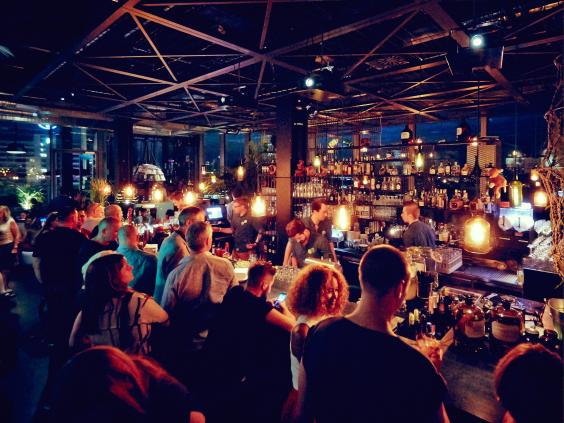
Set on the 10th floor of the 25Hours Hotel Bikini Berlin, in the Bikini building, the Monkey Bar (14) is one of the city’s hippest places for a pre-or post-dinner drink and has great views out over the zoo and Kaiser Wilhelm church from its floor-to-ceiling windows.

25hours-hotel-bikini-berlin-monkey-bar-farbe-gross-3.jpg
Monkey Bar hosts a cool crowd

Dine with the locals

The brasserie-style Borchart (15) is where to come to spot the great and good of Berlin – be sure to book or you’ll have to join the never-ending queue. Wiener schnitzel served with potato salad and cranberry sauce is one of its specialties (€50).

The latest venture from two-star Michelin chef Tim Raue is Brasserie Colette (16), serving classic French fare like croque monsieur, steak frites and moules (€40 for two courses).

Day two

Read more

  • Berlin's alternative nightlife, from cabaret to porno karaoke
  • In pictures: The world’s best cities for street art
  • Can you take Christmas crackers, frozen turkey and cheese on flights?

Sunday morning: Out to brunch

Brunch is something of a religion for Berliners. Although there are now more up-and-coming neighbourhoods, Kreuzberg remains one of the most boho and cosmopolitan parts of the city with a large Turkish community. Local hangout Le Bon (17) is the ideal place to tuck into eggs benedict. Brunch is served from 9.30am to 4pm on Saturday and Sunday. Booking advised.

A walk in the park

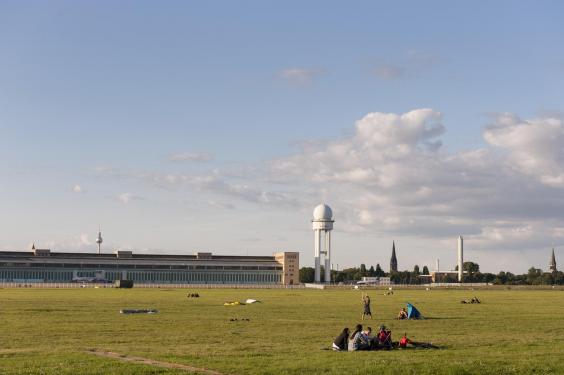
The abandoned Tempelhof airport (18) is one of the largest Fascist-built structures in Europe. Closed in 2008, this sprawling green expanse became Berlin’s newest and largest park in 2010 and was renamed Tempelhofer Feld.

8413998662-7623c209d1-o.jpg
Tempelhofer Feld, a repurposed airport (Philip Koschel/visitBerlin)

Cultural afternoon

Berlin is one of the great museum cities with over 180, from the celebrated to quirky.

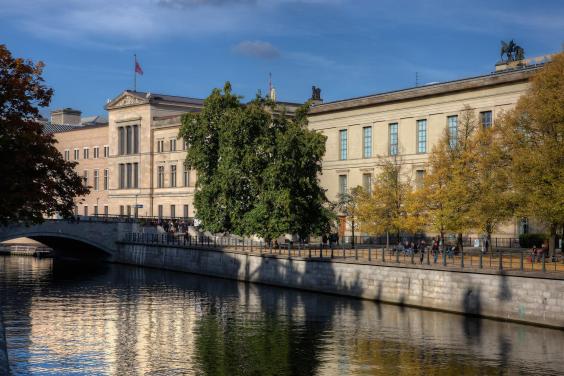
There is no shortage of cultural riches on the Unesco World Heritage-listed Museum Island (19). This cluster of five of Berlin’s finest institutions, built between 1830 and 1930 on an island in the Spree, includes the restored Neues Museum, the Altes Museum, the Alte Nationalgalerie, the Bode Museum and the Pergamonmuseum.

8413922148-91ea9f5ceb-k.jpg
Neues Museum (Wolfgang Scholvien/visitBerlin)

The latter’s most precious exhibit, the monumental Ancient Greek Pergamon Alter, dating from 2BC, is currently off limits due to ongoing renovation; the entire complex is being remodelled. Open Tuesday-Sunday 10am-6pm. Closed Monday. A day-pass to all five museums costs €18.

The icing on the cake

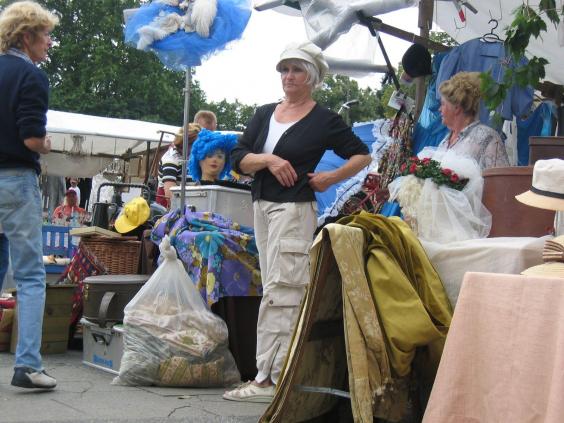
Must of the city shuts down on Sundays; do as the locals do and visit one of Berlin’s many flea markets. The Berliner Trödelmarkt (20), in the Tiergarten, is the largest with a trove of antique finds.

13979208-af4c80bec4-o.jpg
Flea market finds at Berliner Trödelmarkt (Martino Sabia/Flickr)

Travel essentials

Getting there

Until the controversial new Berlin Brandenburg airport is finished (reportedly at the end of 2017), the city’s two main airports are Tegel (21), 9km northwest of the centre, and Schönefeld (22), 24km south east.

From the UK, Tegel is served by Flybe, BA and Germanwings, while Schönefeld is served by Ryanair, easyJet, Jet2 and Norwegian.

From Tegel, the X9 bus to Zoo station (23) takes 20 minutes; the TXL bus to Alexanderplatz (24) about 30 minutes. A taxi takes roughly 15 minutes (around €20).

From Schönefeld, take the train: Deutsche Bahn’s Airport Express runs every 30 minutes and takes around half an hour to reach Berlin Hauptbahnhof (25) (central station), while a taxi costs around €45 and takes about 40 minutes.

Staying there

A former Bauhaus department store in Mitte is the backdrop for the enduringly fashionable Soho House Berlin (26). It’s done out in the group’s signature style – Damien Hirst spray-painted one of his sharks on a wall in reception. Doubles from €210, room only. 

berlin-bedroom.jpg
Soho House Berlin

Sir Savigny (27) is one of the newest arrivals on the Berlin hotel scene, a 44-room hotel set in a building dating from 1893 in the genteel neighbourhood of Charlottenberg. Doubles from €150, room only.

Neukölln is another one of the city’s hipster enclaves and the presence of the Hüttenpalast (28) is testament to its on-trend credentials. You can stay in retro caravans and cabins within this former vacuum cleaner factory, or opt for one of six hotel rooms. Cabins from €69 per night, room only.

Click here to view German tours and holidays, with Independent Holidays.

Wednesday, 15 March 2017

48 hours in Dublin: hotels, restaurants and places to visit

Travel essentials

Why go now?

This time of year sees a number of festivals and events taking place in the capital. Many of the country’s historic properties fling open their doors with special events for National Heritage Week (heritageweek.ie), from 20 to 28 August. Microbreweries have been riding a wave of popularity all over the country, so much so, there’s now a festival dedicated to it. The Irish Craft Beer Festival (irishcraftbeerfestival.ie) takes place from 8 to 10 September at The Royal Dublin Society (1) and is a chance to sample a vast array and meet the makers. Tickets cost €10. And finally, Ireland’s theatrical credentials are well known the world over. The Tiger Dublin Fringe Festival (fringefest.com) takes place from 10 to 25 September with more than 300 performances over its run. 

Touch down 

There are numerous flights from the UK to Dublin with airlines including Ryanair (0871 246 0000; ryanair.com), Aer Lingus (0871 718 5000; aerlingus.com), CityJet (0871 666 5050; cityjet.com), Flybe (0871 700 2000; flybe.com) and British Airways (0344 493 0787; ba.com). There are also ferries to Dublin with Stena Line (0871 244 1545; stenaline.co.uk) and Irish Ferries (08717 300 400; irishferries.com) from around 190 return. 

Dublin Airport (2) is 12km north of the centre. There is no rail link but the 24-hour Aircoach shuttle (00 353 1 844 7118; aircoach.ie) provides a handy alternative, which runs every 10 minutes at peak times and stops throughout the city; €7 one-way, €6 if booked in advance online.

Dublin Bus (00 353 1 873 4222; dublinbus.ie) also operates the 747 Airlink to the Central Bus Station (3) priced at €6 one-way, and has just introduced a new 757 route - useful if you are staying on the south side of the Liffey with stops at Grand Canal Dock (4), Merrion Square (5) and St Stephen’s Green (6). A taxi will cost about €25 one-way.

Get your bearings

Dublin’s natural dividing line is the River Liffey, which flows languorously out towards Dublin Bay. O’Connell Street is the city’s spiritual heart and its monumental General Post Office (7) was where the main events of the Easter Rising took place 100 years ago, changing the course of Irish history forever.

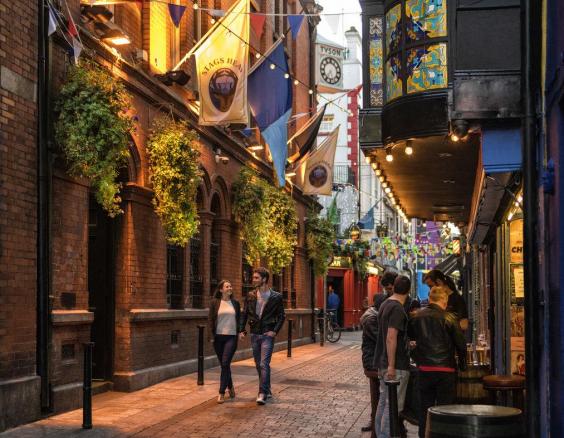
South of the river is the cobblestoned streets of Temple Bar (8), Trinity College (9) and a mostly intact Georgian streetscape around St Stephen’s Green (6), Merrion (5) and Fitzwilliam Squares (10). Further east is the city’s regenerated Docklands area (11).

The Discover Ireland Centre (12) is set in the former Church of St Andrew on Suffolk Street (00 353 1 605 7700; visitdublin.com). It opens 9am-5.30pm Monday to Saturday, Sundays 10.30am-3pm.

medium-rdp-20140909-00457.jpg
Temple Bar is known for its lively nightlife and is a favourite spot for savouring a Guinness (Rob Durston)

Check in

The Merrion (13) on Upper Merrion Street (00 353 1 603 0600; merrionhotel.com) offers a glimpse into the grandeur of Georgian era Dublin - albeit with more modern luxuries - and spans four stately mansions opposite Ireland’s seat of parliament, known as The Dail (14). Doubles cost from €295 per night, B&B.

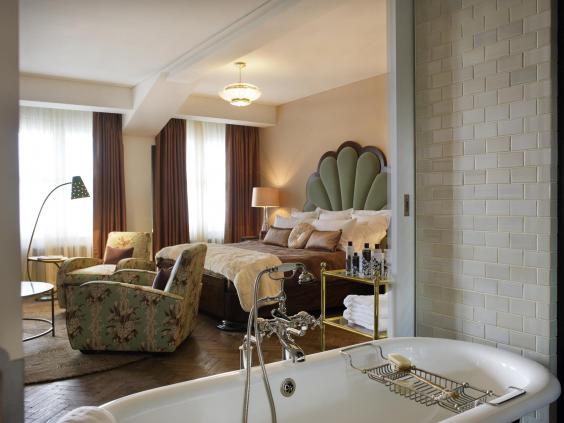
With rooms like Mod Pod and Punk Bunk, there’s a hip, youthful vibe at The Dean (15), 33 Harcourt Street (00 353 1 607 8110; deandublin.ie), a design-conscious spot carved from a terrace of Georgian townhouses. There’s a great cityscape from the rooftop Sophie’s Bar and Restaurant. Doubles from €155, room-only.

The Generator (16) on Smithfield Square (00 353 1 901 0222; generatorhostels.com) is one of the best budget options - with private rooms costing from €65 per night, B&B. 

Day one

Take a hike

Start on the northside of the River Liffey and cross via its main point, O’Connell Bridge (17), for fine views in both directions. Continue along Westmoreland Street and soon you will arrive at College Green (18); to your right is the imposing Bank of Ireland Building (19), the erstwhile seat of power under British rule.

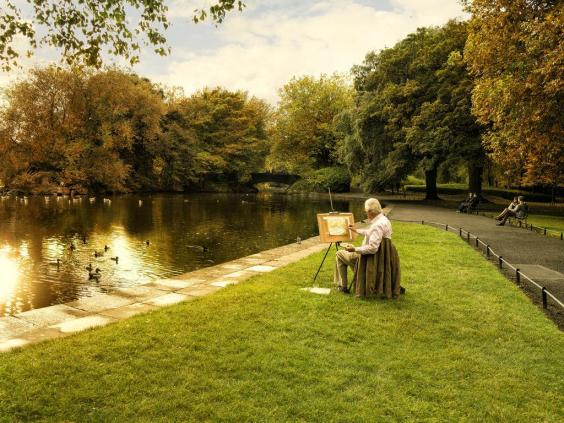
Bear left and pass under the landmark arch of one of Ireland’s most influential seats of learning, Trinity College (9). Cross the quad and pass the college’s leafy lawns and playing fields, exiting at Lincoln Place. Continue along Clare Street and bear right onto Merrion Square (5), bordered on all sides by elegant Georgian townhouses. To your left is the National Gallery of Ireland (20) and on Upper Merrion Street, The Dail (14). Bear right down Merrion Row and you will emerge onto St Stephen’s Green (6), Europe’s largest city square. 

medium-rdp-20140930-08073.jpg
St Stephen's Green is reputed to be the largest city square in Europe (Rob Durston)

Lunch on the run

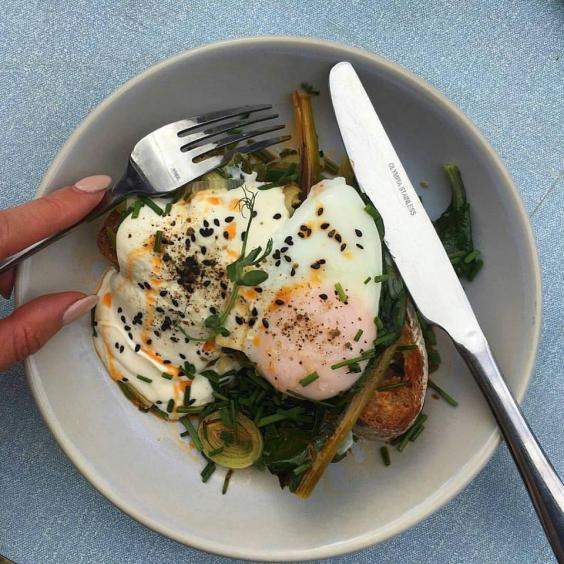
Named after a Bob Dylan lyric, the recently opened Meet Me in the Morning (21) (50 Pleasants Street, find them on Facebook), has swiftly risen to the top of foodies’ lists, garnering wild praise for its winning formula of interesting food and specialty coffee served up in friendly surroundings. The 'egg and greens' has already become a staple, while gazpacho with black kale on toast is another to try if it’s on the menu. From €10. 

Window shopping

Grafton Street is the city’s main upmarket retail row. Browse designer department stores Brown Thomas (22) at 88-96 Grafton Street (00 353 1 605 6666; brownthomas.ie) and Avoca (23), on neighbouring Suffolk Street (00 353 1 677 2451; avoca.ie). There's also a burgeoning scene of independent small boutiques on Drury Street (24)

An aperitif

Dublin has its fair share of urbane cocktail and wine bars, but for most people a highlight of any visit is the opportunity to sip a pint of Guinness in one of the many traditional pubs dotting the city. Try Grogans Castle Lounge (25) at 15 William Street (00 353 1 677 9320; groganspub.ie), a one-time haunt of literary giants like Patrick Kavanagh, J.P Donleavy and Flann O’Brien, who immortalised it in 1939 novel At Swim-Two-Birds

egg1.jpg
The egg and greens has become a staple dish at relaxed specialty coffee and food cafe Meet Me in the Morning (Meet Me in the Morning)

Dine with the locals

The just opened Charlotte Quay (26) at swish Millennium Tower (00 353 85 757 9198; charlottequay.ie) is Dublin’s latest must-dine. Slightly off the beaten path with a pleasant waterside location, it’s the latest venture from the team behind the city centre’s hopping Coppinger Row. A buzzy, casual atmosphere prevails and the menu looks towards the Middle Eastern for inspiration. Main meals here can nudge up to €30.

Or join the queue for a place at tiny Forest & Marcy (27), 126 Leeson Street Upper (00 353 1 660 2480; forestandmarcy.ie), an offshoot of Forest Avenue around the corner. It serves innovative sharing plates, like fermented potato bread with bacon and cabbage, and an impressive list of small-producer wines. Small plates cost anything between €4 and €20.

Day Two 

Sunday morning: a quick history lesson

This year Ireland celebrated the 100th anniversary of the Easter Rising - the armed insurgence of Irish republicans determined to end British rule in April 1916. While the uprising failed, it won more public support for republicanism and reset the course of Irish history. Richmond Barracks (28), off Bulfin Road in Inchicore (00 353 222 8400; richmondbarracks.ie), was where many of the insurgents were held before being moved to Kilmainham Gaol, and in June it opened an exhibition dedicated to their stories. It opens on weekdays from 10am to 4pm and on Saturdays and Sundays at 11am (access is only by pre-booked guided tours at the weekend). Admission and tour costs €8 total per adult. 

Ireland’s globetrotting diaspora is the subject of one of the city’s latest attractions, EPIC (29), at The chq Building, Custom House Quay (00 353 1 531 3688; epicirelandchq.com). The museum tells the story of the Irish abroad, revealing surpising insights into some well-known figures’ Irish ancestry - like Charles de Gaulle and Billy the Kid. It opens daily from 9am to 6pm and admission costs €16, advance booking recommended. 

medium-rdp-20141002-05018.jpg
Cycling Dublin's sea walls is a lovely way to admire Dublin Bay. Pictured here is Bull Wall, which faces the longer Great South Wall (Rob Durston)

Out to brunch

Breakfast is a relaxed affair at The Fumbally (30) (00 353 1 529 8732; thefumbally.ie), which occupies a bright space on the busy Clanbrassil Street. Try Fumbally Eggs, €6, lightly scrambled with Gubbeen cheese on brioche. They also make a mean latte.

A walk in the park

The National Botanic Gardens (31) in Glasnevin (00 353 1 857 0909; botanicgardens.ie), just 3km from the city centre, are well worth a wander. Established in 1795, there are over 17,000 different plants cultivated here from all over the world, including six that are already extinct in the wild. Admission is free and guided tours are free on Sundays. From March to October it opens weekdays from 9am to 5pm, and at 10am to 6pm on Saturdays and Sundays. 

On your bike

Hire one of the bicycles from sharing scheme "dublinbikes" (dublinbikes.ie) and cycle along the sturdy granite flagstones of the Great South Wall (32). Extending for 4km into Dublin Bay, it's one of the longest sea walls in Europe. At the end is the distinctive Poolbeg Lighthouse, painted red to indicate portside for ships entering Dublin port, and there are sweeping views of Dublin Bay and its suburbs. 

medium-rdp-20140929-8232.jpg
For a proper Dublin experience, take a dip at The Forty Foot, a favourite bathing spot in Sandycove (Rob Durston)

The icing on the cake

One of Dublin’s most alluring traits is the ease with which you can leave behind the urban streets and escape to the seaside. Pack your swimming costume and take the DART (Dublin Area Rapid Transit) from Pearse Street Station (33) to Sandycove (a single to Sandycove is €3.25 for an adult). From there, it’s a short stroll to The Forty Foot, one of Dublin’s enduring bathing spots, mentioned in the opening chapters of James Joyce's Ulysses. Once the preserve of male bathers, now everyone takes the plunge together come rain or shine.  

Click here to view our tour of Waterford, Wexford and the Garden of Ireland, with Independent Holidays

Monday, 13 March 2017

48 hours in Milan: hotels, restaurants and places to visit

Travel essentials

Why go now?

Milan is a city that strides out in style, from its fashion houses to its cultural delights. Get there before the impeccably dressed crowds arrive for Milan Fashion Week (21-27 September) and you’ll find the city much more manageable. On September 14, the annual Rito della Nivola will take place at the Duomo (1), a historic tradition that sees the Holy Nail retrieved from its case above the altar using a cloud-shaped lift, and put back again two weeks later (00 39 02 720 22 656; duomomilano.it).

Touch down

Milan has three airports served from the UK: Malpensa (2), 50km north-west of the city centre; Linate (3), which is just 11km east but flights arrive from London only; and Bergamo (4), which is the furthest at 60km to the north-east.

Ryanair (0871 246 0000; ryanair.com) flies from Stansted, Manchester and East Midlands; Flybe (0371 700 2000; flybe.com) from Birmingham and Manchester; easyJet (0330 365 5000; easyjet.com) from Gatwick, Luton, Manchester, Glasgow and Edinburgh; and British Airways (0870 850 9 850; ba.com) from Heathrow.

The Malpensa Express train runs every 30 minutes from outside Terminal 1 to several stops in the city centre (€12), while bus 73 connects Linate to Piazza San Babila (5) every 10 minutes (€1.50). From Bergamo, bus 1 (€2) operates every 30 minutes, taking you to the train station in the nearby city of Bergamo, from which you can catch a 50-minute train to Milano Centrale (6) for €5.50.

Get your bearings

Milan is built in concentric rings starting from the Duomo (1), the city’s Gothic cathedral and focal point. North-east of its 135 spires and gold-plated La Madonnina statue is the fashion district, close to the cobbled streets of Brera, with its cafés and restaurants.

The steel and glass skyline of the new business district, Porta Nuova, rises further north, before the Art Deco-style Milano Centrale (6). To the south lies the bohemian neighbourhood of the Navigli with its network of canals.

The main tourist information centre (7) is at Piazza Castello (00 39 02 77 40 43 43; turismo.milano.it). Open daily 9am-6pm, to 5pm on Sundays.

Milan’s bike-sharing scheme, BikeMi (bikemi.com), has hundreds of stations in the city; it’s €4.50 to register for a day, with the first 30 minutes free.

Four metro lines, as well as trams and buses, connect the whole city, and single tickets cost €1.50 for 90 minutes (atm.it).

Check in

The five-star Mandarin Oriental (8) at Via Andegari 9 (00 39 02 8731 88 88; mandarinoriental.com/milan) is luxurious without feeling stuffy. Contemporary rooms feature bespoke furnishings, velvet textiles and marble bathrooms with waterfall showers. Doubles from €725.50, including breakfast.

milan-suite-mandarin-terrace-01.jpg
Terrace suites at the Mandarin Oriental

A short walk from the Duomo, the Baglioni Hotel Carlton (9) at Via Senato 5 (00 39 06 42 11 11; baglionihotels.com) is classically styled, with 87 rooms and suites decorated with antiques and fine art. Doubles from €290, including breakfast. I travelled with Kirker Holidays (020 7593 2283; kirkerholidays.com), which offers tailor-made trips to Milan, including a two-night break staying at the Baglioni Hotel Carlton from £699 per person, which includes flights, transfers, breakfast and a morning’s guiding.

For those on a tighter budget, the Hilton Milan (10) at Via Luigi Galvani 12 (00 39 02 69 831; hilton.com) is a five-minute walk from Centrale train terminal (6) and has doubles from €129, excluding breakfast.

Cheaper still, Ostello Bello (11) at Via Medici 4 (00 39 02 36 58 27 20; ostellobello.com) is a good value hostel with a fun, communal vibe. Six-bed dorms from €29; private doubles from €79, including breakfast.

Day one

Take a view

The Duomo (1) at Piazza del Duomo is the best place to get city panoramas. Take the lift for €13 or climb the stairs for €9 to access the rooftop terraces where views stretch as far as the Alps. Open daily 9am-7pm; a €2 ticket includes entrance to the cathedral, Duomo Museum and nearby San Gottardo in Corte church (12) but not the terraces.

Take a hike

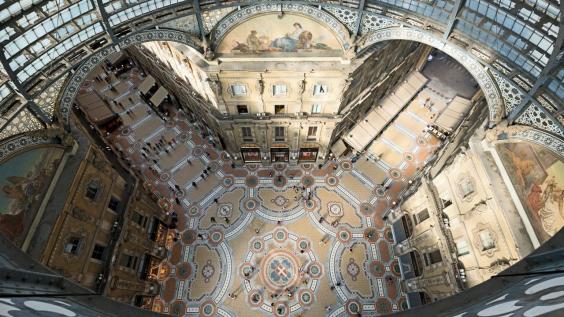
Start outside Milan’s 18th-century opera house, Teatro alla Scala (13), at Via Filodrammatici 2 (00 39 02 860775; teatroallascala.org) and cross the elegant piazza with its monument of Leonardo da Vinci (14), who lived here for 17 years. Wander through the Galleria Vittorio Emanuele II (15), the glass-roofed shopping arcade designed by Mengoni in 1877, pausing to spin three times with your heel on the testicles of the dancing bull on the mosaic floor (said to bring good luck).

Galleria-Vittorio-Emanuele-II-milan.jpg
Galleria Vittorio Emanuele II (Turismo Milano)

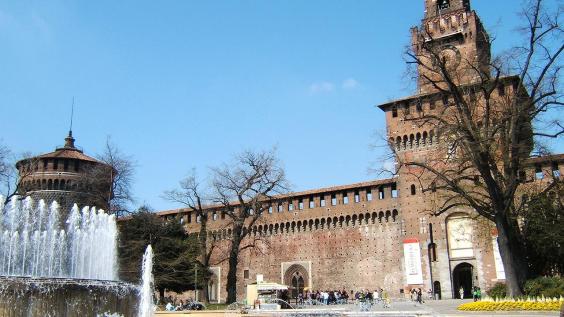
Emerging on to Piazza del Duomo, turn right onto Via dei Mercanti, passing the archways of the 13th-century Palazzo della Ragione (16) on your left, and continue down the pedestrianised Via Dante. Ahead looms the Castello Sforzesco (17), once home to the Visconti family and now housing the Triennale design and art museum, among others (00 39 02 8846 3700; milanocastello.it, entry €5).

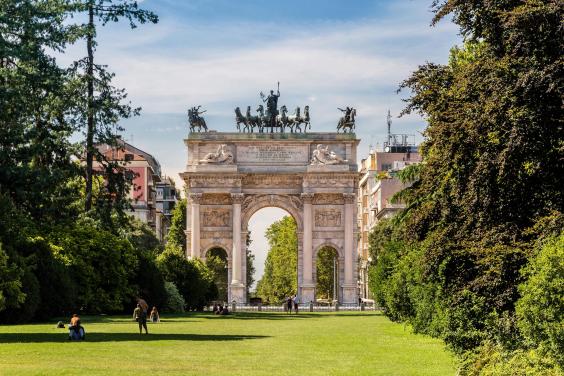
Cross the castle’s walls through a gate and stroll through the park until you reach the Arco della Pace (18), the Arch of Peace, built in 1807 under Napoleonic rule and mentioned in Hemingway’s A Moveable Feast.

Castello-Sforzesco-milan.jpg
Castello Sforzesco (Turismo Milano)

Lunch on the run

Rest weary feet at the Ristorante Galleria, inside Galleria Vittorio Emanuele II (15). It serves traditional Milanese fare, such as ossobuco (veal shanks) with saffron risotto for €26 (00 93 02 86 46 49 12; ristorantegalleria.it). Open 8.30am-12.30am daily.

For something quick and cheap, queue for panzerotti (pizza folded into a half moon shape) at Luini (19), at Via Santa Radegonda 16, which has been a Milanese institution for three generations. Tomato and mozzarella is priced at €2.50. Open 10am-3pm Monday; to 8pm Tuesday to Saturday (00 39 02 86 46 19 17; luini.it).

Read more

The motorway that built Italy: Piero Puricelli's masterpiece

Window shopping

Fashion is the city’s biggest draw, and the likes of Prada, Gucci and Valentino are found in the Quadrilatero d’Oro, a “golden rectangle” of streets centred around Via Montenapoleone (20).

Fashionistas on a budget should head to 10 Corso Como Outlet (21) at Via Tazzoli 3, a slightly shabbier, cheaper version of Carla Sozzani’s original store, 10 Corso Como (22) (10corsocomo.com) –the name is also the address.

Once lined with craftsmen’s workshops, Via Torino (23) is now one of the main areas of Milanese shopping to suit all tastes and budgets.

An aperitif

Aperitivo is a sacred rite in Milan, and the Navigli area is one of the best places to get stuck in. Mingle with the after-work crowd at El Brellin (24) at Alzaia Naviglio Grande 14 (00 39 02 5810 1351; brellin.com) , where you can order an Aperol spritz for €8 and fill your plate with pasta, cheese and meat for free at the bar. Open daily 12.30pm-3pm and 6.30pm-1am.

10506564-741733032559745-1475597976131482304-o.jpg
Take your aperitivo out on the terrace (El Brellin)

Diagonally opposite, Mag Cafe (25) is edgy and cool, with tattooed bar staff serving creative cocktails from €8, which also arrive with a plate of snacks (00 39 02 3956 2875). Open 7.30am-1.30am daily.

Dine with the locals

Run by the same family since 1938, Alla Collina Pistoiese (26) at Via Amedei 1 (00 39 02 8645 1085; allacollinapistoiese.it) serves high-quality Tuscan cuisine beneath an impressive carved ceiling. Try the fresh pappardelle with mushrooms for €16 and homemade tiramisu for €8. Open Sunday to Friday 12.30pm-2.30pm and 7.30pm-10.30pm; Saturday 7.30pm-10.30pm.

Locals head to Dry (27) at Via Solferino 33 (00 39 02 63 79 34 14; drymilano.it) for its excellent pizzas and cocktails. Calzones filled with smoked provolone, olives and onion cost €12 and French 75s (a gin and champagne concoction) are €10. Open 7pm-12am daily.

Day two

Sunday morning: go to church

Hidden amid Via Torino’s high-street shops is the Chiesa di Santa Maria Presso di San Satiro (28), an architectural gem (chiesadimilano.it). Inside, marvel at Donato Bramante’s illusory apse, a magnificent example of trompe-l’oeil. Sunday mass is at 11am and 6pm.

Read more

  • Cagliari travel tips: Where to go and what to see in 48 hours
  • Genoa travel tips: Where to go and what to see in 48 hours
  • 48 Hours in Florence: where to go and what to see

Out to brunch

Founded in 1817, Cova (29) at Viale Monza, 91 (00 39 02 76 00 55 99; pasticceriacova.it) is one of Italy’s oldest coffee houses and has an ornate interior with chandeliers and gilded curtains. There are 13 types of tea (from €7 per person) and pastries from €2. Try the Coppa Cova (a custard, forest fruit and whipped cream delight) for €12. Open 7.45am-8.30pm Monday-Saturday; 9am-7pm Sunday.

A walk in the park

Parco Sempione (30) is a vast, green expanse with numerous recreational areas such as jogging tracks and a duck pond, and the Arena Civica (31), Arco della Pace, Napoleon’s triumphal Arch of Peace (18) and the Triennale design museum (32) (00 39 02 72 43 41; triennale.it), stand along its perimeter.

shutterstock-460383535.jpg
The Arch of Peace in Parco Sempione (Shutterstock)

Sempione may be Milan’s biggest park, but the Giardini Pubblici Indro Montanelli (33) is its oldest, established in 1784. It has a running track around its edge, and houses the Ulrico Hoepli Planetarium and Natural History Museum (34) (00 39 02 88 46 33 37; comune.milano.it/museostorianaturale).

Cultural afternoon

The Pinacoteca di Brera (35) at Via Brera 28 (00 39 02 722 63 264; pinacotecabrera.org) is home to an important collection of Italian paintings, including works by Bellini, Caravaggio and Mantegna. Open 8.30am-7.15pm daily but closed Monday; Thursday open until 10.15pm; entry €10.

Santa Maria della Grazie (36), located on the piazza of the same name, contains one of Italy’s most famous masterpieces, Leonardo Da Vinci’s The Last Supper. You can spend 15 minutes gazing at it – but advance booking is essential (cenacolovinciano.net). Open 8.15am-7pm Tuesday to Sunday; entry €10.

The icing on the cake

For a quirky evening, take in the sights while you eat a four-course dinner on board a vintage tram with Atmosfera Milan. Set menus cost €70 (atmosfera.atm.it), with journeys departing daily at 8pm from Piazza Castello, corner of Via Beltrami (37).

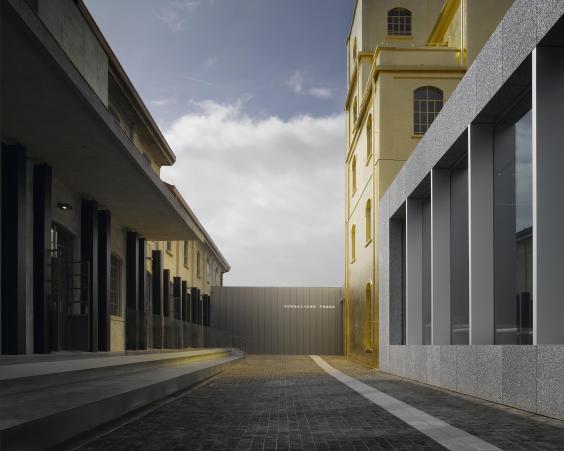
fondazione-prada-bas-princen-2.jpg
Fondazione Prada is home to a Wes Anderson-designed café

Designed by Wes Anderson, Bar Luce (38) (fondazioneprada.org/barluce) is a coffee shop-cocktail bar in the Fondazione Prada, an arts space owned by the fashion brand that opened at Largo Isarco 2 in 2015. Exhibition tickets cost €10, but an espresso costs just €1.50. Open 9am-9pm Monday, Wednesday and Thursday; to 10pm Friday to Sunday; closed Tuesday.