Monday, 6 March 2017

Cheaper, crazier and cooler than ever: The ultimate guide to Las Vegas

Why go now?

Seeing as a visit to Vegas traditionally means frittering away wads of cash (the house always wins, people), Norwegian’s (norwegian.com) launch in October of the UK’s cheapest direct flight to Sin City could come in handy. Norwegian has been quietly establishing itself as a surprisingly brilliant budget long-haul airline, and Vegas is the latest addition to its ridiculously cheap transatlantic stable, with one-way fares starting at £179. The route niftily flies on Thursdays and Mondays – perfect for a weekend blowout.

But if you’re curious about more than a “big one” on the Strip, it’s also a fascinating time to visit the Downtown area, which is shrugging off decades as a prohibitively dodgy neighbourhood to emerge as a hip, cultural alternative to the Strip’s bawdy brash and flash. 

Get your bearings

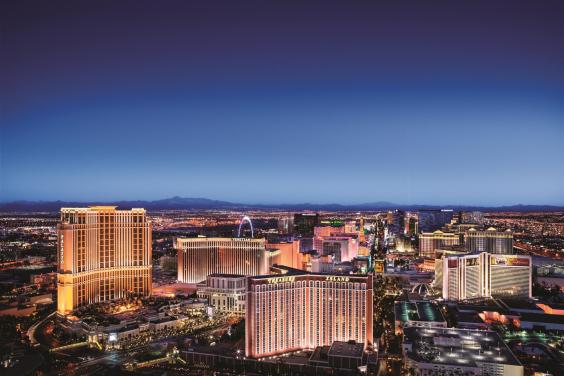
Mind-blowing fact alert: it's estimated that around half of visitors never stray from the Strip – the 4.2-mile concentration of famous hotels and casinos on Las Vegas Boulevard – which means they’ve never actually visited the city of Las Vegas. The Strip, in fact, lies south of the Las Vegas city limits, and within the city of Paradise, Clark County.
vegas-strip.jpg
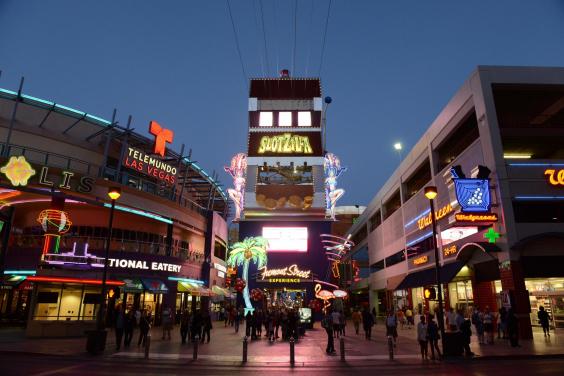
The Las Vegas Strip’s mega-resorts at dusk

Though many are content to stick to this neon-lit stretch of naughtiness, keep heading north and you’ll find the historic centre of the actual Las Vegas around Fremont Street in Downtown. The Arts District, just south-west of Downtown, is also an area of rejuvenation, where a new crop of galleries and arts festivals strive to tempt visitors into the city proper.

For the perfect 48 hours, then, spend a day in each area. We’ll start with the must-dos of the Strip and then head into less familiar territory. 

Currently £1 = approximately US$1.25.

Day one

Take a hike

As a parched railroad town stranded in the Nevada desert and thirsting for tourism, in 1931 plucky little Las Vegas realised providing a hub for gambling and quickie marriages would do the trick. It’s been a magnet for those looking to escape humdrum reality and let loose ever since. To get a good feel for the Strip’s hedonistic pull, walking a few miles along this audacious artery provides an instant immersion into its anything goes, alternate universe. 

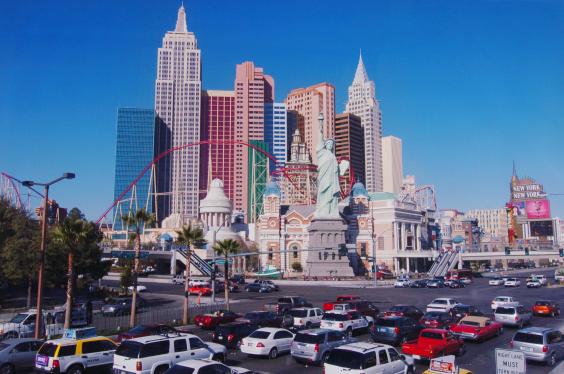
The fantasy land that is Vegas is embodied by its themed hotels; you can take a round-the-world trip in a few paces. Start at the Luxor hotel and casino (1) at the south end, a giant Egyptian pyramid that, at night, shines the world’s strongest beam of light into the sky (it can be seen by aircraft at cruising altitude). Walk north past Excalibur (2) (decked out like a medieval castle), which brings you to the Statue of Liberty – or, rather, New York New York (3), a hotel built to resemble a mini Manhattan. Along with the torch-bearing icon, there’s a rollercoaster looping around the Empire State and the Chrysler, a teeny Brooklyn Bridge and, adjacent to the casino, a replica of Greenwich Village.
new-york-new-york-day.jpg
New New New York Hotel & Casino imitates the Big Apple’s skyline

If the hotels weren’t boggling enough, the people-watching along this route should entertain – expect the likes of painted naked ladies hustling you to pose for photos, deliriously happy tourists toting half-yards of booze, and silver-painted performers dancing to Enya.

The next big stop is Paris (4) – with its mock Eiffel Tower and Arc de Triomphe – and after that, The Venetian (5), where you’ll spot the Rialto Bridge and canals paddled by stripy-T-shirt-clad gondoliers. If there’s enough room on your camera roll after this lot, and it happens to be night time, continue on to The Mirage (6). At 8pm and 9pm on Saturdays and Sundays, the ominous beat of jungle drums strikes up, heralding the eruption of the resident volcano. 

Lunch on the run

You’ll be hard pushed to find an authentic locals’ favourite on the Strip, but it’s definitely worth dipping into The Venetian (5) to seek out the Southern-style fare at Yardbird. The fried chicken with honey hot sauce and the five-cheese mac and cheese are outstanding; wash it all down with a dangerously gluggable Southern Peach cocktail (with bourbon, Aperol, sweet tea and thyme). 
linq-and-high-roller.jpg
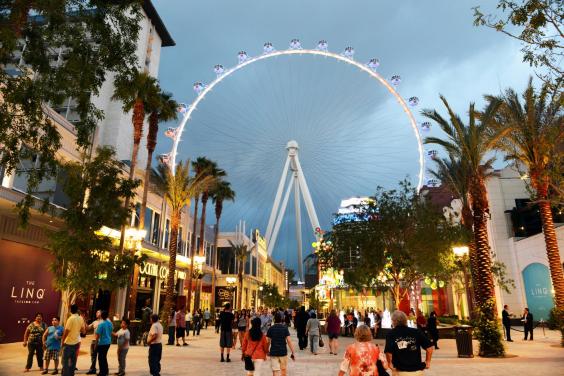
The High Roller is the world's tallest observation wheel

Take a view 

They’ve nicked the Statue of Liberty and the Eiffel Tower, so why not the London Eye? The 550ft-tall High Roller (7), which opened in 2014, is the world’s tallest observation wheel. This being Vegas, you can book the ‘Happy Half Hour’ option, wherein your pod includes a straight-talkin’ bar wench who’ll ply you with shots for the rotation’s duration. By day, the vista of the red-streaked Spring Mountains that surround the bizarre mirage that is Las Vegas is really quite something. 

Just won big? A 15-minute flight over the Strip with Maverick Helicopters (8) gives an unforgettable bird’s eye view of the biggest and brightest mega-resorts. 
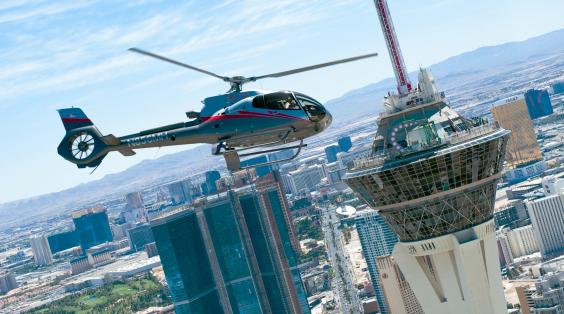
mh-vegas-voyage21.jpg
Those who do well at the casinos might want to splash out on a helicopter ride

Window shopping

You’ll never be stuck for a mall in Vegas, but for 540,000 square feet of bargain designer goods, head to Las Vegas Premium Outlets North (9). Here, brands including Saks Fifth Avenue, Armani and Kate Spade ply their wares at (relatively) affordable prices. 

Want something a bit quirkier? Head Downtown to Retro Vegas (10), an antique store selling impossibly cool wares from the city’s Fifties heyday – think entire pastel-pink kitchens and vintage dinettes. 

  • Read more

Donald Trump-free holidays: Five liberal places to visit in the US

An aperitif

If you’re gunning for something glamorous, the Skyfall Lounge at the Delano (11) gives the best view of the Strip we’ve seen anywhere, and mixes a mean espresso martini. Or try The Chandelier bar at The Cosmopolitan (12), a three-floor poser wrapped inside glittering beaded curtains. It’s just as ridiculous as it sounds – making it a must-stop – and offers the verbena cocktail with ‘buzz button’ flower garnish, sure to set your tongue a-tingle. 

If you’d rather a laugh with the locals, swerve off-Strip to the Golden Tiki (13), an enjoyably garish, 24-hour tropical paradise serving all manner of “rum”-bunctious concoctions.
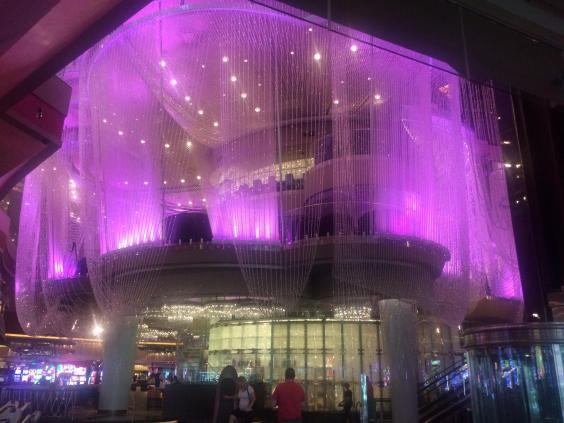
img-3196.jpg
The three-storey Chandelier bar encased in beaded curtains (Laura Chubb)

Dine with the locals

The latest outpost of London’s high-end Chinese eatery Mr Chow (14) opened in Caesar’s Palace late last year. If you’re celebrating a big win, this is the spot – with its decadent champagne trolley and outrageous prices, there’s no better place to show off. Most interesting is the bizarre, spaceship-esque art installation that springs to life every hour or so – we’re told Mr Chow had become obsessed with Close Encounters of the Third Kind when he devised it. 

For something more authentic, old-school Vickie's Diner (15), heading north towards Downtown (just past the Stratosphere), is much-loved for its classic red booths and fuss-free, 24-hour food – think corned beef hash with three eggs for $8.95.
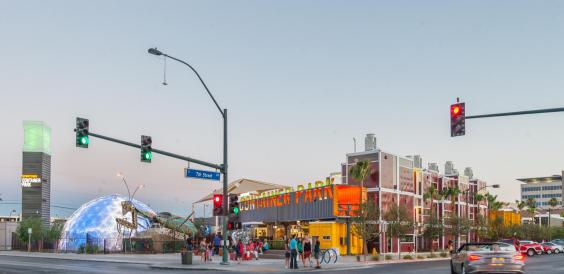
downtown-container-park-img-5753.jpg
The Downtown Container Park proffers hip food and fashion

Day two

Sunday morning: out to brunch

Bid farewell to the Strip with great views and even better food at Giada (16), a bright and chic little spot owned by Italian-born Food Network chef Giada De Laurentiis. The bottomless mimosas go great alongside a strawberry polenta waffle with pineapple and Nutella, or if you’re more of a savoury bruncher, lobster hash with bacon and eggs. 

A walk in the park

Time to head Downtown. For an instant vibe shift, have a wander around the Downtown Container Park (17), a hipster-by-numbers complex of shipping containers offering everything from art and fashion boutiques to upmarket hot dogs and filthy loaded fries at Cheffini’s. And hey, it’s Vegas, so there’s even a wedding chapel. Not to be outdone by the Strip, in the evenings a giant praying mantis sculpture starts dancing to disco music and breathing fire. 

Desperate for some actual nature? The Springs Preserve (18), three miles west of Downtown, offers nature walks and a butterfly house. 

img-3311.jpg
Loaded fries from Cheffini’s at Downtown Container Park (Laura Chubb)

Cultural afternoon

Just five minutes on foot from the container park, housed in the former, 1930s-era Las Vegas Post Office and Courthouse, The Mob Museum (19) is an utterly fascinating – and impressively thorough – account of not only how the mafia ran Vegas in the Thirties and Forties, but the history of organised crime itself. To get the most out of it, you need about three hours. General admission from $23.95.

Find another brilliant bit of Vegas history at the Neon Museum (20), where you’ll wander around an outdoor exhibition (the “Neon Boneyard”) of more than 200 rescued signs from the city’s earliest hotels and casinos. As our guide put it, this is the city’s “native art form”, and there are loads of little nuggets to learn here – the original sign from Liberace’s favourite dry cleaners led to the story of how they would remove all the rhinestones from his outfits before cleaning, and then painstakingly reattach them. Guided tours only, from $19.

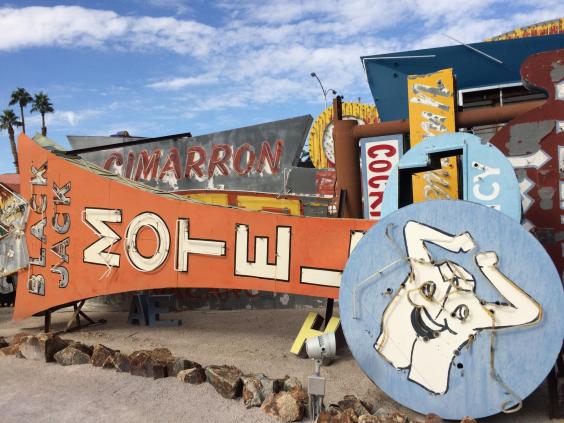
img-3071.jpg
The original sign from Fifties casino Stardust at the Neon Boneyard (Laura Chubb)
img-3061.jpg
The shirt once advertised Liberace’s favourite dry cleaners (Laura Chubb)

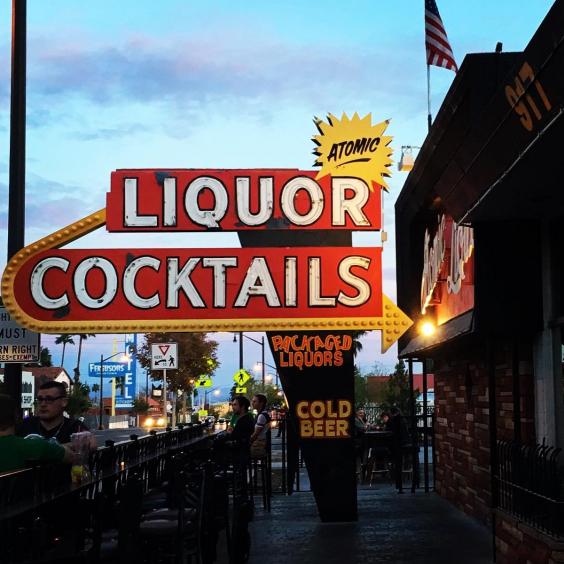
Time for one more? Back towards the Strip in Paradise, the National Atomic Testing Museum (21), admission $22, explores the story of the Nevada Test Site, where nuclear weapons were – and still are – developed. In the early Fifties, the huge mushroom clouds that billowed from the site became a tourist attraction – afterwards, swing by Downtown’s Atomic Liquors bar (22), where people would come to watch explosions from the roof while sipping an “atomic cocktail”. All red light and black leather, it’s enjoyably seedy, and the smoked melon beer cocktail (with mescal and habanero) is a winner.  
img-3314.jpg
The Atomic Liquors bar was popular with tourists who came to Nevada to watch nuclear explosions (Laura Chubb)

Take a ride

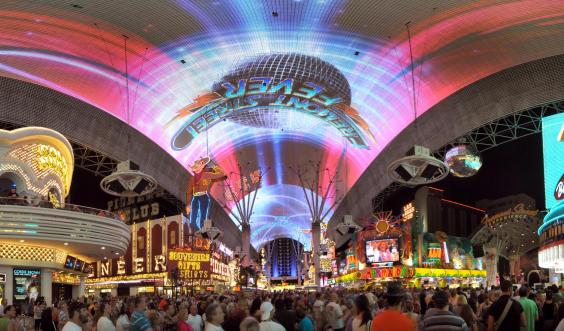
Fremont Street is where Las Vegas started, and today the Fremont Street Experience (23) offers a sort of charmingly downmarket version of the Strip – lined with old-school casinos like the Golden Nugget, “only in America” restaurants such as the Heart Attack Grill (where staff spank you if you fail to finish your ticker-testing meal), and bars selling super-sized cups of beer. The best view of it all is undoubtedly from SlotZilla (24) – a zip-wire ride that takes off from a giant slot machine and, if you opt for the higher, 114ft option, whizzes you along the entire length of the Experience. 
2010-323-2.jpg
The Fremont Street Experience lies at the historical heart of the city
slotzilla-zip-line.jpg
The SlotZilla zip line takes off from a giant slot machine – obviously

The icing on the cake

This depends on which day you liked most. If the Strip is your thing, find more Las Vegas pizzazz at a show. Cirque du Soleil has seven different themed extravaganzas on the Strip at the moment, or for something more intimate, BAZ at The Venetian (5) is a glittery, musical mash-up of Baz Luhrmann movies.

More into Downtown culture? First Friday in the Arts District (25), on the first Friday of every month, offers free art shows and live music, with food trucks supplying the sustenance. If you want to see more art, take a car south of Paradise to find Seven Magic Mountains (26), a trippy art installation by Swiss artist Ugo Rondinone, where towers of colourful boulders have been stacked in the lonely Nevada desert. Unveiled in May, it will stay put for two years. 

Getting there

Touch down is at McCarran airport (27), which is just a 15-minute cab ride from the Strip. According to the Nevada Taxicab Authority, it should cost around $21.95 to reach the Bellagio, which is roughly the mid-point of the Strip. Bus 108 from Terminal 1 runs to Downtown in about half an hour for $2.

The RTCSNV runs the Deuce bus between Fremont Street and Mandalay Bay at the south of the Strip 24/7. Tickets cost $6 for two hours, $8 for 24 hours and $20 for three days. It also operates the SDX bus which, with fewer stops, is a quicker way to get from the Strip to Downtown and also swings by the Arts District. It runs 9am to midnight and fares are the same. 

Staying there

Vegas is known for its mega-resorts, so The Cromwell’s (28) claim to be a “boutique hotel” should be taken relatively – it has 188 rooms, compared with 3,976 at Caesars Palace. There’s a smattering of a decadent Parisian theme – sultry rooms decked out in purple and black – and at around $148 a night (inclusive of tax and resort fee), and smack-bang in the middle of the Strip, it’s a deal.

Party poseurs will love The Cosmopolitan (12), which has massive, apartment-style rooms (there’s even a microwave for late-night snacking) and great views of the Strip. Milk and cookies at bedtime is a nice touch. Starting rates from $246 per night, including tax and resort fee.

For something more sophisticated, the Mandarin Oriental (29) is without doubt the classiest broad in Vegas. Its Asian-accented, non-gaming environment provides a Zen oasis away from all those bright lights and slot machines, and rooms have floor-to-ceiling windows proffering knockout views – even in the toilet (fret not, there’s a sheer modesty blind to keep your bathroom activities private). Rooms from $300 per night, including tax and resort fee.

More information

lasvegas.com/uk

Click here to view the California & the Golden West Tour, with Independent Holidays.

Sunday, 5 March 2017

Christmas markets, a red light district and the world's most expensive concert hall: A winter weekend in Hamburg

Why go now?

Hamburg, that red-bricked port forever associated with ground beef sandwiches and The Beatles, is a fine prospect in winter. This time of year sees the return of the beer-fuelled Hamburger Dom funfair (on until 4 December), while the Reeperbahn’s (1) cafes and bars spark to life in the dark nights under a neon glow. On 11 January the city’s new cultural landmark, the Elbphilharmonie (2), will officially open to great fanfare as the world’s most expensive concert hall. The final bill after construction ended in October was said to total €860m.

Get your bearings

Hamburg is easy to get around. The egg-shaped centre is squeezed between the main rail lines to the east, the Alster lake (3) to the north-east, the gardens (4) that follow the line of the old city walls to the north and west, and the broad River Elbe (5) to the south. The southern part of the city comprises the old docks, magnificently reborn as HafenCity (6).

Day one

Take a hike

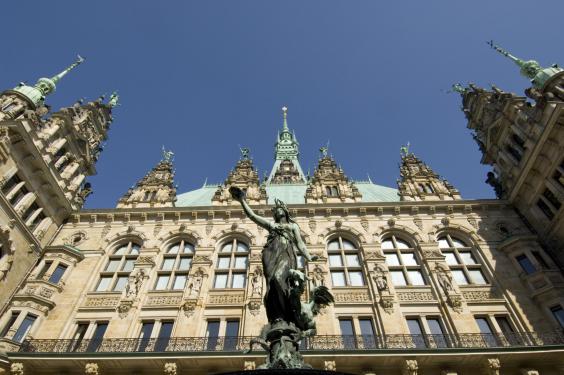
Begin a morning stroll when it’s quiet and the porticoed shopfronts along the Colonnaden (7) are still thick with shadows. Wander south, past the Alster lake (3), a silvery bowl popular for year-round pleasure boating, before turning right, past the boutiques and renaissance arches of Alsterarkaden (8). The city’s oldest shopping arcade, it is hung with creaky lanterns, gilded fish and tridents. Cross the Reesendamm bridge for views of the Kleine Alster basin, then follow the ghost of empire to the Hamburg Rathaus (9). Once the seat of the Hanseatic League, its classic gingerbread house facade trumps every other city hall across Germany. Outside, it’s awash in baroque splendour; inside its beehive interiors compel you to explore (11am-4pm daily, weekend hours vary; €4). 

abu-09-004.jpg
Hamburg's photogenic city hall

From here, the Rathausmarktplatz cuts west through the Altstadt to a series of deep waterways that fan out from the Alster Canal. You’ll find more of the same as you continue south-west towards the red-brick buildings of Speicherstadt (10), a UNESCO World Heritage Site and the largest warehouse district on earth. It’s framed by the wizard-hat spires of the St-Nikolai Memorial (11) and St Catherine’s Church (12), where Johann Sebastian Bach once pedalled away on the organ (katharinen-hamburg.de; 11am-5pm at weekends, other days vary; free).

Lunch on the run

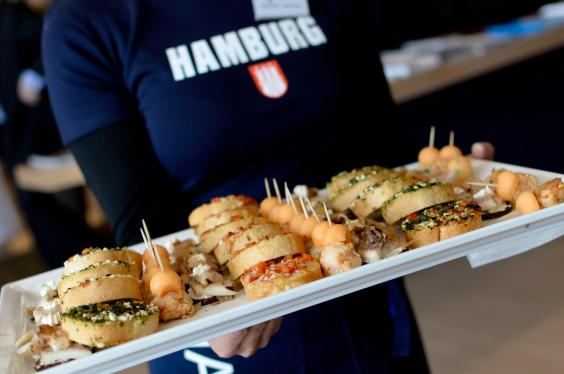
In Berlin they swear by currywurst, but in Hamburg locals argue about where to get the crumbliest fish fingers. It’s a winning formula the closer you get to the sea, with grab-and-go sandwich counters lining the wharves from Speicherstadt’s timber-pile foundations to the St Pauli Pier (13). Dinky pitstop and local favourite Brücke 10 (bruecke-10.de; open 10am-10pm daily) serves a variety of buttery herring and salmon buns (from €3), as well as local speciality krabbenbrötchen – North Sea brown shrimps on rye, €9.50. 

abu-10-007.jpg
Seafood sandwiches are a speciality of the city's food markets

A walk in the park

Weave through the streets of the St Pauli district from here to Planten ind Blomen (14), the green lung of the city. Its first seeds were planted in 1821 and the garden has dug in its roots to form a parkland belt that curves round the city centre’s midriff. It’s open from 7am to 8pm in winter and until 11pm in summer (plantenunblomen.hamburg.de).

An aperitif

Beat the work-day rush from the park to a 23rd-floor perch at Clouds (15) (clouds-hamburg.de; dishes from €10) atop the Dancing Towers, a pair of wonky skyscrapers designed to look like tangoing lovers. The highest bar in the city, it struts above St Pauli, and has a rooftop party deck one floor up. While nursing a biscuit-brown Krombacher wheat beer (€4.50), you’ll spy the stone-faced Otto von Bismarck monument (16) in Alterelb park below and count more bridges than you’d cross in Amsterdam and Venice combined. 

  • Read more

Move over Oktoberfest: an alternative beer pilgrimage in Bavaria

Dine with the locals

The Gröninger Braukeller (17) (groeninger-hamburg.de; dishes from €9.30) across town clings to beer hall tradition with all the trimmings you’d expect: cellar-aged casks; gigantic copper stills; a naughty anything-goes weekend atmosphere. Besides that, on the oak-stained tables you’ll find mountainous plates of suckling pig and sausages to soak up all those thick-foamed home brew pilsners (€2.40).

Day two

Sunday morning: out to brunch

Rise early and follow the cry of gulls to the ornately-domed Fish Market on Grosse Elbstrasse (18) (fischauktionshalle.com). It’s only open on Sundays (5am to 9.30am, 6am in winter), but don’t expect it to be quiet. It’s also the time when pie-eyed stragglers from the clubs in the nearby Reeperbahn red-light district (19) find themselves sobering up in wait for the shutters to roll open for breakfast. Order a fresh fish sandwich or quarkballchen (doughy cheese bites). 

Window shopping

Locals flit between the gallerias and passages of Neuer Wall (20) and Grosse Bleichen (21), a canal-lined rectangle of streets where you can pick up the latest high street fashions cheaper than you ever could at home. 

For something more seasonal, amble along the Kunst Meile (22) (kunstmeile-hamburg.de), past the city’s most influential galleries to HafenCity (6) for one of Hamburg’s spectacular Christmas markets (until 30 December; 11am to 10pm at weekends, other days vary). Tradition seeps from the waterfront, where antique boats are festooned with lights and stalls sell bratwursts big enough to sink a ship. 

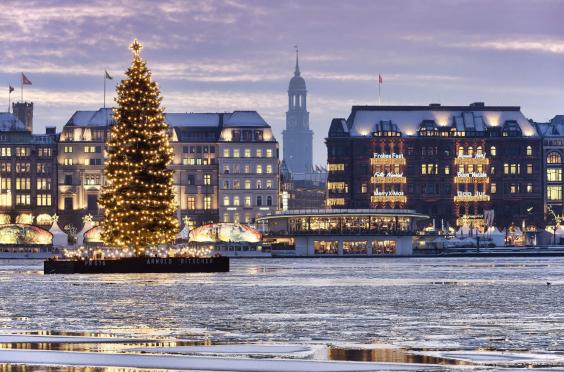
vof-01-q-051.jpg
The city gets especially festive for Christmas

Cultural afternoon

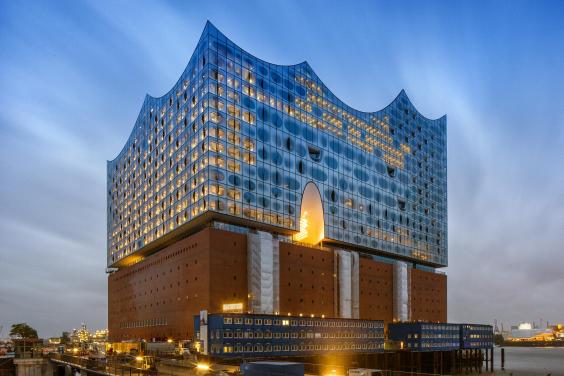
At the crossroads of antiquity and modernity, the Elbphilarmonie concert hall (2) (countdown.elbphilharmonie.de) is becoming a hub for harbour regeneration. When it finally opens in January (10 times over-budget and nine years late), the gigantic crest-shaped glass wave will reimagine the dockside quarter as a cultural zone. Until then, it’s possible to listen to electro pioneer Brian Eno’s walk-through sound installation (2pm-8pm, until 4 December; €3). It also houses the Plaza, a viewing gallery from where you can breathe in the salt-tanged maritime history and watch cargo ships shuttle up and down the Elbe. 

The icing on the cake

The city has Miniatur Wunderland (23) (miniatur-wunderland.com), the world’s largest model railway, and Knust (24) (knusthamburg.de), a slaughterhouse-turned-live-music-venue. But few oddities beat the eccentricity of the nuttily-bonkers German Food Additives Museum (25) (zusatzstoffmuseum.de; open 11am-5pm Wednesday to Sunday, Thursday 2pm-8pm). Dedicated to emulsifiers, stabilisers, sweeteners, and preservatives, a trip here guarantees you’ll never look at a German cookie the same way again.

nordostansicht-der-elbphilharmonie-am-abend-raetzke-140815.jpg
The new Elbphilharmonie is the world's most expensive concert hall (Thies Raetzke)

Getting there

You can fly to Hamburg Airport (26), 9km north of the city centre, with easyJet (from Gatwick, Luton, Manchester and Edinburgh), British Airways (from Heathrow) and Ryanair (from Stansted).  

The suburban rail link (S-Bahn line 1) runs from the airport every 10 minutes for a fare of €3.20 (hvv.de). It takes 25 minutes to reach Hamburg's vast main station, the Hauptbahnhof (27). Taxis make the same journey for between €25-35 depending on your final destination.

Staying there

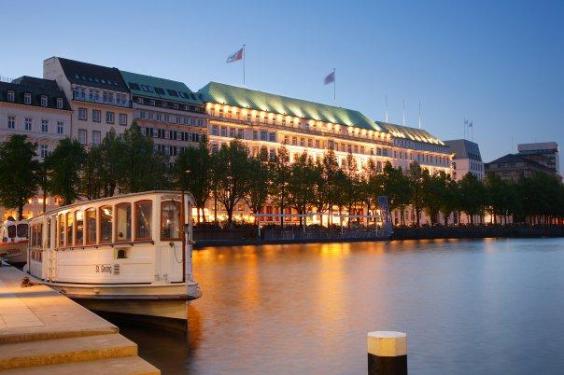
The Fairmont Hotel Vier Jahreszeiten (28) (fairmont.com/vier-jahreszeiten-hamburg) opened in 1897 and is a grand old dame with 156 wrinkle-free rooms and more five-star pomp than anywhere else in Hamburg. If splashing out, request a lake view and try the two Michelin-starred Haerlin Restaurant. Doubles from €225, room only. 

1917250-208246489573-5970560-n.jpg
The Fairmont Hotel Vier Jahreszeiten is Hamburg's most exclusive address

With cabins (not rooms), the 25hours Hotel Hamburg HafenCity (29) (25hours-hotels.com) has the harbour spirit in its bones. The seafaring decor is held together by vintage sailing accessories, bunk beds, and logbooks to leaf through, while there’s a handy kiosk on the ground floor selling Hamburg originals. Doubles from €124, room only. 

Superbude has two offbeat hostels in the city, including a corker in St Pauli (30) (superbude.de). It’s heavy on hipster attitude and up-cycled furniture, with doubles from €60, room only. 

More information

hamburg-travel.com

Click here to view a Christmas Market cruise of Hamburg, Amsterdam and Antwerp, with Independent Holidays.
Saturday, 4 March 2017

48 hours in Wellington: Hotels, restaurants and places to visit

Why go now?

Thriving Wellington is a perfect city to escape to during the Northern Hemisphere’s winter. January features international cricket, while 6 February is Waitangi Day – which commemorates the ratification of the Waitangi Treaty, which enshrined citizenship rights for Maori people and is a de facto national day for celebrating New Zealand’s European and Pacific heritage. And until 2018 the acclaimed Gallipoli – The Scale of Our War exhibition at the Te Papa Museum (1) (tepapa.govt.nz) looks in detail at the Anzac’s role in this bloody First World War battle.

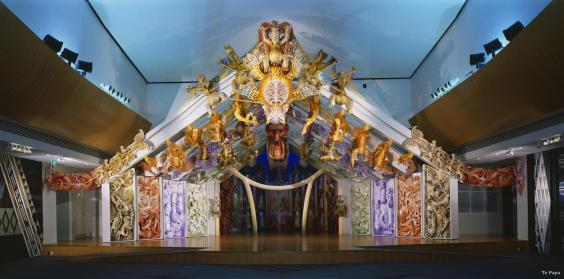
cu35-te-papa-wellington-te-papa-museum.jpg
Te Papa Museum

Get your bearings

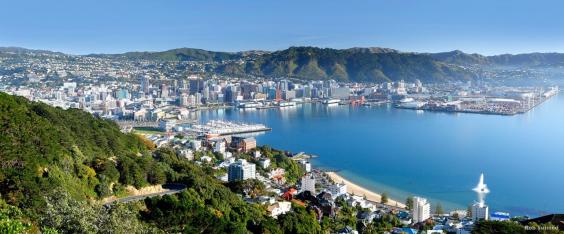
New Zealand’s capital is at the very southern tip of the North Island. This is a small city and practically everything in the downtown district is in a stright line between the mountains that rise to the west and the bay to the east. The suburbs spread as the bay widens out, with the airport (2) on a small flat plate of land to the south east. Ferries to Picton on South Island run from the ferry port (3) just north-east of the city centre.

Trolleybuses run in central Wellington, but the chances are you won’t need to use them much as it’s so walkable. You can get a Snapper card from newsagents (snapper.co.nz) to reduce a central bus zone ride from NZ$2 (£1.18) to NZ$1.66 (£0.98) and top it up at will.

The main tourist information centre is called i-Site (4) (wellingtonnz.com), and is located on the corner of Victoria and Wakefield Streets in the city centre. Open 8.30am-5pm daily.

Day one

Take a view

Follow the curve of the bay down to the small beach at Oriental Bay (5) and from there you’ll see Mount Victoria (6) rising above the city. If you’re feeling fit, you can yomp up to the summit; there are various bike and walking routes, including pleasant woodland strolls. 

Mount Victoria also gives its name to the neighbourhood of streets to the west of the mountain that are home to Wellington’s cool crowd, including comedy duo Flight of the Conchords, who you can still see out and about in town.

u103-mount-victoria-wellington-rob-suisted.jpg
The view from Mount Victoria (Rob Suisted/New Zealand Tourism)

Take a hike

A northern arc of a stroll allows you to take in practically all of central Wellington’s main sights. After descending Mount Victoria and checking out the colonial houses on Marjoribanks Street, you can see the Art Deco Embassy Theatre (7) on the corner with Kent Terrace. Turn right on to Oriental Parade and you’ll come across the graceful heft of the Wellington City Fire Station (8)

Read more

  • Thumbs up: hitchhiker's guide to New Zealand
  • What are the best stopovers en route to New Zealand?
  • Wellington: Arty, indie, and more than a little bit Hobbity
  • From craft beer to wild boar, New Zealand is a Land of Plenty

Continue straight ahead to Clyde Quay Wharf (9), where you’ll find a pop-up sauna in an old shipping container with a diving board that lets you launch yourself straight into the freezing cold sea after your 15 minutes of heat.

Double back and turn right along Wellington Waterfront Walk, following it until you cross a bridge, turning left immediately afterwards and joining Harris Street. To your left are steps, which will take you to Civic Square (10), one of Wellington’s main public meeting spots. 

shutterstock-351854648.jpg
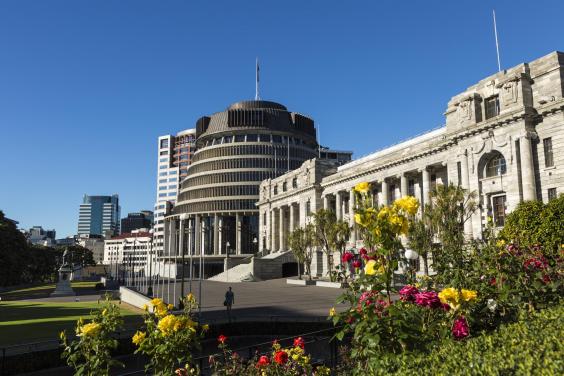
‘The Beehive’ (Shutterstock)

Exit on to Victoria Street and cut down Chews Lane to Willis Street, which, if you head right along it, becomes Custom House Quay. You’ll pass many of the city’s skyscrapers along this street. Go left at Bunny Street and you’ll see the city’s fine old railway station (11)

Diagonally opposite is the unmistakable sight of the Parliament building (12). There’s an original colonial building connected to a dramatic 1960s extension affectionately called “the Beehive” by Wellingtonians, and designed by a Scot, Sir Basil Spence. Tours of Parliament are available daily (10am to 4pm; parliament.nz).

Lunch on the run

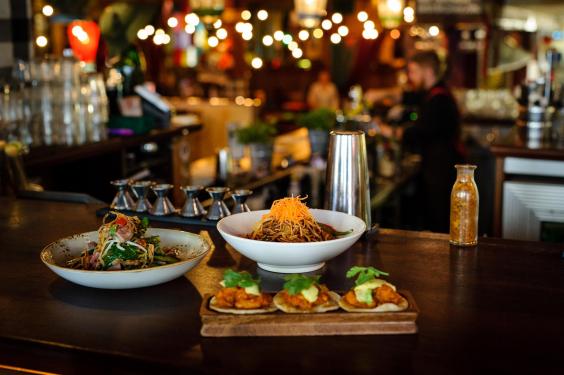
Various Kiwi celebs have signed the plates that hang on the wall at Monsoon Poon (13) at 12 Blair Street, though to be perfectly honest I was pushed to recognise the names of any of them. No matter, it’s an informal and fun lunch joint proferring an odd but enjoyable mix of Indian, Thai, Malaysian and Chinese food. The beef rendang is very good, likewise the butter chicken (moonsoonpoon.co.nz; open daily 11am to 10pm).

monsoon-poon.jpg
Dining at Monsoon Poon

Window shopping

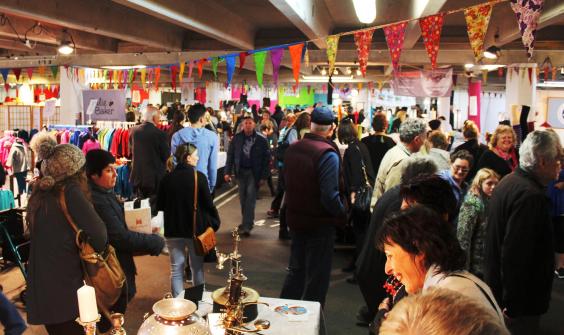
Wellington Underground Market (14), below Frank Kitts Park at Jervois Quay, runs officially from 10am to 4pm every Saturday (undergroundmarket.co.nz). You can pick up clothes, jewellery, ornaments and food – and there are live tunes.

underground-market-1.jpg
Wellington Underground Market

An aperitif

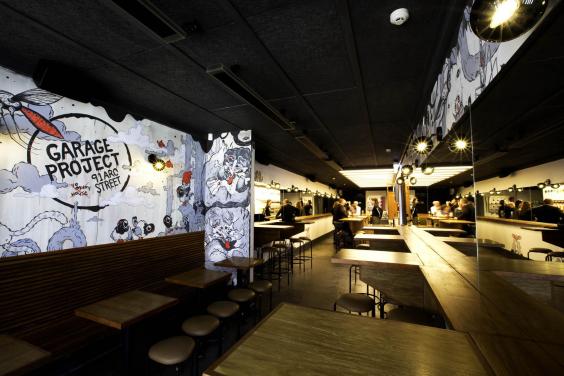
Kiwis are crackers for craft beers, and the hottest name on everyone’s lips right now is The Garage Project (15) at 68 Aro Street (garageproject.co.nz), where they brew everything from IPA to pilsener, and you can sip it all in a default hipster setting (found furniture, white tiles, exposed steel and wood, lots of beards). Open Friday and Saturday 10am-9pm, Sunday to 7pm, Monday 2pm-6pm, Tuesday-Thursday 12pm-8pm.

garage-project-taproom5.jpg
The Garage Project

Dine with the locals

Some restaurant reviews can be rather off in real life but if you don’t like the whole lamb shoulder (find some friends to share with) at The Bresolin (16) at 278 Willis Street (thebresolin.co.nz) I’ll eat my hat – or maybe just the rest of your dinner. Cooked for 12 hours by a team led by Wellington superchefs Leonardo and Lorenzo Bresolin, it’s some of the best lamb I’ve ever stuck a fork into. Book ahead for Saturday nights – and dress up. Open weekdays 7am-11pm, weekends 9am-11pm.

Day two

Sunday morning: out to brunch

Olive (17) at 170 Cuba Street (oliverestaurant.co.nz) is popular among Wellintonians for its extravagant brunches (tiramisu waffles with boysenberry compote, vanilla mascarpone and coffee syrup) and sophisticated air.

A walk in the park

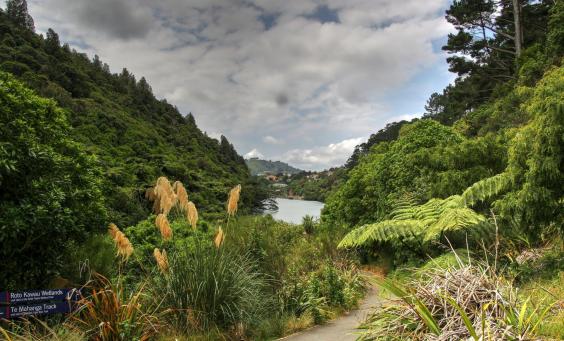
A cross betweena a zoo and a park, Zealandia’s (18) aim is to preserve the landscape of Wellington in a time capsule before settlers arrived here and changed the natural set up. A beautiful place for a walk, its 225 hectares are packed with plants. You’ll find it on Waiapu Rd (visitzealandia.com).

15666831174-51067faa39-k.jpg
Zealandia (Howard/Harriet Greenwood/Flickr)

Alternatively, hire a car and head out of town to the Wairarapa, a region of spectacular scenery, with vineyards, fields and walks along the river valleys. It’s all sheltered by the Rimutaka Mountains, which locals comically refer to as “the hill”. creating a warm, dry microclimate a world away from “Windy Welly”. Don’t want to drive? No problem. There’s a cycle trail running from Wellington to the Wairarapa over the Rimutaka mountains (wairarapanz.com/rimutakacycletrail).

Cultural afternoon

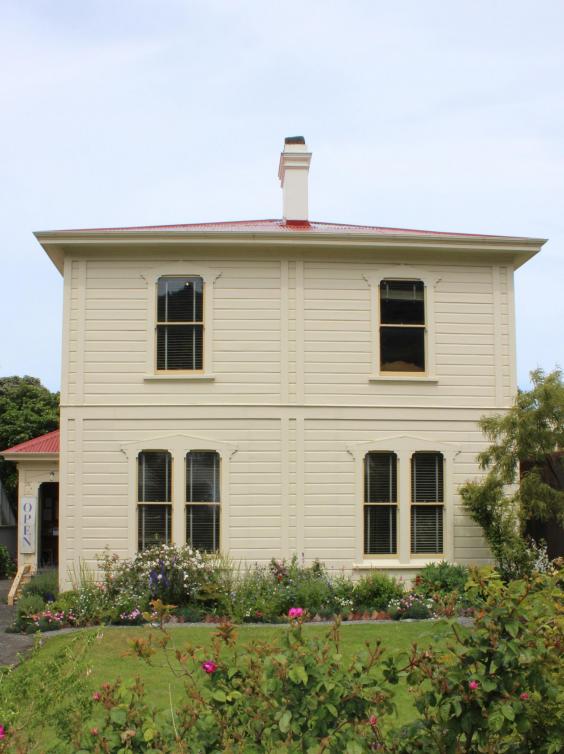
Wellington is famous for its films, comedy and literature. Visit the Tinakori Road home of one of the city’s most talented scribes, Katherine Mansfield (19), known for writing The Woman At The Store and Prelude (katherinemansfield.com). It was built in 1888 and has been restored to how it would have looked back in Mansfield’s day.

katherine-mansfield-house-credit-katherine-mansfield-birthplace-society-inc.jpg
Katherine Mansfield House (Katherine Mansfield Birthplace Society Inc)

The icing on the cake

Chances are if you’ve come all the way to New Zealand, you’re not just spending time in Wellington. The railway journey north from the city is one of the world’s greatest, packed with tunnels that plough through mountains and tracks that wend their way round cliffs and thread between valleys over huge viaducts. 

Kiwirail’s Northern Explorer service (kiwirailscenic.co.nz) runs four times a week as far as Auckland (12 hours; singles from NZ$179/£106), or you could hop off at Ohakune for the spectacular mountains, Ruapehu, Ngauruhoe and Tongariro, and return to Wellington the following day.

Travel essentials

Getting there

The writer flew with Singapore Airlines (singaporeairlines.com), which serves Wellington from Heathrow via Singapore and Canberra four times a week. It also flies from Manchester.

There are no one-stop flights from the UK to Wellington. Other carriers offering two-stop services include Air New Zealand (airnewzealand.co.uk), Qantas (qantas.com.au) and Emirates (emirates.com).

From the airport (2) a taxi takes 20 minutes into town NZ$44 (£26) – though ask for the scenic route via the bay rather than the tunnel (NZ$9/£5.30 extra and 10 mins longer) – while the Airport Flyer bus takes around 45 minutes to get to the stop on Queensgate (NZ$9/£5.30; metlink.org.nz). 

Staying there

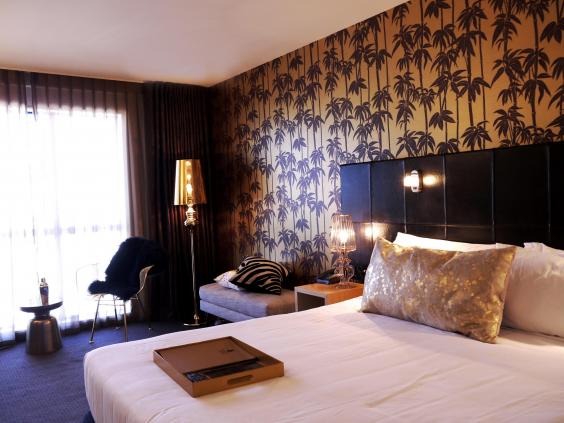
QT Museum Wellington (20) at 90 Cable St (qthotels.com.au) is about to launch as the Aussie design-focused brand’s first overseas venture. It’s set within the old Museum Hotel building, a local landmark which was jacked up and moved 100 yards on rails from its original home when the Te Papa Museum (1) was being built. Wellington’s hippest hotel by miles. Doubles from NZ$250 (£147), room only.

full.jpg
QT Museum Wellington

Quest on Thorndon (21) (questonthorndon.co.nz) is a cool little hotel on Thorndon Quay, a stone’s throw from Wellington’s waterside, with a friendly vibe. Doubles from NZ$222 (£131), room only.

Halswell Lodge (22) at 21 Kent Terrace (halswell.co.nz) is an affordable option in the centre of town with free wi-fi and parking. It’s within walking distance of all the major attractions. Doubles from NZ$100 (£59), room only.

Click here to view our New Zealand Tour, with Independent Holidays

Thursday, 2 March 2017

How to spend two days in Yangon: South-east Asia's new boomtown

Why go now?

Burma, or Myanmar as it is more commonly now known, is on the move at an astonishing pace. It is, after all, only a few years since the dark days of military rule and house-arrested Aung San Suu Kyi’s pleas to us to stay away. Now, with her blessing, tourist numbers are soaring and Burma's largest city, Yangon (also known by its colonial name of Rangoon), is fast becoming South-east Asia’s latest boomtown. Glass skyscrapers are rising up to take their place among the skyline’s glittering gold pagodas. And with the curtain of mystery lifting on this one-time pariah of the international community, there is an edgy excitement about brushing with people, places and ways of life still getting used to foreign visitors. 

Get your bearings

About six million people live in Yangon, Burma’s commercial hub. However, it has not been the official capital since 2005 when the military regime upped sticks and relocated the government to brand new Naypyidaw.

Yangon stands on the east bank of the oceanic River Yangon, about 30km from the Andaman Sea. It came to prominence in the latter half of the 19th century when the British made it the capital of their new imperial possession. The colonial port area is still the commercial centre, though the heart of the city remains the gigantic gold Shwedagon Pagoda, visible from most places and so the main focal point. 

Day one

Take a view

A lift whisks you 20 storeys up Yangon’s tallest building, Sakura Tower (1) (sakura-tower-yangon.com). Gaze over 360 pagoda-dotted degrees of the city and the broad, brown Yangon river beyond. Eat at the Thiripyitsaya Sky Bistro, or simply step out on to the open rooftop. 

Take a hike

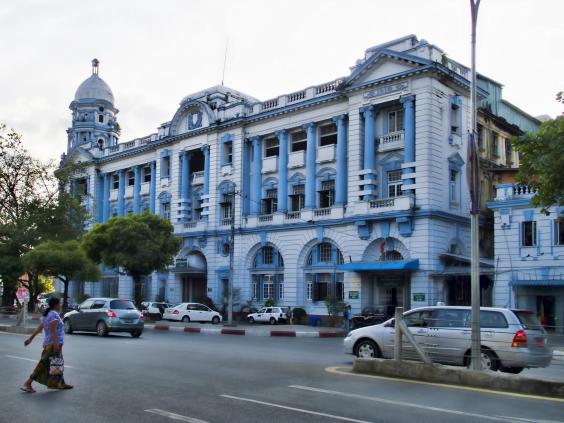
Street life is at its most vivid in the downtown ‘heritage’ district of dilapidated colonial mansions cheek by jowl with glittering temples. The area is compact enough to explore on foot, starting at the Sule Pagoda (2) (Junction of Sule Pagoda Road, Mahabandoola Road) – almost certainly the world’s only example of an ancient temple in the middle of a busy traffic roundabout. The arresting, pink-and-purple-painted colonial façade on the east side is City Hall (3), while further along Mahabandoola Road is the Immanuel Baptist Church (4). Stroll through Mahabandoola Gardens (5), noticing the fading colours and wrought-iron balconies of buildings which were once trappings of mercantile wealth. 

Continue down Sule Pagoda Road to meet Strand Road, then pass the imposing Custom House (6) to reach the homage to colonialism that is the Strand Hotel (7) (hotelthestrand.com).

12847580843-b607c97884-k.jpg
British-colonial architecture on Sule Pagoda Road (Dan Lundberg/Flickr)

Lunch on the run

Yangon locals are enthusiastic guzzlers at the street stalls found all over the city. Traders proffer bowls of Mohinga (noodle soup) to slurp-and-go, or Bein Moun (crispy pancakes) which might be savoury – often with prawns – or filled with fruit and condensed milk. The deep-fried crickets are more of an acquired taste, while battered chunks of gourd in chilli sauce cry out for a cold glass of Shwe Bali (milk and yoghurt, rather like an Indian lassi).  

Cultural afternoon

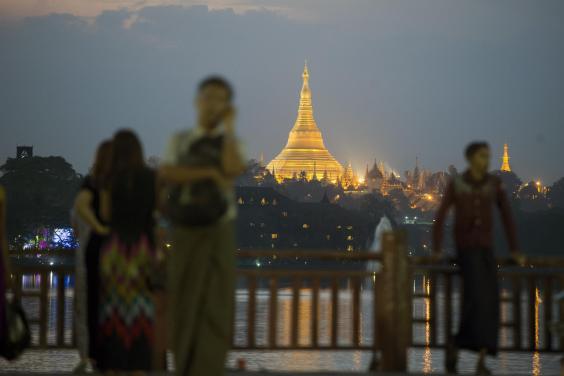
The Shwedagon Pagoda (8) (shwedagonpagoda.com) is Myanmar’s show stealer, its Taj Mahal. The golden stupa rockets 100 metres into the air carrying 30 tons of pure gold leaf, 2,500 rubies, and a 76-carat diamond on its crown. Nobody knows for sure how old it is, but it seems to have risen by degrees from about 600BC, with new layers and chambers added over the centuries to house sacred relics. 

Nowhere is Buddhism more observable as a living, breathing religion. Tourists are vastly outnumbered by Burmese in a constant tide of raspberry-robed monks and pilgrims flowing clockwise round this holiest monument, pausing at marble pavilions and shrines where they leave offerings of rice and flowers. 

gettyimages-502984052.jpg
Shwedagon Pagoda dominates Yangon's skyline ( Getty)

An aperitif

The historic Strand Hotel (7), a colonial icon of the Singapore Raffles or E&O in Penang ilk, re-opened in November after extensive refurbishment. Sip Strand Sours (Mandalay rum with lime juice, sugar syrup and Angostura bitters) on a rattan chair under slowly turning fans and you will only be following Kipling and Somerset Maugham. If it happens to be Friday evening, when Happy Hour is declared, you’ll find the place going bonkers. Most of expat Yangon and the cream of local society congregate here from 6pm onwards; by 9pm The Strand is a merry place. 

  • Read more

South-east Asia’s final frontier: 5 ways to see Burma

Dine with the locals

The House of Memories Restaurant (9) (houseofmemoriesmyanmar.com) has a special place in Burmese hearts. In this century-old colonial half-timbered house, General Aung San, assassinated father of Aung San Suu Kyi, had a secret office from which he orchestrated his resistance against British rule. The room has been restored, complete with the national hero’s desk and typewriter. Diners are treated to a tour before tucking into signature dishes such as Poo Pad Pang (soft-shelled crab, fried and curried with onions). 

Day two

Window shopping

Expansive, covered Bogyoke Aung San Market (10) (Bo Gyoke Road), founded by the British as Scott Market, is the place to find anything from traditional Burmese jade, lacquer, puppets or teak carvings, to sarong-like longyis. Wander deep into the central alleys to find vendors busily trading in gold. The market is open every day from 9am to 6pm, with the best bargains often to be had first thing in the mornings. Haggling is expected, but this is usually done at relaxed, shoulder-shrugging pace.

14457475-10154007001151909-5909594276107019333-n.jpg
Get stuck in at 999 Noodle Shop (Facebook)

Sunday morning: Out to brunch

Burmese eat noodles for breakfast (and lunch, and dinner). It is hard to find better than those at 999 Shan Noodle Shop (11) (130B 34th Street; 00 95 1 389363; no website) where locals and tourists rub shoulders over brimming bowls. The bouncy, English-speaking owners will offer tastes of toppings such as crispy bacon or creamy tofu, to help you choose. 

A walk in the park

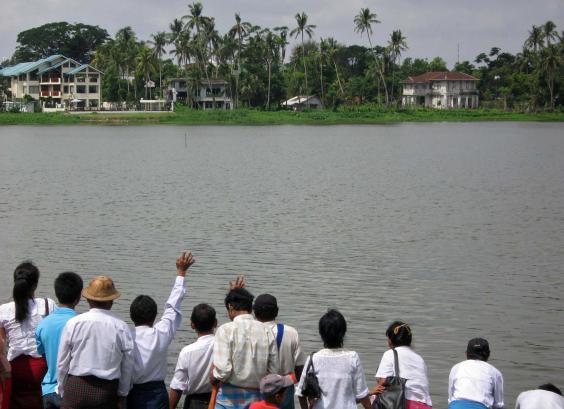
Saunter along the waterside path through lush gardens fringing enormous Inya Lake, an expansive reservoir at the heart of the city. Stretch the legs along Kaba Aye Pagoda Road (12), watching flocks of splashing wildfowl. This is an exclusive neighbourhood with posh villas peeking from behind creeper-draped walls. The most famous – selfied in front of by thousands of visitors – is the so-called ‘Lady House’ (13) at 54 University Avenue, where Aung San Suu Kyi was held under house arrest. 

gettyimages-86041402.jpg
Supporters wave towards Lady House on the other side of Inya Lake (AFP/ Getty Images)

Take a ride

Yangon’s 50-kilometre Circle Line train clatters round the urban perimeter, stopping every few minutes as commuters, food hawkers and flower sellers clamber aboard. The full loop takes about three hours from the Central Railway Station (14) (yangonrailwaystation.com). However, you can hop on and off at any point and get a taxi home if you have had enough.

Travel essentials

Getting there

Taxis from the airport (15) to downtown cost about £8. Agree the price in advance.

Staying there

The Belmond Governor’s Residence (16) (governorsresidence.com) is an uber-luxury 1920s teak mansion set in luxuriant landscaped gardens. Doubles from £267.

Panorama Hotel (17) (panoramaygn.com) is a centrally-located mid-range hotel, aptly named for its great views of the Shwedagon. Doubles from £105.

Motherland Inn (18) (myanmarmotherlandinn.com) is a simple, clean budget hotel run by a welcoming family. Rooms from US$20 (approx. £16).

Wednesday, 1 March 2017

48 hours in Canberra: Hotels, restaurants and places to visit

Why go now?

With the weather warming up, spring is the perfect time to visit Canberra – a city that can get brass monkeys in winter and stifling in the summer. And there’s a new way to get there; Singapore Airlines recently launched route is the only one-stop service from the UK to Australia’s under-appreciated capital. 

From 11 November the city’s Sunset Cinema season (sunsetcinema.com.au) kicks off, and sunny weather means it’s cricket season too, with the South African test side visiting for matches at the Manuka Oval (1) (manukaoval.com.au) on 18 and 20 November.

Get your bearings

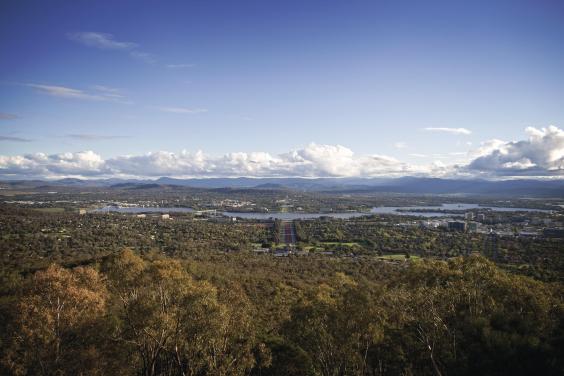
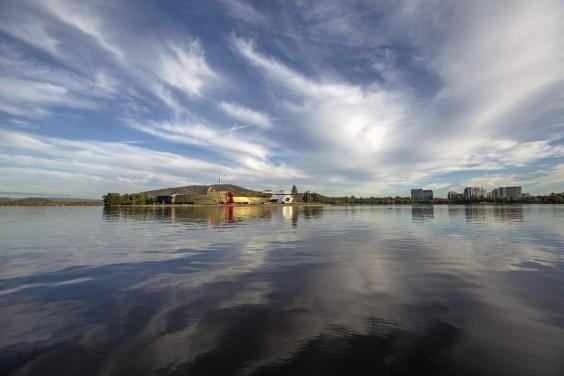
Canberra is the most successful planned city in history – and one of the most spectacular. A low-rise urban gem surrounded by bush, it’s laced with greenery and hills and sliced through by the serpentine Lake Burley Griffin. North of the lake is the central business district of Civic, also known as City Centre; south of it is Parliament House (2)

Mount Ainslie (3) looks over the city from the east, while to the west is the embassy district of Yarralumla. The area is more than a little reminiscent of Walt Disney World’s Epcot Centre, with each embassy built in the stereotypical vernacular of that nation – the Chinese and Japanese buildings are particularly flamboyant. Mexico is a modernist marvel; Britain, sadly, is middle of the road.

139559-34.jpg
Mount Ainslie offers a stunning view that’s worth the climb (Tourism Australia)

Expressway roads connect all areas and while some find the layout confusing, you can get your bearings very quickly using the excellent free maps from the visitors’ centre (4) at Regatta Point (visitcanberra.com.au; open 9am-5pm weekdays, to 4pm weekends).

Day one

Take a view

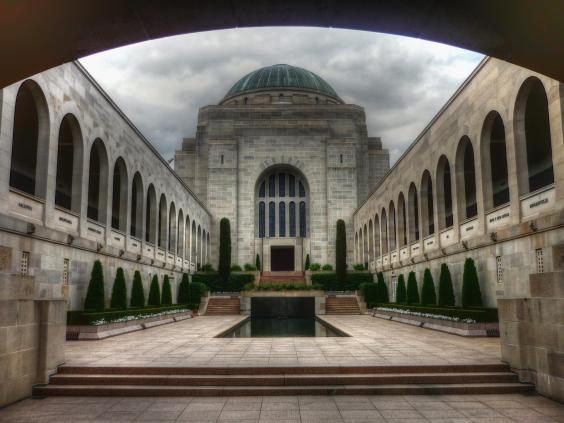
Walk up to the peak of Mount Ainslie (3). From the Australian War Memorial (5), on Treloar Crescent, it’s a 40-minute trek of medium difficulty, and from the top you can survey the city, built on a series of axes.

142527-34.jpg
The Australian War Memorial commemorates the sacrifices of Australians who have died in wars (Tourism Australia)

Take a hike

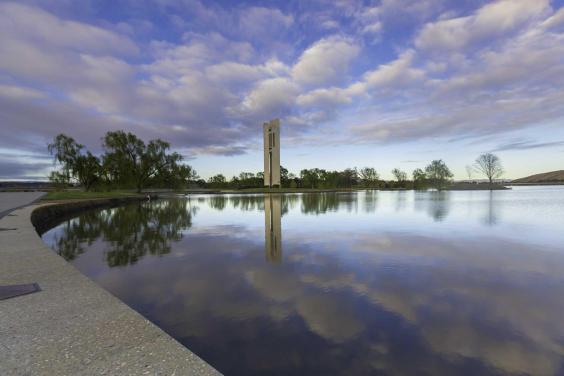
Walk back down Mount Ainslie (3), and either hop on a bus or take a taxi to Lake Burley Griffin; a good drop-off point is by the National Carillon bell tower (6), the first in a series of modern architectural marvels dotted along the lake.

107172.jpg
The National Carillon was a gift from the British Government to the people of Australia in celebration of the capital’s 50th anniversary (VisitCanberra)

Read more

  • Driving Australia’s ‘other Great Ocean Road’
  • Is it a good plan to travel to Australia in June?
  • Winter sun destinations: banish the cold with a trip to warmer climes

Keep walking with the water to your left and you’ll come to the National Capital Exhibition (7) at Regatta Point (nationalcapitalexhibition.com.au), where you can learn about the history of Australia’s capital. Sydney and Melbourne had quarrelled over the title, and in 1908 Canberra was selected as the new capital; the design was inspired by the garden cities philosophy of a town within nature. Regatta Point offers more fine lakefront views. 

Next cross the Commonwealth Avenue Bridge (8) over the lake. You’ll see the National Library of Australia (9) (nla.gov.au) on your left; turn towards it and along the southern shore you can see plaques commemorating the Australians of the Year, dating back decades. 

Continuing in the same direction you’ll reach the stunning brutalist double bill of the High Court of Australia (10), and the National Gallery of Australia (11) (nga.gov.au; open daily, 10am-5pm), both on Parkes Place. 

canberra-parliament-119296-2.jpg
Visitors can sit in on debating sessions at Old Parliament House (Tourism Australia)

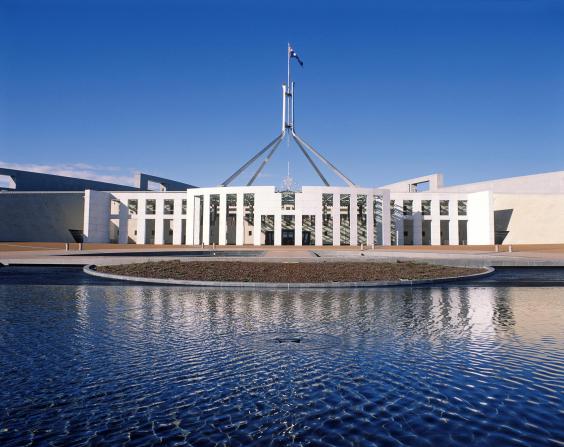
Turn right on to King Edward Terrace and meander through the gardens to your right before you reach Old Parliament House (12) at 18 King George Terrace. Sitting behind, on Parliament Drive, it is Parliament House (2), the huge heart of Australian democracy (aph.gov.au). Prebook a tour; during the week you can even sit in on debating sessions. The coup de grace is the rooftop garden and the huge stainless steel flagpole, which flies an Aussie ensign the same size as a tennis court.

Lunch on the run

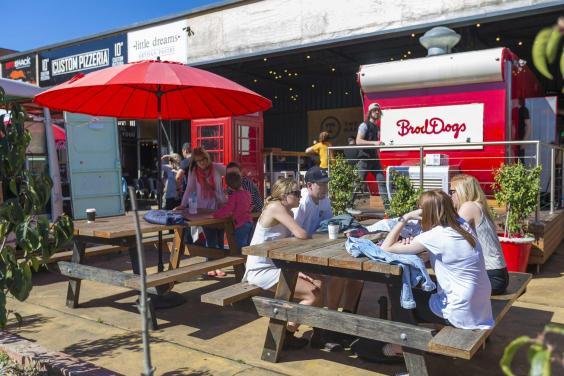
Stroll up to Braddon for a fantastic street food experience at The Hamlet (13), a collection of about a dozen trucks in an old car yard on Lonsdale Street. Broddogs (broddogs.com.au) is a Canberra institution; order a chilli cheese dog and enjoy on a stool while people-watching.

107156.jpg
The Hamlet is a fun shopping district, with thrift shops, design boutiques and stores (VisitCanberra)

Window shopping

Head out of The Hamlet (13) on to Lonsdale Street. Here you’ll find thrift shops, design boutiques and stores selling all sorts of clothes, books and trinkets. Among the highlights are home accessories at Handsomepretty (14) in the Ori building at No 30 (handsomepretty.com.au) and women’s vintage threads at Designer Op Shop (15) at No 18 (designeropshop.com.au).

An aperitif

Smith’s Alternative (16) at 76 Alinga Street (smithsalterntaive.com), right by the City Centre bus interchange (17), is the perfect place for a glass of local wine. There’s a relaxed vibe, and live music later on too.

Dine with the locals

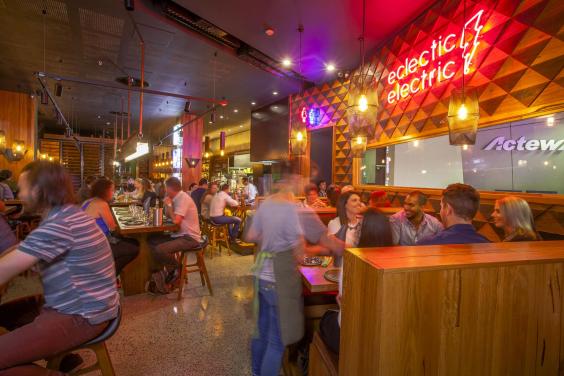
Akiba (18) at 40 Bunda Street (akiba.com.au) is a must for late-night dining. A five-minute stroll from Smith’s, it mashes Japanese and Aussie influences and serves the likes of prawn-fried rice and scallop ceviche in a ultra hipster blaze of beards, tats and neon signs.

107456.jpg
Akiba is a culinary mashup of Japanese and Australian cuisine (VisitCanberra)

Day two

Sunday morning: Out to brunch

If you’re Jonesing for a cup of Joe head to Penny University (19) at 15 Kennedy Street, in the cool enclave of Kingston (pennyuniversitycafe.com). Avo on toast plus a flat white is a Canberra staple and here it’s done right – ask for home smoked bacon on the side. Brunch is served on Sundays 8am-2pm; weekdays 8am-12pm.

A walk in the park

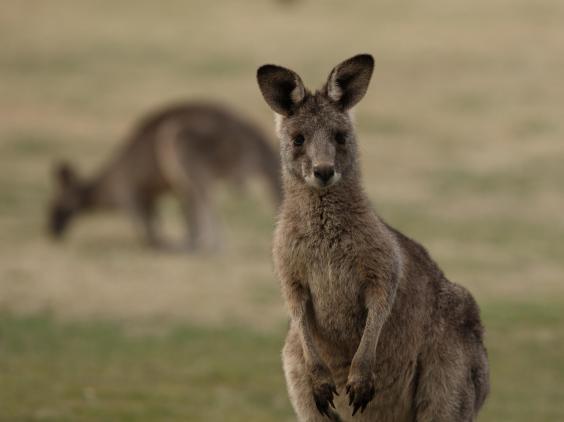
Head to Weston Park (20) in Yarralumla, on the city’s western edge, and you’re almost guaranteed a heartwarming sight of dozens of kangaroos chilling out on the grass. 

2808712710-41d4a7d08d-o.jpg
Dozens of kangaroos can be spotted at Weston Park (Tasty Snaks/Flickr)

Not far away, on Forest Drive, is the National Arboretum (21) (nationalarboretum.act.gov.au). Much of it has been destroyed by successive bushfires, giving it an eerie feel, but look at the incredible trees that did survive on top of Dairy Farmer’s Hill, another excellent city vantage point.

Take a ride

The brilliantly named Action (as in ACT – Australian Capital Territory) buses are actually a very simple and easy way to get around the main sights. Single tickets cost AU$4.70 (£3), which allows you to transfer to another bus within 90 minutes. For discounted travel, pick up a contactless MyWay card, available at various stores around the city. If you are feeling lazier, by all means hire a car as some of the distances can make walking a little tricky; cycling is also good here.

Cultural afternoon

The National Museum of Australia (22), on Lawson Avenue on the lake’s north-west shore, is the city’s cultural big hitter (nma.gov.au; open 9am-5pm daily). It contains stacks of objects telling the story of Oz – from trinkets made by convicts to art that the Indigenous Australians of this continent have crafted, sometimes in very trying circumstances.

146012-34.jpg
The National Museum of Australia houses 50,000 years of history (Tourism Australia)

The icing on the cake

You’d be mad not to take a trip out to the country. It’s a 30-minute drive north into the Yass Valley, where you could lunch on barramundi at an old farm called Poacher’s Pantry (poacherspantry.com.au) and stop by Clonkilla Winery (clonkilla.com.au) which has a new visitor’s centre, bar and tasting room which opened this year.

Travel essentials

Getting there

Singapore Airlines (singaporeairlines.com) flies four times a week from Heathrow to Canberra Airport (23) via Singapore. Returns start at £795 in economy and £2,910 business class. The airline also flies from Manchester.

Two-stop flights from the UK are available on various airlines including British Airways (with its partner, Cathay Pacific; ba.com), Qantas (with Emirates; qantas.com.au).

From the airport (23) a taxi takes just 10 minutes to get into town (approximately AU$50/£31) and the Airport Express bus around 20 minutes (royalecoach.com.au; AU$20/£12.50 return) to West Row (24) in the centre.

Staying there

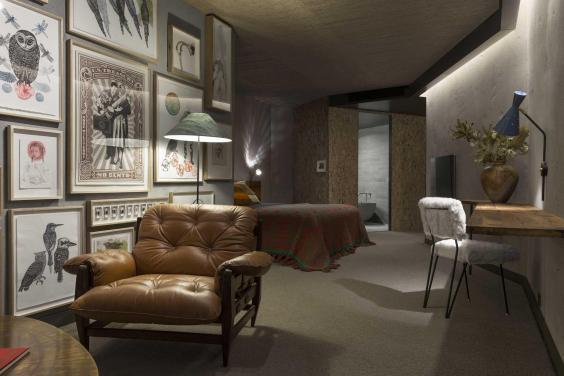
Hotel Hotel (25) at 25 Edinburgh Avenue (hotel-hotel.com.au) is Canberra’s coolest choice. Concrete sculptures mix with natural wood and Fifties style décor in this exceptional Design Hotels outpost. Doubles from AU$255 (£159) excluding breakfast.

036-ds-hotelhotel.jpg
Hotel Hotel is easily the trendiest spot to stay in Canberra

The QT Canberra (26) at 1 London Court (qthotels.com.au) is a former 1970s Rydges hotel that was recently reborn as part of the ever-expanding Aussie boutique chain QT. It comes complete with a speakeasy (Luckies) and a barbershop. Room-only doubles from AU$169 (£105).

Vibe Hotel Canberra Airport (27) at 1 Rogan St (tfehotels.com) offers clean, simple style for a reasonable (for Canberra, at any rate) price. Being near the airport doesn’t matter as it’s extremely central. Doubles from AU$119 (£74), room only.

Tuesday, 28 February 2017

48 Hours in Rio de Janeiro: hotels, restaurants and places to visit in the 2016 Olympics host city

Travel essentials

Why go now?

2016 is the year that the Olympic Games come to the riotous capital of carnival and caipirinhas. Rio de Janeiro, Brazil’s second city, underwent intense redevelopment ahead of the 2014 FIFA World Cup and the Games, which open this Friday, and it now boasts a revitalised historical district and waterfront as well as better transport, making this the perfect time to visit the city where people dance samba in the streets.

Touch down

Only British Airways (0344 493 0787; ba.com) flies direct from the UK to Rio, serving Galeao International Airport (1) from Heathrow. Stopover options include KLM (020 7660 0293; klm.com) from Manchester, Edinburgh and Heathrow; and from Gatwick with TAP Portugal (0345 601 0932; flytap.com) and Brazilian airline TAM (0800 026 0728, tam.com.br).

The 2018 bus, operated by REAL (realautoonibus.com.br), runs between the airport (1) and the main bus terminal (2) via Copacabana Beach (3) every 30 minutes between 5.30am and 10pm. A single ticket, which you buy from the driver, costs R$14.50. From the airport to Barra, where the Olympic Park (4) is, should take about an hour, but traffic in Rio is nightmareish during rush hour so allow up to two.

Rio’s public transport network includes a metro and a perplexing bus system with more than 1,000 lines. While buses are the cheapest option – at R$3 a go – they can be difficult to navigate and only stop when you hail them, or tell the driver (in Portuguese) you want to get off. The comfortable, air-conditioned metro runs until midnight Monday-Saturday and until 11pm on Sundays. A single ticket costs R$3.70. Its two lines – green and orange – cover the major tourist zones.
Get your bearings

Rio encompasses world-famous beaches, frenetic favelas and a rainforest. The city is split by the hilly Tijuca Forest national park (5) and spreads across four zones – Zona Sul, in the south, is the major tourist destination, home to upscale neighbourhoods like Copacabana and Ipanema. Centro, the business district, splices skyscrapers and historic monuments; Zona Norte boasts the Maracana football stadium (6); and Zona Oueste is where much of the Olympic Games is due to take place.

Currently £1 is worth 4.3 Brazilian reals (R$). US$1 is worth R$3.27.

Check in

Many of the hotels in Rio’s most popular districts, like Copacabana, and those close to the Olympic action, are fully booked for the Games. Where there is availability prices have soared, but if you’re still on the lookout for a last-minute place to stay, some hostels still have beds; expect to pay around R$180 a night.

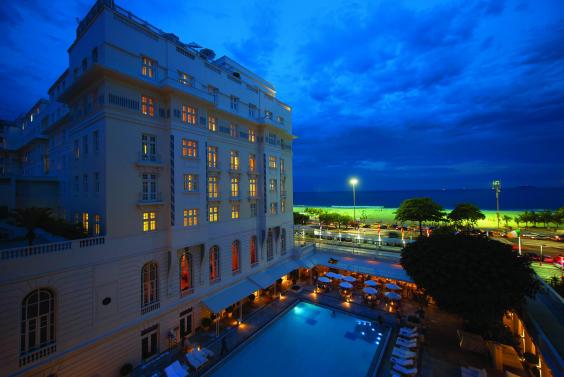
If you don’t plan to travel until after the Olympics, you have many more options. Overlooking Copacabana Beach and with breathtaking views of the ocean, the five-star Belmond Copacabana Palace (7), at Avenida Atlantica 1702 (00 55 21 2548 7070; belmond.com), is favoured by rock stars and Hollywood starlets for good reason. Doubles from R$1,875, including a poolside breakfast.

cop-pool-25.jpg
Belmond Copacabana Palace

A short taxi drive uphill, in boho Santa Teresa, Quinta Azul Boutique Pousada (8) sits in a colourful colonial-style building at Ria Almirante Alexandrino 256 (00 55 21 3253 1021;quintaazul.com), with garden rooms fringed by tropical rainforest. Doubles from R$440, room only.

Centrally located and with great metro links, Discovery Hostel (9) at Rua Benjamin Constant 26 (00 55 21 3449 0672; discoveryhostel.com), is a former baroness’s home that has been converted into a bright, colourful hostel with its own pet cat. A dorm bed costs R$54 per person, or you can get a private room for $R180-190 (£30).

Day one

Take a view

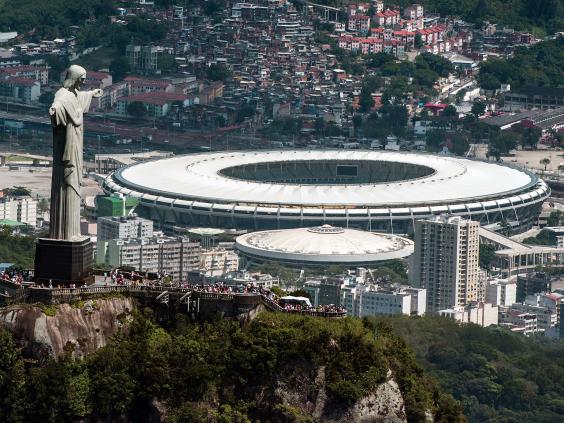
Join Christ the Redeemer (10) atop Corcovado hill by catching the funicular from Cosme Velho (11), Rua Cosme Velho 513, for a 20-minute, R$51 return trip. Start early: queues for the funicular can be lengthy, afternoon cloud can obscure the view over Rio and by midday you can hardly move for selfie sticks.

Christ-Redeemer.jpg
Christ the Redeemer looks out over the Maracana stadium (Getty)

Take a hike

Ramble through Rio’s historical district, whose old port was redeveloped for the Olympics. From Central metro station (12), walk east to the Baroque church, Igreja de Nossa Senhora da Candelaria (13) on Praca Pio X (7.30am-4pm, closed weekends; free).

Head right – along the port – on Rua 1 de Marco, to the equally impressive Old Cathedral (14) (8am-6pm, closed weekends; free). Adjacent to the Carmelite convent, it once served as the Royal Chapel.

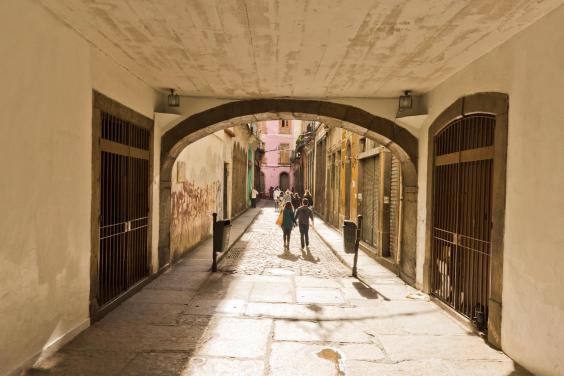
Cross onto the Largo do Parco and duck left under the Arco do Teles (15) into a labyrinth of multi-coloured streets – some of the oldest in Rio. The buildings were constructed with a gap at the top of the ground floor to help air circulate – an early kind of air conditioning. Stop to pay your respects at the church of Nossa Senhora de Lapa dos Mercadores (16), at the southern end of Rua dos Mercadores, whose miraculous Madonna statue survived a direct shot from a battleship.

shutterstock-440393029.jpg
Arco do Teles leads to some of the city's oldest streets (Shutterstock)

Lunch on the run

Lunch is the favourite meal of Rio’s locals – the Cariocas – and in the little warren of historic streets you can find plenty of places to join them. The Line Bistro (17) at Travessa do Comercio 20 (theline.com.br) serves a traditional buffet (priced per kilo) with plenty of black beans and rice.

Wash everything down with a craft beer at Al Farabi (18) at Rua do Rosario 30 (00 55 223 30879; alfarabi.com.br), a bar and antique bookshop.

Cultural afternoon

Read more

  • Simon Calder: the Olympics don't boost tourism, so bag a Brazil bargain now
  • 48 Hours in Lima: hotels, restaurants and places to visit in the Peruvian capital
  • Exploring Uruguay, the world's most successful footballing nation

Visit the Museu de Arte do Rio (19) (MAR) at Praca Maua 5 (00 55 21 3031 2741; museudeartedorio.org.br) for rooftop views of the Guabana Bay, and stay for its exhibitions on samba and the women of Rio. Open 12pm-7pm Tuesday-Friday; entry R$10 or free on Tuesdays. Nearby, the Museo de Arte Moderno (20) (MAM) at Avenida Infante Dom Henrique 85 (00 55 21 3883 5600) houses the world’s most complete collection of modern Brazilian art. Open Tuesday-Friday 12pm-6pm and 11am-7pm weekends; R$14.
An aperitif

Rio Scenarium (21) at Rua do Lavradio 20, in the trendy Lapa district, would not be amiss amid east London’s nightlife scene. The three-storey bar and nightclub (00 55 21 3147 9000; rioscenarium.art.br) is bursting with weird antiques and taxidermy. Hang over the first-floor balcony to watch locals dance samba to the live band, or have a go yourself – after enough caipirinhas, Brazil’s lethal local cocktail.

Dine with the locals

Perched amid the trees like an ewok encampment, Aprazivel (22) at Rua Aprazível 62 (00 55 21 2508 9174; aprazivel.com.br) has lovely views down onto the city, and rainforest-inspired food.

For fine dining, try Olympe (23) at Rua Custódio Serrao 62 (00 55 21 2537 8582; olympe.com.br), which serves French food with a Brazilian twist. Or fill up on street food: grilled cheese sticks, popcorn and deep fried pasties are sold at stalls on most street corners.
Day two

Window shopping

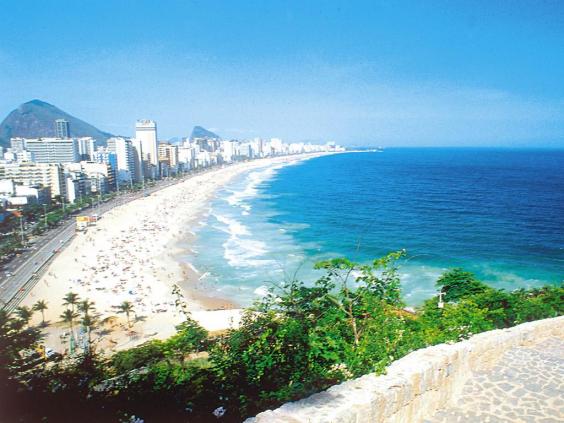
Take a walk down the pristine, 5km stretch of beach at Copacabana (3) – past the beach volleyball matches, surfers and football games – into upmarket Ipanema (24). A haven for beachware, many of the best-known brands are based at the Forum Ipanema shopping centre (25) on Rua Visconde de Pirajá. Visit BumBum (00 55 21 2227 4080; bumbum.com.br) or chic Lenny (00 55 2523 3796; lennyniemeyer.com) for luxury bikinis. On Sunday stock up on sarongs at the Feria Hippie De Ipanema (26) (Hippie Fair) in the Praca General Osorio.
Pg-80-Ipanema-1.jpg
Ipanema and Leblon Beaches ( Rio Visitors Bureau/Erick Barros Pinto)

Out to brunch

New Natural (27) at Rua Barão Torre 173 (00 55 21 2287 0301) is great for vegetarians – who might otherwise struggle with meat-heavy Brazilian cuisine – and sells organic salads by the kilo at its buffet.

Or indulge in Copacabana glamour and book ahead for a treat meal at the Hotel Cipriani restaurant at the Belmond Copacabana Palace (7) for northern Italian dining with local ingredients and a Brazilian twist.

A walk in the park

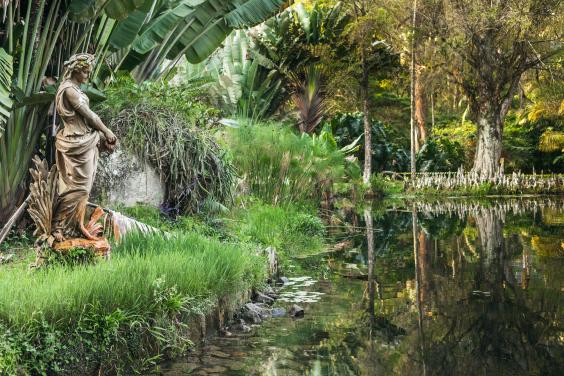
Overlooked by Christ the Redeemer (10) and in the shade of the Corcovado hill, the botanical gardens (28) at Rua Jardim Botanico 1008 (00 55 21 3874 1808; open 6am-8pm; R$9) are a fine place to escape the heat beneath tall Brazil nut trees. Keep an eye out for toucans.

shutterstock-330036539.jpg
Rio's botanical gardens (Shutterstock)

Take a ride

Channel Jurassic Park with a jeep tour of Tijuaca national park (5), the rainforest that carpets the city’s hills. A ride through lush forest accompanied by noisy monkeys takes you to the Vista Chinese, a hilltop pagoda with views of Copacabana beach and Guanabara Bay. A number of operators offer “safaris” through the park, of which Jeep Tour has a particular focus on sustainability (00 55 21 3486 6379; jeeptour.com.br; R$142 per person).

Icing on the cake

A backstage tour of the Maracana Stadium (6), where the Olympics opening and closing ceremonies will be held, is fascinating even for non-football fans. It’s at Avenida Presidente Castelo Branco and has its own Metro station (00 55 800 062 7222; maracana.com; tours R$36). Visit the changing rooms, lounge in the press seats and jog through the tunnel onto the pitch where Brazil’s collective heart was broken during the 2014 World Cup semi-final against Germany. The home team lost 7-1 – but it’s best not to bring that up.

Monday, 27 February 2017

Discover the other Florida – Pensacola

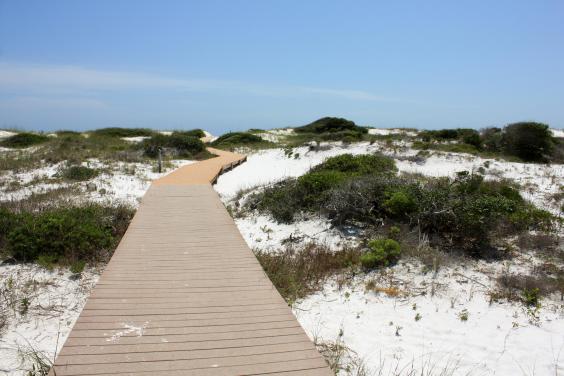
How’s this for a slogan? Pensacola: the western gate to the Sunshine State, where thousands live the way millions wish they could. That was coined by a former mayor of the city, Vince Whibbs. And he has a point. Pensacola is Florida’s westernmost city, closer to New Orleans than Tallahassee. It’s where the Panhandle meets the Deep South and they go to the beach: Pensacola Beach, a sugar-white sandbank eight miles out to sea from the city. I stayed in a room facing the Gulf at the Margaritaville Hotel on Pensacola Beach, named after the Jimmy Buffett song (margaritavillehotel.com; for the first couple of months of 2017 it’s closed for renovation)

140819127-0.jpg
Pensacola Beach

Rich Pickens

At the end of this barrier island is Fort Pickens — a great place for watching migrating birds, which use the fortress and the dunes that surround it as a pit stop on their long-haul trips.

140822044.jpg
Fort Pickens, Pensacola

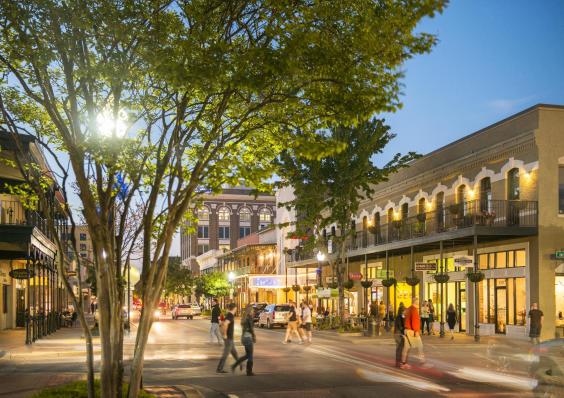
Downtown Pensacola has echoes of New Orleans, the city just three hours’ drive away. And it also has a strong musical tradition — as you discover at the crossroads known as Belmont-DeVilliers. During the final years of racial segregation, the intersection of Belmont and DeVilliers Streets was the heart of the Black community. Musicians from Louis Armstrong to Aretha Franklin played at clubs and saloons here, because Pensacola was an important stop on the so-called Chitlin Circuit — the crucible for rhythm and blues, and rock ’n’ roll. Today there are echoes of that era in the Five Sisters Blues Café, where you can order food for body and soul such as gumbo, black-eyed peas and okra.

To infinity and beyond

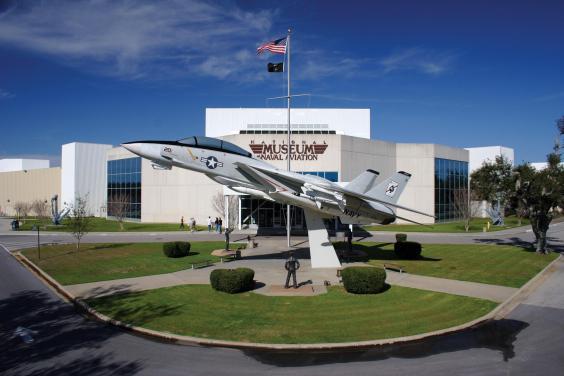
If you dream of flying machines, or you just want to know how the space race was won, then follow a million visitors a year to the number-one tourist attraction on the Gulf Coast: the National Naval Aviation Museum (navalaviationmuseum.org). It’s free to get in, but as it’s part of a military base you’ll need to bring your passport. Inside, there are more than 150 aircraft — including Marine One: the helicopter that flew President Richard Nixon.

140820068.jpg
National Naval Aviation Museum, Pensacola

He was in the White House on what may have been the most momentous day in human history: 20 July 1969, when man first walked on the moon. After Neil Armstrong’s historic moonwalk, President Nixon radioed Apollo 11 to say: “What you have done today makes the heavens part of man’s world.” Both Armstrong and the last man on the moon, Gene Cernan, trained in Pensacola as naval aviators.

Almost Alabama

The final frontier for Florida is a short way west — and you can’t mistake the state line because of Flora-bama, the bar on the border. This classic piece of Americana was established in 1964 at the western gate to the Sunshine State — where Florida meets Alabama and visitors meet locals.

pensacola-0.jpg

It’s a great place to end a road trip — exhilarated by the diversity of a rich heritage, welcoming people and entrancing wildlife. Another Florida, indeed.

Seven days’ hire of compact car from Pensacola Regional Airport costs from £170 or upgrade to a Chevrolet Camaro Convertible from £331. Book with Hertz.co.uk

Discover more at Visit Florida