Friday, 17 February 2017

48 hours in Melbourne: Hotels, restaurants and places to visit

Why go now?

Melbourne has long prided itself as Australia’s arts capital. This year its premier arts showcase, the Melbourne Festival (5-23 October; festival.melbourne) welcomes a new (British) director, Jonathon Holloway, who has promised more public acts – such as Les Tambours De Feu by Catalan company Deabru Beltzak, which will see dancers with pyrotechnics and drums traverse Melbourne laneways.

Spring in Melbourne is also synonymous with horse racing, which culminates in the Melbourne Cup Festival (29 October-5 November; flemington.com.au), so pack your fascinator. 

Read more

Neighbours at 30: Melbourne __travel tips from Dr Karl, Toadie, and

Get your bearings

The Central Business District (CBD) lies at the heart of the city, on the Yarra River’s north bank. The Melbourne Visitor Centre (1) is here, at Federation Square, on the corner of Swanston and Flinders streets (00 61 3 9658 9658; visitmelbourne.com; 9am-6pm daily). 

Melbourne is often called Australia’s “Garden City” thanks to its parks, some of which run either side of St Kilda Road, south of the river. St Kilda itself is a hip district located along the beach that lines Port Phillip Bay. The edgy eastern suburbs of Fitzroy, Richmond and Collingwood, and the more upscale southeastern suburbs of South Yarra and Prahan, meanwhile, offer plenty of shops, restaurants and cafés.

£1 is currently worth AU$1.70; US$1 is worth AU$1.30

Day one

Take a hike

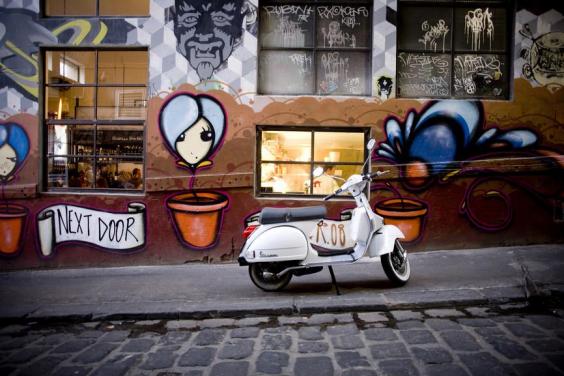
Start at the visitor centre (1). Cross Flinders Street and take the second left into Hosier Lane (2), Melbourne’s most celebrated lane for street art. Double back towards the city centre along Flinders Lane, mentally noting dinner options along this restaurant-lined street. 
hosier-lane-movida.jpg
Street art on Hosier Lane (visitmelbourne.com)

Turn right at Elizabeth Street, and pop into the beautiful Block Arcade (3) on the corner of Collins Street. Designed in the style of Galleria Vittorio Emanuele in Milan, this stunning shopping arcade was the place to be seen in 19th-century Melbourne. 

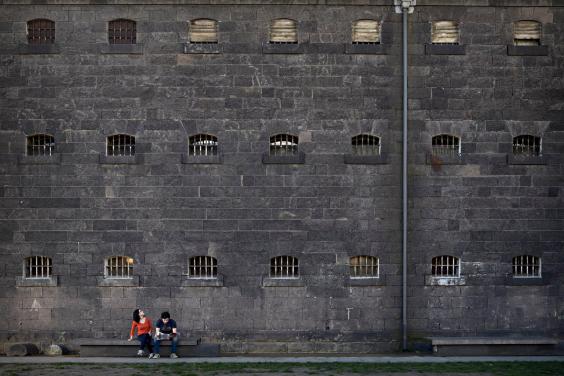
Continue up Elizabeth Street, making a right into the retail haven of Bourke Street Mall (4). Turn left at Swanston Street, admiring the State Library of Victoria (5) with its iconic octagonal dome at the corner of La Trobe Street. Opposite the Library sits the Old Melbourne Gaol (6) where infamous Australian bushranger, Ned Kelly, was hanged in 1880. 
286786-185270658217608-1135236677-o.jpg
Old Melbourne Gaol ( National Trust of Victoria/Facebook)

Heading west along La Trobe Street, turn right on Elizabeth Street until you reach the century-old Queen Victoria Market (7), the largest open-air market in the Southern Hemisphere. 

Lunch on the run

Pick up some soft cheeses and cured meats in the Queen Victoria Market’s deli hall (7) for a picnic on the go. If you’d rather sit down, tuck into modern Australian comfort food (think chicken and sweet corn soup in a dashi broth) – and perhaps a glass of natural wine – at new all-day laneway café Sun Moth Canteen & Bar (8) at 28 Niagara Lane (00 61 3 9602 4554; sunmoth.com.au). Open 12-11pm on Saturday, and from 8am weekdays. 
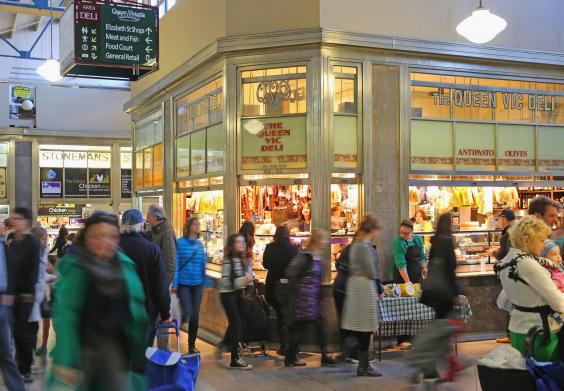
queen-victoria-market-melbourne-getty.jpg
Queen Victoria Market (Scott Barbour/Getty Images)

Window shopping

While known for its fashion, Melbourne is also a great place to shop for accessories. Head to Flinders Lane to coo over the Aladdin’s cave of designer fashion accessories at Christine (9) at No 181 (00 61 3 9654 2011; christineaccessories.com.au; open 10am-5pm Monday to Saturday, closed Sunday).
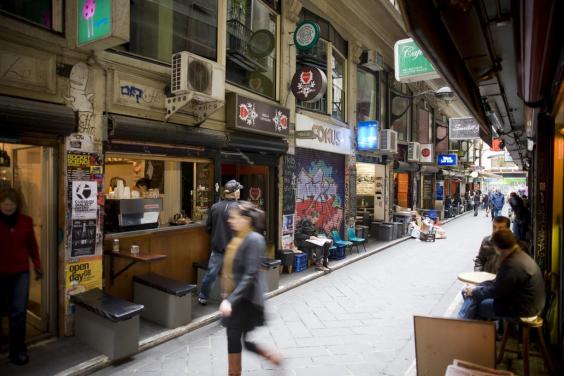
melbourne-flinders-lane.jpg
Flinders Lane (visitmelbourne.com)

Alternatively, take the lift to level five of Mitchell House at the corner of Lonsdale and Elizabeth Streets to peruse the wares of Lord Coconut (10) (00 61 3 450 015 263; lordcoconut.com), arguably Australia’s best contemporary jewellery retailer for men. Open 11am-6pm Monday to Friday, and 12pm-4pm Saturday, closed Sunday. 

A walk in the park

Just east of the CBD, the centrepiece of Fitzroy Gardens (11) is a 1930s conservatory featuring five floral displays each year. Open 9am-5pm daily (until 5.30pm during daylight savings), entry is free. 

If you really need to stretch your legs, hit the trails that that weave through the 31 living plant collections at the Royal Botanic Gardens Melbourne (12) (open 7.30am until sunset daily; rbg.vic.gov.au). 
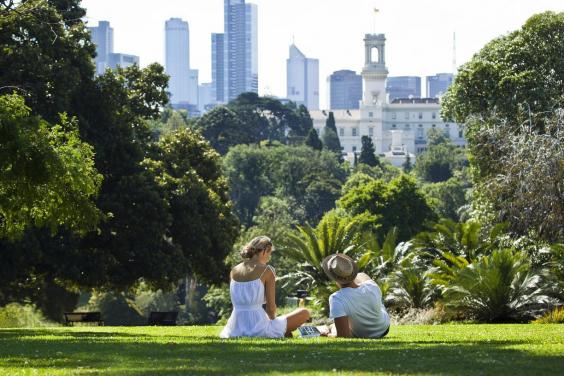
melbourne-visionsofvictoria1375249-303.jpg
The Royal Botanic Gardens

An aperitif

Spring in Melbourne signals rooftop boozing, with plenty of options to choose from – enjoy a carafe of sangria on the AstroTurf at Rooftop Bar (13) atop Curtin House, 252 Swanston Street (open noon-1am daily), or sip a locally brewed Mountain Goat beer in a train carriage perched on a Collingwood rooftop at Easeys (14), 48 Easey Street (easeys.com.au). Open 11am-10pm Sunday to Thursday, to 11pm Friday and Saturday. 
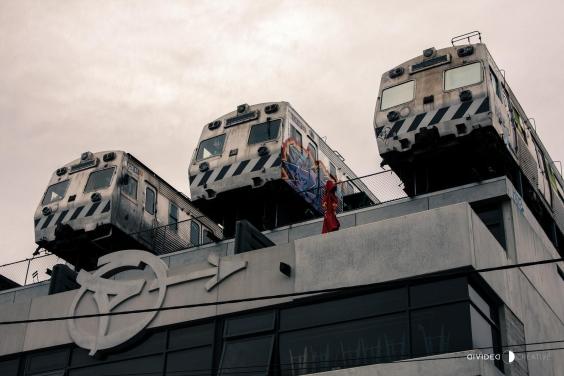
26447132753-deb06af2db-o.jpg
The train carriages that comprise Easeys ( Amanda K Grace/Flickr)

After dark, crowds disperse into hip laneway bars like Eau de Vie (15) at 1 Malthouse Lane (eaudevie.com.au/melbourne) for cocktails with serious flair (order the espresso martini here to see what I mean). Open 4pm-1am Friday and Saturday; hours vary on other days. 

Dine with the locals

Step back into mid-century Melbourne by pulling up a stool at Pellegrini’s Espresso Bar (16) at 66 Bourke St (00 61 3 9662 1885; open daily 8am-11.30pm), a Melbourne institution that has barely changed since opening in 1954. There’s no printed menu – simply tell counter staff how you like your home-style Italian pasta and it’ll be served up in a flash, accompanied by a buttered roll. Wash it down with a homemade watermelon granita or an espresso.

Day two

Out to brunch

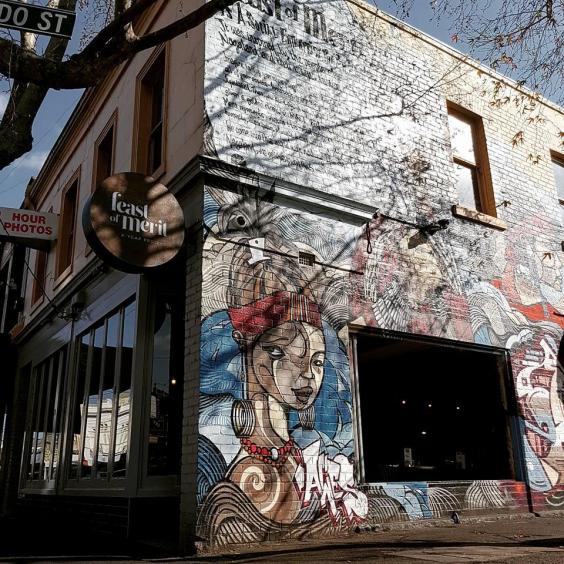
Melbourne’s restaurants are key to the city’s reputation as one of the world’s most sustainable cities. In Richmond, just one train stop from Flinders Street Station, Feast of Merit (17) at 117 Swan Street (00 61 3 9428 8480; feastofmerit.com) pumps its profits into initiatives that improve the lives of people living in poverty, which makes its Middle Eastern-style crumpets with vanilla and cinnamon labneh, pear puree, and pistachio praline (AU$13.50/£8) taste that much better. 
14203317-1777844182490918-5998804021643929344-n.jpg
Feast of Merit ( Feast of Merit/Facebook)

Take a ride

Riding Melbourne’s excellent tram network in the CBD is free, but you’ll need to purchase a Myki card (AU$6; ptv.vic.gov.au) for journeys into the suburbs (a two-hour pass for trips in zones 1-2 costs UA$3.90/£2.30). Jump on number 12, 16, 96 or 3a to St Kilda (about 25 minutes __travel time) for a stroll along the foreshore Bay Trail (18) and a beetroot latte at Matcha Mylkbar (19) at 72A Acland St (00 61 3 9534 1111; matchamylkbar.com), a vegan cafe at the forefront of Melbourne’s “rainbow coffee” trend. Open 7.30am-4pm daily.

Cultural afternoon

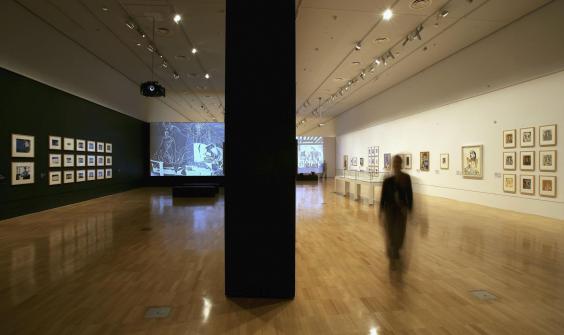
The National Gallery of Victoria (00 61 3 8620 2222; ngv.vic.gov.au) is split across two venues; peruse works by indigenous and other Australian greats at The Ian Potter Centre: NGV Australia (20) at Federation Square before heading across the river to ogle the extensive collections of the NGV International (21) at 180 St Kilda Rd. Both galleries are open daily from10am-5pm, with free general entry.
art-gallery-gettyimages-71331279.jpg
NGV International (Mark Dadswell/Getty Images)

At the other end of the city, Melbourne Museum (22) (00 61 3 8341 7777; museumvictoria.com.au) offers a window into Australia’s natural and cultural history. It’s located in Carlton Gardens, just north of the CBD, behind the resplendent Royal Exhibition Building (23). The museum is open 10am to 5pm daily; entry is AU$14. 

The icing on the cake

You can expect high-calibre coffee across Melbourne, but for a guaranteed good drop, try Dukes Coffee Roasters (24) at 247 Flinders Lane (00 61 3 9417 5578; dukescoffee.com.au; open 9am-5pm Saturday, and from 7am-4.30pm Friday), or Brother Baba Budan (25) at 359 Little Bourke Street (sevenseeds.com.au; open 7am-5pm Monday to Saturday, and from 9am Sunday).

Travel essentials

Read more

  • Melbourne: Race into pole position Down Under
  • Western Australia's wildlife: A marine hotspot that appeared out of the blue
  • How Tasmania became Australia’s newest gourmet hotspot: This island could become a pit-stop on the Michelin circuit

Getting there

Melbourne Airport (26) is served by various one-stop flights from the UK, including British Airways (ba.com) with its partner, Cathay Pacific; Qantas (qantas.com) with its partner, Emirates, and Qatar Airways (qatarairways.com).

The SkyBus (skybus.com.au) runs from the airport to Southern Cross Station (27) in the CBD every 10 minutes, 24/7. Tickets for the 40-minute journey cost AU$19 one-way. Taxis costs around AU$50-60. 

Staying there

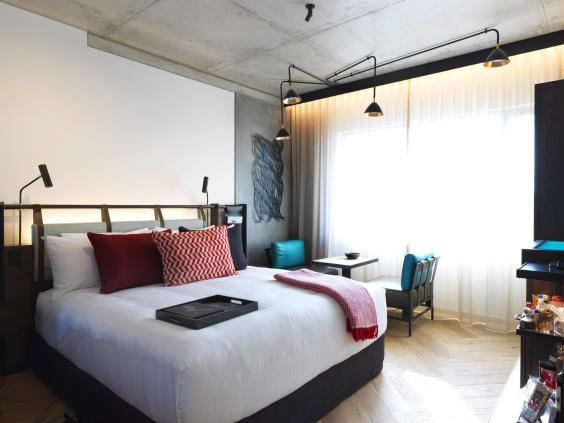
The brand new QT Melbourne (28) at 133 Russell Street (00 61 3 8636 8800; qthotelsandresorts.com/melbourne) plays up to its location at the French fashion-influenced “Paris end” of Collins Street with trademark QT quirkiness – bold art, a lobby patisserie and interactive elevators that call out to guests. Its industrial-style rooms start at AU$280, room only.
melbourne-qt-rooms-819-0136.jpg
A bedroom at QT Melbourne

More affordable boutique hotels are scattered throughout Melbourne’s suburbs. In seaside St Kilda, the 39 uniquely furnished rooms tucked behind the Art Deco façade of The Prince (29) at 2 Acland Street (00 61 3 9536 1111; theprince.com.au), start at AU$170 without breakfast. 

Cheaper still is the Space Hotel (30) at 380 Russell Street (00 61 3 9662 3888; spacehotel.com.au). Private rooms at this “flashpacker” favourite are a steal given its central location: AU$82 (not including breakfast). Bonus facilities include a rooftop deck, gym, home cinema and a kitchen for self-catering.

Thursday, 16 February 2017

48 hours in Colombo: Hotels, restaurants and places to visit

Why go now?

No longer just the sprawling city you have to endure on your way to the beaches and tea country, Sri Lanka’s capital is rapidly emerging as a destination in its own right. Increasing hotel construction offers more choice for travellers, while the opening of the Colombo-Katunayake Expressway in 2013 has more than halved the journey time from the airport to the capital. It’s a cosmopolitan city that will get the adrenaline pumping from the minute you hop in a tuk-tuk or push through the crowds of people in the bazaars.

Get your bearings

Colombo is split into 15 postal code areas, used to identify specific districts. The old colonial centre is Fort (Colombo 1) home to government buildings, the President’s House (1) and the World Trade Centre (2)

Just east lies Pettah (Col 11), an old quarter with thriving markets, and Cinnamon Gardens (Col 7), the city’s swankiest district. 

To the south is Slave Island (Col 2), not actually an island but it was used for keeping slaves during the Dutch colonial era. South of Fort and facing the sea, Galle Face Green is a stretch of lawn, dotted with kite flyers and food vendors. The main tourist office (3) is at 80 Galle Road (00 94 11 24 26 900; srilanka.travel). Open 8am-4pm Monday to Saturday; closed Sundays.

Day one

Take a hike

Start at the Old Dutch Hospital (4), a complex of teak beams and courtyards that dates back to the early 1600s but has been lavishly restored to house shops, cafés and restaurants. Exit and turn right up Hospital Lane and left onto Chatham Street, once part of a network of canals built by the Dutch which have been converted into streets by the British who arrived later, as Colombo was becoming more commercialised, and the backdrop for Duran Duran’s “Hungry Like the Wolf” music video. 

shutterstock-452817877.jpg
The Old Dutch Hospital (Shutterstock)

Pause at the junction with Janadhipathi Mawatha (formerly Queen Street) to admire the 95ft-high Clock Tower (5); built in 1857, this was Colombo’s tallest building at the time and originally served as a lighthouse. 

Turn right down Janadhipathi Mawatha, pausing to send a postcard from the Old General Post Office (6) on the right; the 19th-century building was used as a military barracks during the civil war but has recently returned to its original function. 

Read more

Kandy, Sri Lanka: A city of relics ringed with tea

Leaving behind the walled-off President’s House (1) opposite, follow the road round to the right until you reach the ornate 1906 building housing Cargill’s Main Store on York Street (7); now mostly empty, its faded elegance can still be glimpsed in the red facade’s cornucopia carvings and ground-floor colonnades. Continue along Sir Baron Jayathilake Mawatha until you reach Front Street, where the lively markets of Pettah begin.

For an historical account of the city, Colombo City Walks (facebook.com/Colombocitywalks) offers superb guided walks from $40 (£33) per person.

Lunch on the run

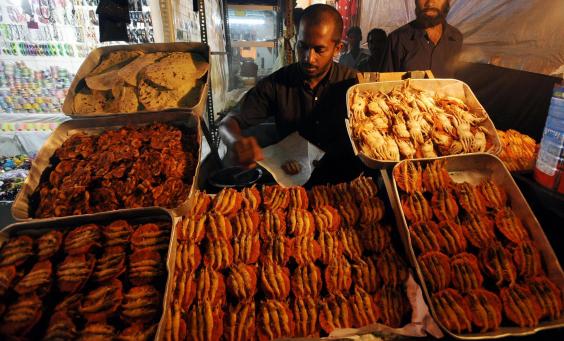
For cheap, tasty eats, it’s hard to beat Colombo’s street food. Pick up a lunch packet (rice and curry packs sold from carts in the city for about 150 rupees (80p)) or hoppers, bowl-shaped pancakes served with seeni sambal (a spicy chilli dip). Join the locals at Al-Batha Muslim Hotel (8), at 74 Olcot Mawatha, for samosas (40 rupees) cooked in front of you. Open 24 hours, daily.

gettyimages-82987071.jpg
Grab a bite to eat at a street food stall (Getty)

Window shopping

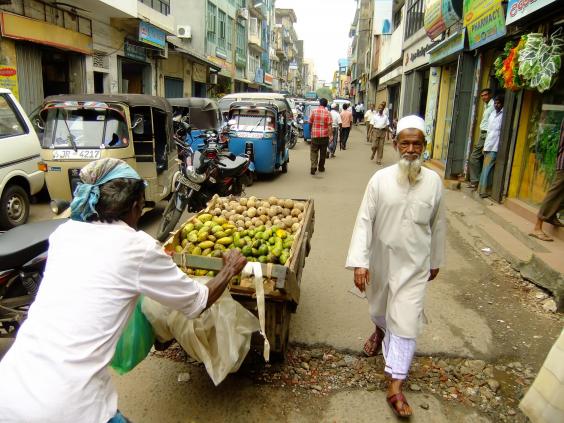
Locals go to Pettah to pick up household goods and food. Each street has its speciality (for example, 1st Cross Street for electrical items and 2nd Cross Street for jewellery). Don’t miss Federation of Self Employees Market (9) which stretches along 5th Cross Street (7am-4pm daily). 

shutterstock-171705986.jpg
The busy Pettah neighbourhood, known for its markets (Shutterstock)

For something less hectic but more expensive, try Odel (10) at 5 Alexandra Place (odel.lk); the glitzy department store houses both international and local brands. Open 10am-9pm daily.

An aperitif

The west-facing seafront is the place to be come sunset. Treat yourself to a G&T (800 rupees) at the Travellers’ Bar in Galle Face Hotel (11), with its comfy sofas and spectacular Indian Ocean sunset views (00 94 11 254 1010; gallefacehotel.com). Open 10am-midnight daily.

Dine with the locals

On Galle Face Green, Nana’s (12) is a busy beachfront pop-up that opens in the evenings to serve fast food, such as devilled cuttlefish for 250 rupees (00 94 77 154 66 52). 

In the Old Dutch Hospital (4), Ministry of Crab is popular with city workers and tourists alike (00 94 11 234 2722; ministryofcrab.com). Try the garlic chilli crab, from 3,600 rupees. Open 11.30am-3.30pm and 6pm-10.30pm daily; booking is advisable.


Day two

Sunday morning: out to brunch

Inside the Crescat Boulevard Shopping Mall (13) at 89 Galle Road, Sugar Bistro (sugarcolombo.com/sugar-bistro-wine-bar) has a relaxed atmosphere, a collection of quirky wall clocks and a good menu featuring fresh fruit platters, French toast and avocado and feta cheese mash. Open 8am-midnight daily. 

A walk in the park

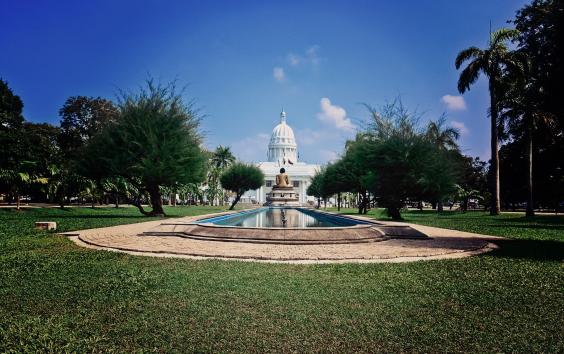
Viharamahadevi Park (14) is the city’s largest park, with playgrounds, cycling tracks, fountains and a palm tree-lined walkway leading up to a huge Buddha statue. Originally called Victoria Park, it was renamed in the 1950s after the mother of King Dutugamunu.

shutterstock-277997816.jpg
Viharamahadevi Park is the city’s largest (Shutterstock)

Take a ride

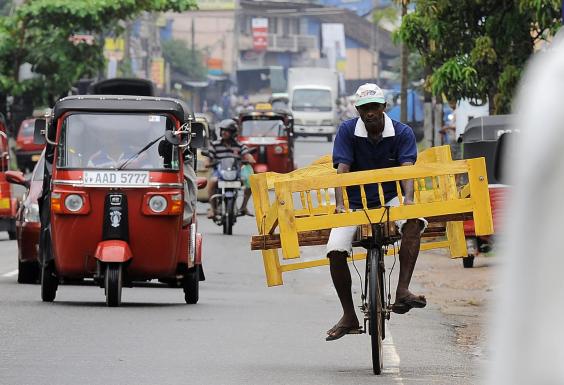
Three-wheeled tuk-tuks are omnipresent and often the cheapest and most convenient way to get around. Unless the driver uses a meter, agree the price before setting off. From Fort, expect to pay around 300 rupees to reach Cinnamon Gardens, for example. 

Read more

Sri Lanka by train: The formerly war-torn north is rebuilding

Cultural afternoon

For a fascinating insight into the country’s past, wander through the National Museum (15) at Sir Marcus Fernando Mawatha (00 94 112 695 366; museum.gov.lk), Sri Lanka’s largest and oldest museum, with some galleries dating back to 1877. Highlights include the bejewelled royal throne made for King Wimaladharma in 1693 and a rare collection of traditional masks. Parts of the museum are closed for refurbishment, but should be open by December. Entrance 600 rupees for adults; 300 rupees for children. Open 9am-5pm. Closed on Poya (full moon) days.

gettyimages-185385326.jpg
Tuk-tuks are the easiest and cheapest way to get around in Colombo (Getty)

The icing on the cake

Colombo is home to a plethora of superb street food – but seeking it out can be daunting for foreign visitors. Urban Adventures (urbanadventures.com/Colombo-tour-eat-eat-repeat) has an excellent three-hour foodie tour led by a local guide who immerses you in the city’s unique mix of Sinhala, Muslim, Tamil and Malay cuisines with a number of food stops. The tours meet outside Colombo Fort Railway Station (16) daily at 4.45pm. From Rs 8,000. Book online.


__travel essentials

Getting there

Bandaranaike International Airport (17) is 30km north of Colombo. A taxi to the city centre costs about 3,000 rupees and takes about 30 minutes. Bus 187 runs every half hour from 5.30am to 6.30pm, costing 110 rupees and taking about 45 minutes to reach the station in Fort (18).

dsc-9759d.jpg
Treat yourself to a night at Residence by Uga Escapes (Uga Escapes)

Staying there

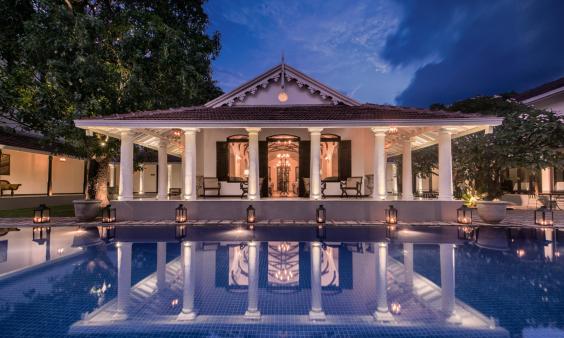
Residence by Uga Escapes (19) at 20 Park Street (00 94 11 56 730 00; ugaescapes.com/residence) is one of the best places to stay in Colombo, offering secluded peace despite its central location. The 11 suites are sumptuous, with high ceilings, dark wooden furnishings and silk sofas. Suites from £160 per person per night, room only.

The hulking Cinnamon Lakeside (20) at 115 Sir Chittampalam A Gardiner Mawatha (00 94 11 24 910 00; cinnamonhotels.com/en/cinnamonlakesidecolombo) overlooks Beira Lake and has colourful, contemporary rooms, plus 10 restaurants, inside its polished marble interior. Doubles from £105 including breakfast. 

city-rest.jpg
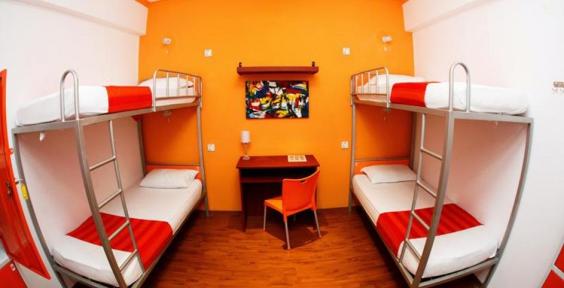
The City Rest hostel is cheap and cheerful (City Rest Fort Colombo)

City Rest (21) at 46 Hospital Street (00 94 11 23 393 40; cityrestfortcolombo.bookings.lk) is a bright and funky hostel with a fun, communal atmosphere. Dorm beds from £16 including breakfast; private rooms from £56.

The writer travelled with Audley Travel (audleytravel.com; 01993 838 335), which offers tailor-made trips to Sri Lanka. A 12-day itinerary taking in colonial culture, tea country and Colombo, including a two-night break in Residence by Uga Escapes, international flights, as well a private vehicle and chauffeur-guide throughout, starts from £2,880 per person.

Click here to view our Sri Lanka Tour, with Independent Holidays

Wednesday, 15 February 2017

A weekend in Copenhagen: How to spend two days in the happiest city in the world

Why go now?

Copenhagen is regularly voted the happiest city in the world, and has in recent years become something of a beacon for hipsters, given its eminently Instagrammable streets and the supremacy of Danish design. Furthermore, this month Frost (frostfestival.dk) brings an immersive celebration of music and light installations to the city, until 26 February. It’s the first of many festivals to be held in Copenhagen in 2017, encompassing an eclectic mix that includes Distortion festival, dedicated to emerging dance music, and the Copenhagen Opera Festival. 

But though Copenhagen might currently be the cream of the Scandi crop, this is undoubtedly one of Europe’s more expensive capitals. So here’s a guide to seeing the parts of the city that don’t cost much – or, even better, are free.

Get your bearings

Copenhagen, being flat, built around waterways and with a compact downtown area, is a very walkable city - and most points of interest are within easy reach of City Hall Square (1) and Central Station (2), where the tourist office (3) is situated (4 Vesterbrogade; winter opening hours 9am-5pm, 9am-4pm on Saturday, closed Sundays). 

It's also a great city for cyclists, and its reasonably priced Bycyklen rented bike scheme (DKK30, about £3.50, an hour; bycyklen.dk) is a good way to get around. Visitors will be most interested in the historic central area, autonomous hippie neighbourhood Christiana and hipster hub, Vesterbro. 

A Copenhagen Card (copenhagencard.com), which can be purchased online or at the airport, gives unlimited use of public transport and free entrance to 72 museums and attractions for 24 or 48 hours (DKK379 or DKK529, or from about £43, up to two children under 10 free).

£1 = 8.77 Danish krone

Day one

Take a view

Forget the DKK50 entry fee at the City Hall Tower and head to the tower at Christiansborg Palace (4), the seat of Danish parliament, instead. It is the tallest in Copenhagen at 106 metres, and entry is free. As Copenhagen is very flat, you can see all the inner-city landmarks, including Tivoli, the huge Victorian pleasure gardens open between April and September. 

Window shopping

Browsing doesn’t cost a thing. Stroget runs from City Hall Square (1) to Kongens Nytorv Square and, at 1.1km, is one of Europe's longest pedestrian streets. It's home to dozens of shops, from cheap souvenir outlets to high-end department stores - including local landmark Illum (5), which has been trading since 1891, and is the equivalent of Selfridge's in London. LEGO (6), Denmark's most famous export, has its flagship store here and children of all ages can assemble toys and buy box sets that aren’t available elsewhere. Most Stroget shops are open 10am-8pm daily (11am-6pm Sunday).
1024px-magstraede.jpg
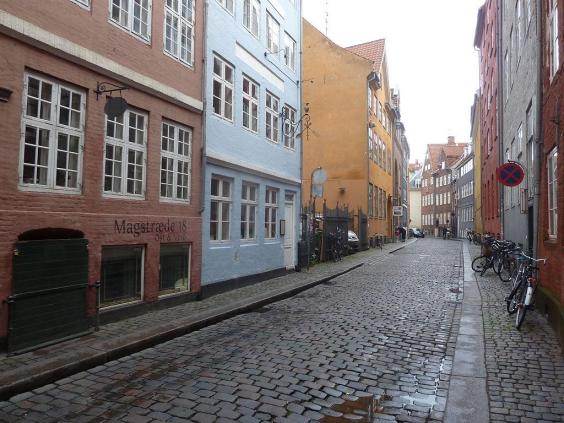
Magstraede is one of Copenhagen's oldest and prettiest streets ( Wikicommons)

Take a hike

This walk allows you to sight-see for nothing. Start in City Hall Square (1) (after popping into City Hall (7), free entry, its size and grandeur a sign of Denmark's rich sea-faring and empire-building past). Back in the square, notice the statue of its most famous son, Hans Christian Andersen. With City Hall to your right, turn right into Regnbuepladsen and then left on Longangstraede, which leads into Magstraede (8) and Snaregade (9), two of Copenhagen's oldest streets. They still have their original cobbles and a higgledy-piggledy array of different-sized houses with brightly painted plasterwork.

Double back on yourself to turn left into Frederiksholms Kanal, and cross the canal at Marmorbroen bridge, which takes you into Christiansborg Palace (4), where you got that great view. 

Walk through to the other side of the complex, turn right into Christiansborg Slotsplads and continue along Borsgade, where the striking Gothic building on your right is the former stock exchange building (10). Cross the canal at Borsbroen, into Havngade, right at Holmens Kanal and continue along Holbersgade, which ends at Nyhavn (11). The colourful houses here were once frequented by rowdy sailors seeking female company in its many taverns, but the area is now the tourist centre of Copenhagen.

gettyimages-50837826.jpg
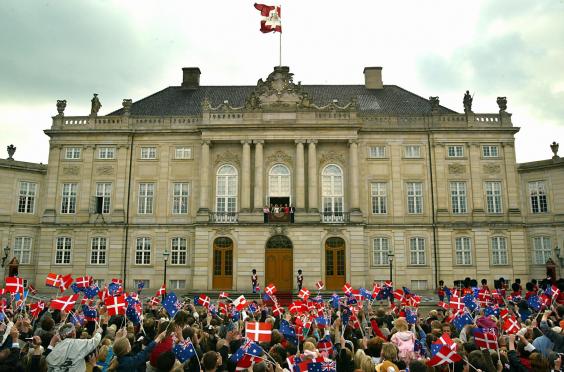
Amalienborg Palace is home to the Danish royals (AFP/ Getty Images)

Cross the canal at Nyhavnsbroen, continue along Toldbodgade, and eventually on your left is Amalienborg Palace (12), home of Danish royals. The central forecourt and gardens are public spaces, so enjoy these for free, too.

Lunch on the run

Kompagnistraede and Laederstraede form Copenhagen's “food street” with several decent eateries, including Stella (13) (cafestella.dk) and Café Zirup (14) (00 45 3313 5060; Laederstraede 32), where lunch with a beer costs DKK140-180 (from around £16). Have the good-value breakfast platter (pastry, fruit, cheese, skyr, fish), served all day, or the Danish speciality, smørrebrød (open sandwiches), served at both cafés. 

An aperitif

Gammel Strand is bar central, and once the weather warms up this lovely old street overflows with tables outside its upmarket bars and restaurants. FUGU (15) (fugu.dk) serves a terrific seasonal cocktail menu; winter offerings include the warming El Diablo (liquorice-infused tequila, ginger syrup, fresh lime, crème de cassis and ginger beer, DKK95 or £10). 

13498022-1152431021486224-2204559623919401338-o.jpg
Soak up seasonal cocktails at trendy FUGU bar (Facebook)

Dine with the locals

Bistro Royal (16) (madklubben.dk/bistro-royal), a large and lively restaurant, serves good-value international cuisine, from smorrebrod and salads to burgers and beef fillet with truffle-infused chips. The generous serving of beef tartare (DKK100, about £11.50) is a bargain. For more romantic dining, the Maven (17), located in a former church, is suitably candlelit and atmospheric and serves “home-style” hearty Danish dishes including veal shank (DKK215, approx. £25). 

Day two

Out to brunch

Copenhagen locals love a leisurely Sunday brunch, and Vesterbro offers clean-eating and some serious people-watching in the capital's coolest area. Fancy half an avocado with chilli oil and baked almonds, or lactose-free yoghurt with homemade berry compote? Then head to Mad & Kaffe (18) (madogkaffe.dk). Dishes from DKK75, or £8.50.

16730166-1268347006577231-6976159886976343524-n.jpg
Mad & Kaffe is the best spot for brunch (Facebook)

A walk in the park

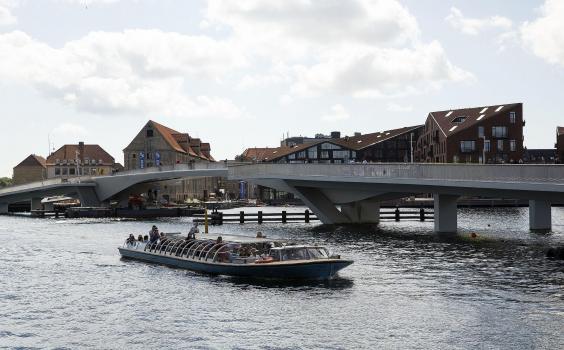
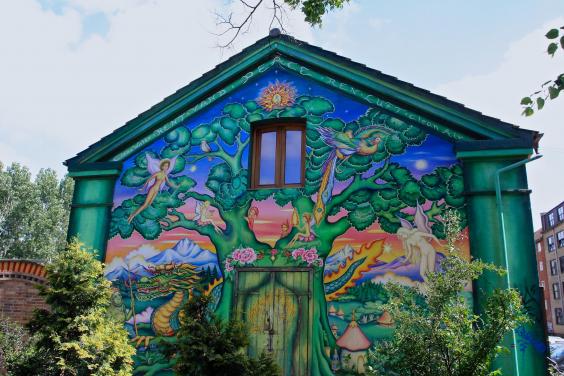
Walk across Inderhavnsbroen (19), the striking new pedestrian bridge at Nyhavn. It's known locally as the “kissing bridge” as, before its two halves were joined in the middle from each bank of the harbour, it looked like two lovers reaching for a kiss. Then wend your way to Christiana (20) - a commune established in 1971 when a group of hippies took over an abandoned military barracks. Now with 850 residents and covering eight acres, it's an eco-city within a city, where the sale of marijuana is tolerated but cars are banned. The area is a colourful collection of homemade houses, workshops, art galleries and cheap organic cafés. 

inderhavnsbroen-copenhagen.jpg
The new Inderhavnsbroen bridge is known locally as 'the kissing bridge' ( Wikicommons)

While you're this side of town, visit the Church of Our Saviour (21), built in 1752. Its striking serpentine spire dominates the Copenhagen skyline. You can climb the 400 steps running up the outside of the spire when it reopens in March (Monday to Saturday 10am-4pm, Sunday 10.30am-4pm, DKK45, about £5).

13988844565-26096254ee-k.jpg
A painted mural at the entrance to autonomous neighbourhood Christiana ( TravelingOtter/Flickr)

Cultural afternoon

Copenhagen is stuffed with great museums, but two you mustn't miss are the National Museum (22) (natmus.dk)and Glyptotek (23) (glyptoteket.com). The former charts Denmark's history from prehistoric times through the Viking age and Victorian empire-building to modern day. Open Tuesday to Sunday 10am-5pm. Closed Monday. Entry DKK75.

Glyptotek has extensive collections of Greek, Roman and Egyptian artefacts, as well as 19th- and 20th-century French and Danish paintings. Open Tuesday to Sunday 11am-6pm (Thursday till 10pm). Entry is free on Tuesdays; entry DKK95 otherwise. Closed Monday.

The icing on the cake

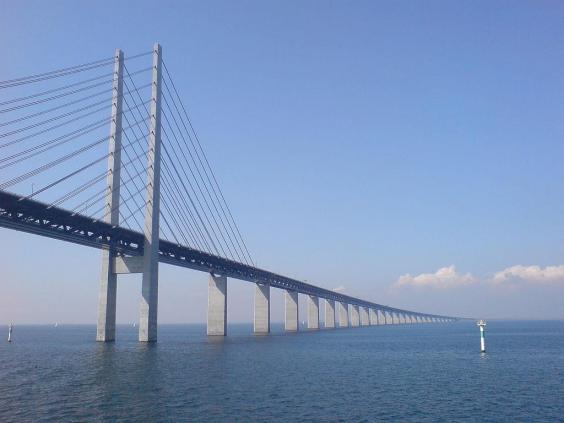
If you were a fan of The Killing, Borgen or The Bridge you will be familiar with the Oresund bridge (24), a magnificent 8km structure connecting Copenhagen with Malmo in Sweden. Trains from Central Station reach Malmo in 36 minutes (from DKK340, about £38, return), so you can say you popped over to another country for a coffee (admittedly a budget-busting one).

1024px-oresund-bridge.jpg
The Oresund bridge stretches to Sweden ( Wikicommons)

Getting there

Flight time to Copenhagen Kastrup airport is less than two hours, and British Airways, Ryanair, easyJet, Norwegian and SAS fly direct from seven UK airports. 

Kastrup is a few miles south of Copenhagen and the city's transport system is zonal  – Kastrup is in zone 4, the city centre zone 1 – and tickets can be used on trains, metro or bus. A zone 1-4 ticket is DK36 (£4.20). 

The metro and train stations are located respectively above and beside terminal 3 (UK flights land at terminal 3 or terminal 2, a 10-minute walk from T3); metro (to Norreport hub) and trains (to Central Station) take 13 minutes. The 5A bus takes 30-35 minutes to the city centre; a taxi takes about 20 minutes to downtown and costs approximately DKK250-DKK300 (from about £30).

Staying there

The Square (25) (thesquarecopenhagen.com) overlooks City Hall Square (1) so couldn't be more central, and the minimalist rooms are compact but comfortable. Doubles from DKK996, approx. £115, room only.

A decent budget option is Wakeup Copenhagen (26) (wakeupcopenhagen.dk), a bright new capsule-style hotel in Borgergade, which has doubles from DKK400, approx. £45, room only.

If you're pushing the boat out, one of Copenhagen's oldest hotels, D'Angleterre (27) (dangleterre.com), which dominates Kongens Nytorv square, oozes quality with its beautifully decorated rooms (in muted colours, of course) and the staff's quiet but old-fashioned courtesies. Doubles from DKK3,250, about £370, room only.

More information

visitcopenhagen.com

Friday, 10 February 2017

Discover the other Florida – Gulf County

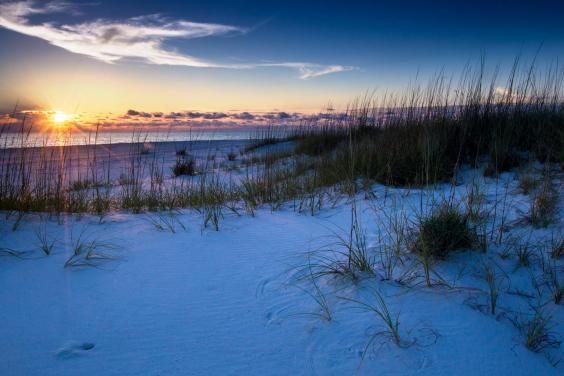
For years, I thought of Florida only in terms of the peninsula that dips into the Atlantic like a finger. But there’s so much more to the state — the so-called Panhandle, which extends hundreds of miles west to the Perdido River and the Alabama state line. Halfway along the Panhandle, a bulge dips into the Gulf of Mexico. The southernmost part comprises of Gulf County — whose shore is known as the ‘Forgotten Coast’.

24906287769-58b4656e80-o.jpg

What time is it?

Port St Joe is the main town, and a world, or 500 miles away, from the bright lights of Miami.

It’s a fair drive, but seven days’ hire of a compact car from Northwest Florida Beaches International Airport starts from £187 with Hertz.co.uk. It’s in the same time zone as Florida’s biggest city, but most of the county isn’t. Indeed, Gulf County is chronologically confusing: parts are in Central Time, an hour behind other parts in Eastern Time. At the Lookout Lounge, the time zone runs straight through the outdoor deck. If you’re feeling nostalgic, walk 10 feet over the line to enjoy the last hour again.

14265043440-9b9275488b-b.jpg
Port St Joe

Traffic lights and baked oysters

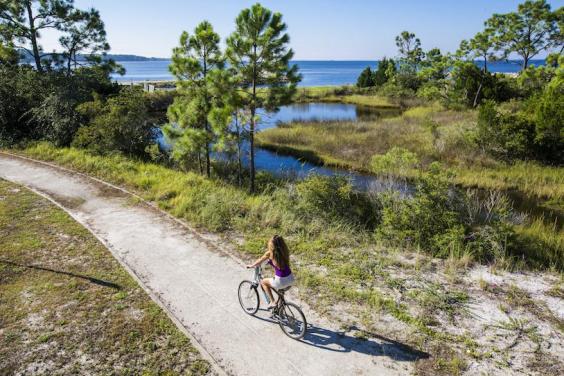
At the other end of the county’s coastline, the Indian Pass Trading Post is better known as the Raw Bar. It’s an only-in-Florida experience. A dozen oysters, baked with Parmesan cheese, cost less than $15. And the well-stocked fridge is run as an honesty bar. Nearby, Turtle Beach Inn is one of several divine places to stay on the beach, with its own boardwalk leading you to the warm waters of the Gulf. Heading inland, the town of Wewahitchka (more concisely known as Wewa) has an unusual characteristic for this part of Florida: traffic signals - one of only three sets in the whole of Gulf County.

Water, water everywhere

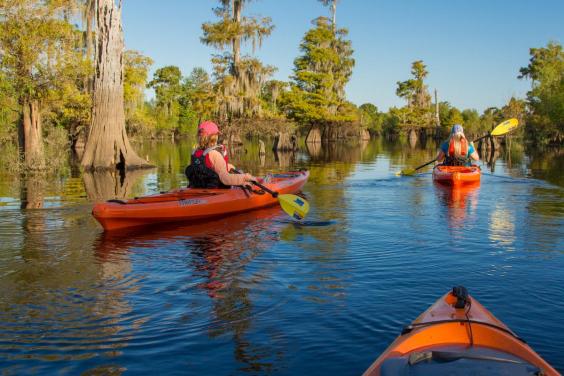
Close by is Dead Lakes, an eerie waterscape populated by the half-submerged skeletons of trees. You can paddle for hours in idyllic isolation. Staying on the water, in St Joseph State Park, on St Joseph Peninsula, overlooking — yes, you’ve guessed it, St Joseph Bay — you can try paddleboarding. The claw-like peninsula protects the bay from the Gulf beyond, making it gratifyingly calm for travellers with a wobble. On the other side of the claw, the Gulf shore is often lively with surf. This is one of the few places in the US where you can ride a horse through the shallows. Gulf County is a place to let time stand still, whatever zone you are in, as you have the time of your life.

13244691093-a00cca2d2c-o.jpg
Dead Lakes, Wewahitchka

Discover more at Visit Florida

Wednesday, 8 February 2017

How to enjoy Venice without destroying it: A guide to beating the crowds and being a more responsible tourist

Why go now?

Masks at the ready – the Venice Carnevale, or carnival, takes to the streets from 11-28 February. Events are largely on weekends, which means that during the week, the atmosphere is quieter, allowing you to indulge in more local activities like stuffing yourself with traditional frittelle doughnuts and drinking hot zabaione (kind of like a whipped pudding cocktail).

But February is also your last chance to enjoy the city's off-season – the hordes arrive in March. And, as Justin Francis of Responsible Travel told The Independent recently, if Venice is to survive, people should try to visit more responsibly. It helps to avoid the obvious places, buy local, and go off the beaten track – here’s how to do all that in a weekend.

Get your bearings

Fittingly, Venice is shaped like a fish. Its 118 islands are largely crammed into one small area covering six canal-streaked sestieri, or districts. The historical centre is San Marco, but on this trip you’ll be spending more time in the lesser-visited Cannaregio, Castello and Giudecca.

The Grand Canal bisects the Venice “mainland”; you can cross it via one of four bridges, on a traghetto (a gondola that acts as a bus, ferrying passengers back and forth across the canal) or by hopping on a vaporetto waterbus. Venice is surprisingly compact and walkable, but it’s still worth buying a travel card – a single vaporetto ride costs €7.50 and lasts 75 minutes, but a 48-hour card costs €30.

Currently £1 = €1.16

Day one

Take a hike

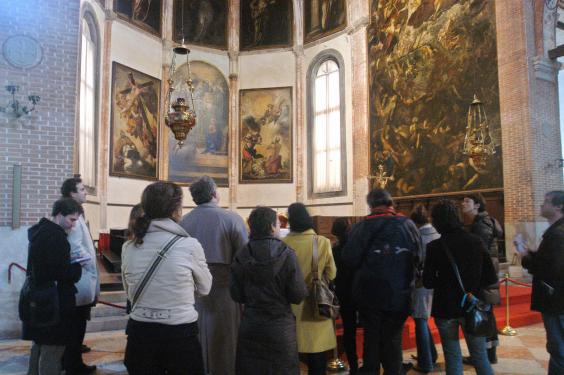
Start in Cannaregio, perhaps the least touristy of Venice’s six sestieri, at the 15th-century church of Madonna dell’Orto (1), better known as the church of Tintoretto, 10 of whose paintings are housed inside. It’s open 10am-5pm on Saturdays, 12pm-5pm Sundays.

From there, walk east along the Fondamenta Contarini, turning right across the bridge when it ends, and right again when you hit the next canal, the Rio della Sensa. At the end of Campo de l’Abazia, cross the bridge to your right where you’ll find the Scuola Grande della Misericordia (2), the least known of Venice’s scuole or confraternities (open 10am-6pm, Wednesday to Sunday, free admission).

gettyimages-72676952-1-0.jpg
Visitors admire the paintings in Madonna dell'Orto church (AFP/ Getty Images)

From there weave left and left again to hit the lagoon once more. Walk east along Fondamente Nove, past the Gesuiti church (3) with its marble-clad interior – look to your left as you walk to see the cemetery island of San Michele and Murano behind it. At the hospital turn right – the building is built around the Scuola Grande San Marco (4), whose original gilded coffered roof is worth a pit-stop (open Tuesday-Saturday, 9.30am-5.30pm, entry €5).

Lunch on the run

A two-minute thread across bridges and through alleys takes you to Campo Santa Marina where at number 5908, Pasticceria Didovich (5) (00 39 041 523 0017; no website) has been serving Venetian and Austro-Hungarian cakes and snacks for over 40 years. Ask which primi are on offer today – the creamy pasta dishes are something to behold. Finish with a frittella, the traditional doughnuts served during Carnevale. Didovich’s are the best in the city.

fondaco-cut.jpeg
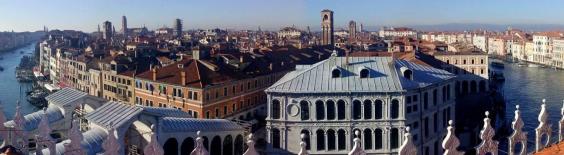
Phenomenal views from the Fondaco dei Tedeschi (Julia Buckley)

Take a view

Next to the Rialto bridge, a grand 16th-century trading hall reopened last October as Venice’s most swish department store, T Fondaco dei Tedeschi (6). Head straight to the top floor where the roof terrace offers arguably the best view of Venice: vaporettos, gondolas and private boats looping round the Grand Canal; a bird’s eye view of the newly refurbished Rialto; and the entire city skyline, from the domes of St Mark’s to the hulking Frari church, and the delicate Ca’ d’Oro palace to the slim bell tower of San Francesco delle Vigne church. On a clear day, you can see the Alps.

Window shopping

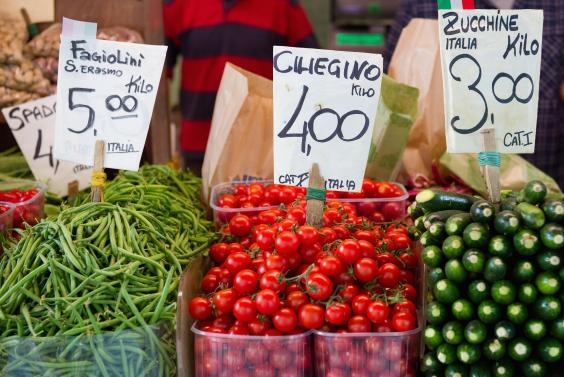
Cross the Rialto to wander around the market (7) (Campo della Pescheria, 30125) on the other side, which has been going strong for 700 years. The famous morning fish market will be over by this time of day, but the greengrocer stalls are piled high until nightfall.

From there, follow the signs to Frari, which take you to the San Polo neighbourhood. Here, on Calle dei Meloni, you’ll find Il Pavone (8) (00 39 041 522 4296; no website), where Paolo Pelosin creates notebooks, journals, pencils and even wastepaper baskets from hand-marbled paper. Ask him how he does it and he’ll talk you through the process in his workshop out the back.

venicerialto.jpg
Take in the colours at the historic Rialto market ( Getty)

An aperitif

From Il Pavone (8), either retrace your steps one block and then turn right to catch the vaporetto at San Silvestro (9), or continue down Calle dei Meloni (which takes on other names every few blocks) to reach San Tomà (10), where you can choose between a vaporetto or traghetto (public gondola which crosses the Grand Canal). Either way, you’re getting off at Sant’Angelo.

A short walk away, near the Palazzo Fortuny gallery, is Teamo wine bar (11), an upmarket take on Venice’s traditional bacaro taverns. Stand at the bar with locals or sit on the comfy banquette – there’s a good selection of local wines and the service is always friendly. Say ciao to Honey, the resident dog.

Dine with the locals

Next to the Fenice opera house, Antico Martini (12) is one of those rare grande dames that even locals love – come before a performance and you’ll find it buzzing. Established in 1720 as a café, everyone from Charlie Chaplin to Richard Burton has come for the top-notch seafood, posh cicchetti (sort of like Venetian tapas) and famous risottos. Its historic dining room, the Sala Cherubini, is in the process of being registered as a national historic monument.

venicegiudecca.jpg
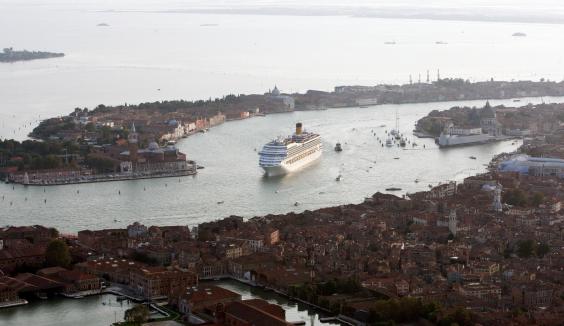
You'll spend much of day two on Giudecca, the island on the left, where locals still live ( Getty)

Day two

Sunday morning: out to brunch

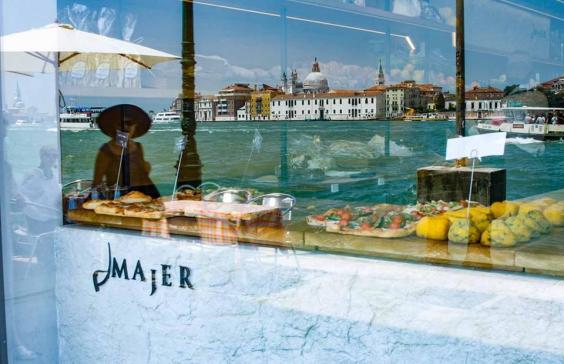
Trentino-based pasticceria chain Majer has eight locations across Venice, but the Giudecca branch (13), which opened in December 2015, is the biggest, and doubles as a restaurant. Sit at one of the tables lined up on the waterside, overlooking the Zattere and St Mark’s in the distance – and have something sweet or one of the genovese focaccias stuffed with grilled vegetables.

venicemajer2.jpg
Majer on Giudecca overlooks the Zattere and San Marco beyond ( Majer/Facebook)

A walk in the park

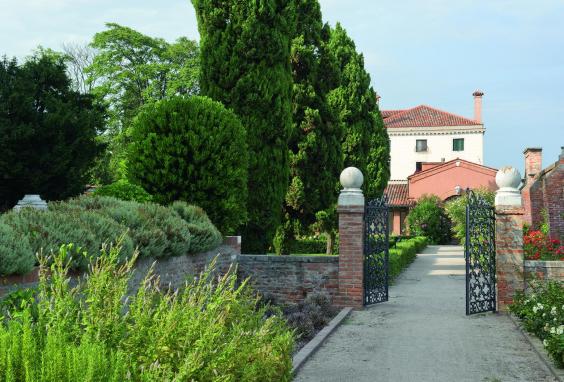
Venice’s “parks” (like the Giardini and the tree-lined stretch of Sant’Elena) aren’t really worth writing home about, but walking along Giudecca is a far more Venetian experience. From Majer, head east (towards San Marco), straight along the waterfront. As well as the views of Zattere and the shimmering Giudecca Canal you’ll pass locals walking their dogs, spy rare gardens through gateways and over walls, and pass the Redentore church, designed by Palladio.

  • Read more

The ultimate beer lovers' guide to Bruges

At Zitelle, take a right down Calle Michelangelo and follow it to the other side of the island for spectacular lagoon views and a sneaky walk through the garden at Villa Hériot (14), a 20th-century Neo-Gothic palazzo looking towards the Lido. Now home to various organisations, you’re allowed in the garden, but not the building.

Cultural afternoon

Right by the Zitelle vaporetto stop, the building that looks like a Gaudi-esque riff on the Doge’s Palace is Tre Oci (15), built in 1913 for artist Mario de Maria. These days it’s one of the more forward-looking galleries in town, focusing predominantly on photography exhibitions. The current show, about the Arctic, runs until 2 April, but exhibits aside, it’s worth the €12 entry fee for the building – and its astonishing views of San Marco – alone.

venicegondola.jpg
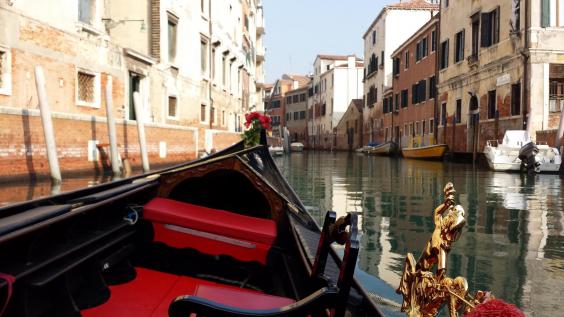
Riding a gondola is for a good cause, thanks to the launch of Gondolas4all (Julia Buckley)

Take a ride

Never set foot on a gondola because you wouldn’t be seen dead succumbing to a tourist trap? Understandable. But now you’ve a reason to get onboard with what, actually, is an unforgettable experience – in fact, you could say it’s your moral obligation to do so.

Last April, Gondolas4all launched the world’s first wheelchair-accessible gondola station – hugely symbolic, it’s the brainchild of two gondoliers who’ve received no financial backing from the city. They’re paying off the €120,000 cost with crowd-funding; non-wheelchair users can pre-book a ride (in a normal gondola) and donate €10 to the project as you do so. From Zitelle, take the number 2 vaporetto to Piazzale Roma (16), where they’re based.

The icing on the cake

For the ultimate Venice private view, book a tour with the Wigwam Club Giardini Storici Venezia. Remember those gardens you caught glimpses of on Giudecca? Venice is full of them, and Mariagrazia Dammico and her team have access to over 80. Tell them what you like and they’ll tailor-make a tour for you, usually by area. Local-heavy Cannaregio has some beautiful gardens, some of which – like the Casino degli Spiriti (17) – have views across the lagoon and towards the Alps.

venicespiriti-0.jpg
The Casino degli Spiriti's garden is a rare retreat from the crowds (Gabriele Kostas/ Mariagrazia Dammico)

Getting there

Flying to Venice’s Marco Polo Airport (18) involves one of the most beautiful descents in the world, giving great views across the lagoon. Airlines flying from the UK include Monarch from Birmingham, Gatwick and Manchester, easyJet from Bristol and Gatwick, and British Airways from Heathrow and Gatwick.

Marco Polo also offers one of the most beautiful public transport rides into town on the Alilaguna boats. There are three lines – which to take will depend on where you’re staying. Tickets cost €15 each way and boats leave roughly every half hour.

There are also coaches going to Piazzale Roma at the top of the Grand Canal, but the atmospheric boat ride is incomparable. Water taxis are much faster than the Alilaguna, taking about 30 minutes as opposed to 1-2 hours, but cost at least €120 one-way.

venice-bauer.jpg
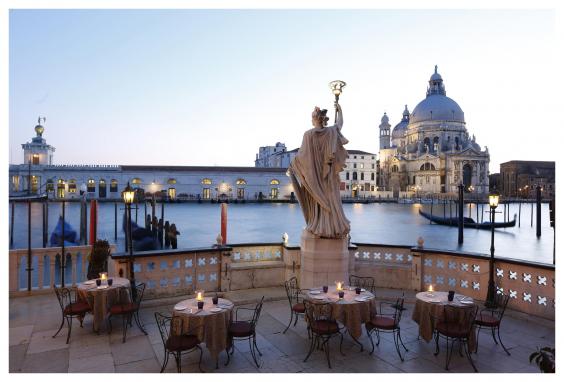
View from the locally owned Bauer Hotel (Bauer Hotel)

Staying there

The Bauer hotels (of which there are three) aren’t just locally owned, but have deep links to the community (for example, their organic toiletries are made at the local women’s prison). Only one is open year-round: The Bauer (19), a 1940s Brutalist gem (or eyesore, depending on your attitude to modern architecture) adjoining a classical 18th-century Grand Canal palazzo. These used to be sister hotels, but were merged last year – rooms are in the modern building, suites in the old one. Doubles from €250 per night, B&B.

Unlike most Grand Canal hotels, where you incur an eye-watering supplement for a room with a view, all the rooms at Palazzo Barbarigo sul Canal Grande (20) have canal views – either the Grand or the tributary running into it. The look is sexy Art Deco, as opposed to typical Venetian damask. Doubles from €200, B&B.

For a taste of old Venice – though with modern comforts – you can’t do better than the family-owned Hotel Flora (21). In a prime San Marco location with a rare garden, rooms are simple but beautifully styled with antiques, and staff know everything about their beloved city. Doubles from €108, B&B.

More information

turismovenezia.it; carnevale.venezia.it

Tuesday, 7 February 2017

Discover the other side of Florida - Citrus County

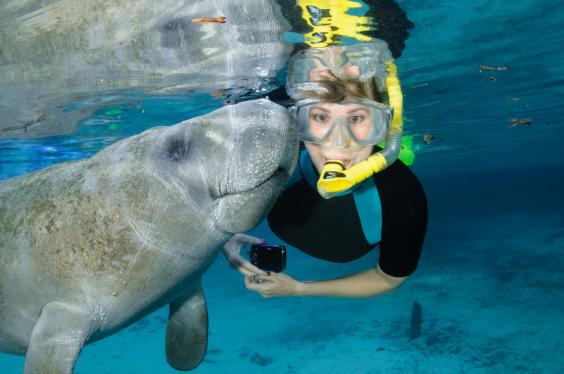
Calm, gentle and weighing half a ton. No, not me — the manatee. This magnificent mammal, also known as a sea cow, has been around for more than 60 million years

Florida has plenty of places where you can get close to them, but Citrus County is one of the best. Before the manatee experience, enjoy some of the county’s other attractions. Citrus County snuggles up against the Gulf Coast just over an hour north-west of Orlando and north of Tampa, and offers a wealth of surprises from nature to culture. To get there, hire a compact car for seven days from Tampa International Airport from £156. Book with Hertz.co.uk

visitcitrus-cgrant-manatee-models-jul14-7735-55.jpg

Where to stay? Like other parts of Florida, Citrus County has plenty of vacation rentals; I stayed in the cheerful little town of Homosassa, in the Tree House — considerably more luxurious than it might sound.

4,000 miles from Scotland

The capital, Inverness, has some advantages over the original in the north of Scotland: it’s sunnier, warmer and has an Elvis connection.

In 1961, Hollywood came to town and brought the king of rock and roll. Elvis Presley spent six weeks in Citrus Country filming Follow That Dream. The climax of the movie was shot at the Old Court House — where Elvis was put on trial here for illegal squatting. He charmed the judge and calmed suspicious minds. Today, the Old Court House is the home of the Citrus County Historical Society.

unspecifiedjtyzbxzw.jpg
Inverness

On your bike

During the filming, Elvis resided at the Port Paradise Hotel at Crystal River. At the time of the filming, an old railroad ran south from Inverness to Floral City. The tracks have gone, to be replaced by the Withlacoochee state trail — a great escape on a rented bike.

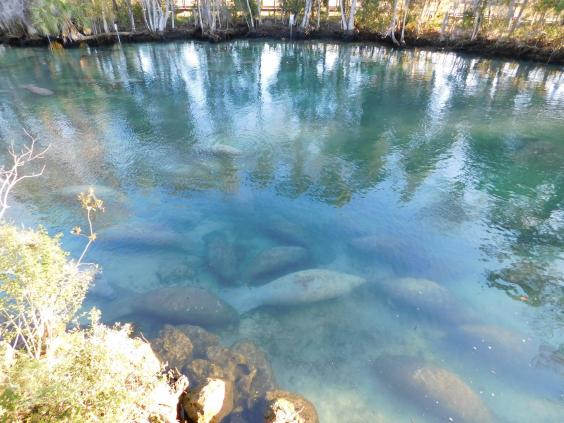
West of Inverness, Scotland is Loch Ness, with a mythical monster. And west of Inverness, Florida is Crystal River with some real marine giants. To see them, get up early and join a tour that leaves at dawn to explore King’s Bay, a network of waterways that comprises a National Wildlife Refuge. The reason the area is popular with manatees: a constant supply of warm water from the underground springs. And the reason for the early start: manatees are most active first thing in the morning, when they are feeding. They are strictly vegetarian, with voracious appetites. They eat 10 per cent of their body weight every day — that’s three bath tubs full of marine vegetation.

Float like a manatee

three-sisters-springs-with-manatees-2.jpg
Crystal River, Inverness

Christopher Columbus apparently mistook manatees for mermaids. He evidently didn’t get close enough. 

The trick is not actually to swim, but to drift on the surface with the “dead man’s float” — in other words, behaving like a manatee. The calmest, quietest people always get the best experience of close encounters with these vast, gentle giants.

Discover more at Visit Florida

Thursday, 2 February 2017

How to spend a beer-themed two days in fairytale Bruges

Why go now?

Beer literally flows through the fairytale streets of Bruges, the capital of West Flanders, albeit in a pipeline running beneath the Belgian city’s cobbled pavements. Its annual beer festival this weekend (4-5 February) is one of the best in the world, with more than 400 different beers on offer. Based beneath the famous Belfry (1), and with no entrance fee, the festival can quickly overwhelm the market square (2); luckily, Bruges is so steeped in brewing culture that there’s plenty more beer to explore once you’ve drunk the tents dry.

Get your beer bearings

Belgian beer can be a minefield for the uninitiated, so it’s worth learning how to tell your Tripel from your Kwak before you order a pint of something 14% ABV.

Pale, farmhouse and blonde ales are closest to British and US-styles, while Dubbels, Tripels and Quadrupels – as the names suggest – multiply in strength.

Flanders is famous for sour ales, whose styles include Lambics, Guezes, and Flanders Red and Brown ales. They’re fruity, often tasting of sour cherry, but are an acquired taste. Kwak is a strong amber ale that comes in a glass, test-tube-like flask propped up on its own wooden stand, and if you drink too many of them you might need one of your own.

Day one

Take a view

For an overview of Belgium’s beer culture study the “beer wall” at 2be (3) (00 32 50 61 12 22; 2-be.biz/en/2BeBar.php), a bar close to the market square (2). Dominating one side of the pub’s pretty, canalside garden, the beer wall’s shelves are a colourful spectrum of styles, bottle-types and glasses. Temptingly, the wall ends at the bar – but best to get there early on: it’s open daily from 10am but closes by 7.30pm.

1024px-jielbeaumadier-carbonade-flamande-2010.jpg
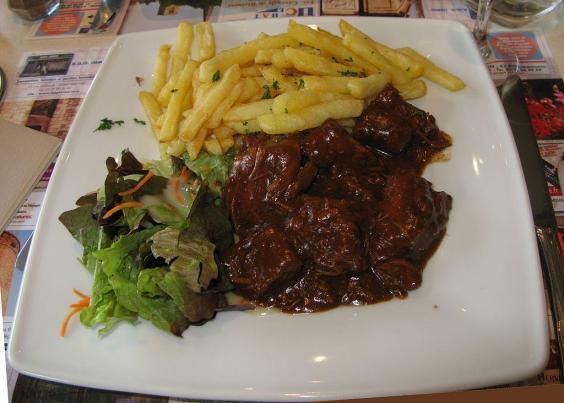
Classic dish Carbonades Flamandes comprises slow-cooked beef in beer

Lunch on the run

With its mismatched ornaments, exposed brickwork, roaring fires and chequered tablecloths, De Vlaamsche Pot (4) (00 32 3 250 34 00; devlaamschepot.be), on Helmstraat, feels like a medieval hunting lodge upholstered with leftover material from a 1950s tearoom. It turns out some of the best Flemish food in Bruges, including the famous Carbonades Flamandes, an unctuous stew made with beef slow-cooked in dark beer, for €22.50. With no fixed closing time, it’s open Wednesday-Friday from 5.30pm and from midday at weekends.

Window shopping

From bottles to tankards to gleaming glassware, The Bottle Shop (5) (00 32 50 34 99 80; thebottleshop.be), just off the market square, is the best place to stock up on boozy paraphernalia. It’s a riot of colour, stocking more than 600 different beers on its densely packed shelves. Beers are displayed alongside their intended glassware to help you avoid the ultimate Belgian beer faux pas. Open daily from 10am-6.30pm.

10580679-1153932334623511-3292839881366464236-o.jpg
Le Trappiste offers a medieval setting and monk-brewed beer (Facebook)

An aperitif

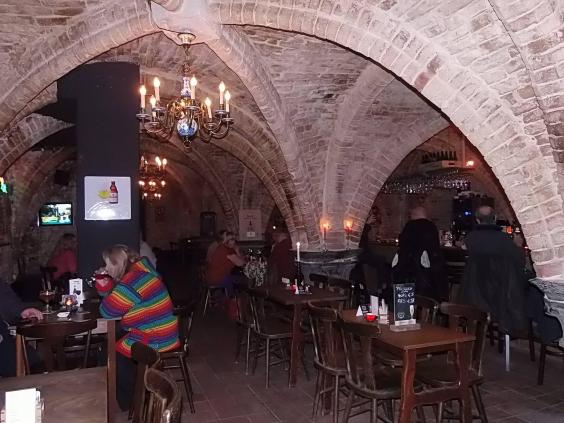
Some of Belgium’s best beer is brewed by the cloistered monks of the Trappist order. Trekking around all six of the country’s secretive abbey-breweries is the ultimate spiritual pub crawl; but if you don’t have time to do that, make a pilgrimage to Bruge’s Le Trappiste (6) (00 32 475 45 50 66; belgianbeer.wixsite.com/letrappiste), a gloriously spooky bar based in a vaulted medieval cellar beneath the Kuipersstraat. Open daily from 5pm-1am, it stocks a wide range of rare Trappist, Abbey and other Belgian beers and its expert bartenders are a dab hand at guiding you through the extensive beer menu. 

Dine with the locals

Book well in advance to secure a table at Ribs ‘n Beer (7), just across the canal at 50 Ezelstraat (00 32 50 70 76 77; ribsnbeer.com). Busy, friendly and cacophonous, it’s a meat lover’s paradise. Best known, obviously, for the ribs – served traditional or slow-cooked – it also serves up enormous steak and frites. Given how close it is to the tourist hotspots like the market and Belfry, it’s also excellent value with all-you-can-eat ribs for €18.

Day two

Sunday morning: out to brunch

If you’re in need of a hearty plate of grease following a night on the cobbles, make for the only museum in the world that’s dedicated to the humble chip.

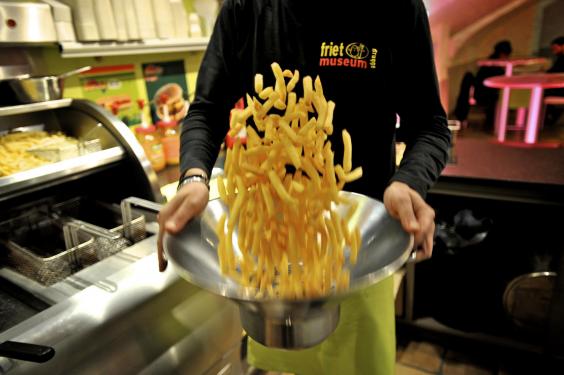
On the corner of Vlamingstraat and Academiestraat, the Frietmuseum (8) (00 32 50 34 01 50; frietmuseum.be), with its endearing, cartoonish presentation, somehow renders the potato surprisingly fascinating. It’s open daily from 10am-5pm but if your craving for carbs is overwhelming, you can always skip the museum’s €8 entry fee and head straight to the café for a cone of frites, cooked to the traditional recipe in beef fat. Genuinely cheap as chips, a large portion is €2.20.

friet10.jpg
Learn everything you ever wanted to know about chips - or just eat them - at the Frietmuseum ( Frietmuseum)

Take a hike

Bruges’s famous underground beer pipeline flows from the Half Man Brewery (9) to its bottling plant just outside the city, solving a logistical tangle by cutting across town without damaging any medieval architecture. Walk some of its route above ground: from the market square (2), follow the cobbled Oude Burg west as far as the imposing Sint Salvatorskathedraal (10), the city's main church, then follow Heilige-Geeststraat until it becomes Katelijnestraat. The road passes between the Church of Our Lady of Bruges (11) and Oud Sint-Jan (12), an old hospital-turned-exhibition centre that’s currently hosting a major PIcasso exhibition (00 32 50 47 61 00; picasso-bruges.be). Entry costs €10; it closed on 9 January but from Friday, 3 February will reopen daily from 10am-6pm.

2541731737-65836a26a1-b.jpg
A stroll around Bruges guarantees beautiful views (Flickr/Wolfgang Staudt/CC BY 2.0)

Cultural afternoon

If you’ve worked up a thirst after all that walking, join a tour at the Half Man Brewery (9) (00 32 50 44 42 22; halvemaan.be), just over the canal from the Oud Sint-Jan, which turns out some of Belgium’s best-known beers under the Brugse Zot and Straffe Hendrick labels. Tours cost €9 per person and last 45 minutes; for an extra €10 you can try out a professional beer tasting in the cellars. It’s open 10am-6pm during the week, with an 11pm finish on Friday and at the weekend.

Take a ride

Soothe your head after all that beer by hiring a city bike at the train station (13) (Station Brugge, 8000 Brugge) and going for a ride along the wide, still canals that stretch between Bruges and the Netherlands. The border town of Damme (14) has an oddly Cotswolds feel to it: sleepy outside the summer season, its streets are lined with art galleries and cafes. The Blue Bike scheme (blue-bike.be/en) costs €10 for an annual membership – which also entitles you to use bikes in other Belgian cities – then €1 for a 24-hour bike rental.

The icing on the cake

The festival promises a rare opportunity to try the Trappist beer Westvleteren 12, widely acclaimed as the best beer in the world. Short of visiting the monks' secluded, West Flanders abbey and brewery, it's usually impossible to get hold of, so it's likely to sell out very quickly. If you miss out, it's occasionally been seen at Le Trappiste (6)

Travel essentials

Getting there

The Eurostar (01233 617575; eurostar.com) connects London’s St Pancras International to Bruges via Brussels Midi/Zuid for £34.40 each way. From the train station (13) – a magnificently spiky Gothic building straight out of Harry Potter – take the Number 12 bus to the market square (2). The journey takes seven minutes and buses leave every 10 minutes. A ticket, valid for 60 minutes, is €3. 

Staying there

The Dukes’ Palace (14) (00 32 50 44 78 88; hoteldukespalace.com/en) is a grand old hotel occupying a 15th-century palace, with its own Rapunzel-esque pointy tower and sumptuous rooms. Doubles from €308, not including breakfast. Near the canal, St Christopher’s (15) (00 32 50 34 10 93; st-christophers.co.uk), an upmarket hostel, offers decent mid-range accommodation for €16 for a dorm bed, including breakfast.