Sunday, 1 January 2017

48 hours in Ljubljana: hotels, restaurants and places to visit

Travel essentials

Why go now?

With its superlative green spaces, car-free historic centre and impressive recycling efforts, Ljubljana is a fitting European Green Capital for 2016. To celebrate the honour, Slovenia’s capital has rolled out a programme of green-themed events (greenljubljana.com) that run through to the end of the year. Go now and you’ll also catch the tail end of the Ljubljana Summer Festival (ljubljanafestival.si), which wraps on 13 September. 

Touch down

Ljubljana’s Joze Pucnik Airport (1), 25km northwest of the city, is served by easyJet (0330 365 5000; easyjet.com) from Stansted, Wizz Air (0911 752 2257; wizzair.com) from Luton and, until mid-September, Adria Airways (00 386 1 369 1010; adria.si) from Gatwick, Southend and Manchester. 

Bus 28 runs from the airport to Ljubljana’s bus station (2) hourly until 8pm, costs €4.10 and takes about 45 minutes. Shared or private transfers can be booked through companies including GoOpti (goopti.com) that’ll drop you to your hotel door (from around €7), or as close as possible to it if you’re staying in the pedestrian zone. Taxis cost between €35 to €45.

The city’s bus station (2) and train station (3) are located beside each other, less than 1km north of the centre, within walking distance of many hotels and guesthouses. 

Get your bearings

Ljubljana’s historic and cultural centre straddles the banks of the Ljubljanica River that curves through the city. The medieval Ljubljana Castle (4) dominates the cobbled Old Town on the east bank; the more modern west bank houses cultural institutions and parks. 

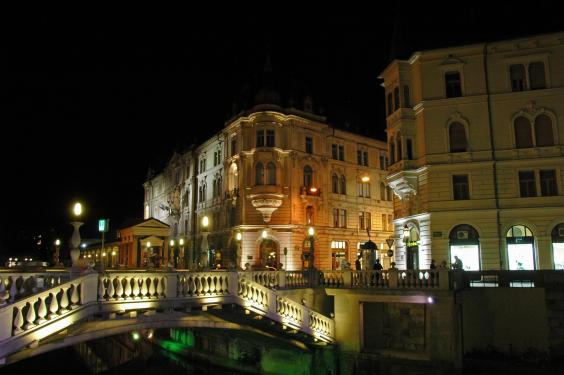
Stop by the Ljubljana Tourist Information Centre (5) (visitljubljana.com) at Adamic-Lundrovo nabrezje 2, next to the Tromostovje (Triple Bridge) (6) to pick up a Ljubljana Card (from €22.77 for 24 hours), which offers free entry to the city’s top attractions, free city bus travel, 24-hour access to the WiFree Ljubljana wi-fi network and other discounts. It’s open from 8am-9pm until 1 September, then from 8am-7pm until 31 May.
night-view-of-triple-bridge-1-d.wedam-2735-orig.jpg
Triple Bridge by night (D Wedam/slovenia.info)

Check in

Earlier this year, the smart Hotel Park Ljubljana (7), at Tabor 9 (00 386 1 300 2500; hotelpark.si) became the became the first Slovenian hotel to be awarded a Travelife Gold certificate for environmental friendliness. Superior doubles from €110, including breakfast.

Housed in a former military prison, Hostel Celica (8), at Metelkova 8 in the artsy Metelkova district (00 386 1 230 9700; hostelcelica.com), scored its own green claim to fame by becoming the world’s first eco-certified hostel in June. Twin privates at this quirky budget option go for €66, with breakfast. 

At the fancier end, the boutique Antiq Palace Hotel and Spa (9), at Gosposka 10, (00 386 8 389 6700; antiqpalace.com) occupies a 16th-century former diplomatic residence. Its 18 spacious rooms (€171 for a double, not including breakfast) are elegantly furnished – some with chandeliers – and there’s a good spa. 

Day one

Take a view

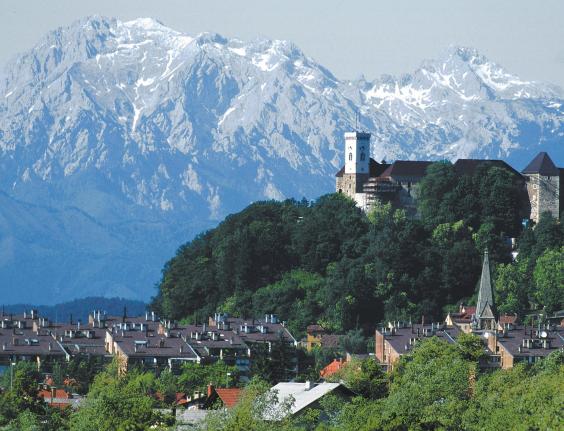
Ride the funicular from Krekov Trg (10) to Ljubljana Castle (4) (00 386 1 306 4293; ljubljanskigrad.si) for panoramic city views from the ramparts. A ticket to the castle costs €10 and includes the funicular, visits to the exhibition of Slovenian history and the puppet museum. Summer opening hours are from 9am to 11pm; times during other months vary.
ljubljana-castle-with-mountains-in-background-e.kase-2688-orig.jpg
Ljubljana Castle and the mountains beyond (E Kase/slovenia.info)

Take a hike

Start at the Ljubljana tourist office opposite the marble Triple Bridge (6) designed by Jose Plecnik, the Slovene architect credited with shaping modern Ljubljana. It leads to Presernov Trg and the salmon-pink Franciscan church (11)

From here, you can wander down Wolfova ulica, past shaded Kongresni Trg and the National and University Library (12) – another Plecnik masterpiece; enter through the main door on Turjaska ulica to admire the moody, black marble-pillared staircase leading to the industrial-styled Main Reading Room.  

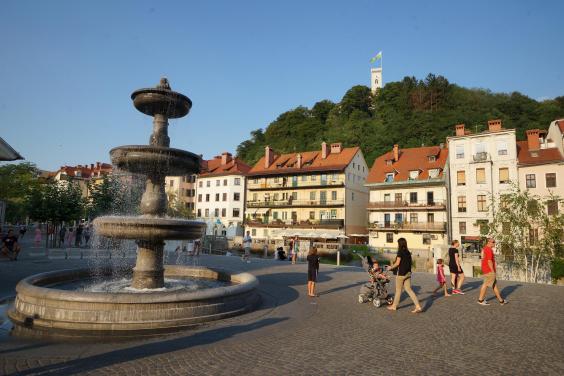
Head towards the river and cross the graceful Cobblers’ Bridge (13) into the Old Town; on Sundays, a flea market sprawls along the embankment towards the Triple Bridge (6). Continue through to Mestni Trg and make a left. When you reach the replica of the 16th-century Robba Fountain (14) (the original was moved to the National Gallery of Slovenia in 2006) in front of the Town Hall, veer left towards the Triple Bridge, and then head right at the tourist office towards the Central Market (15).
fontana-in-stara-ljubljana-3755-orig.jpg

The Old Town (Aleš Fevžer/slovenia.info)

Lunch on the run

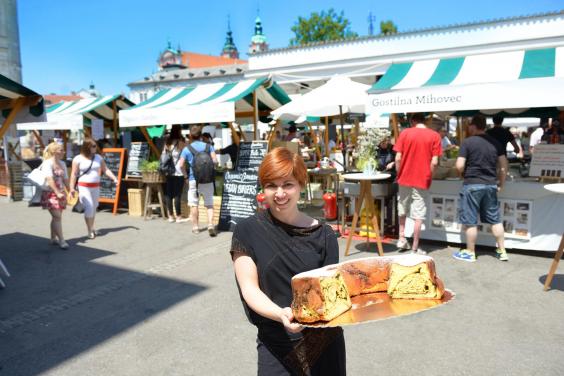
If you’re in town on a Friday between March and November, sample gourmet Slovenian small plates at the Open Kitchen Food Market (16) (odprtakuhna.si). From 10am to 11pm, Pogacarjev Trg next to the Central Market (15) transforms into a giant open-air restaurant with local chefs peddling everything from homemade gelato to plates of buttery zlikrofi (Slovenian dumplings). 

On other days, a plate of fresh, fried calamari (around €6.50) served at the fish market (7am-4pm Monday to Friday, 7am-2pm Saturday), which forms part of the Central Market (15), should hit the spot. 
15-potica-odprta-kuhna-4206-orig.jpg
Try local delicacies at Open Kitchen (Nea Culpa/slovenia.info)

Window shopping

In the spirit of Ljubljana’s eco status, seek out the city’s vintage fashion stores. Head to Divas Preloved (17) at Gosposka 3 (00 385 91 890 7366; divaspreloved.com) for pre-loved Chanel, and hunt for ethical bargains at Moje Tvoje (18) (00 386 40 127 973; mojetvoje-second-hand.si) at Mestni Trg 8, which only stocks high-quality garments that were not produced in countries with poor labour standards.

An aperitif

Read more

Ljubljana: eat, drink and explore in the European Green Capital

Doubling as an art space, Tozd (19) at Gallusovo nabrezje 27 on the east bank (00 386 4 072 7362; tozd.eu)  is one of Ljubljana’s best riverside bars. It’s open 8.30am to 1am daily and offers a solid range of very drinkable Slovenian wines and craft beers (try Human Fish).

For cocktails, book a table on the rooftop terrace at Gostilna As (20) (00 386 1 425 8822; gostilnaas.si). Tucked behind Wolfova ulica in the Knafljev prehod passage, this popular Mediterranean-Slovenian restaurant slings a mean As Spritz (prosecco, vodka, elderflower liqueur; €3.90). Open 12pm-1am daily.

Dine with the locals

Indulge in the seven-course tasting menu for a very reasonable €50 at Monstera Bistro (21) at Gosposka 9 (00 386 4 043 1123; monsterabistro.si). Opened this summer by Bine Volcic, one of Slovenia’s best-known chefs, this small, stylish restaurant specialises in “zero waste” Slovenian fusion cuisine inspired by seasonal ingredients (think polenta with chanterelles, blue cheese and garlic flowers) and has its own-label craft beer on tap. Open 8.30am-5pm Monday to Wednesday; to 11pm Thursday to Saturday.

Day two

Sunday morning: go to church

Replete with colourful baroque frescoes and ornately carved choir stalls, the twin-towered Cathedral of St Nicholas (22)  off Ciril-Metedov Trg (00 386 1 234 2690; lj-stolnica.rkc.si), is open from 10am-noon and 3-6pm daily, though there are services (in Slovenian) throughout the day.
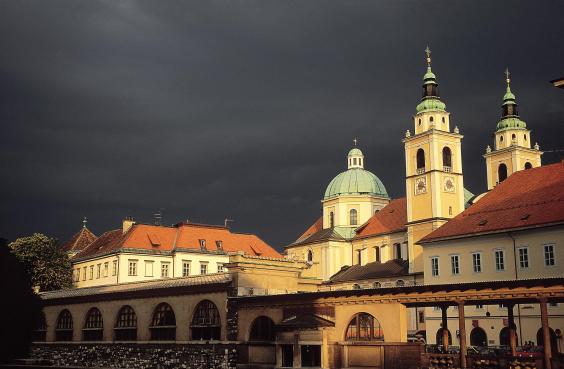
acathedral-of-st.-nicholas-b.kladnik-2513-orig.jpg
Cathedral of St Nicholas (B Kladnik/slovenia.info)

Out to brunch

Linger over pastries at Le Petit Café (23) (00 386 1 251 2575; lepetit.si), which spills on to Trg francoske revolucije on the west bank (open 7.30am-midnight daily). Alternatively, if you’re just after a caffeine hit, sip on a fair-trade, single-estate brew (or a refreshing cold-press) on the terrace of Cafe Cokl (24) (00 386 4 183 7556; cafecokl.si) near the base of the funicular (10). 

A walk in the park

Learn more about Ljubljana’s green efforts on one of 12 sustainability-themed events throughout the year; September’s Beekeeping Trail will offer an insight into the city’s beekeeping history on a wander from Ljubljana Castle (4) to the Ljubljana Botanic Garden (25). All guided walks cost €10 and are bookable through the tourist office (5). 
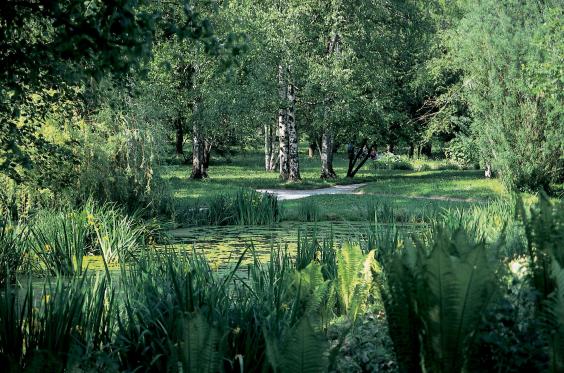
botanical-garden-j.bavcon-2569-orig.jpg
Follow the trail to the Botanic Garden (J Bavcon/slovenia.info)

Take a ride

Bicycles can be rented around town for about €5 per day, or you can register for Ljubljana’s bike-share scheme, BicikeLJ (bicikelj.si) for €1 and borrow a bike for free for one hour. Energetic cyclists will enjoy The Path of Remembrance and Comradeship (also known as The Green Ring), a 35km recreational path running along the course of the barbed-wire fence which surrounded Ljubljana during WWII.

Mobility-restricted visitors can hail free rides around the Old Town in one of several Kavalir – little green electric carts that that ply the pedestrianised zone from 8am-8pm daily, even in winter. 

Cultural afternoon

The National Gallery of Slovenia (26) near the lush Tivoli Park (27) at Presernova cesta 24 (00 386 1 241 5418; ng-slo.si; €7) spans Slovenian art from the 13th to the 20th centuries.

One block south, at Cankarjeva cesta 15, the Museum of Modern Art (28) (00 386 1 241 6834; mg-lj.si; €5) houses works from Slovene greats including expressionist France Mihelic and surrealist Stane Kregar. Both galleries are open 10am-6pm Tuesday to Sunday, with late opening until 8pm on Thursday.
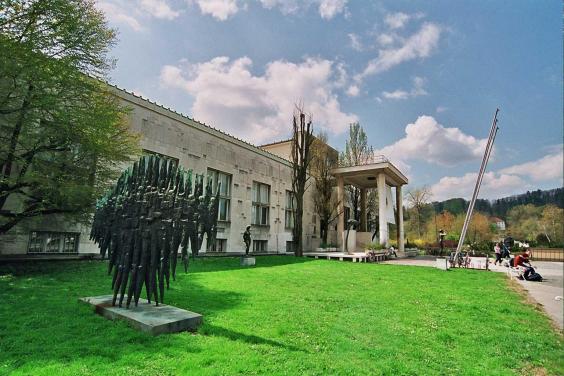
museum-of-modern-art-d.jpg
The Museum of Modern Art (D Wedam/slovenia.info)

Hop another block south to the National Museum of Slovenia (29) at Muzejska 1 (00 386 1 241 4400; nms.si; 10am-6pm Tuesday to Sunday; €6), which explores the country’s past including Roman relics and a Neanderthal flute. A joint ticket for €8.50 also gets you into the Natural History Museum (same opening hours, €4), in the same building. 

All four institutions offer free entry on the first Sunday of each month. 

The icing on the cake

Just 50km from the city, picture-postcard Lake Bled is a deservedly popular day trip; organised tours start from €39 (visitljubljana.com), but it’s easy to drive, or take the bus or train. Admire the emerald lake from every angle on a stroll around the perimeter (6km), or take a gondola ride to Bled Island (€12 return) to get a closer look at the baroque Church of the Assumption (€6).
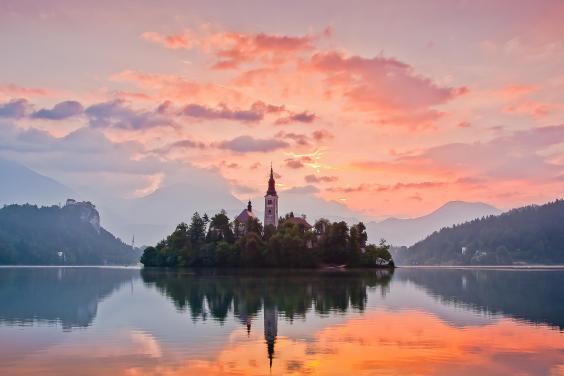
lake-bled-slovenia.jpg
Nearby Lake Bled is the perfect day trip (Franci Ferjan/slovenia.info)

Saturday, 31 December 2016

48 hours in Milan: hotels, restaurants and places to visit

Travel essentials

Why go now?

Milan is a city that strides out in style, from its fashion houses to its cultural delights. Get there before the impeccably dressed crowds arrive for Milan Fashion Week (21-27 September) and you’ll find the city much more manageable. On September 14, the annual Rito della Nivola will take place at the Duomo (1), a historic tradition that sees the Holy Nail retrieved from its case above the altar using a cloud-shaped lift, and put back again two weeks later (00 39 02 720 22 656; duomomilano.it).

Touch down

Milan has three airports served from the UK: Malpensa (2), 50km north-west of the city centre; Linate (3), which is just 11km east but flights arrive from London only; and Bergamo (4), which is the furthest at 60km to the north-east.

Ryanair (0871 246 0000; ryanair.com) flies from Stansted, Manchester and East Midlands; Flybe (0371 700 2000; flybe.com) from Birmingham and Manchester; easyJet (0330 365 5000; easyjet.com) from Gatwick, Luton, Manchester, Glasgow and Edinburgh; and British Airways (0870 850 9 850; ba.com) from Heathrow.

The Malpensa Express train runs every 30 minutes from outside Terminal 1 to several stops in the city centre (€12), while bus 73 connects Linate to Piazza San Babila (5) every 10 minutes (€1.50). From Bergamo, bus 1 (€2) operates every 30 minutes, taking you to the train station in the nearby city of Bergamo, from which you can catch a 50-minute train to Milano Centrale (6) for €5.50.

Get your bearings

Milan is built in concentric rings starting from the Duomo (1), the city’s Gothic cathedral and focal point. North-east of its 135 spires and gold-plated La Madonnina statue is the fashion district, close to the cobbled streets of Brera, with its cafés and restaurants.

The steel and glass skyline of the new business district, Porta Nuova, rises further north, before the Art Deco-style Milano Centrale (6). To the south lies the bohemian neighbourhood of the Navigli with its network of canals.
The main tourist information centre (7) is at Piazza Castello (00 39 02 77 40 43 43; turismo.milano.it). Open daily 9am-6pm, to 5pm on Sundays.
Milan’s bike-sharing scheme, BikeMi (bikemi.com), has hundreds of stations in the city; it’s €4.50 to register for a day, with the first 30 minutes free.

Four metro lines, as well as trams and buses, connect the whole city, and single tickets cost €1.50 for 90 minutes (atm.it).

Check in

The five-star Mandarin Oriental (8) at Via Andegari 9 (00 39 02 8731 88 88; mandarinoriental.com/milan) is luxurious without feeling stuffy. Contemporary rooms feature bespoke furnishings, velvet textiles and marble bathrooms with waterfall showers. Doubles from €725.50, including breakfast.

milan-suite-mandarin-terrace-01.jpg
Terrace suites at the Mandarin Oriental

A short walk from the Duomo, the Baglioni Hotel Carlton (9) at Via Senato 5 (00 39 06 42 11 11; baglionihotels.com) is classically styled, with 87 rooms and suites decorated with antiques and fine art. Doubles from €290, including breakfast. I travelled with Kirker Holidays (020 7593 2283; kirkerholidays.com), which offers tailor-made trips to Milan, including a two-night break staying at the Baglioni Hotel Carlton from £699 per person, which includes flights, transfers, breakfast and a morning’s guiding.

For those on a tighter budget, the Hilton Milan (10) at Via Luigi Galvani 12 (00 39 02 69 831; hilton.com) is a five-minute walk from Centrale train terminal (6) and has doubles from €129, excluding breakfast.

Cheaper still, Ostello Bello (11) at Via Medici 4 (00 39 02 36 58 27 20; ostellobello.com) is a good value hostel with a fun, communal vibe. Six-bed dorms from €29; private doubles from €79, including breakfast.

Day one

Take a view

The Duomo (1) at Piazza del Duomo is the best place to get city panoramas. Take the lift for €13 or climb the stairs for €9 to access the rooftop terraces where views stretch as far as the Alps. Open daily 9am-7pm; a €2 ticket includes entrance to the cathedral, Duomo Museum and nearby San Gottardo in Corte church (12) but not the terraces.

Take a hike

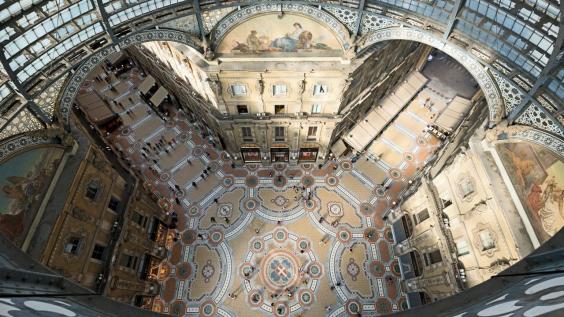
Start outside Milan’s 18th-century opera house, Teatro alla Scala (13), at Via Filodrammatici 2 (00 39 02 860775; teatroallascala.org) and cross the elegant piazza with its monument of Leonardo da Vinci (14), who lived here for 17 years. Wander through the Galleria Vittorio Emanuele II (15), the glass-roofed shopping arcade designed by Mengoni in 1877, pausing to spin three times with your heel on the testicles of the dancing bull on the mosaic floor (said to bring good luck).

Galleria-Vittorio-Emanuele-II-milan.jpg
Galleria Vittorio Emanuele II (Turismo Milano)

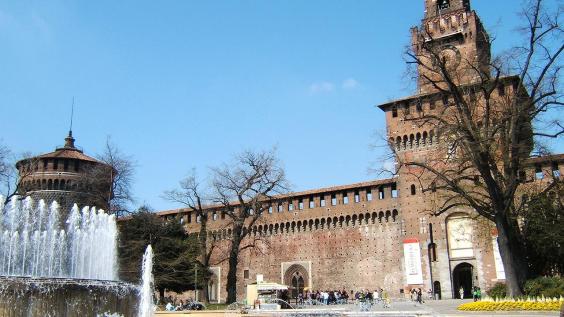
Emerging on to Piazza del Duomo, turn right onto Via dei Mercanti, passing the archways of the 13th-century Palazzo della Ragione (16) on your left, and continue down the pedestrianised Via Dante. Ahead looms the Castello Sforzesco (17), once home to the Visconti family and now housing the Triennale design and art museum, among others (00 39 02 8846 3700; milanocastello.it, entry €5).

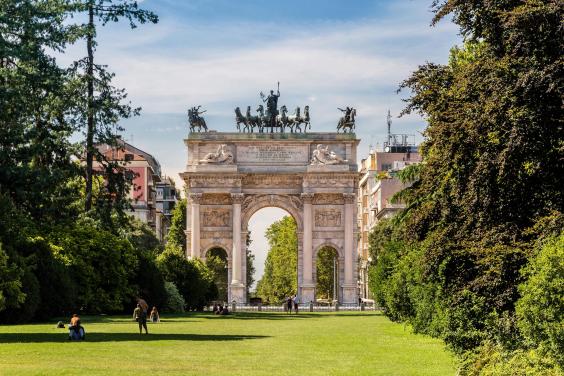
Cross the castle’s walls through a gate and stroll through the park until you reach the Arco della Pace (18), the Arch of Peace, built in 1807 under Napoleonic rule and mentioned in Hemingway’s A Moveable Feast.

Castello-Sforzesco-milan.jpg
Castello Sforzesco (Turismo Milano)

Lunch on the run

Rest weary feet at the Ristorante Galleria, inside Galleria Vittorio Emanuele II (15). It serves traditional Milanese fare, such as ossobuco (veal shanks) with saffron risotto for €26 (00 93 02 86 46 49 12; ristorantegalleria.it). Open 8.30am-12.30am daily.

For something quick and cheap, queue for panzerotti (pizza folded into a half moon shape) at Luini (19), at Via Santa Radegonda 16, which has been a Milanese institution for three generations. Tomato and mozzarella is priced at €2.50. Open 10am-3pm Monday; to 8pm Tuesday to Saturday (00 39 02 86 46 19 17; luini.it).

Read more

The motorway that built Italy: Piero Puricelli's masterpiece

Window shopping

Fashion is the city’s biggest draw, and the likes of Prada, Gucci and Valentino are found in the Quadrilatero d’Oro, a “golden rectangle” of streets centred around Via Montenapoleone (20).

Fashionistas on a budget should head to 10 Corso Como Outlet (21) at Via Tazzoli 3, a slightly shabbier, cheaper version of Carla Sozzani’s original store, 10 Corso Como (22) (10corsocomo.com) –the name is also the address.

Once lined with craftsmen’s workshops, Via Torino (23) is now one of the main areas of Milanese shopping to suit all tastes and budgets.

An aperitif

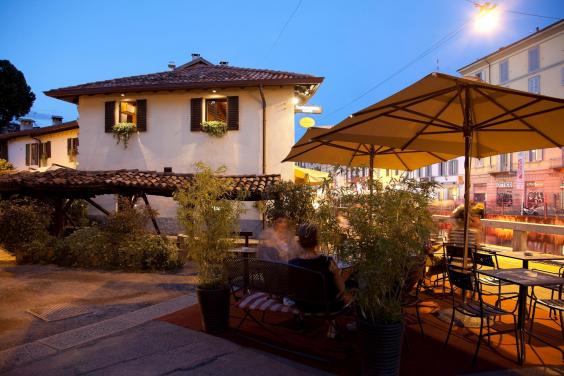
Aperitivo is a sacred rite in Milan, and the Navigli area is one of the best places to get stuck in. Mingle with the after-work crowd at El Brellin (24) at Alzaia Naviglio Grande 14 (00 39 02 5810 1351; brellin.com) , where you can order an Aperol spritz for €8 and fill your plate with pasta, cheese and meat for free at the bar. Open daily 12.30pm-3pm and 6.30pm-1am.

10506564-741733032559745-1475597976131482304-o.jpg
Take your aperitivo out on the terrace (El Brellin)

Diagonally opposite, Mag Cafe (25) is edgy and cool, with tattooed bar staff serving creative cocktails from €8, which also arrive with a plate of snacks (00 39 02 3956 2875). Open 7.30am-1.30am daily.

Dine with the locals

Run by the same family since 1938, Alla Collina Pistoiese (26) at Via Amedei 1 (00 39 02 8645 1085; allacollinapistoiese.it) serves high-quality Tuscan cuisine beneath an impressive carved ceiling. Try the fresh pappardelle with mushrooms for €16 and homemade tiramisu for €8. Open Sunday to Friday 12.30pm-2.30pm and 7.30pm-10.30pm; Saturday 7.30pm-10.30pm.

Locals head to Dry (27) at Via Solferino 33 (00 39 02 63 79 34 14; drymilano.it) for its excellent pizzas and cocktails. Calzones filled with smoked provolone, olives and onion cost €12 and French 75s (a gin and champagne concoction) are €10. Open 7pm-12am daily.

Day two

Sunday morning: go to church

Hidden amid Via Torino’s high-street shops is the Chiesa di Santa Maria Presso di San Satiro (28), an architectural gem (chiesadimilano.it). Inside, marvel at Donato Bramante’s illusory apse, a magnificent example of trompe-l’oeil. Sunday mass is at 11am and 6pm.

Read more

  • Cagliari travel tips: Where to go and what to see in 48 hours
  • Genoa travel tips: Where to go and what to see in 48 hours
  • 48 Hours in Florence: where to go and what to see

Out to brunch

Founded in 1817, Cova (29) at Viale Monza, 91 (00 39 02 76 00 55 99; pasticceriacova.it) is one of Italy’s oldest coffee houses and has an ornate interior with chandeliers and gilded curtains. There are 13 types of tea (from €7 per person) and pastries from €2. Try the Coppa Cova (a custard, forest fruit and whipped cream delight) for €12. Open 7.45am-8.30pm Monday-Saturday; 9am-7pm Sunday.

A walk in the park

Parco Sempione (30) is a vast, green expanse with numerous recreational areas such as jogging tracks and a duck pond, and the Arena Civica (31), Arco della Pace, Napoleon’s triumphal Arch of Peace (18) and the Triennale design museum (32) (00 39 02 72 43 41; triennale.it), stand along its perimeter.

shutterstock-460383535.jpg
The Arch of Peace in Parco Sempione (Shutterstock)

Sempione may be Milan’s biggest park, but the Giardini Pubblici Indro Montanelli (33) is its oldest, established in 1784. It has a running track around its edge, and houses the Ulrico Hoepli Planetarium and Natural History Museum (34) (00 39 02 88 46 33 37; comune.milano.it/museostorianaturale).

Cultural afternoon

The Pinacoteca di Brera (35) at Via Brera 28 (00 39 02 722 63 264; pinacotecabrera.org) is home to an important collection of Italian paintings, including works by Bellini, Caravaggio and Mantegna. Open 8.30am-7.15pm daily but closed Monday; Thursday open until 10.15pm; entry €10.

Santa Maria della Grazie (36), located on the piazza of the same name, contains one of Italy’s most famous masterpieces, Leonardo Da Vinci’s The Last Supper. You can spend 15 minutes gazing at it – but advance booking is essential (cenacolovinciano.net). Open 8.15am-7pm Tuesday to Sunday; entry €10.

The icing on the cake

For a quirky evening, take in the sights while you eat a four-course dinner on board a vintage tram with Atmosfera Milan. Set menus cost €70 (atmosfera.atm.it), with journeys departing daily at 8pm from Piazza Castello, corner of Via Beltrami (37).

fondazione-prada-bas-princen-2.jpg
Fondazione Prada is home to a Wes Anderson-designed café

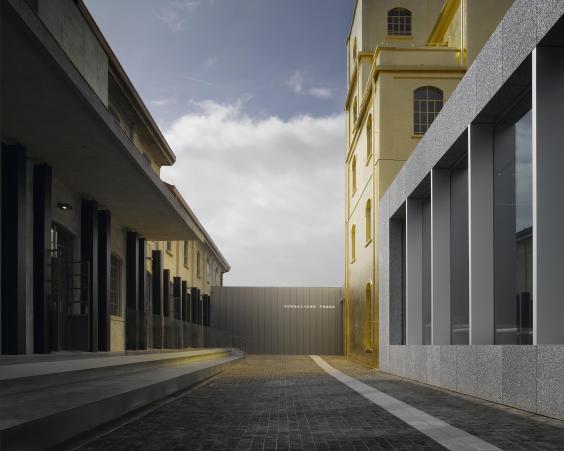
Designed by Wes Anderson, Bar Luce (38) (fondazioneprada.org/barluce) is a coffee shop-cocktail bar in the Fondazione Prada, an arts space owned by the fashion brand that opened at Largo Isarco 2 in 2015. Exhibition tickets cost €10, but an espresso costs just €1.50. Open 9am-9pm Monday, Wednesday and Thursday; to 10pm Friday to Sunday; closed Tuesday.

48 hours in Verona: hotels, restaurants and places to visit

Why go now?

Shakespeare’s heartbreaking tale of forbidden love, set in Verona, brings thousands to this ancient city’s narrow streets to retrace the tragic paths of Romeo and Juliet. 

To mark 400 years since the Bard's death, performances of the play, in English and Italian, are being held in the cobbled courtyard of Juliet’s House (9) and run until the end of September (teatrostabileveneto.it/en).

Get your bearings

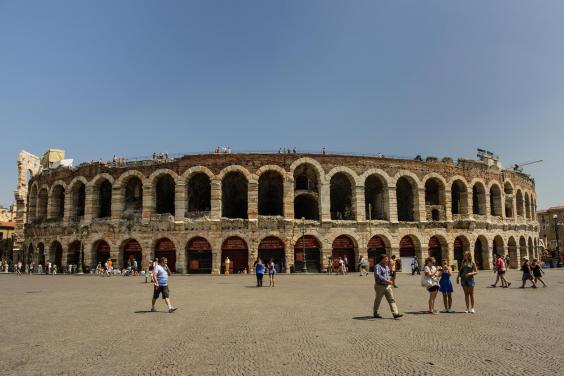
Verona is now the fourth most visited city in Italy, with a compact historic centre studded by bell towers, as well as a dynamic restaurant scene and a growing number of designers opening boutiques between the frescoed churches. If you arrive at the main Porta Nuova train station (1), head straight down Corso Porta Nuova to arrive at Piazza Bra, where the main tourist office (2) is located (00 39 045 806 8680; tourism.verona.it; open 10am-6pm, Monday-Saturday; 10am-3pm Sunday). Here you will also find the Roman Amphitheatre, known as the Arena (3), a good central point from which to plan your sightseeing. 

If you come in by taxi, make your way to Piazza delle Erbe (4), the original centre of Verona, the city’s beating heart. The small town centre is neatly enclosed by a loop of the River Adige.

The excellent Verona Card is available from tourist offices, many attractions, churches and news kiosks, and entitles you to free city bus __travel as well as free or reduced entry to most tourist sites. Two versions are available: €18 for 24 hours and €22 for 48 hours.

10761887934-ed090633e0-o.jpg
The Arena di Verona was built 50 years before Rome's Coliseum (Son of Groucho/Flickr/CC BY 2.0)

Day one

Take a hike

Start at the Porta Borsari (5), a Roman contruction that was once the main gate to the city, and walk down Corso Porta Borsari, pausing for an aromatic coffee at 15d, Caffè Borsari (6) (00 39 045 803 1313). Pass the Gardello Tower (7), a former prison and watch tower, and stop for one of the delicious ice creams at Pretto (8) at Piazza dell’Erbe 40 (open 11am to midnight). 

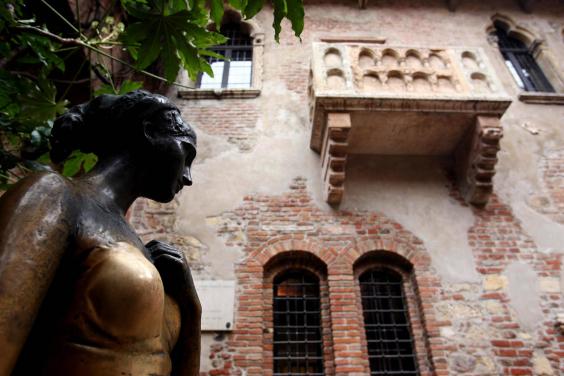
Savour it as you explore Piazza delle Erbe (4). Once the Roman Forum, its name comes from its time as a vegetable market in the 15th century. Head out of the square to Juliet’s House (9) at Via Cappello 23 (open Tuesday-Sunday, 8.30am-7.30pm; Monday from 1.30pm; entrance fee €6 or free with Verona Card). Thought to have once belonged to the Capuleti family (the real-life equivalent of Shakespeare’s Capulets), the house dates back to the 12th century. In the courtyard you’ll find a bronze statue of Juliet (rubbing her breast will make you lucky in love, apparently), while the interiors have been decorated 14th-century style. A balcony was added on in the 20th century, seemingly in an attempt to strengthen the connection to Romeo and Juliet.

Read more

Searching for Tuscan fun: Italy for families

Return to Via Mazzini with its designer shops, which brings you to the Arena (3), built 50 years before Rome’s Coliseum (00 39 045 800 5151; arena.it; €10 or free with Verona card). Open Tuesday-Sunday, 8.30am-7.30pm; Monday from 1.30pm. If it’s opera season, you’re better off catching a performance, as seats are installed in the interior, preventing a full view of its Roman glory. 

gettyimages-79103324.jpg
Juliet's House, with the bronze statue of Juliet in front, is a big favourite with visitors (Getty)

Lunch on the run

With its fast-paced service and typical Veronese fare, informal Osteria del Bugiardo (10) at Corso Porta Borsari 17A (00 39 045 591869) is an ideal lunch spot. Try pasta with aubergine, tomato and fresh ricotta (€8), accompanied by wine from the neighbouring Valpolicella region (from €7.50 a glass). Open 11am to 11pm.

Window shopping

The Italian eye for design permeates all of Verona’s shopping streets, but particularly attractive is Corso Porta Borsari. Shops normally open from 10am to 7.30pm, with a siesta from 1pm to 3pm. Dip into Fabriano Boutique (11) at number 47 (00 39 045 801 1785; fabrianoboutique.com), with its bright leather notebooks, and then browse through the equally colourful baubles at Canestrari (12) at number 37A (00 39 045 594763; canestrari.it). Fabulous fragrances, especially melograno (pomegranate) can be found in Santa Maria Novella (13) at number 9 (00 39 045 590028; smnovella.com). 

shutterstock-422332195.jpg
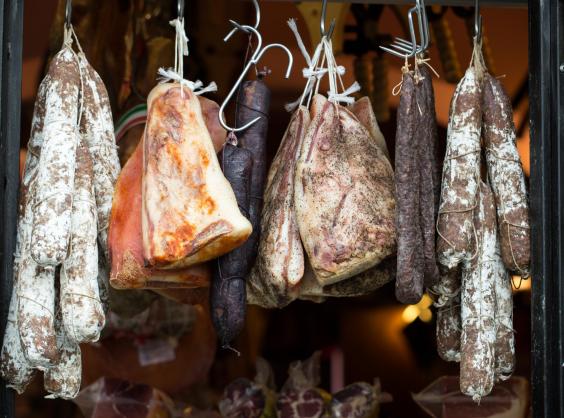
Browse Verona's delis for delicious sausages, oils and cheeses (Shutterstock)

As you head north-east, the street changes name to Corso Sant’Anastasia. At number 4 is the century-old Fazzini (14) (00 39 045 8000193; fazzinicoltelleria.it) – a shop famed for its knives, though those travelling with hand luggage might want to opt for the pasta cutters instead. And at number 41 is Salumeria G Albertini (15), a delicatessen full of delectable oils, cheeses and salamis (00 39 045 803 1074).

An aperitif

Indulge in the local favourite, Aperol spritz, or a glass of chilled, regional Soave wine at Caffé Rialto (16) at Via Diaz 2 (00 39 045 8012845; grupporialto.it). Here, you can sit under the arches of the Porta Borsari (5) and enjoy aperitivi of olives and little squares of bruschetta alongside your drink.

Dine with the locals

A relatively new addition to Verona’s dining scene is Locanda 4 Cuochi (17) at Via Alberto Mario 12 (00 39 045 80 30 311; locanda4cuochi.it), where you can sit at the bar and watch the cooks whirl around the open kitchen. Ravioli from €11. 

Read more

Dare you cycle Italy's dizzying Amalfi Coast?

More traditional is Bottega del Vino (18) at Via Scudo di Francia 3 (00 39 045 8004535; bottegavini.it), a pre-opera haunt for locals that dates back a century. There is a lengthy wine list, and don’t miss the risotto con vino Amarone (risotto with dry red wine; €16) or the tortellini with butter and sage (€15) – both worth the journey alone.

Day two

Go to church

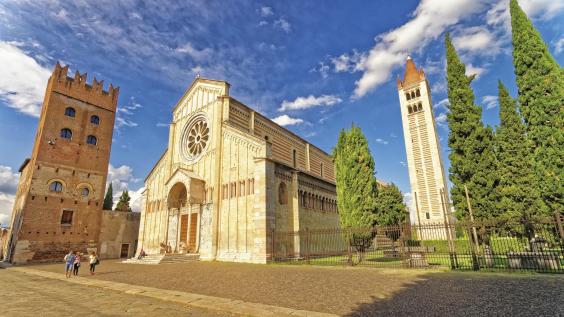
The Basilica di San Zeno Maggiore (19), on Piazza San Zeno, is named after Verona’s patron saint, who is buried here, and has foundations that date back to the 9th century. Look for Andrea Mantegna’s triptych before the main altar, representing the Virgin and Christ-child among saints. 

Sunday mass is held at 10am and 11am, and the church opens for visitors from 12.30pm until 5pm or 6pm according to the season (00 39 045 800 6120; basilicasanzeno.it).

shutterstock-268276319.jpg
Verona's Basilica di San Zeno is named after the city's patron saint (Shutterstock)

Take a view

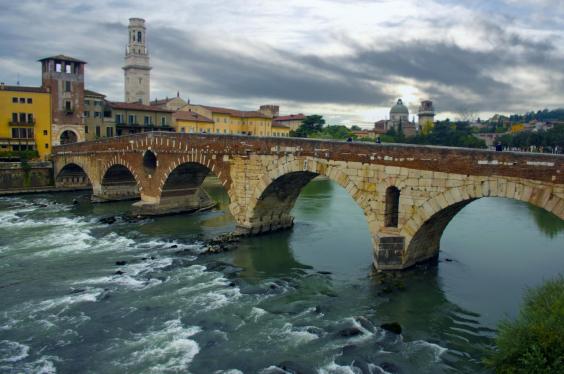
Head towards the River Adige, using the spire of 13th-century Santa Anastasia (20) or the bell tower of the Duomo (21) to guide you close to the river. Cross Ponte Pietra (22), a stone bridge that dates from the 1st century BC, and climb up the 100 or so steps facing you on the other side. Pass the Roman Theatre (23) on your right and keep walking up until the whole of the terracotta-roofed city lies beneath you across the river. It's worth it.

Out to brunch

Il Cenacolo (24) at Via del Teatro Filarmonico 10 (00 39 045 5922 88; ristoranteilcenacolo.it) was one of Luciano Pavarotti’s favourite restaurants, and its hearty menu makes it a perfect option for brunch, as it will last you the whole day. Start with an assortment of antipasti before indulging in tagliolini pasta with truffle (€14) and beef with amarone sauce (€22). Open from 12.30pm daily.

12265662-1084008644976862-951446491046150429-o.jpg
Treat yourself to a traditional feed at what was one of Pavarotti's favourite restaurants, Il Cenacolo (Ristorante Il Cenacolo/Facebook)

A walk in the park

Giardino Giusti (25) at Via Giardini Giusti 2 (00 39 045 803 4029; palazzogiardinogiusti.it), was planted in the 16th century by the Giusti family, just behind their palace. The lower part is a typical Italian garden, decorated with statues and fountains and hedge mazes, while the upper terraces are wilder and dominated by gargoyles, grottoes and a belvedere. Open 9am-8pm; entrance €7 or €5 with a Verona Card.

Cultural afternoon

Castelvecchio (26) at Corso Castelvecchio 2 (00 39 045 806 2611; museodicastelvecchio.it) has been demolished, rebuilt and altered a number of times. The 12th-century castle walls house a museum of military artefacts, sculptures and paintings. Unfortunately 17 of the best paintings, including Mantegna’s Holy Family, Pisanello’s Madonna of the Quail and further works by Rubens and Tintoretto have not been on display since they were stolen (and recovered) last year. Open Tuesday to Sunday, 8.30am-7.30 pm; Monday from 1.30pm. Entrance €6 or free with a Verona Card.

10996202924-5cf9f396ed-o-0.jpg
The Ponte Pietra was built in the first century BC (Kosala Bandara/Flickr/CC BY 2.0)

Travel essentials

Getting there

Easily reached by rail from Venice or Milan, the small airport also has a number of flights from the UK. British Airways (ba.com) and easyJet (easyJet.com) fly from Gatwick; Ryanair (ryanair.com) flies from Stansted and Birmingham; Monarch (monarch.co.uk) flies from Gatwick and Manchester; Flybe (flybe.co.uk) flies from Cardiff and Southampton; and Jet2 (jet2.com) flies from Edinburgh and Nottingham.

From the airport, it's a 15-minute taxi ride into the city centre (€15-€25). There are also shuttle buses which run every 20 minutes, and take 15 minutes, from 6.10am to 11.10pm between the airport and Porta Nuova station (1) (€6 one way).

Staying there

The welcoming Palazzo Victoria (27) at Via Adua 8 (00 39 045 596 508; palazzovictoria.com) lies in the shadow of the Porta Borsari (5), within the historic city centre, putting everything within easy walking distance. Doubles from €284, B&B.

Right by Verona’s most exclusive shopping streets, the 95-room Hotel Accademia (28) at Via Scala 12 (00 39 045 596 222; hotelaccademiaverona.it) is a popular choice, and offers free bicycles for guests to explore the city. Doubles from €190, B&B.

14196197-840742782693561-1851091915097615013-o.jpg
One of the opulent rooms at welcoming Palazzo Victoria, within Verona's historic centre (Palazzo Victoria/Facebook)

Down one of the narrow streets that radiate away from the Arena, overlooking the Piazza Bra, the simple Hotel Bologna (29) at Piazzetta Scalette Rubiana 3 (00 39 045 800 68 30; hotelbologna.vr.it) provides an excellent base at an affordable price. Doubles from €155, B&B.

Mary Lussiana travelled with Abercrombie & Kent (01242 547 760; abercrombieandkent.co.uk), which offers a three-night package from £475pp including B&B accommodation at Palazzo Victoria (27), BA flights, transfers and a private walking tour.

More information

turismoverona.eu

Click here to view our Lake Garda, Venice & Verona Tour, with Independent Holidays

Friday, 30 December 2016

48 hours in Ottawa: hotels, restaurants and places to visit

Why go now?

Canada’s capital was chosen in 1857 as “the least objectionable place” to locate the seat of government. Today, few cities are blessed with the superb location and sheer good looks that Ottawa enjoys. Autumn is the ideal time to visit: the summer heat is cooling, and tinges of red and gold are starting to colour the great outdoors in which the city is set.

The nation’s parliament returns on Monday 19 September, and as Ottawa gets back to work, the cultural pulse of the city quickens – with the One World Film Festival (oneworldfilmfestival.ca) running 29 September to 2 October.

Get your bearings

The capital is defined by two waterways. The broad Ottawa River marks the north-western edge of the city, with national institutions on the high bluff above the water. Just below Parliament Hill, the Rideau Canal meets the river at the Ottawa Locks (1). The canal cuts south-east through the city. The commercial hub is clear from the huddle of skyscrapers that populates the area south and west of the canal.

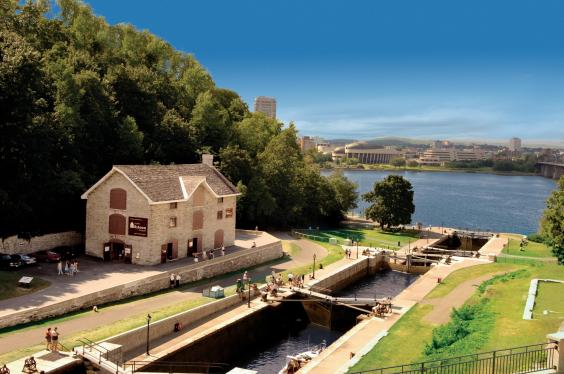
bytown-museum-and-rideau-canal-locks-credit-ottawa-tourism.jpg
Bytown Museum and the Ottawa Locks (Ottawa Tourism)

The Capital Information Kiosk (2) at 90 Wellington Street opens 9am-5pm daily (001 844 878 8333; ottawatourism.ca). It is more grand than the name suggests: it formerly a branch of Molson’s Bank, as the ornate mosaic on the floor testifies.

Congestion in and around the city centre can be intense, due to the construction work expanding the light-rail system, the O-Train. The network should be complete in 2018.

Currently C$1 = £0.57 or US$0.76.

Day one

Take a view

Nepean Point (3), overlooking the Ottawa River,  provides an excellent overview of the city and its verdant surroundings. It also looks back to the early days of European occupation, in the shape of an equestrian statue of Samuel de Champlain, who founded New France in 1608.

Take a hike

An enlightening two-mile hike begins from just below Nepean Point (3). The Trans-Canada Trail, which runs through the capital, leads you along the south bank of the Ottawa River, beneath the main structures of government on Parliament Hill. Leave the trail and aim for the steps that take you up to the Library and Archives (4) at 395 Wellington Street. The ground floor level is open 10am-6pm at weekends (6am-11pm on weekdays). It contains emblems of nationhood – including a statue, donated by Iceland, representing the first Europeans in Canada – as well as a new exhibition, Icons of Knowledge, which opens on Thursday 22 September.

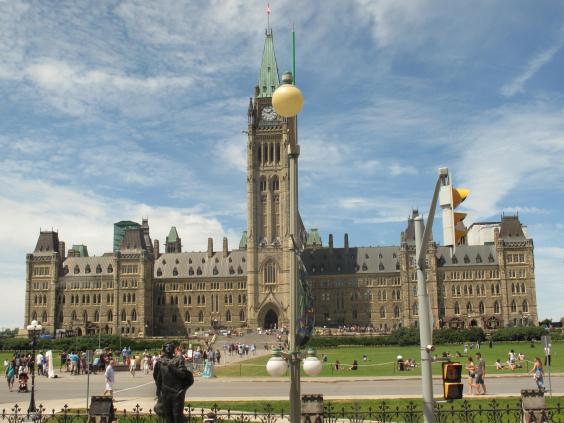
Wellington Street leads you past the Supreme Court (5), the Confederation Building (6) and Parliament (7). To visit the Parliament, call in at the Capital Information Kiosk (2) for a free ticket. With summer over, you may be able to get a space on an imminent guided tour, lasting 40 minutes, of the interior. Or just pick up a ticket for the Peace Tower, Ottawa’s answer to Big Ben (which is also open to visitors on guided tours).

canada-parliament-ottawa.jpg
The Parliament building (Simon Calder)

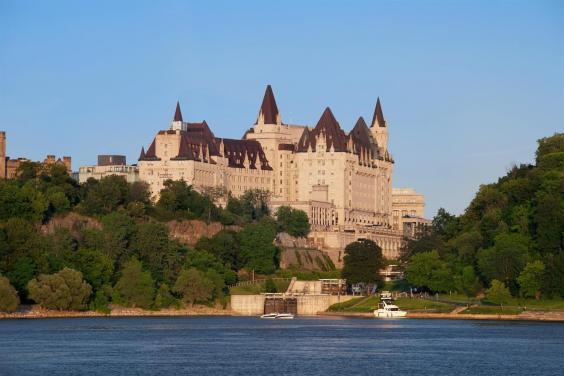
One more impressive monument remains: the French gothic Chateau Laurier (8), a grand hotel built to host passengers arriving on the Canadian Pacific Railway (the station used to be in the city centre, but the trains have since moved several miles out). It is named for Sir Wilfred Laurier, the nation’s first French-Canadian, bilingual Prime Minister, who helped secure permission to build it on a patch of parkland. There's a gallery on the ground floor depicting the hotel’s colourful history.

Read more

  • Travel guide to fly-drive Canada: how to plan a road trip to North America's wildest corners
  • Do I need a visa for Canada now?
  • 48 Hours in Toronto: hotels, restaurants and places to visit in Canada's largest city

Lunch on the run

The hike ends on the edge of ByWard Market, the entertainment and dining district. Lt-Col John By, who laid out the area in 1826, specified that George Street and York Street should be extra wide to allow for market stalls – which sell fresh produce daily except in the depths of winter. 

You could pick up the ingredients for a picnic, or choose one of the many competing lunch options. If you’re happy to splash out, the small plates at Play (9) at 1 York Street (001 613 667 9207; playfood.ca) are always tempting; you can order two for C$22 (£12.57) at lunchtime. 

Take a ride 

Take southbound bus 1 or 7 (fare C$3.65, cash only), and you get an excellent tour of the city thrown in. From the top deck, you get a fresh perspective on Wellington Street – note the banners showing flowers from each of the Canadian provinces. Then the bus turns south, and cuts through the layers of commerce and culture along Bank Street. Once you get beyond Highway 417 (the motorway to Montreal), you reach The Glebe – with the highest concentration of independent (and sometimes weird) stores in Ottawa. 

Window shopping

Start at the junction with First Street. The Great Glebe Emporium (10) at 724 Bank Street has an eclectic selection of arty gifts, while at the junction of Third Street, at No 791, Delilah in the Glebe (11) turns local designs into retro fashion. In the next block on the other side of the road, The Flag Shop (12) at No 838 (ottawa.flagshop.com) offers possibly the widest range of national banners you have ever seen.

The area is interspersed with places to pause, such as Wild Oat Bakery (13), at No 817, where you can sip a mango lassi. Where Bank Street broadens on its way south, a bunch of newer stores bring more recognised brands – but for Ottawa’s best selection of “respectable retail”, the Rideau Centre (14), at 50 Rideau Street, re-opened in the heart of the city last month after some dramatic remodelling. 

An aperitif

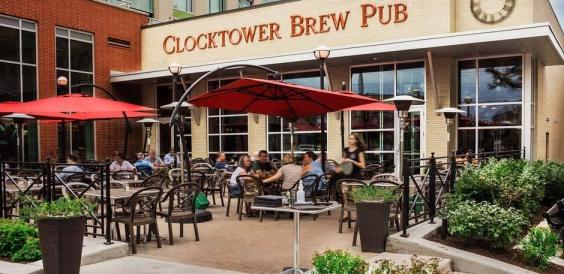
Late September in Ottawa often features warm evenings, and several locations on Bank Street in The Glebe offer outdoor tables on terraces: try the Clocktower Brew Pub (15) close to the freeway (001 613 724 4561​; clocktower.ca), or the FarmTeam Cookhouse (16) at 683 Bank Street (001 613 680 3324; farmteamcookhouse.ca). Both offer local beers such as Beau’s Lug Tread and St Ambroise Apricot Wheat Ale.

12651198-1116350605091236-1516151055613024216-n.jpg
Indulge in an al-fresco beer ( The Clocktower Brew Pub/Facebook)

For a view of the water rather than the traffic, return to the city centre and visit the Mill Street Brew Pub (17) at 555 Wellington Street (001 613 567 2337; millstreetbrewery.com) overlooking one of the veins of the Gatineau River just across from Portage Bridge.

Dine with the locals

Still in The Glebe? Try the “gourmet burger bistro” known as The Works (18) at 580 Bank Street (001 613 247 0406; worksburger.com), which spawned sister restaurants in other Canadian cities.

For something significantly more sophisticated, return to ByWard Market. E18hteen (19) at 18 York Street (001 613 244 1188; restaurant18.com) has a five-course Tasting Menu for C$95 (£54.30), offering the best of its meat and seafood options.

12916769-10153923707465465-5137532544007724469-o.jpg
E18hteen serves sophisticated meat and seafood dishes ( E18hteen/Facebook)

Day two

Sunday morning: out to brunch

If jet-lag has woken you early, Zak’s Diner (20) at 14 Byward Market Square (001 613 241 2401; zaksdiner.com) is the answer; it’s open 24 hours a day, serving a massive Lumberjack’s Breakfast (egg, bacon, cheese, homefries, toast…) for $15.49 (£9).

A walk by the canal

The Rideau Canal is an extraordinary waterway created as a British military supply route, following an ancient Indian canoe route to connect the Navy Yards at Kingston on Lake Ontario with the Ottawa River. It rises from the river in a magnificent flight of eight locks. The stone cottage halfway up houses the Bytown Museum (21), which tells the story of settlement from the early 19th century; the ground floor (with free access) offers an overview of the history of the waterway (001 613 234 2570; bytownmuseum.ca; 9am-4pm daily except Monday).

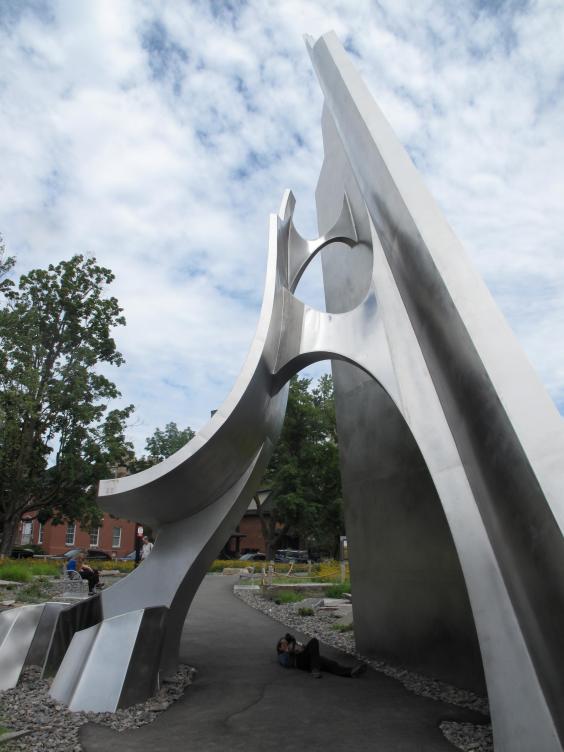
Heading south, the canal's tree-lined banks provide a verdant antidote to the city streets. Just before it reaches the freeway, bear right along Argyle Avenue to the Canadian Museum of Nature (22) – which has a brand new shard of steel this autumn, in the shape of Bill Lishman’s study of an iceberg. It soars skyward from terrain intended to represent the Arctic tundra in the north of Canada.

The museum, formerly the Victoria Memorial Museum, served as Canada’s parliament following a ferocious fire a century ago; 9am-5pm daily except Monday, with late opening to 8pm on Thursdays; admission C$13.50 (£11.15) (nature.ca).

icebergsculpture3.jpg
Bill Lishman’s iceberg sculpture (Simon Calder)

Cultural afternoon

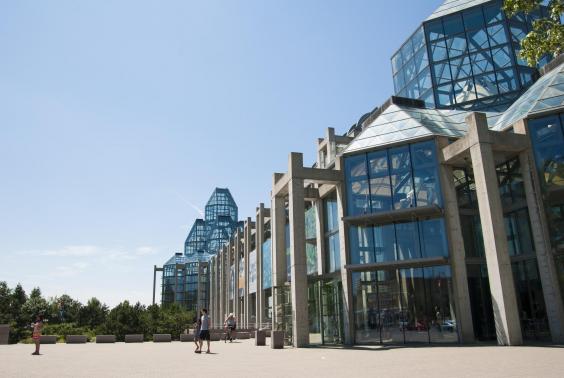
Ottawa is extremely rich in culture. The shiny National Gallery of Canada (23) at 380 Sussex Drive (001 613 990 1985; www.national.gallery.ca) is prefaced by a giant spider, Maman. Once inside you can discover some remarkable Inuit art on the ground floor, which has the nation’s best collection of carvings from the Arctic world. You can also inspect a reasonable collection of European Old Masters, but the architecture is equally impressive – especially the Keorner Family Atrium. The Gallery also contains the Rideau Chapel, which was rescued from destruction and is now buried in the heart of the building. It opens 10am-5pm daily except Monday (to 8pm on Thursdays), admission C$12 (£6.85). 

national-gallery-of-canada-ngc-exterior-people-summer-credit-ottawa-tourism.jpg
National Gallery of Canada (Ottawa Tourism)

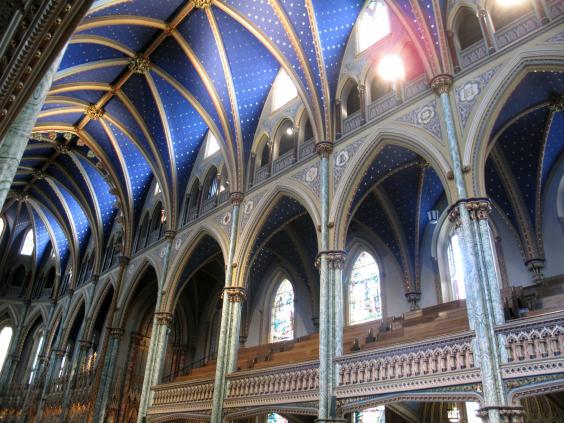
Almost next door to the Gallery stands the Notre Dame Cathedral Basilica (24) at 375 Sussex Drive. Inside, the cathedral is spacious and ornate, its blue ceiling covered with gold stars. It opens 8am-8.15pm on Sunday, 11.30am-6pm on Monday, 7.30am-6pm Tuesday-Saturday.

ottawa-cathedral1.jpg
Notre Dame Cathedral Basilica (Simon Calder)

The crowning cultural attraction is across the river in Gatineau: the Canadian Museum of History (25), whose entrance is close to the north end of Alexandra Bridge (001 819 776 7000; historymuseum.ca; 9.30am-5pm daily; Thursdays to 8pm; $15/£9). The country’s story, from First Nations people through early European exploration to the modern Canada, is told with some spectacular exhibits, such as the totem poles on the ground floor. 

Icing on the cake

“Indulgent moments since 1978” is the boast of the BeaverTails kiosk (26) at 69 George Street, in ByWard Market (beavertails.com), where deep-fried spears of dough are available with a variety of toppings including cinnamon, sugar and lemon (C$4.75/£2.70), chocolate and hazelnut (C$5.75/£3.30) and cheesecake (C$6.25/£3/60).

Travel essentials

Getting there

Air Canada (0871 220 1111; aircanada.com) flies from Heathrow to Ottawa with a stop in Halifax, while WestJet (00800 5381 5696; westjet.com) flies from Gatwick to Ottawa with a stop in St John’s. 

The airport (27) is nine miles south of the city centre. Bus 97 departs from outside the level 1 arrivals area (pillar 14) for central Ottawa. The journey of 30-40 minutes costs C$3.65. A taxi costs around C$40 (£22.86) and takes 20 minutes.

Montreal’s Trudeau airport has many more flights from the UK, including services on Air Transat and British Airways as well as Air Canada and WestJet. Frequent buses run direct from Montreal airport in around two hours to Ottawa’s modest bus station (28).

Staying there

Now part of the Fairmont brand, the Chateau Laurier (8) at 1 Rideau Street (001 613 241 1414; fairmont.com) is the grande dame of Ottawa hotels. The typical rate for a double room is C$429 (£245), though cheaper deals are available at weekends. Join the President’s Club loyalty programme (no fee) to qualify for free wi-fi and use of the bikes that are kept by the concierge.

clh-v-100-478164-med.jpg
Fairmont Chateau Laurier

The Swiss Hotel (29) at 89 Daly Avenue (001 613 237 0335; swisshotel.ca) is a small, family-run property just away from the hub of the city. It might not be quite the boutique hotel it claims, but the two-night-minimum stay rate of C$173 (£99), without breakfast, is good value. The adjacent Barefoot Hostel (30), which has the same owners, has just become an all-female hostel, with beds from C$34 (£19.50).

The Ottawa Jail Hostel (31) at 75 Nicholas Street (001 613 235 2595; hihostels.ca/ottawa) was established in 1862 as the Carleton County Gaol prison, and offers the chance to stay in an unreconstructed small cell. “A truly once-in-a-lifetime experience not available anywhere else in the world without actually breaking the law” is promised The rate is C$45 (£25.75), including breakfast; standard dorm beds and private rooms are also available.

Why Holiday Villages’ Academies Score Top Marks

Lazing on a sunlounger might be the dream for mum and dad, but it’s not exactly top of the younger generation’s holiday checklist. That’s where Holiday Villages step up to the plate, with activities that are on a different level…

We’re not talking about ping pong tournaments or arts and crafts here. No, what we’re looking at are the academies you can sign your little ones up for at every HV. Before you start picturing school-style desks and First Choice reps wearing mortar boards, what we’re getting at is a little more fun. Our academies are all about professionally-trained staff helping youngsters unlock their potential. The sun-kissed hotel settings aren’t bad, either.

There are three different types of academy that kids can get involved in, so everyone’s catered for – whether you’re a budding Beyonce or a wannabe Wayne Rooney.

Stage Academy

worldcup-stageacademy

If your little ones love being in the spotlight, this academy’s the right pick – it’s all about the glitz and glamour of showbiz. Dancing, singing and acting are all on the cards, and the professionally-trained staff help develop skills and build confidence. There’s a chance to perform what they’ve learned in front of a live audience, and there’s even a mini-academy for the littlest guests to start their music and drama careers early.

If you’re wondering how good the academy really is, the last few months speak for themselves. We had to extend the stage academy by an extra two weeks due to popular demand, and had over 2,000 kids strutting their stuff over the space of a couple of months.

Football Academy

Whether you’re channelling your inner Cristiano Ronaldo at Holiday Village Algarve, or doing your best impression of Andres Iniesta at Holiday Village Costa del Sol, our football academies will help to hone your little ones’ ability with the ball.

We don’t let any Tom, Dick or Harry run the drills either – our coaches are FA or UEFA qualified, so you can expect top quality, fun-filled sessions. You can sign little ones up for two, three or four-day courses, and there are parent-and-toddler sessions if you want to give them an early eye for goal. We’ve had more than 6,000 children take part in our football academies this summer, so we’re hoping to have inspired at least one or two stars of the future.

If you reckon you’ve got what it takes to join our team of football coaches, take a look at some of our vacancies.

Swim Academy

The Swim Academy rounds off the trio, and it’s arguably the most-rewarding of the three. All of the teachers have ASA (Amateur Swimming Association) qualifications, or the equivalent, and they run group and private lessons for all abilities. Whether your little one needs a bit of help with their technique, or has never been in the water before, the lessons are tailored to their needs. It’s only six kids to a teacher, as well, so they won’t be starved of attention or guidance.

Around 7,000 children have been to our Swim academies in 2016, and our instructors are even trained to help adults learn as well. We’re always on the lookout for new swimming teachers to join our ranks – if you think you’ve got what it takes, here are some of our vacancies.

To check out the prices of our stage, swim and football academies, take a look at the Holiday Villages website.

48 hours in Buenos Aires: hotels, restaurants and places to visit

Why go now

Until 25 September Buenos Aires food week is shining a light on the city’s passionate food culture, with gauchos (cowboys) barbecuing armadillos in streets overlooked by kitchens where chefs pore over molecular gastronomy. Whether or not you’re in time to catch the markets and special tasting menus (a full list of participating restaurants is available at bafoodweek.com), Argentina’s capital has started to warm up as spring takes hold, and has plenty to offer those keen to escape the rainy English autumn with a night or two of tango dancing or, in November, the renowned Open Polo Tournament (aapolo.com).

Read more

  • Argentina: From Buenos Aires to the wilds of the pampas
  • Wine-themed holidays: From Spain to South America
  • Villa Epecuén, Argentina's ghost town

Get your bearings

Buenos Aires sits on the south-west bank of the River Plate, close to the estuary. The districts of Monserrat and San Nicolas sit at its heart, the gentrified docklands of Puerto Madero to the east, historic San Telmo, and the traditionally working-class La Boca, south of the centre. North of San Nicolas are the green, affluent barrios of Retiro, Recoleta and Palermo.

From the airport take a Tienda Leon shuttle bus to central Puerto Madero, near the Sheraton Hotel (1) at 1299 Av Eduardo Madero (every 30 minutes; tiendaleon.com; single AR$190). Taxis charge AR$630 (£32). Both take 40 minutes to an hour, depending on traffic.

San Nicolas has a tourist office (2) at Calle Florida 100 (00 54 11 4313 0187; bue.gov.ar) – while Puerto Madero (3) has another at Avenida Alicia Moreau de Justo 200 (00 54 11 4315 4265). Both are open daily 9am-6pm.

Day one

Take a hike

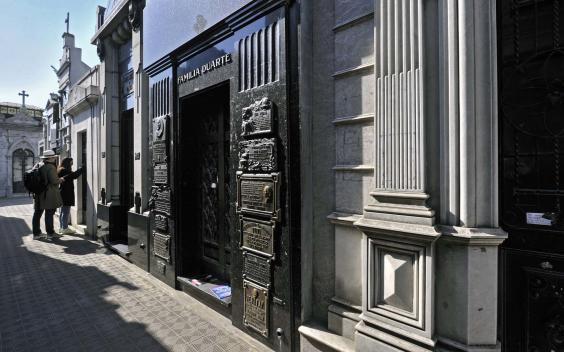
Encounter the city’s European history with a walk through Recoleta, where neo-classical mansions jostle with bustling street markets. From Las Heras metro station (4) turn right on to Av Gral Las Heras, then left onto Junin to stop at the haunting Recoleta cemetery (5), open daily from 7am-5.40pm. Eva Peron, the Argentine first lady whose story is told in Evita, is buried among its gothic mausoleums.

gettyimages-160413185.jpg
Recoleta cemetery (Juan Mabromata/AFP/Getty Images)

Then pass the gilded church of Nuestra Senora Del Pilar (6) and continue through the park to Av del Libertador and the Museum of Fine Art (7) at No 1473 (00 54 11 5288 9900; bellasartes.gob.ar; free entry; open 11am-8.30pm on weekdays and from 10am on weekends; closed Mondays). Seek out the classic Argentinian art hidden among its Van Goghs and the Rothkos, then compare and contrast down the road at the Museum of Latin American Art (Malba) (8) at 3415 Av Pres Figueroa Alcorta, where Yoko Ono’s exhibition Dream Come True runs until 31 October (00 54 11 4808 6500; malba.org.ar; entry AR$100; open 12pm-8pm Thursday through Monday and Wednesday till 9pm. Closed Tuesdays).

Lunch on the run

Bosques de Palermo lies on the edge of Palermo, a barrio so trendy it has subdivided itself into smaller neighbourhoods known locally as Palermo Soho and Palermo Hollywood. Nana’s (9) at 499 Pres Hipólito Yrigoyen (00 54 11 4837 9220; nana.com.ar), all exposed wood, brickwork and bare lightbulbs, serves up zingy, colourful salads – but also does a fine line in the Argentine staple, steak.

Window shopping

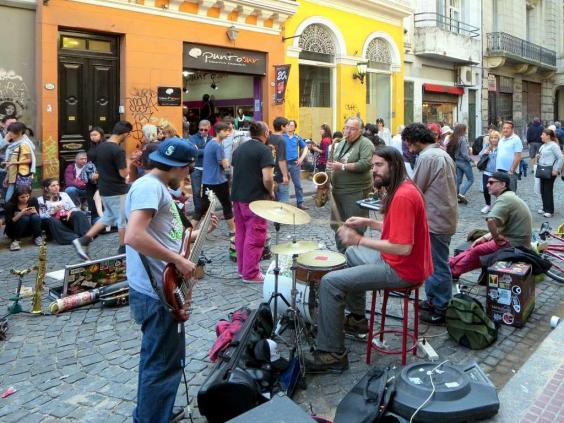
Pick through beaten up leatherwork and worn books in the antiques markets of cobbled San Telmo, one of Buenos Aires’ oldest neighbourhoods. On Sunday, Calle Defensa (10) turns into an enormous, bustling street market.

16307931231-dfce28ecaf-o.jpg
Calle Defensa on a Sunday ( David Stanley/Flickr)

An aperitif

Is it a florist? Is it a record shop? No, it’s a speakeasy: hiding behind the door at the back of Floreria Atlantico (11) at 872 Arroyo (00 54 11 4313 6093; floreriaatlantico.com.ar) lies one of Buenos Aires’ best bars, serving up classic cocktails with an Argentine twist – like a dash of the herb yerba mate, for example.

Dine with the locals

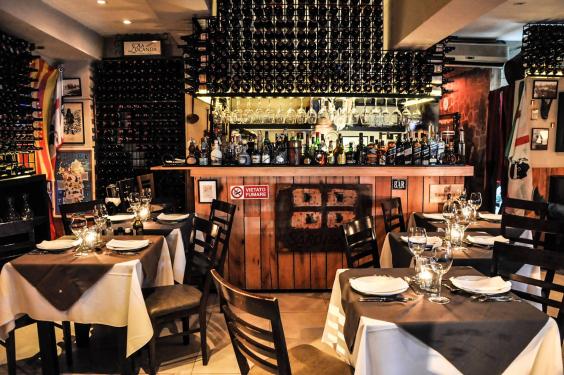
Argentinian food draws heavily on the influence of its Italian immigrant community, with pizza restaurants on every street corner. One of the best is La Locanda (12) at 2697 José León Pagano (00 54 11 4806 6343; lalocandabuenosaires.com; closed Mondays); stepping into the cosy restaurant is like stepping into a Sicilian taverna. Try the local cheeses, the octopus or the juicy lasagna.

an106496548la-locanda-12697.jpg
La Locanda

For a real local’s night out, elbow your way to a table at Cerveceria Nacional (13) at 1588 Arévalo (00 54 11 4771 3383; facebook.com/cervecerianacionalbar), a busy craft beer bar that serves excellent, fresh empanadas – a sort of Latin American twist on the Cornish pasty. Hours spent over drinks and small plates is the standard in Buenos Aires – with the added benefit that you won’t feel too full for tango dancing later.

Day two

Sunday morning: out to brunch

Puerto Madero waterfront has undergone a glistening refurbishment, and has become a hub for the new rich. Luckily, you don’t need to flash too much cash to enjoy brunch at Le Grill (14), a smart riverside spot at 876 Alicia Moreau de Justo (00 54 11 4331 0454; legrill.com.ar) that specialises – like most of Argentina – in grilled meat. Try the steak tasting plate for AR$550/£27.

A walk in the park

Walk off your steak in the nearby nature reserve, Reserva Ecológica Costanera Sur (15), which stretches across the old marshlands on the other side of the Rio Darsena Sur. Unbelievably peaceful, considering its central location, the park sits against an imposing backdrop of the city’s skyscrapers, but looks out across the Rio De La Plata to Uruguay on its eastern side.

Take a ride

Head out to Buenos Aires’s outlying districts – like Flores, where Pope Francis was born and grew up – aboard the clean, efficient and mostly air-conditioned underground system, Subte. Two of its six lines run north to south; the others run east to west. You can buy and charge SUBE cards from the ticket office; a ride costs a flat AR$7.50, no matter how many connections you make.

The bus system, with some 180 lines, is not for the faint hearted, but it is cheap – around AR$6 a ride – and does run throughout the night; you can only pay with a SUBE card. The tourist board’s interactive map (comollego.ba.gob.ar), is the easiest way to plan your route.

Cultural afternoon

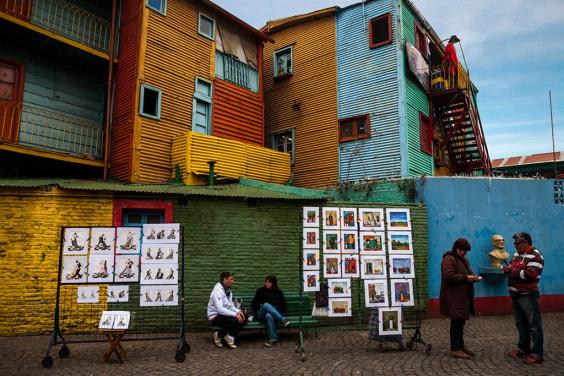
For a peek into Buenos Aires’ maritime past head south-east to the amazing, technicoloured streets of portside La Boca. The neighbourhood’s painted houses once hosted entire families in a single room; now, the floors of its restored homes belong to artists and sculptors who run open studios and galleries.

25079233230-c5c45a4ded-o.jpg
The colourful houses of La Boca ( sandeepachetan.com/Flickr)

The Buenos Aires tourist board offers free guided walks around the barrio, which take in more than just the main tourist drag, the Caminito (16) (turismo.buenosaires.gob.ar/en/guidedtours). 

The icing on the cake

Buenos Aires is the tango capital of the world; for an authentic experience, head to a milonga (a tango club) rather than a tourist show. A good place to start is Oliverio Girondo (17) at Vera 574 (facebook.com/OliverioGirondoEspacioCultural), which mixes a relaxed vibe with an exciting, messy vibrancy.

For all milongas, it’s worth booking ahead if you want a table, and bear in mind that the clubs only really get busy around 1-2am. Entry costs AR$100-150. Casual milongas like Girondo don’t mind learners having a go – but if you end up somewhere more conservative, it’s best just to watch and learn.

Travel essentials

Getting there

British Airways (ba.com) offers the only direct to flights from the UK to Buenos Aires’ Ministro Pistarini International Airport (18), operating once a day from Heathrow. Indirect options include Iberia (iberia.com) via Madrid and LATAM (latam.com) via Sao Paulo.

Staying there

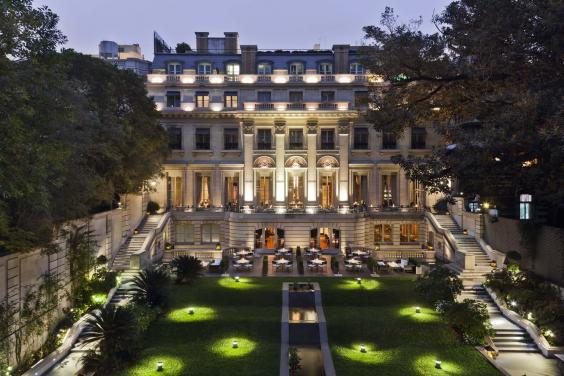
One of the grandest hotels in town, the Palacio Duhau (19) at (00 54 11 5171 1234; buenosaires.park.hyatt.com) offers plush rooms in both its refurbished mansion and the annexe building developed when it came under the Park Hyatt brand. Doubles from £413, not including breakfast.

an106496206palacio-duhau-.jpg
Palacio Duhau

The Panamerican Hotel (20) at 551 Carlos Pellegrini (00 54 11 4348 5000; panamericano.us) is minutes away from the Teatro Colon (21) and has a spectacular view of Buenos Aires’ main thoroughfare, the bustling 9 de Julio, from the 23rd floor. Rooms start at about £130 a night including breakfast.

For budget stays, head to San Telmo. Posada de la Luna (22) at Peru 565 (00 54 11 4343 0911; posadaluna.com) has rooms from AR$400 (£20) including breakfast.

Wednesday, 28 December 2016

48 hours in Bratislava: Hotels, restaurants and places to visit

Why go now?

Slovakia currently holds the rotating Presidency of the EU, pushing its capital, the “little big city” of Bratislava, into the spotlight this month as host of the Special EU Summit. But there’s far more to explore here than politics. For one night on 8 October, the White Night Festival (bielanoc.sk) shows contemporary art in unusual settings, from banks to palace gardens, all over town. Visitors get a special map guiding them around installations, concerts, films, dance and live performances.

The grape harvest also gets going in September and cellars along the 40km Small Carpathian Wine Route open their doors for free tastings, singing and dancing until mid-October. Start in the village of Raca (1), in Bratislava’s outskirts and meander by bus, train or bicycle to Pezinok (2) (pezinok.sk) and Modra (3) (modra.sk), where you can also pick up folk ceramics and fine chinaware, made here since the 16th century. 

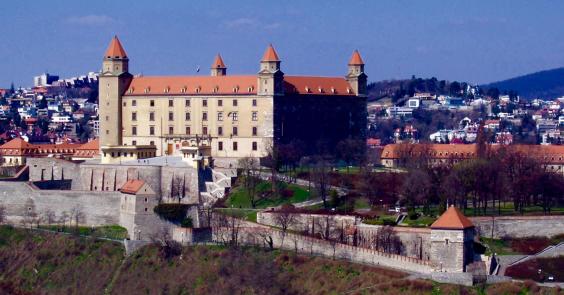
brat-castle-from-ufo.jpg
Bratislava Castle, as seen from the UFO observation deck (Lucy Mallows)

Get your bearings 

Bratislava lies astride the Danube, bordering the Austrian and Hungarian frontiers. The main draw is the Old Town, a largely pedestrianised area. The tourist office (31) is at Klobucnicka 2  (00 421 2 16 186; visitbratislava.com). Opening hours vary depending on whether it is on-season or off-season and on the day of the week, but arrive any time between 10am and 3pm and you should catch them. 

The airport is approximately 9km north-east of the city centre. From the airport, bus number 61 goes to the train station every 20 minutes (a one-way ticket costs €0.90). From here, tram 1 or bus 93 take you to the Old Town within 10 minutes. Taxis cost €25-30 one-way, and the journey should take around 15 minutes.

Day one

Take a view

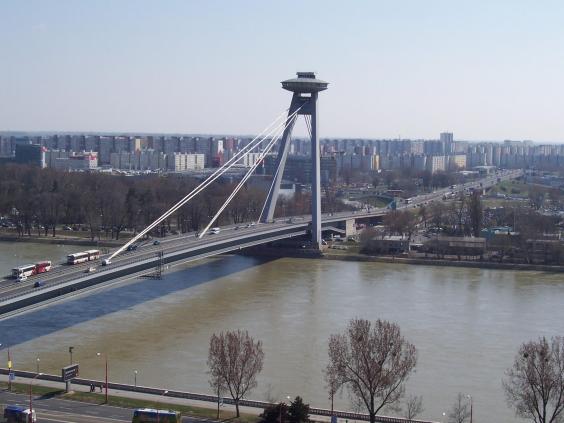
Get an overview of the city by whizzing up in the lift to the open-air observation deck at UFO (4), entry €6.50, the flying saucer-shaped cupola sticking up 87 metres above Most SNP bridge. The UFO offers spectacular views along the Danube and across the Old Town rooftops to the surrounding hills. From here you can also admire Petržalka’s crowded Seventies housing estate, which stretches almost to Austria. To check out the ‘loo with a view’, treat yourself to a coffee or a cocktail in the bar of the stratospherically-priced UFO restaurant (00 421 2 6252 0300; u-f-o.sk).

brat-ufocafe-novy-most.jpg
The UFO sticks out from Most SNP bridge (Lucy Mallows)

Take a hike

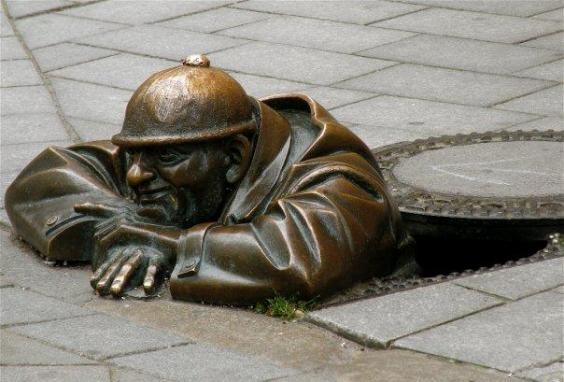
Start in the Old Town’s main square, Hlavné námestie (5), where in December you’ll find traditional Christmas markets. Admire Napoleon’s cannonball, still embedded in the wall of the Old Town Hall’s tower, then walk through the Old Town Hall’s elegant courtyard to emerge into another historic square, this time adorned by the pink, 18th-century Primate’s Palace (6). Turn right and walk along Laurinská street (7), where you can admire the humorous statues of Schöne Náci (tipping his top hat) and Čumil (peering out from his manhole cover). This leads to St Martin’s Cathedral (8), a dinky three-nave Gothic church and the site of the coronation of 19 Hungarian kings and queens. Daily services and concerts are held 9am-11.30am and 1pm-4pm every Monday to Saturday, and at 1.30pm-4.30pm on Sunday (00 421 2/3054 4334; dom.fara.sk; free entry). 

brat.cumil-.statue.jpg
The Čumil statue on Laurinská street (Lucy Mallows)

Lunch on the run

A short walk over Most SNP bridge, in Sad Janka Král’a park (9) (one of the oldest municipal parks in Europe), Leberfinger (10) (00 421 917 115 116; leberfinger.sk) is a lovely lunch spot in a historic 18th-century building overlooking the Danube – go for the classic autumnal dish of goose leg with red cabbage, €17.90. Back in the Old Town, the popular Orbis (11), at Laurinská 7 (facebook.com/orbisfood), is open from 11am and offers street food from around the world; Moroccan wraps, masala omelettes and twice-cooked Belgian frites.

Window shopping

Bratislava’s Old Town is filled with indie fashion boutiques and folk craft emporia. Kompot (12) at Laurinská 19 (00 421 948 630 852; kompot.sk) offers hip T-shirts, totes and homeware. Open 10.30am-7pm Monday to Friday, 2pm-7pm Saturday, closed Sundays.

slavica (13) is a local favourite at Laurinska 19 (14) (00 421 917 968 736; slavicadesign.sk), selling clothes, jewellery and ceramics by young local designers. Open 11am-8pm Monday to Friday, and 11am-5pm Saturday and Sunday. 

An aperitif

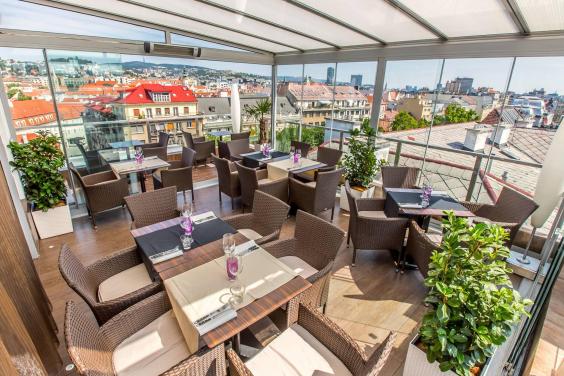
The seventh floor Sky Bar (15) (00 421 948 109 400; skybar.sk) offers a dramatic view across the red rooftops to Bratislava Castle, St Martin’s Cathedral and the hills beyond. Sip a crisp local white wine or try a cocktail made with typically Slovak Borovička juniper brandy.

13482885-1103806626325077-5917997867622629308-o.jpg
The view from the Sky Bar, up on the seventh floor (Sky Bar/Facebook)

Dine with the locals

Up in Bratislava Castle’s grounds, at Námestie A. Dubčeka 1, Restauracia Hrad (16) (00 421 2 5972 4256; facebook.com/restauraciahrad) offers a lighter take on classic Middle Europe dishes (such as local catch zander with potato soufflé, €15.90), quality local wines and a spectacular view from the terrace. Or roll further down the cobbled hill to atmospheric, low-lit Modrá Hviezda (17) (00 421 2 5443 2747; modrahviezda.sk), in an 18th-century, late-Baroque building, for traditional specialities such as roast Mangalica pig with chestnuts and pumpkin purée, €18.90. 

Day two

Sunday morning: out to brunch 

In the early 1900s, the Habsburg-style Kaffe Mayer (18) (00 421 2 5441 1741; kaffeemayer.sk), at Hlavné námestie 4, tempted Viennese ladies to __travel 60km by tram for top-notch kaffee und kuchen – the latter here meaning a choice of 37 different cakes. Or for a contemporary brunch, chill out in a hammock and order the halloumi and portobello mushroom burger (€6.90) at the self-consciously oh-so-cool Urban House (19) (00 421 904 001021; urbanhouse.sk) at Laurinská 14. 

13988135-1912192262341131-5231081924182070267-o.jpg
A typical brunch at typically hip Urban House (Urban House/Facebook)

A walk in the park

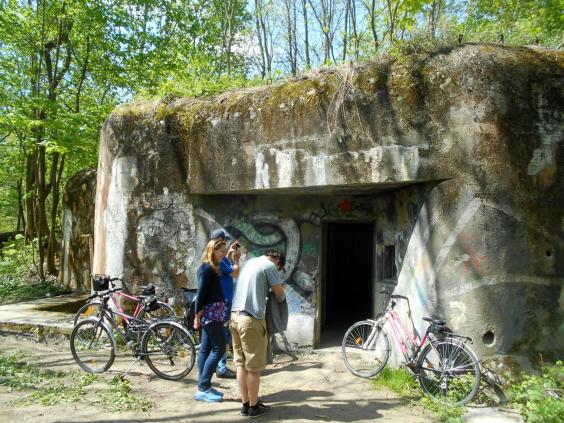
Bratislava is incredibly green. For a truly local view of its prettiest parts – along with a bit of brutal history – forget walking and join brothers Branislav and Peter Chrenka of Authentic Slovakia (00 421 908 308 234; authenticslovakia.com), who take visitors on fascinating bike rides along the Danube to see the Iron Curtain border bunkers and explore hidden gems in verdant Sad Janka Král’a (9). A two-and-a-half-hour tour costs from €22 per person.

Read more

How to spend the perfect weekend in Ljubljana

Take a ride

Bratislava has excellent linked-up public transport operating 5am-11pm daily, with nine tram routes, 14 trolleybus lines, 66 bus routes and many night buses. 

Buy tickets from machines at bus/tram stops and stamp as soon as you board. A 24-hour ticket offering unlimited __travel via tram, bus and trolleybus in all zones of Bratislava costs €6.90 or €3.45 for concessions. 

The Slovak capital is also criss-crossed with cycle paths. Two companies (bikebratislava.sk and bratislavabikepoint.com) rent out bikes; two hours starts from €8. Both banks of the Danube offer lovely, leafy cycle routes. 

For more fresh air, take a 15-minute ride on trolleybus 203 from Hodžovo námestie (20) up to Koliba-Kamzik (21) and explore the cool, well signposted walking trails of the Bratislava Mountain Park (22). A favourite local route is to walk down via a flower-filled meadow to the Železná Studnička (23) (Iron Well), where people like to have picnics and little stalls offer beer and sausages. 

authenticslovakia.ironcurtain.bunker.jpg
Uncovering Bratislava's bunkers on a bike ride with Authentic Slovakia (Lucy Mallows)

Cultural afternoon

The Rococo-style Mirbach Palace (24) (00 421 2 5443 1556; gmb.sk; entry €4) at Františkanske námestie 11 offers two beautifully wood-panelled rooms displaying prints created between 1704-80 that recall scenes of aristocratic life. The Pálffy Palace (25) (00 421 2 5443 3627; gmb.sk; entry €4), also in the Old Town at Panská 19, has a permanent exhibition by Bratislava-born artist Matej Krén, where his captivating “Pasáž” (Passage) installation sees the visitor walk between vertiginous walls of books. Both galleries open 11am-6pm, Tuesday to Sunday.

brat.bluechurch02.jpg
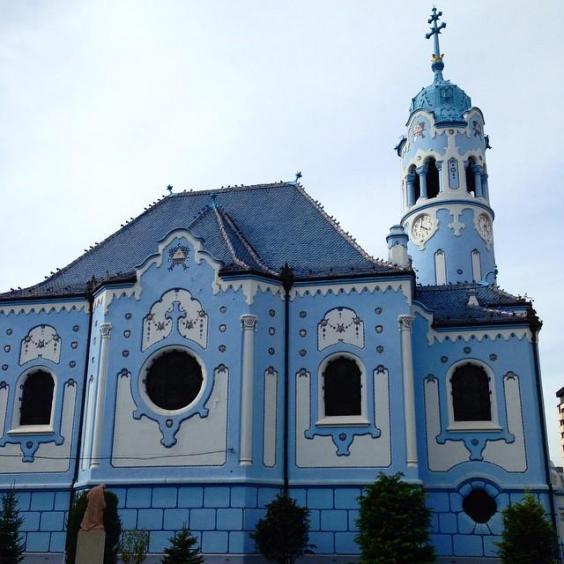
The fairytale exterior of the Blue Church of St Elizabeth (Lucy Mallows)

Bratislava boasts two opera houses under the name of the Slovak National Theatre: the Historic SND (26) (00 421 2 2047 2111; snd.sk) on Hviezdoslavovo námestie, and the New SND (27) (00 421 2 2047 2299; snd.sk) at Pribinova 17, opposite the Eurovea mall. Both have Sunday performances at 5pm of operas such as Cosi fan Tutte, Fidelio and Simon Boccanegra, with tickets costing from €6 in the cheap seats, up to €65 for a prime perch.

The icing on the cake

The outrageously charming Blue Church of St Elizabeth (28) at Bezručová 2, with its Art Nouveau flourishes and light blue icing sugar details, is like something from a fairytale. Opening hours are awkward (6.30am-8am or 5.30pm-7.30pm Monday to Saturday, 7.30am-noon or 5.30pm-7.30pm Sunday, or during a regular mass; free entry) but it’s worth a walk if only just to see the exterior. 

Afterwards, stick with the arty vibe and enjoy imaginative, seasonal dishes in Cubist-themed U Kubistu (29) around the corner at Grösslingová 26 (00 421 948 077 845; ukubistu.sk). 

Travel essentials

Getting there

Ryanair (0871 246 0000; ryanair.com) flies to M R Stefanik Airport (30), 9km north-east of the centre, from Luton, Stansted, Edinburgh and Birmingham.

37127-114323471960530-6294092-n.jpg
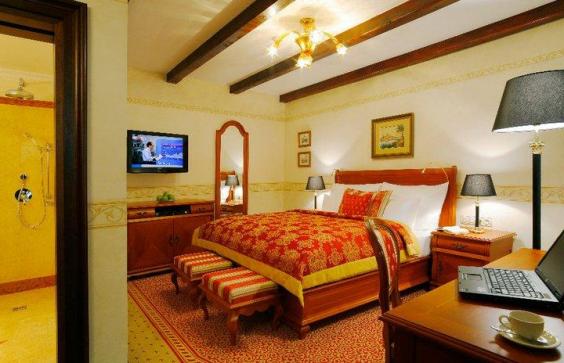
A room at the five-star Arcadia hotel (Arcadia/Facebook)

Staying there

With 21 rooms and nine comfortable split-level maisonettes, the supremely stylish Arcadia (31), at Františkánska 3 (00 421 2 5949 0500; arcadia-hotel.sk) in a listed 13th-century building, offers romantic weekend packages from €209 per night.

Renovated in 2012, yet retaining a traditional ambience, Hotel Devin (32), Riečna 4 (00 421 2 5998 5111; hoteldevin.sk), has a great breakfast buffet and a spa with doubles for €69.

Downtown Backpackers (33), Panenská 31 (00 421 2 2075 6777; backpackers.sk), offers dorms and rooms named after artists. Klimt & Mucha doubles cost €18 a night. Breakfast isn’t included, but there’s a great pub providing bistro lunches.