Wednesday, 28 December 2016

Piscos and mountain views: How to spend a weekend in Santiago

Why go now?

The leafy, Chilean capital is about to become easier to access thanks to new non-stop British Airways flights from Heathrow, the airline’s longest route, which launches on 3 January.

Pinned more or less to the middle of this implausibly long sliver of South America (the country measures almost 4,300km north to south) Santiago is the hub from which travellers fly to the Atacama desert (north) or Patagonia (south). It is also within easy reach of the Pacific coast (90 minutes’ drive west), the Andes (an hour away) and the country’s best vineyards (scattered within two hours of the city). If you need any more reasons to visit, February is the height of summer, with daytime temperatures comfortably in the mid-20Cs until April.

Get your bearings

Read more

  • Santiago de Chile: In search of the perfect pisco
  • Which is the best airline to South America?
  • Bolivia’s growing gourmet scene: Welcome to the high life in the Andes

The snow-dusted peaks of the Andes dominate the Santiago skyline to the east, providing a dramatic backdrop from all over the city. The historic centre remains the city’s heart, while the skyscrapers of the financial district fan out towards the mountains.
barrio-bellavista.jpg
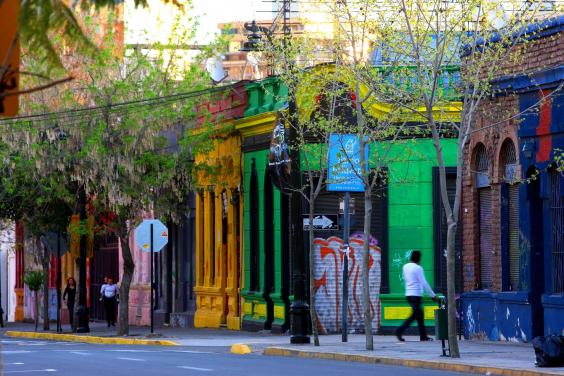
Bellavista ( Turismo Chile)

Neighbourhoods are known as barrios; just a few blocks east of the centre you will find the gourmet hotspot Barrio Lastarria, and the café culture of Barrio Bellas Artes. From there, cross the Mapocho river, to the north, for lively nightlife in arty Bellavista.

There is a tourist office (1) in the central Plaza de Armas, which is open from 9am to 6pm on weekdays and 10am to 4pm at weekends.  
plaza-de-armas-centro-de-santiago.jpg
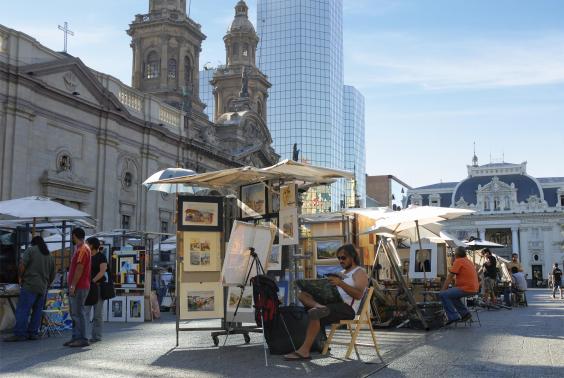
Plaza de Armas ( Turismo Chile)

The Metro has five, easy-to-use lines that criss-cross the city; buy tickets at the station kiosk or buy a rechargeable BIP! card for 1,550CLP (£1.90). One journey costs 610CLP off-peak or 740CLP during peak hours (7am-9am, 6pm-8pm).

£1 = 850,960 Chliean pesos (CLP), $1 = 650,710CLP 

Day one

Take a view

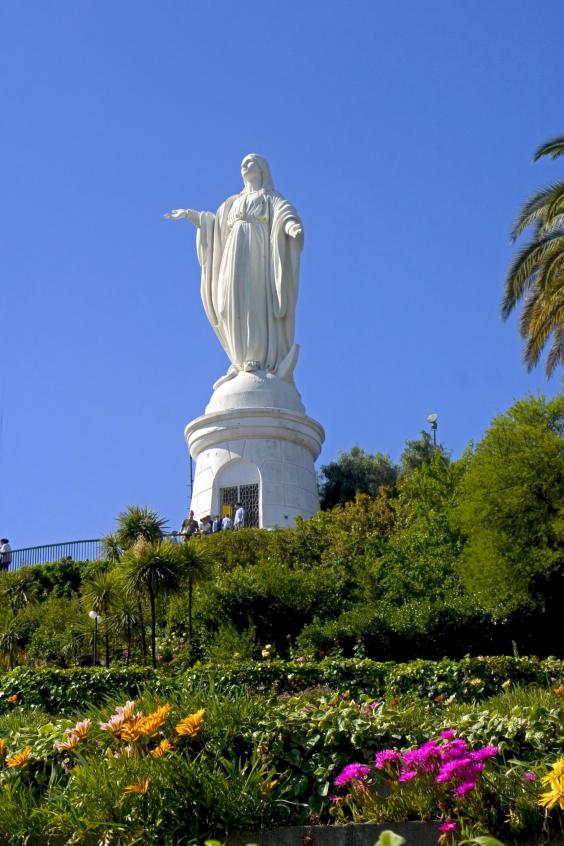
Marvel at the mountainous backdrop from the lungs of the city, Parque Metropolitano. It is popular with runners and cyclists who head up to the Virgin Mary statue at the top of the 869m hill Cerro San Cristóbal (2) at weekends, while the less energetic can take a funicular train (10am-7pm, 2,000CLP return for adults, 1,500CLP return for children) from Estación Pio Nono (3). Return tickets cost 2,000CLP for adults and 1,500CLP for children.
central-regioncosantiago-san-cristbal2.jpg
Cerro San Cristóbal ( Turismo Chile)

Take a hike

For a snapshot of Chile’s history, start at La Moneda (4) in the historic centre. This is the presidential palace where left-wing president Salvador Allende died in the 1973 coup d’etat led by General Augusto Pinochet. Book a free tour in advance; you can ask for tours in English and they operate each weekday at selected times between 9.30am and 6.30pm.

From here, head one block east then walk north on Bandera to find the Museo Chileno de Arte Precolombino (5) (closed Mondays) and admire beautiful pottery from Chile’s pre-Columbian cultures.
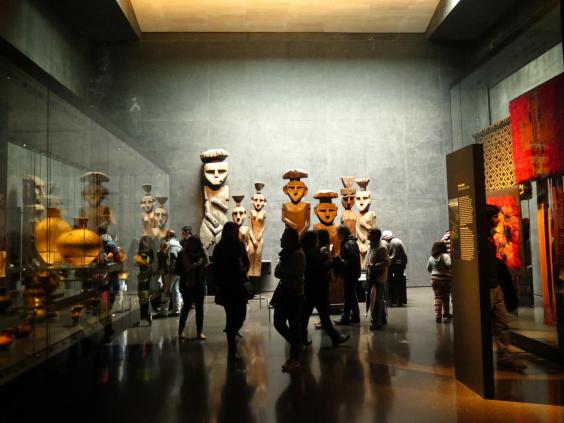
chile-antes-de-chile-cred-pr.jpg
Museo Chileno de Arte Precolombino ( Turismo Chile)

Head north one block and turn right onto Catedral to find Plaza de Armas (1), the heart of the city since it was founded by Spaniard Pedro de Valdivia in 1541, and home to street sellers, colonial buildings and soaring Chilean palms. Continue east on Catedral and turn north on to Mosqueto to find the pretty Parque Forestal (6), and the national fine art museum, Bellas Artes (7) (closed Mondays).
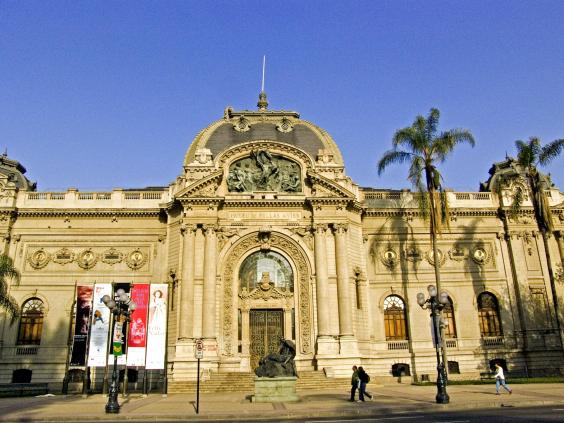
santiago-museo-de-bellas-artes.jpg
Bellas Artes ( Turismo Chile)

Lunch on the run

The street José Victorino Lastarria gives its name to the trendy Lastarria district. Try lunch here, at Chipe Libre (8), where you can sample Chile’s national drink, pisco – as well as several Peruvian piscos (both countries claim the drink as their own and make them using slightly different distillation methods) – plus well-executed northern Chilean and Peruvian dishes, from ceviche and empanadas to sautéed beef tenderloin.

Window shopping

Artisans sell everything from leather work to wood crafts and jewellery in adobe huts at Pueblito Los Dominicos (9). It is open daily from 10am-8pm.
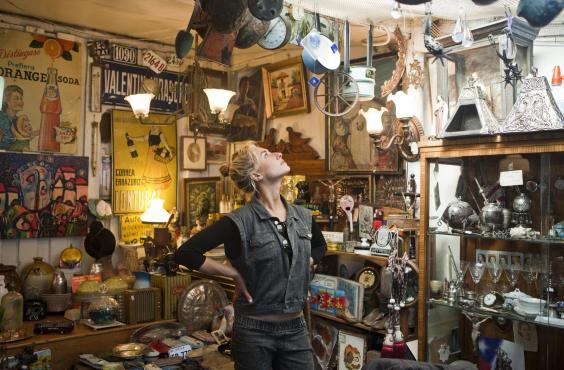
santiago-pueblito-de-los-dominicos.jpg
Pueblito Los Dominicos ( Turismo Chile)

An aperitif

Head to Bar The Clinic (10) for a drink with a political twist. Owned by a left-leaning satirical magazine of the same name, it is decorated with political cartoons and is a great place to try Patagonian microbrews as well as cocktails and Chile’s bountiful wines.

Dine with the locals

Restaurante 040 (11) (closed Sundays and Mondays) is one of the city’s most in-demand eateries, offering 12-course tasting menus celebrating local ingredients such as local clams served with pork scratchings and beetroot salsa, and hake churros with a parmesan dipping sauce. At 35,000CLP a head it is more than fairly priced. There is also the option to pair wines with each dish and customers can also head up to the speakeasy-style rooftop bar for a digestif.
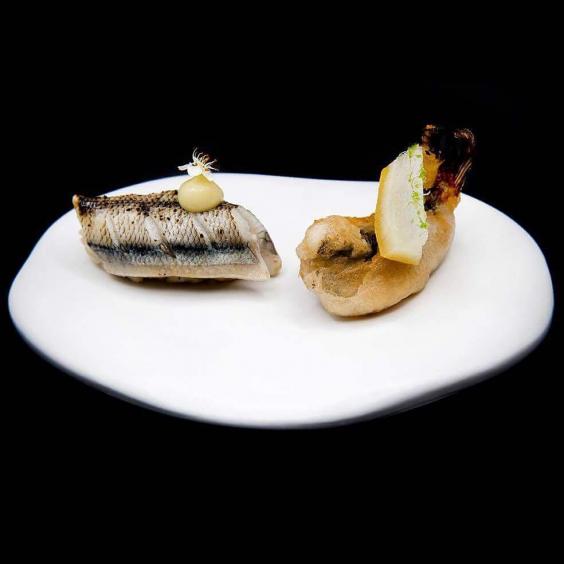
15403659-1147071535410826-4301799271372594759-o.jpg
Fine dining ( Restaurante 040/Facebook)

Liguria (12) (closed Sundays), is a bistro with a quirky selection of vintage adverts and art on the walls, a buzzing bar area and waiters dressed in waistcoats and aprons. The food focuses on classic Chilean dishes such as saltwater clams with parmesan and hake with lentils. The wine list is extensive, too.

Day two

Sunday morning: out to brunch

The Peluquería Francesa, which translates as French hairdresser, may seem an unlikely place for lunch – particularly as it is still turning out Santiago’s most-coiffed inhabitants – but within the elegant yellow and red brick 1925 building you will also find Boulevard Lavaud (13), a French-inspired eatery named after the founder of the original hairdresser in 1868. It is open from 11am-5pm on Sundays and from 9am-1am in the week and 9am-2am on Fridays and Saturdays, serving savoury crêpes, seafood, meats and salads in antique surroundings.

A walk in the park

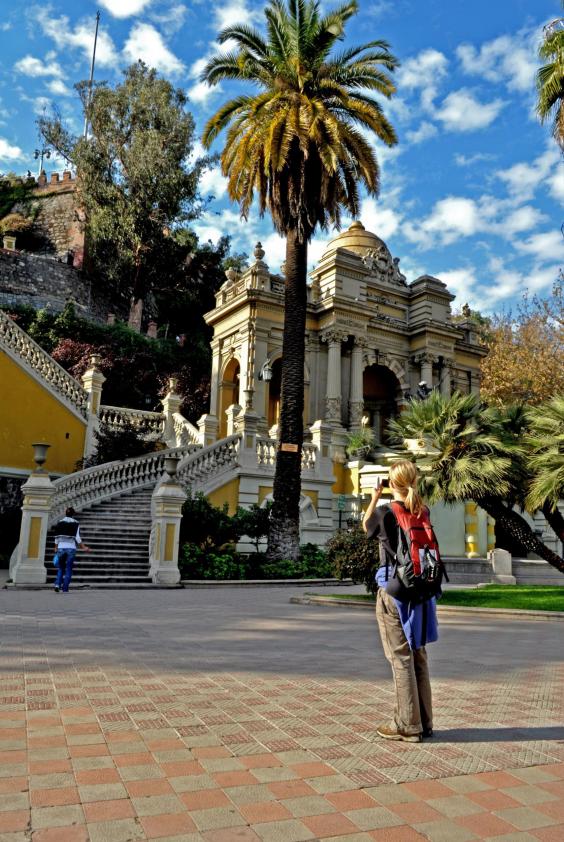
You'll never tire of the mountain view in Santiago and central Cerro Santa Lucía (14) is another hilltop park where you can drink it all in. Stroll the pathways and stone staircases that wind their way past two bougainvillea-draped 19th-century forts, a church, fountains, monuments and lookout points (from 9am-8pm daily).
santiago021-.jpg
Cerro Santa Lucia ( Turismo Chile)

Take a ride

A stroll through the leafy barrio of Providencia is an enjoyable way to while away an hour or two. It is graced by wide, tree-lined boulevards and grand early 20th-century houses, while the main street, Avenida Providencia, is lined with relaxed bars and cafés. You can reach it by taking the clean, modern Metro to Pedro de Valdivia (15), then simply stroll south on any of the quieter streets.

Cultural afternoon

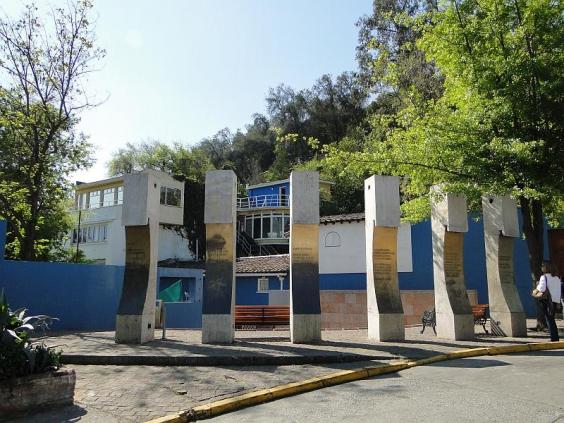
Chile’s Nobel Prize-winning poet Pablo Neruda was a leading light of the left-wing movement in the 20th century and died shortly after the coup d’etat. The eccentric had a fascination with the sea and decorated his blue and yellow Santiago home in Bellavista (entry 6,000CLP; 10-6pm; closed Mondays) in the style of a boat and lighthouse. Named La Chascona (16) for his mistress who he called “the messy haired one”, the house displays his lovelorn poetry and also reveals a tempestuous time in Chile’s history.  
5079457765-2e99c3b8d2-o.jpg
La Chascona (Diego Maia/Flickr)

The icing on the cake

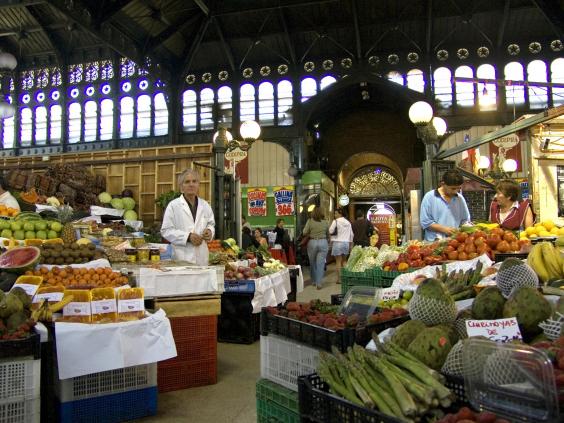
The bustling food market La Vega (17) offers an authentic flavour of Chilean life and is open from 5am-5pm. Try the unusual Latin American fruits on sale such as the sweet chirimoya custard apple and maqui berries, once used by the Mapuche to make alcohol, and then head across the road to La Vega Chica (18) for a lunch of pastel de choclo (a meat and chicken dish covered in corn) or humitas (corn dough steamed in a banana leaf and filled with minced meat).
santiago-mercado-central.jpg
La Vega ( Turismo Chile)

Travel essentials

Getting there

British Airways commences four flights per week from Heathrow to Santiago on 3 January. Alternative routes include Latam from Heathrow via Sao Paulo, Avianca from Heathrow via Bogota, Air Europa from Gatwick via Madrid and Air France from a range of UK airports via Paris.

Arturo Merino Benítez International Airport (19) is located about 15km north-west of the city centre. Head to the official taxi stands in the arrivals hall where the fixed rate for a taxi to the city centre is about 22,000CLP and a shared drop-off is 7,000CLP.

There are also two bus lines operating routes to the city centre. Buses Centropuerto and TurBus Aeropuerto both charge 1,700CLP (£2) one way. They operate from 6am-11.30pm and take about half an hour.

Staying there

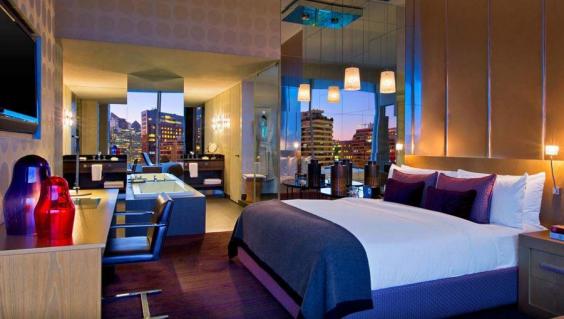
W Santiago (20) is set among the glittering skyscrapers of the Las Condes district with mountain views from the bedrooms as well as a rooftop pool and bar. Doubles from US$299 including breakfast.
capture.jpg
W Santiago

The Aubrey (21) is set in a beautiful 1927-built mansion with 15 stylishly decorated rooms (bone inlay Indian chairs, antiques, brightly coloured and patterned textiles) pretty patios and a sunny pool area. Doubles from US$195 including breakfast.

Hotel Boutique Tremo (22) is set in an early 20th-century building and its understated white rooms are brightened with splashes of colour – some also have their own balcony. Doubles from 70,000CLP including breakfast.

More information

chile.travel

Friday, 23 December 2016

5 Of Our Shortest Flights For A Quick Getaway

If you’re set on a hot holiday, but can’t face being cooped up on a plane for too long, we’ve got the answer…

Forget rocky car ferries and mammoth motorway journeys across the continent, and take a look at some of the shortest flights in our repertoire. You’ll be booked, boarded and beside the hotel bar in a flash on these holidays, which are all less than three-and-a-half hours from home soil.

Majorca – 2 hours 25 minutes

As far as island __holidays go, Majorca’s one of the big boys. Popular with clubbers, couples and families alike, it’s managed to crack the Jack-of-all-trades mantle without falling into master-of-none territory. Magaluf and Palma Nova cover the party side of things, while the capital, Palma, is home to cobbles, culture, and a seriously impressive cathedral.

Head to the quieter corners, like Alcudia and Sa Coma, and you’ll find whopping beaches with Blue Flag ticks to their name. To cap it all, the whole island’s just a blink-and-you’ll-miss-it plane journey from old Blighty. If you still need convincing, the flight’s only 10 minutes longer than the Strictly Come Dancing final, so it’ll literally whizz by.

alcudia-beach-majorca

Morocco – 3 hours

You’ll probably have sat through dreary meetings that are longer than the flight to Morocco, which proves how easy it is to reach its beach-brushed shores. In Agadir, luxury properties like the ClubHotel Riu Tikida Dunas sort you out with long stretches of sand and fine-dining restaurants. The modern city centre’s polka-dotted with traditional bazaars and colourful souks, and you’re arm’s-length from an ancient walled city.

Skip across to Marrakech, and the history’s ramped up a notch. It might not have a beach scene to boast about, but the every-colour street stalls of Jemaa el-Fna and the red-tinted traditional buildings are certainly a worthy fall-back. The gardens on the outskirts are made for arty Instagram posts, too, and feature swanky hotels like the ClubHotel Riu Tikida Palmeraie.

Costa del Sol – 2 hours 40 minutes

This tried-and-tested neck of Spain has been a holiday favourite for longer than we can remember – and it’s an absolute breeze to get to. Hundreds of thousands of Brits have upped sticks and settled on the sunshine coast, drawn in by its high temperatures and close proximity to home. Put it this way – you wouldn’t even get through three hour-long Netflix episodes in the time it takes to get here.

It’s got a little something for everyone, too, from the ever-sunny shores of Estepona to the beaches of Torremolinos – loads of which have Blue Flags slapped against their names.

easter_costadelsol

Malta – 3 hours 15 minutes

You’ll find Malta bobbing in the southern reaches of the Mediterranean Sea, just a hop, skip, and a jump from Sicily’s coastline. It’s hard to put your finger on the island’s main selling point, as it’s got a load of envy-inducing strings to its bow. There’s a family twist to Bugibba, which boasts an action-packed waterfront, while the laid-back shores of Qawra are a short hop away. Further north, the beach at Mellieha Bay is tailor-made for lapping up a bit of sun, and it looks like it belongs on a postcard.

What’s more, the flight probably takes less time than you’d spend building a fiddly bit of flatpack furniture. We reckon it’ll lead to fewer arguments, as well.

Sorrento – 2 hours 50 minutes

Whack on The Lord of the Rings, and you won’t even reach the end of the film in the time it takes to fly to Sorrento. And if you’re wondering which one of the trilogy we mean, take your pick – this flight’s shorter than all three. Once you’re there, it’s an Italian charm offensive.

Backed by Mount Vesuvius and the frozen-in-time ruins of Pompeii, this wedge of Neapolitan coastline is traditional from top-to-bottom. Rustic villas and family-run hotels are punched into the pretty green hillsides, and there’s a no-nonsense Mediterranean approach to the food. If you’re after a bit of hotel inspiration, take a peek at the Hotel Parco Del Sole.

sorrento-italy

For more quick and easy holidays, flick over to the First Choice homepage.

Wednesday, 21 December 2016

Rainbow walkways and streetfood in shipping containers: Forget Copenhagen, Aarhus is Denmark's new capital of cool

Why go now?

Denmark’s second city will officially step out of Copenhagen’s shadow in the new year to become European Capital of Culture 2017 (along with Paphos, Cyprus). A stacked calendar of more than 350 events, festivals and projects kicks off on 21 January under the banner “Let’s Rethink”, reflecting the creative spirit that has long permeated this cool harbour-side sprawl.

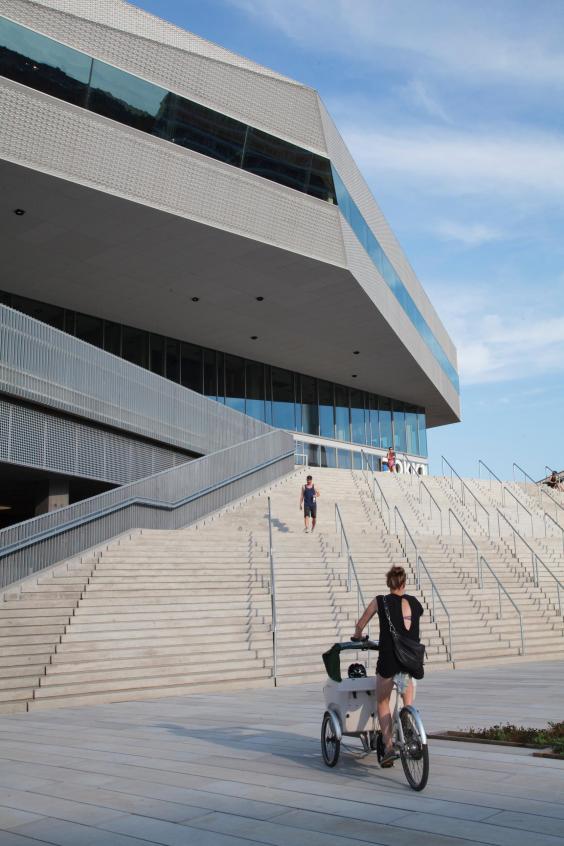
The city’s docks have been transformed by a host of new cultural venues, such as Dokk1 (1), which, together with a thriving gastronomic scene and clutch of world-class museums, means Aarhus should no longer play second fiddle to the capital.

15319-dokk1-aarhus-kim-wyon.jpg
Dokk1 (Kim Wyon/VisitDenmark)

Get your bearings

Aarhus sits on the eastern coast of Denmark’s Jutland peninsula and feels more like a laidback town than a city, with cobbled streets, picturesque canals and charming docks. And with most points of interest accessible on foot or by bike from the compact centre, getting around couldn’t be easier.

Read more

  • Where to stay in Denmark: An old smugglers' inn, Scandi-chic hotels
  • How Bornholm was reinvented as Denmark's 'green island'
  • Copenhagen's best music venues

For longer journeys, a fleet of yellow city buses operate throughout central Aarhus. An AarhusCard gives unlimited travel, plus free or discounted entry to many of the city’s headline attractions, and costs DKK129 for 24 hours. Cards can be purchased at the bus station and most attractions.  

The main tourist centre can be found at Dokk1 (1), where you can use free online touch screens for information and ideas. Open Monday-Saturday 10am-4pm; Sunday 11am-2pm.

Day One

Take a view

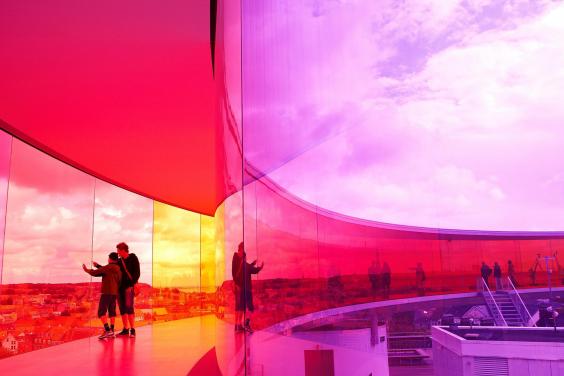
Get a colourful overview of Aarhus from Your Rainbow Panorama, a kaleidoscopic circular walkway on the roof of ARos art museum (2). The brainchild of Olafu Eliasson, a Danish-Icelandic artist famed for his bold, conceptual pieces, this 360-degree skywalk offers brilliant technicolour views of Aarhus through rainbow-hued glass panels. 

ARos takes its main theme from Dante’s The Divine Comedy and is designed as a journey from hell to heaven. Hell is The 9 Spaces, a black-walled basement of eerie installations, while heaven is Eliasson’s multi-coloured halo hovering high above the streets.

9256-aros-aarhus-kunstmuseum-your-rainbow-panorama-claes-bech-poulsen.jpg
Inside Your Rainbow Panorama (Bech Poulsen/VisitDenmark)

Take a hike

Start in Aarhus’ centre point, Domkirkepladsen, where the city’s 12th century cathedral (3) looms large. Across the square, under the Nordea Bank, is where the Vikings founded Aarhus in the ninth century (its name comes from “Aros”, meaning “place at the river’s mouth”); the Viking Museum (4) marks the exact spot.

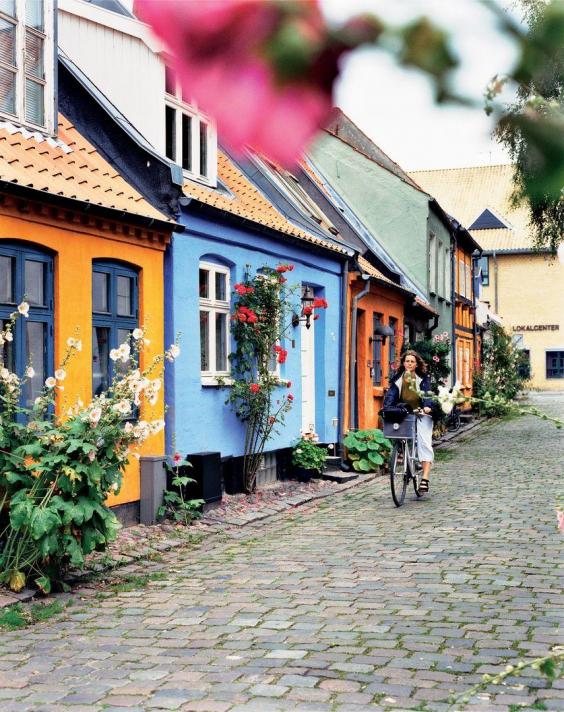
mollestien-photo-ditte-isager.jpg
Mollestein (Ditte Isager)

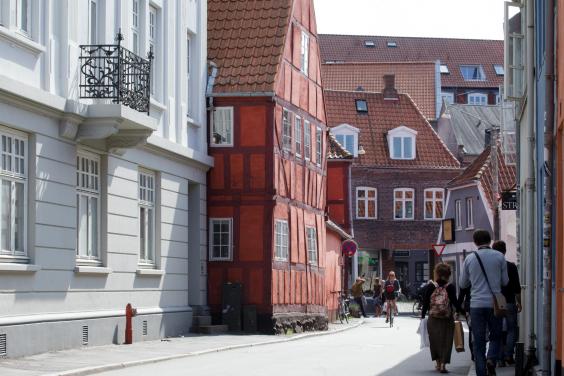
From here, wander through cobbled lanes, past churches and half-timbered houses in the Latin Quarter, the city’s oldest neighbourhood, towards Mollestien (5). It’s by far Aarhus’ prettiest (and most Instagrammed) street with pastel-coloured facades that have looked the same for centuries.

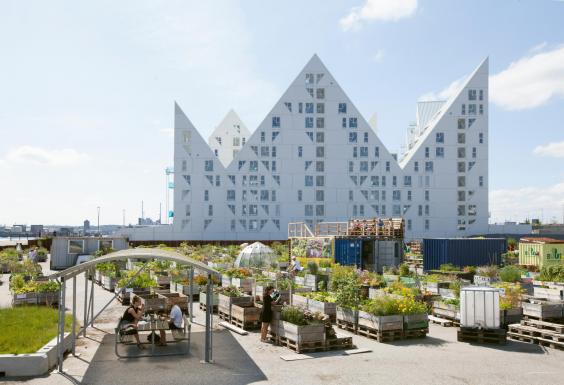
To witness the city’s waterfront regeneration, head east to Dokk1 (1). It’s home to Scandinavia’s largest library and is part of the city’s Urban Mediaspace project, turning former industrial port areas into bright modern spaces. Stroll up the harbour to Aarhus O, the new dockland neighbourhood that’s turning architectural heads with photogenic developments like the iconic Iceberg (6).

15314-isbjerget-aarhus-kim-wyon.jpg
The Iceberg (Kim Wyon/VisitDenmark)

Lunch on the run

Head back down the harbour, or hop on a bus to Banegardspladsen (7) (central station), for the Aarhus Central Food Market (8). Opened in October, this buzzing indoor market is full of specialist shops, delis and breweries, where you can grab everything from Kahler’s seasonal smorrebrod to gourmet porridge at GROD – think oatmeal with organic chicken and peanuts.

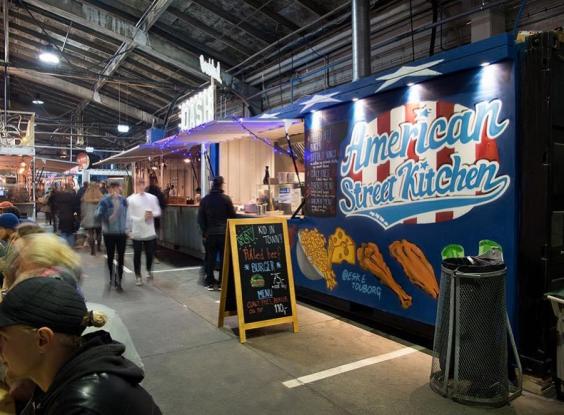
Another mark of the city’s booming food scene is the nearby Aarhus Street Food (9), which opened last summer in a former car park with stalls in repurposed shipping containers. Feast on melt-in-the-mouth pulled-duck burgers at Duck It, or spicy Vietnamese buns at Banh Mi Bandits.

15337515-389230331410039-197788359627927167-n.jpg
Take your pick from food stalls in old shipping containers (Aarhus Street Food/Facebook)

Window shopping

The Stroget is the backbone of Aarhus’ shopping life with an 850-metre long pedestrianised parade of stores. Highlights include Skagen (10), the iconic Danish watch house; department store Salling (11) with big-name brands such as Royal Copenhagen porcelain; and Georg Jensen (12), featuring exquisite silverware and jewellery from the Danish master.

For more independent retailers, head to the so-called “Side Streets Quarter” between Åboulevarden and Norre Alle, where cheaper rents have allowed new designers and artisans to flourish. Check out 1+1 Textil (13) for hygge-enhancing homeware and nearby St Valentin (14) for stylish Scandi menswear. 

An aperitif

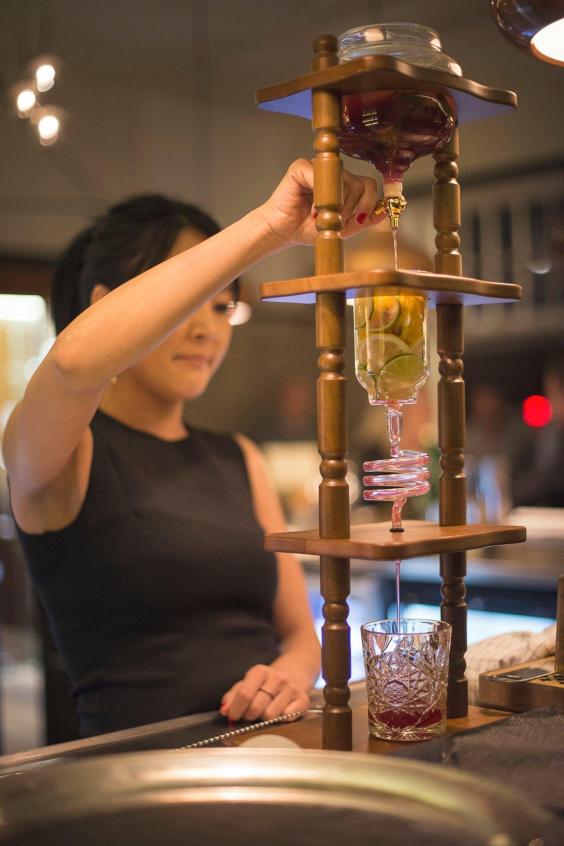
Pharmacy-turned-bar St Pauls Apothek (15) has a vintage, speakeasy charm, with a hip atmosphere and slick mood lighting. The food menu is limited, following a concept of small Nordic dishes and wine pairings, but it’s the killer cocktails that pull in the crowds from pre-dinner into the early hours. It also holds regular rum, whiskey and tequila tastings. Tables fill fast so book ahead or expect a lengthy wait.

10668886-811252028913537-6024176639680582645-o.jpg
Creative cocktails are the speciality (St Pauls Apothek/Facebook)

Dine with the locals

Aarhus’ food revolution has been gathering momentum for some time with Frederikshoj, Gastrome and Substans awarded Denmark’s first Michelin stars outside of Copenhagen in 2015. Much of the recent buzz has centred on newcomer Sart (16), where a band of young chefs adhere to a philosophy of producing everything they can from scratch. Expect casual, Danish-style tapas with sharing plates such as charcuterie meats, venison bolognese and apple compote pizza.

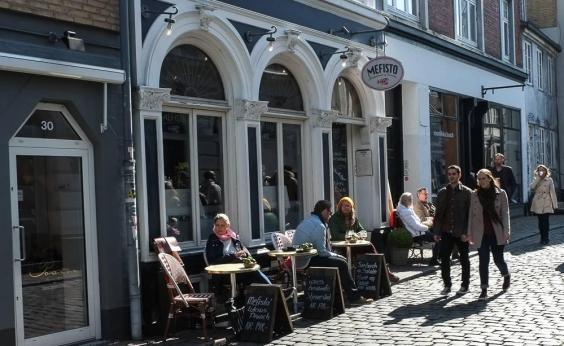
For cosier but equally impressive dining, head to Mefisto (17) in the Latin Quarter. It offers a seasonal four-course menu with pairing wines for DKK600; dishes currently include pickled monkfish with apples and horseradish. 

10295026-836085083072560-6713565114744404297-o.jpg
Mefisto (Mefisto Aarhus/Facebook)

Day two

Sunday morning: out to brunch

Café Smaglos (18) is reputedly one of Aarhus’ oldest cafes, with a charming outdoor area overlooking Monastery Square. Oddly, smaglos in English means “tasteless” but the food and atmosphere is anything but. There’s kitschy décor, live music and a decent breakfast buffet for only DKK45 (daily, 9-11:30am). For bigger appetites, order the café’s cult favourite, the NamNam burger.

Take a ride

Do as the Danes do and get on a bike. With wide cycle lanes, few cars and relatively flat roads, Aarhus is geared for two-wheeled discovery. Cycling Aarhus (19) offers rental bikes for DKK110 a day, as well as several themed tours of the city’s highlights.

For a taste of the great outdoors, get on the Ringgaden Circular Road and head south for a brisk ride on the Brabrandstien cycle trail. It’ll take you along the River Aarhus and around beautiful Brabrand Lake (20), a haven for birdlife with watching towers and nature information dotted along the path. 

A walk in the park

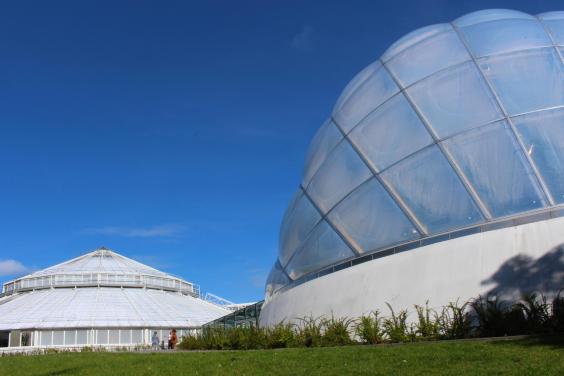
Cycle back up the Ringgaden to the Botanical Gardens (21) for a stroll around its immaculate lawns and striking dome-shaped greenhouses. The glorious gardens make up one of the biggest parks in Aarhus, spread over 53 acres, with lakes, streams and exotic plants gathered from all over the world.

14135-vaeksthusene-i-botanisk-have-science-museerne-.jpg
The Botanical Gardens (Science Museerne)

Cultural afternoon

For a unique local insight, take a journey through time at Den Gamle By (22). It’s an incredibly engaging open-air museum of half-timbered houses, painstakingly reconstructed to form a provincial old market town with supporting costumed guides, horse-drawn wagons and interactive exhibits.

15322-den-gamle-by.-aarhus-kim-wyon.jpg
Den Gamle By (Kim Wyon/VisitDenmark)

After exploring Aarhus of old, head over to Den Gamle By’s more recent historical neighbourhoods, recreating local life in 1927 and 1974. In the latter, you can browse an old hi-fi store with authentic Seventies tech or wander around apartments for an intimate peek into real past lives. Open daily 10am-5pm, but hours vary by season.

The icing on the cake

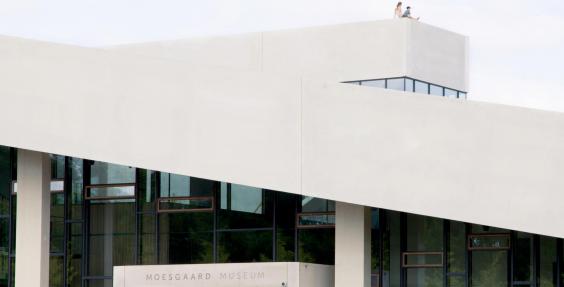
Aarhus isn’t short of fascinating museums or eye-catching architecture, but at Moesgaard Museum (23) you get both. Prehistory exhibits are presented in a spectacular modern space, with the star attraction the 2,000-year-old Grauballe Man – the world’s best-preserved bog body. The part-historical, part-forensic display showcases a remarkably intact body – right down to the fingernails – while more than 50,00 other artefacts document everything from the evolution of man to Viking voyages. Moesgard sits 10km south of the city in Hojbjerg. Bus 18 runs here regularly and takes 25 minutes from central station (7).

15329-moesgaard-museum-aarhus-kim-wyon.jpg
Moesgaard Museum (Kim Wyon/VisitDenmark)

Travel essentials

Getting there

Ryanair flies from Stansted to Aarhus airport (24), and to the nearby city of Billund. British Airways flies from Heathrow and London City to Billund, as well as from Manchester through partner Sun-Air.

A shuttle bus (number 925X) leaves from outside the arrivals terminal at Aarhus airport to the city’s central station (7), and takes 50 minutes. Tickets cost DKK115 one-way.

From Billund the 912X bus travels direct to Aarhus and takes just under an hour and a half (tickets cost DKK146).

Staying there

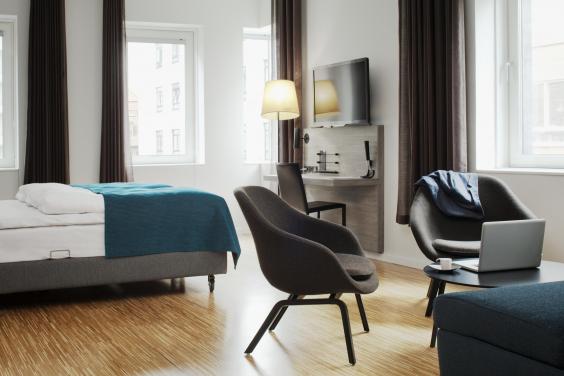
The lively Scandic Aarhus City (25) on Ostergade is a stone’s throw from the main shopping artery, Stroget, and just a five-minute stroll from the train station (7). Bag a room on the top floor for scenic views of the harbour, woods and beaches. Doubles from £95, including breakfast.

12602-scandic-aarhus-city-twin-upgrade-vaerelse-scandic-aarhus-city.jpg
Scandic Aarhus City

A stylish townhouse in the heart of the Latin Quarter, Aarhus Guldsmeden (26) offers French colonial style rooms with four-poster beds and Persian rugs, plus a charming garden for cocktails. Doubles from €171 with breakfast.

Cabinn Aarhus (27) has functional but budget-friendly rooms reminiscent of ship cabins that stretch along a vibrant canal front opposite Aarhus Cathedral (3). It offers compact rooms with twin or bunks beds as well as family rooms for four. Rooms from DKK495, room only.

Monday, 12 December 2016

Crazy cube houses and the country's best cocktail bar: Why Rotterdam beats Amsterdam

Why go now?

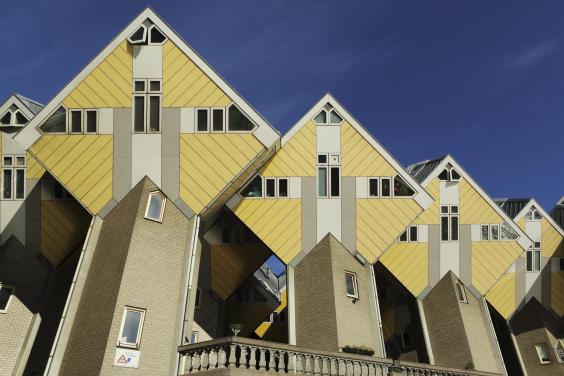
Rotterdam has evolved from a down-at-heel port city into one of Europe’s most exciting urban getaways. The 2014 opening of the Markthal (1) (markthalrotterdam.nl) supplied the city with an iconic visitor attraction and a shot of self-confidence – the arched ceiling of this market hall and residential building bears the country’s largest artwork, a piece by Dutch digital artist Arno Coenen, equivalent to the size of two football pitches. The city has also become known for its unusual architecture, such as surreal bright yellow Cube Houses (2) and the De Rotterdam complex’s (3) stacked glass towers.

In comparison to Amsterdam (42 minutes away by Intercity direct train), where hotels are enjoying record occupancy, Rotterdam offers value for money and a good smattering of museums for chilly days.

Until February 12, slick black-and-white portraits of supermodels and personalities from popular culture will be exhibited at the Kunsthal (4) (00 31 10 4400 300; kunsthal.nl) in Peter Lindbergh: A Different Vision of Fashion Photography.

Get your bearings

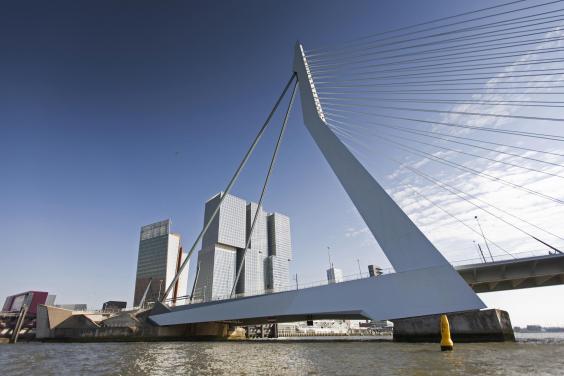
The swan-shaped Erasmus Bridge (5) and red Willemsbrug bridge (6) straddle the New Meuse close to Rotterdam’s centre, which lies on the river’s northern side.

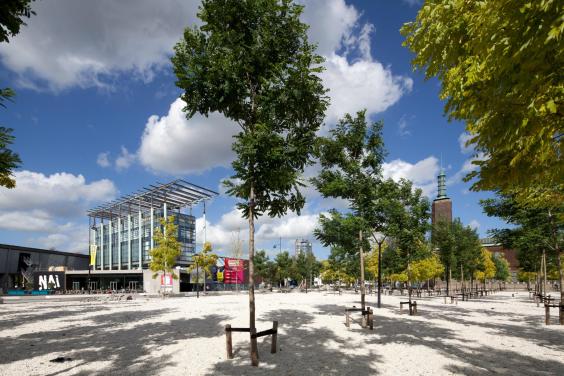
The Museumpark (7), offering six different museums and galleries, is 10 minutes’ walk west of the Erasmus Bridge (5) and 15 minutes’ stroll south of Centraal Station (8). The Markthal (1) is near Rotterdam Blaak station and the Oudehaven (Old Port) (9).

sf-rotterdam-2015-042.jpg
Rotterdam's surreal canary-yellow Cube Houses (Stuart Forster)
2014-erasmusbrug-de-rotterdam-claire-droppert.jpg
The city's landmark Erasmus Bridge, with the stacked glass towers of the De Rotterdam complex behind (Claire Droppert)

The main tourist information office (10) is at Coolsingel 114 (00 31 10 7900 185; rotterdam.info), open 9.30am-6pm daily, in the garden of the Schielandshuis (11), a 17th-century townhouse that opens to the public in 2017.

Day one

Take a hike

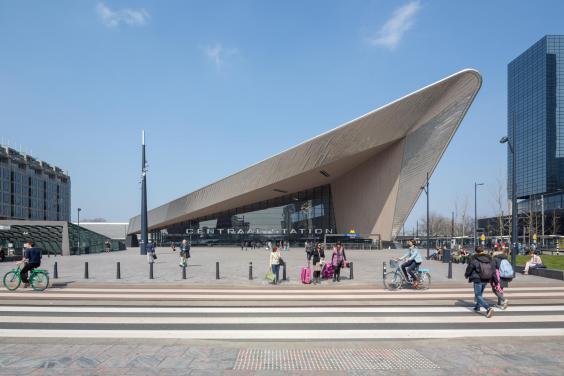
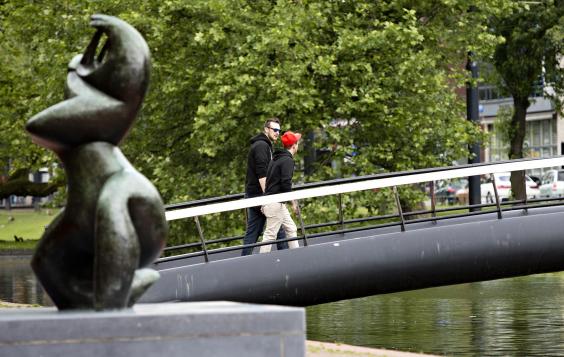
View the distinctive metallic façade of Centraal Station (8), which opened in 2014, from Stationsplein (12), then head towards the nearby Westersingel canal, where you can stroll along the Westersingel Sculpture Route (13) – waterside artworks include August Rodin’s L’Homme qui Marche (“the walking man”) and Henri Laurens’ bronze La Grande Musicienne. Halfway along the canal you’ll see the Functionalist façade of De Unie (14), at Mauritsweg 34-35 (00 31 6 4839 4017; unie010.nl), which opened as a café and restaurant in 1925. It was one of the few city centre buildings to survive the bombs dropped by the Luftwaffe on May 14 1940 – a trail of lights set into pavements marks the boundary of that wartime destruction.

2016-rotterdam-centraal-3-ossipvanduivenbode-redactioneel.jpg
The distinctive Centraal Station
2016-irisvandenbroek-67a2143-redactioneel.jpg
La Grande Musicienne, by Henri Laurens, on the Westersingel Sculpture Route (Iris Van Denbroek)

Lunch on the run

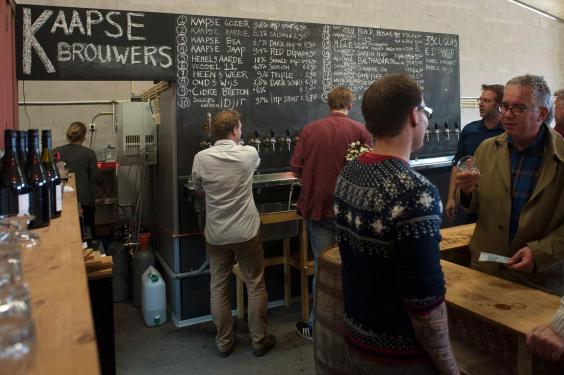
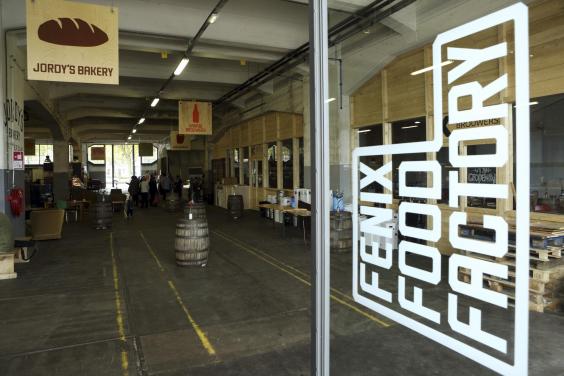
For informal dining, cross the river and take your pick from stalls in the Fenix Food Factory (15) at Veerlaan 19D (fenixfoodfactory.nl). The emphasis is on local, artisanal produce – a bakery, coffee roastery and Moroccan deli number among businesses operating in the former warehouse. Grab your grub and take a seat among the eclectic array of furniture at the building’s centre. The Kaapse Brouwers brewpub (00 31 10 2180 853; kaapsebrouwers.nl) hosts live jazz sessions on Friday evenings and Sunday afternoons. Opening hours vary, closed Monday.

-7414.jpg
Catch live jazz sessions and sample local beers at Kaapse Brouwers brewpub

Window shopping

Browse vintage furniture in Posse (16) at Verlaan 13 (00 31 10 7371 815; posse.nl). Rummage around the back room before sinking into a leather armchair for coffee and a slice of cake. Open Friday to Monday, hours vary.

For photography books and prints of works by Dutch photographers, browse the shop in the Nederlands Fotomuseum (17) at Wilhelminakade 332 (00 31 10 2030 4 05; nederlandsfotomuseum.nl). Open 10am-5pm Tuesday to Friday, 11am-5pm on weekends.

sf-holland-rotterdam-080.jpg
Head to Fenix Food Factory for local produce from independent suppliers (Stuart Forster)

An aperitif

Have a cocktail tailored to your tastes in Stirr (18), at Eendrachtsweg 29b (thestirr.nl). Open from 6pm, Wednesday to Monday. The speakeasy-style bar was named the Netherlands’ best new cocktail bar in Esquire’s 2016 awards. Drinks cost €10.50.

If you prefer gin and tonic peruse the long list round the corner in Ballroom (19) at Witte de Withstraat 88b (00 31 10 3412 029; ballroomrotterdam.nl). Open from 4pm, Tuesday to Sunday. The owners claim to have the biggest collection of gins in Europe, costing from €6 a glass.

Dine with the locals

For well-presented seafood or a tender rib-eye steak, at €39.50, reserve a table in the stylish Restaurant Las Palmas (20), run by Dutch TV chef Herman den Blijker, at Wilhelminakade 330 (00 31 10 2345 122; restaurantlaspalmas.nl). Open Monday to Friday 12pm-3pm, Monday to Saturday from 6pm, Sunday 12pm to 8pm.

Day two

Sunday morning: out to brunch

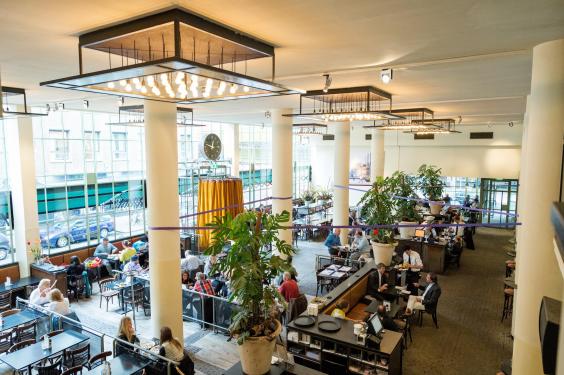
Dudok (21) at Meent 88 (00 31 10 4333 102; dudok.nl) is a buzzy brasserie and popular meeting place serving uitsmijter (an open sandwich with fried eggs, cheese and meat or salmon) for €9.75 and apple pie, from its patisserie, for €3.75. Open daily, from 9am-11pm on Sunday.

2014-dudok-janbijl-0202.jpg
Dudok is a popular spot for brunch

A walk in the park

The Zuiderpark (22), a couple of kilometres south of the river, is the Netherlands’ largest urban park, and offers a world away from the city with hiking and biking trails, wetlands and forests. 

2010-watertaxi-213-mh.jpg
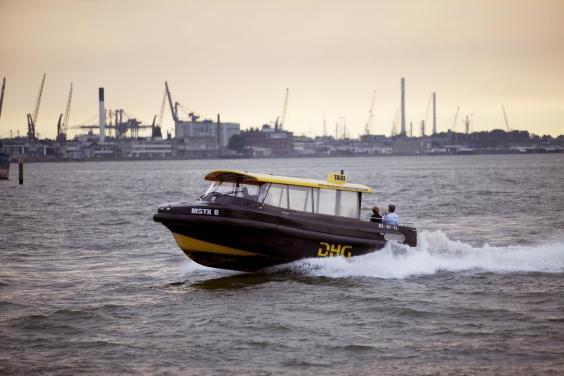
Catch a water taxi for a view of the city from the river

Take a ride

Rotterdam’s network of buses, trams, ferries and metro trains means public transport (ret.nl) is reliable and easy to use. A reloadable OV-Chipcaart (ov-chipkaart.nl) can be acquired for a €7.50 deposit – the tap in, tap out system is comparable to London’s Oyster card and valid across the Netherlands, including on rail journeys.

Day tickets for local transport cost €7.50. Rotterdam Welcome Cards, valid for one day (€11) as well as two (€16) or three (€20) consecutive days of travel are available from Rotterdam Tourist Information and online – they also bring discounted entry to a number of attractions.
Rides by water taxi (watertaxirotterdam.nl), costing from €4.50, are a thrilling way of seeing the skyline from the river.

2011-museumpark3-ovd.jpg
The Museumpark, an urban park offering six different galleries and museums

Cultural afternoon

If you appreciate art and applied design, spend time exploring the expansive Museum Boijmans Van Beuningen (23) at Museumpark 18-20 (00 31 10 4419 400; boijmans.nl). View paintings by the likes of Rembrandt van Rijn, Vincent van Gogh and Piet Mondriaan, along with furniture designed by the De Stijl movement’s Gerrit Rietveld. From February 11 until May 28 the Mad About Surrealism exhibition will show works by the likes of Salvador Dali, Max Ernst and René Magritte. Open 11am-5pm, Tuesday to Sunday; entry €15.

The icing on the cake

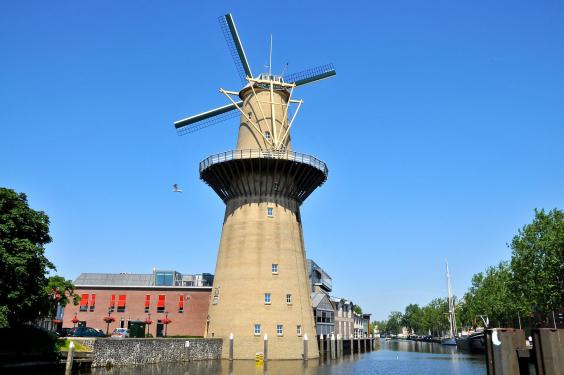
Schiedam, a mere five-minute rail journey from central Rotterdam, is home to the world’s tallest traditional windmill and renowned as the centre of Dutch gin production. The National Jenever Museum (24) (00 31 10 2469 676; jenevermuseum.nl) here tells the story of the spirit’s production and consumption, and houses a working distillery. Open 11.30am-5pm on Saturday and 12.30pm-5pm on Sunday; entry €5.

7741194328-868ec4a603-o.jpg
The windmill at Schiedam, considered to be the world's tallest (FaceMePLS/Flickr/CC BY 2.0)

Travel essentials
Getting there

Rotterdam The Hague Airport (25) is 7km north-west of the city centre and can be reached from London City Airport with Air France, British Airways, KLM and City Jet.

Bus 33 takes 25 minutes to the city centre and runs from 6am until shortly after midnight, costing €3. Alternatively, a free shuttle service runs between the airport and Meijersplein metro station. They journey by taxi costs anything between €20 and €30.

Amsterdam Airport Schiphol is 60km north-east of Rotterdam. Trains to Rotterdam Centraal Station (8) run around the clock. The journey takes around 55 minutes, costing €12.20. Intercity direct trains, requiring a €2.40 supplement, cut the journey to 27 minutes. 

Staying there

Booking into Stayokay Rotterdam (26) at Overblaak 85-87 (00 31 10 436 5763; stayokay.com/nl/hostel/rotterdam) means an opportunity to stay within the Cube Houses, designed by Piet Blom, at the Oudehaven. Double rooms from €54.50 per night, including breakfast.

Right on the river, nHow Rotterdam (27) at Wilheminakade 137 (00 31 10 206 7600; nhow-rotterdam.com) is in the vast De Rotterdam building (3), designed by Rem Koolhaas. The 278 designer rooms have floor-to-ceiling windows and those facing the waterfront give impressive views of the Erasmus Bridge. Rooms from €111 per night, excluding breakfast.

On the other side of the river, the Mainport (28) at Leuvehaven 77 (00 31 10 217 5757; mainporthotel.com) is a five-star design hotel with 215 rooms and suites. A spacious eighth-floor spa, featuring a hammam and Finnish sauna, overlooks the riverfront. Rooms from €144 per night, excluding breakfast.

More information

rotterdam.info

Click here to see tours and holidays in The Netherlands, with Independent Holidays.

Tuesday, 6 December 2016

From 'Beer Corner' to the best banh in Hanoi: How to spend 48 hours in the city

Why go now?

Vietnam is one of the fastest growing tourist destinations in the world, with the number of UK arrivals soaring to more than 200,000 this year as Brits took advantage of a new visa waiver programme, launched in January.

To keep the newcomers happy, the Department for Tourism is now offering free walking tours around Hanoi (see below). And while the whirlwind of mopeds is part of the the city’s charm, taking a stroll has been made less fraught thanks to newly pedestrianised areas.

gettyimages-511256498.jpg
Tet celebrations (Getty Images)

Visit for Tet, the Vietnamese New Year, when you’ll find the streets overrun by parties and traditional ceremonies during the seven-day public holiday, which starts 28 January.

Get your bearings

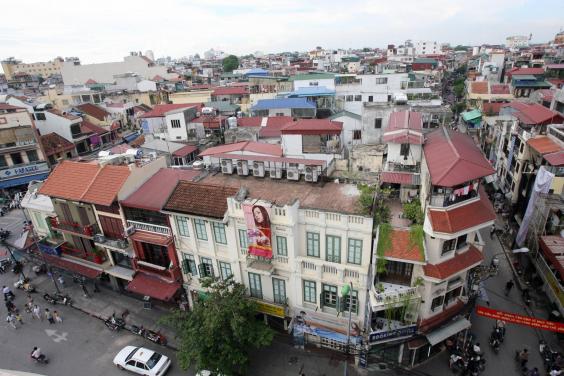
Although the population is over seven million, Hanoi feels modest compared to Vietnam’s second city, Ho Chi Minh City. A lot of that has to do with the compactness of the capital’s time-worn Old Quarter, where most visitors will start their visit. The district sits in the corner of a right angle formed by the Red River to the east and the West Lake to the north. Most historic landmarks can be found in the Old Quarter, but the up-and-coming neighbourhoods around the West Lake are also worth exploring.

gettyimages-162679248.jpg
The Old Quarter (Getty Images)

A new tourist information centre (1) recently opened at 28 Hang Dau Street (00 84 941 336677; open daily 8am-6pm). The free tours depart from here several times a day, Wednesday to Sunday, but stop by first to check exact times and to reserve a place if necessary.

Day one

Take a hike

Brace yourself for the whirlwind of the Old Quarter. The constant stream of mopeds can take some getting used to, especially given the lack of pavements. Despite the traffic, it’s an enthralling maze of little streets and quaint houses that have stood the test of time – Hanoi celebrated its 1,000th birthday in 2010.

Needle your way through the area until you reach tranquil Hoan Kiem Lake (2), mist-kissed and heaving with trees. Crossing its red-painted wooden bridge brings you to an islet with a temple dedicated to the 14th century military leader Tran Hung Dao (3). An even smaller islet on the other side of the lake hosts the elegant 19th century Turtle Tower (4).

gettyimages-2510283.jpg
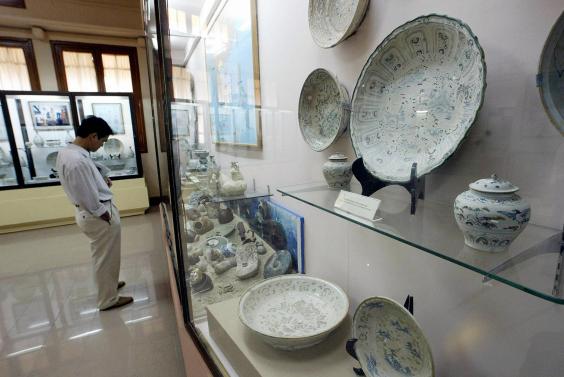
Traditional ceramics on display at the Vietnam National Museum of History (Getty Images)

From the lake, stroll a few blocks to the Vietnam National Museum of History (5) (open 8am-5pm daily). Housed in a colonial building that was once the French School of the Far East, the museum exhibits ceramics, statues and tablets dating back to Vietnam’s prehistory, as well as from the centuries of Chinese rule and the contemporary struggle against imperialism.

Lunch on the run

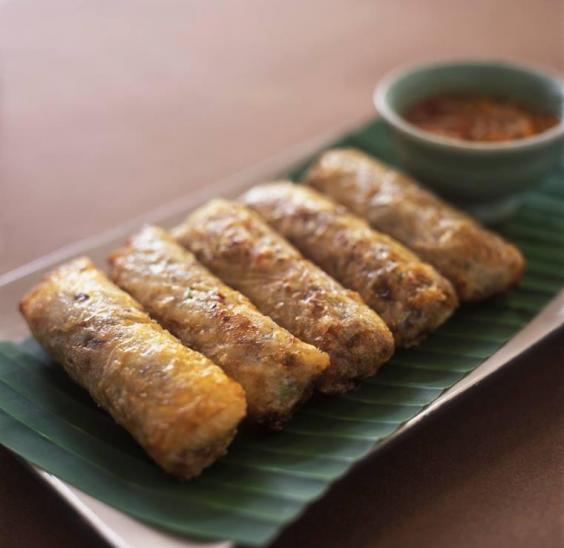
Head back towards the Old Quarter, past the 19th century faux-Gothic cathedral (6) for some traditional pastries, or banh. Quan Goc Da (7) at 52 Ly Quoc Su, offers plates of assorted deep-fried banh, including different types of meat-stuffed dumplings, both sweet and savoury doughnut-type cakes, and various spring rolls.

Cultural afternoon

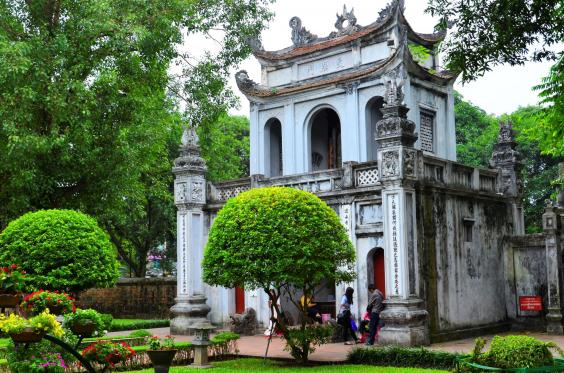
Before the sun goes down, make your way to the Temple of Literature (8). This picturesque site, founded in 1070 to honour Confucius, is dominated by traditional Vietnamese houses, their red-tiled roofs sporting the distinctive upturned corners. There are also grand archways dividing the pretty gardens, as well as tablets dedicated to scholars and writers propped up by giant stone tortoises.

15701893178-5016f35b5c-k.jpg
The Temple of Literature (Pierre Doyen/Flickr)

Window shopping

Hanoi is home to an array of antique shops and clothing boutiques. Next to the Temple of Literature, one such is Indigo Store (9), which sells traditional clothes from the Sapa region, one of Vietnam’s last preserves of traditional Asian culture. The materials and dyes used are all natural, while the seamers working upstairs are all deaf – a common disability in Vietnam, where the legacy of Agent Orange endures.

Dine with the locals

In the modern Ba Dinh District, north of the Old Quarter, is Hanoi Cooking Centre (10). The chefs there take you on a tour of a food market before showing you how to make local classics like banana leaf salad, spring rolls in rice paper, and clay-pot chicken in a ginger, garlic and fish sauce. You can, of course, eat the fruits of your labour.

13935043-1252562678096943-1221922791652877881-n.jpg
Learn to make street food specialities such as spring rolls (Hanoi Cooking Centre/Facebook)

For authentic Vietnamese fare that you don’t have to cook yourself, head to Mot Ngay Moi, or A New Day (11) in the Old Quarter. Opened in 1997, it has a traditional wood-panelled setting. Try the bun cha, pork served with rice noodles, broth and salad.

A nightcap

End the evening at Cama Atk (12), a hip bar with an art space and live music.

Day two

Sunday morning: Out to brunch

Any fan of Vietnamese cuisine will recognise pho as its most iconic dish, but few realise that the noodle soup is meant for breakfast. Early in the morning, the chilly Hanoi air is filled with scents of delicious broth served in bowls with rice noodles, slivers of beef, fresh mint, coriander and bean sprouts. Any one of the street stalls in the Old Quarter, all crowded with locals on their way to work, will do the trick. Pho 10 (13) at 10 Ly Quoc Su Street is a winner if you prefer to sit in a restaurant. Finish with a potent Vietnamese coffee with condensed milk.

Take a ride

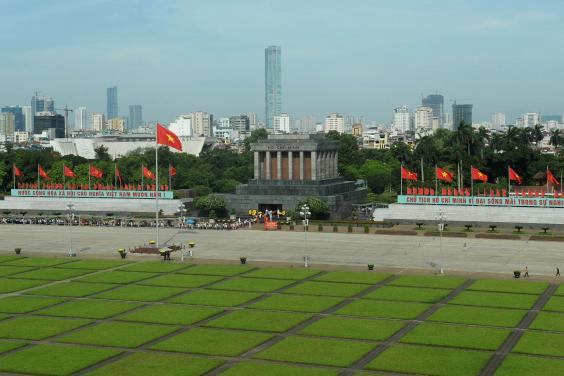
Join Vietnamese pilgrims getting in line to visit their foremost national hero at Ho Chi Minh Mausoleum (14) (open 8am-11.30am, 2pm-4.30pm, closed Monday and Friday). The quickest – and most thrilling – way to get there from the centre of town is via motorbike taxi for around 40,000 (£1.40), though if you’re not alone, it’ll be cheaper to take a metered taxi. Rather like Lenin’s tomb in Moscow, visitors to the mausoleum walk round in respectful silence to catch a glimpse of the embalmed corpse of the revered leader of Vietnamese independence.

gettyimages-577910016.jpg
Ho Chi Minh Mausoleum (Getty Images)

A walk in the park

A short walk north of the mausoleum brings you to the large West Lake, whose banks host a number of temples. Walk down a tree-lined pathway that crosses the lake to see one of the oldest pagodas in Hanoi, the soaring, needle-like Tran Quoc Pagoda (15). You’ll see locals praying and taking part in ceremonies, such as plodding in solemn circles around the ancient tree there.

An aperitif

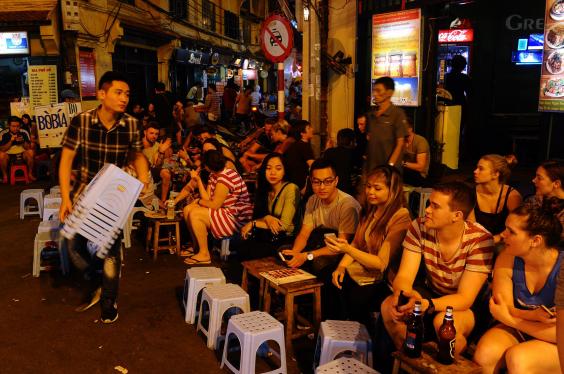
Cross back into the Old Quarter a few blocks to Beer Corner (16) (Bia Hoi Corner) at the intersection of the streets Ta Hien and Luong Ngoc Quyen, where there are several bars selling bia hoi, the cheap local draught beer. Tiny plastic chairs sprawl out into the road, with locals and foreigners making up a lively crowd until late.

gettyimages-498666580.jpg
Sip a bia hoi on Beer Corner (Getty Images)

Icing on the cake

For a refined dinner to cap off your stay, try La Badiane (17). Sit in the plant-filled courtyard and choose from the playful menu of Mediterranean-inspired dishes with an Asian twist, concocted by the French chef. The spiced lamb moussaka and fish curry in coconut milk with hints of saffron are guaranteed to please.

Travel essentials
Getting there

Vietnam Airlines flies from Heathrow to Hanoi's Noi Bai International Airport (18). One-stop options are available on airlines including Emirates and Qatar Airways.

A shuttle bus outside departures connects the airport with the Old Quarter for 40,000 VND (£1.40) one way.

Staying there

A pleasant boutique property, Essence Hanoi Hotel (19) manages to block out the din from nearby Beer Corner. It’s also great value for money with a fantastic breakfast included. Doubles from $35.

Few are disappointed by the trendy De Syloia (20) and its colonial-style facade. The sleek, stylish rooms start at $100 including breakfast.

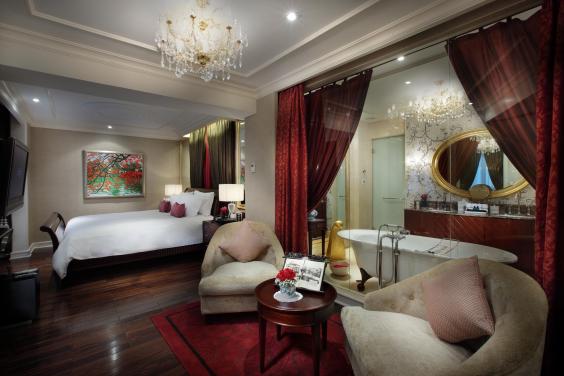
hotelmetropolehanoi-001-imperialsuite05.jpg
A room at the Sofitel Legend Metropole Hanoi
Part of Sofitel's Legend range, the Metropole (21) is just that. Dating back to 1901, the historic property can claim Charlie Chaplin and Jacques Chirac as past guests. Expect the ultimate in Old World grandeur. Doubles start at €286, excluding breakfast.

More information

vietnamtourism.com

Click here to view Asian tours and holidays, with Independent Holidays.

Thursday, 1 December 2016

Cheaper, crazier and cooler than ever: The ultimate guide to Las Vegas

Why go now?

Seeing as a visit to Vegas traditionally means frittering away wads of cash (the house always wins, people), Norwegian’s (norwegian.com) launch in October of the UK’s cheapest direct flight to Sin City could come in handy. Norwegian has been quietly establishing itself as a surprisingly brilliant budget long-haul airline, and Vegas is the latest addition to its ridiculously cheap transatlantic stable, with one-way fares starting at £179. The route niftily flies on Thursdays and Mondays – perfect for a weekend blowout.

But if you’re curious about more than a “big one” on the Strip, it’s also a fascinating time to visit the Downtown area, which is shrugging off decades as a prohibitively dodgy neighbourhood to emerge as a hip, cultural alternative to the Strip’s bawdy brash and flash. 

Get your bearings

Mind-blowing fact alert: it's estimated that around half of visitors never stray from the Strip – the 4.2-mile concentration of famous hotels and casinos on Las Vegas Boulevard – which means they’ve never actually visited the city of Las Vegas. The Strip, in fact, lies south of the Las Vegas city limits, and within the city of Paradise, Clark County.

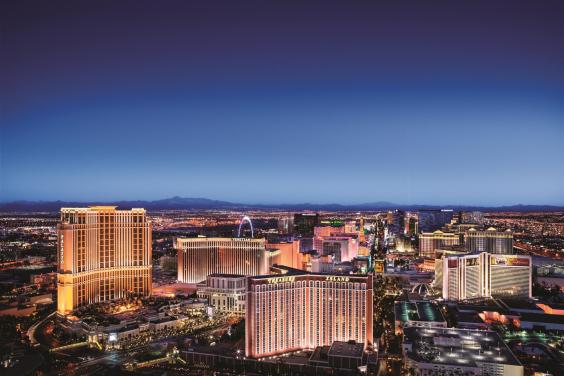
vegas-strip.jpg
The Las Vegas Strip’s mega-resorts at dusk

Though many are content to stick to this neon-lit stretch of naughtiness, keep heading north and you’ll find the historic centre of the actual Las Vegas around Fremont Street in Downtown. The Arts District, just south-west of Downtown, is also an area of rejuvenation, where a new crop of galleries and arts festivals strive to tempt visitors into the city proper.

For the perfect 48 hours, then, spend a day in each area. We’ll start with the must-dos of the Strip and then head into less familiar territory. 

Currently £1 = approximately US$1.25.

Day one

Take a hike

As a parched railroad town stranded in the Nevada desert and thirsting for tourism, in 1931 plucky little Las Vegas realised providing a hub for gambling and quickie marriages would do the trick. It’s been a magnet for those looking to escape humdrum reality and let loose ever since. To get a good feel for the Strip’s hedonistic pull, walking a few miles along this audacious artery provides an instant immersion into its anything goes, alternate universe. 

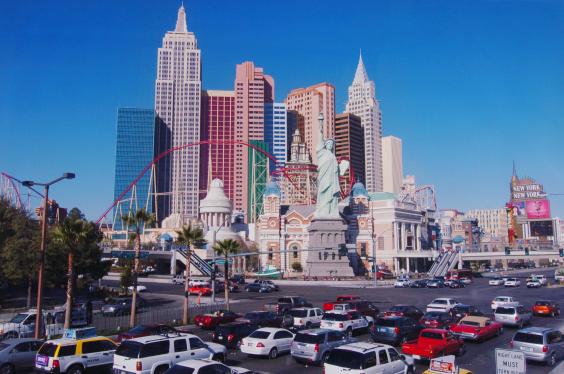
The fantasy land that is Vegas is embodied by its themed hotels; you can take a round-the-world trip in a few paces. Start at the Luxor hotel and casino (1) at the south end, a giant Egyptian pyramid that, at night, shines the world’s strongest beam of light into the sky (it can be seen by aircraft at cruising altitude). Walk north past Excalibur (2) (decked out like a medieval castle), which brings you to the Statue of Liberty – or, rather, New York New York (3), a hotel built to resemble a mini Manhattan. Along with the torch-bearing icon, there’s a rollercoaster looping around the Empire State and the Chrysler, a teeny Brooklyn Bridge and, adjacent to the casino, a replica of Greenwich Village.

new-york-new-york-day.jpg
New New New York Hotel & Casino imitates the Big Apple’s skyline

If the hotels weren’t boggling enough, the people-watching along this route should entertain – expect the likes of painted naked ladies hustling you to pose for photos, deliriously happy tourists toting half-yards of booze, and silver-painted performers dancing to Enya.

The next big stop is Paris (4) – with its mock Eiffel Tower and Arc de Triomphe – and after that, The Venetian (5), where you’ll spot the Rialto Bridge and canals paddled by stripy-T-shirt-clad gondoliers. If there’s enough room on your camera roll after this lot, and it happens to be night time, continue on to The Mirage (6). At 8pm and 9pm on Saturdays and Sundays, the ominous beat of jungle drums strikes up, heralding the eruption of the resident volcano. 

Lunch on the run

You’ll be hard pushed to find an authentic locals’ favourite on the Strip, but it’s definitely worth dipping into The Venetian (5) to seek out the Southern-style fare at Yardbird. The fried chicken with honey hot sauce and the five-cheese mac and cheese are outstanding; wash it all down with a dangerously gluggable Southern Peach cocktail (with bourbon, Aperol, sweet tea and thyme). 

linq-and-high-roller.jpg
The High Roller is the world's tallest observation wheel

Take a view 

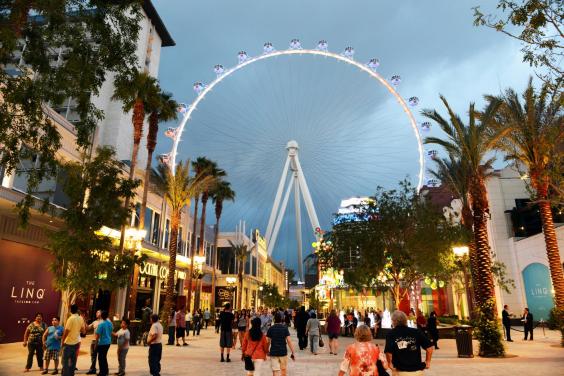
They’ve nicked the Statue of Liberty and the Eiffel Tower, so why not the London Eye? The 550ft-tall High Roller (7), which opened in 2014, is the world’s tallest observation wheel. This being Vegas, you can book the ‘Happy Half Hour’ option, wherein your pod includes a straight-talkin’ bar wench who’ll ply you with shots for the rotation’s duration. By day, the vista of the red-streaked Spring Mountains that surround the bizarre mirage that is Las Vegas is really quite something. 

Just won big? A 15-minute flight over the Strip with Maverick Helicopters (8) gives an unforgettable bird’s eye view of the biggest and brightest mega-resorts. 

mh-vegas-voyage21.jpg
Those who do well at the casinos might want to splash out on a helicopter ride

Window shopping

You’ll never be stuck for a mall in Vegas, but for 540,000 square feet of bargain designer goods, head to Las Vegas Premium Outlets North (9). Here, brands including Saks Fifth Avenue, Armani and Kate Spade ply their wares at (relatively) affordable prices. 

Want something a bit quirkier? Head Downtown to Retro Vegas (10), an antique store selling impossibly cool wares from the city’s Fifties heyday – think entire pastel-pink kitchens and vintage dinettes. 

  • Read more

Donald Trump-free holidays: Five liberal places to visit in the US

An aperitif

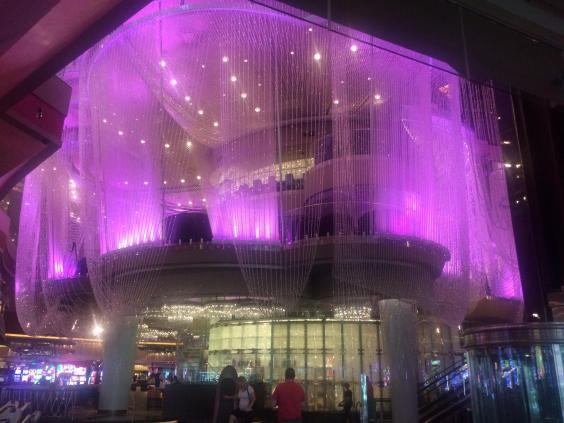
If you’re gunning for something glamorous, the Skyfall Lounge at the Delano (11) gives the best view of the Strip we’ve seen anywhere, and mixes a mean espresso martini. Or try The Chandelier bar at The Cosmopolitan (12), a three-floor poser wrapped inside glittering beaded curtains. It’s just as ridiculous as it sounds – making it a must-stop – and offers the verbena cocktail with ‘buzz button’ flower garnish, sure to set your tongue a-tingle. 

If you’d rather a laugh with the locals, swerve off-Strip to the Golden Tiki (13), an enjoyably garish, 24-hour tropical paradise serving all manner of “rum”-bunctious concoctions.

img-3196.jpg
The three-storey Chandelier bar encased in beaded curtains (Laura Chubb)

Dine with the locals

The latest outpost of London’s high-end Chinese eatery Mr Chow (14) opened in Caesar’s Palace late last year. If you’re celebrating a big win, this is the spot – with its decadent champagne trolley and outrageous prices, there’s no better place to show off. Most interesting is the bizarre, spaceship-esque art installation that springs to life every hour or so – we’re told Mr Chow had become obsessed with Close Encounters of the Third Kind when he devised it. 

For something more authentic, old-school Vickie's Diner (15), heading north towards Downtown (just past the Stratosphere), is much-loved for its classic red booths and fuss-free, 24-hour food – think corned beef hash with three eggs for $8.95.

downtown-container-park-img-5753.jpg
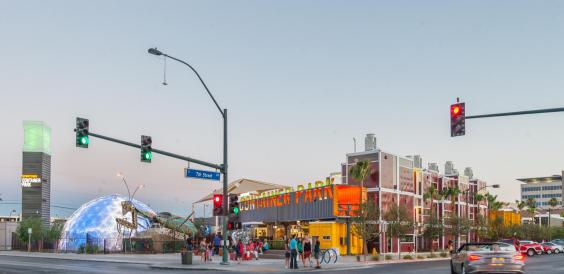
The Downtown Container Park proffers hip food and fashion

Day two

Sunday morning: out to brunch

Bid farewell to the Strip with great views and even better food at Giada (16), a bright and chic little spot owned by Italian-born Food Network chef Giada De Laurentiis. The bottomless mimosas go great alongside a strawberry polenta waffle with pineapple and Nutella, or if you’re more of a savoury bruncher, lobster hash with bacon and eggs. 

A walk in the park

Time to head Downtown. For an instant vibe shift, have a wander around the Downtown Container Park (17), a hipster-by-numbers complex of shipping containers offering everything from art and fashion boutiques to upmarket hot dogs and filthy loaded fries at Cheffini’s. And hey, it’s Vegas, so there’s even a wedding chapel. Not to be outdone by the Strip, in the evenings a giant praying mantis sculpture starts dancing to disco music and breathing fire. 

Desperate for some actual nature? The Springs Preserve (18), three miles west of Downtown, offers nature walks and a butterfly house. 

img-3311.jpg
Loaded fries from Cheffini’s at Downtown Container Park (Laura Chubb)

Cultural afternoon

Just five minutes on foot from the container park, housed in the former, 1930s-era Las Vegas Post Office and Courthouse, The Mob Museum (19) is an utterly fascinating – and impressively thorough – account of not only how the mafia ran Vegas in the Thirties and Forties, but the history of organised crime itself. To get the most out of it, you need about three hours. General admission from $23.95.

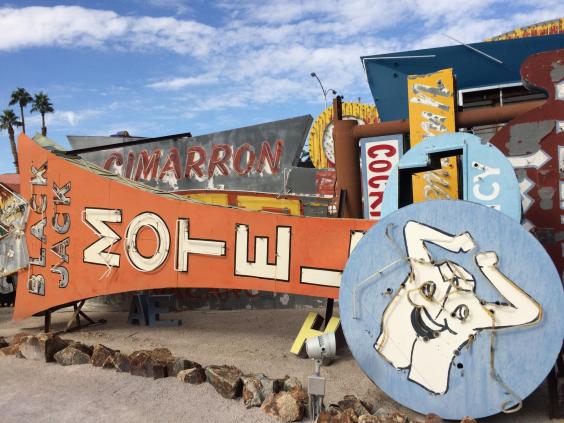
Find another brilliant bit of Vegas history at the Neon Museum (20), where you’ll wander around an outdoor exhibition (the “Neon Boneyard”) of more than 200 rescued signs from the city’s earliest hotels and casinos. As our guide put it, this is the city’s “native art form”, and there are loads of little nuggets to learn here – the original sign from Liberace’s favourite dry cleaners led to the story of how they would remove all the rhinestones from his outfits before cleaning, and then painstakingly reattach them. Guided tours only, from $19.

img-3071.jpg
The original sign from Fifties casino Stardust at the Neon Boneyard (Laura Chubb)
img-3061.jpg
The shirt once advertised Liberace’s favourite dry cleaners (Laura Chubb)

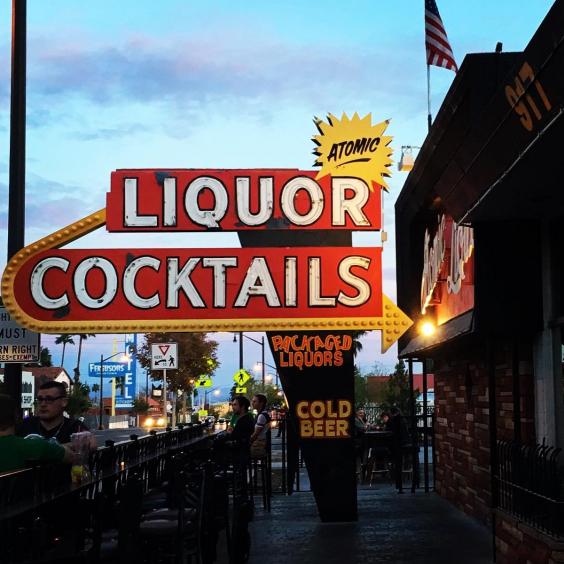
Time for one more? Back towards the Strip in Paradise, the National Atomic Testing Museum (21), admission $22, explores the story of the Nevada Test Site, where nuclear weapons were – and still are – developed. In the early Fifties, the huge mushroom clouds that billowed from the site became a tourist attraction – afterwards, swing by Downtown’s Atomic Liquors bar (22), where people would come to watch explosions from the roof while sipping an “atomic cocktail”. All red light and black leather, it’s enjoyably seedy, and the smoked melon beer cocktail (with mescal and habanero) is a winner.  

img-3314.jpg
The Atomic Liquors bar was popular with tourists who came to Nevada to watch nuclear explosions (Laura Chubb)

Take a ride

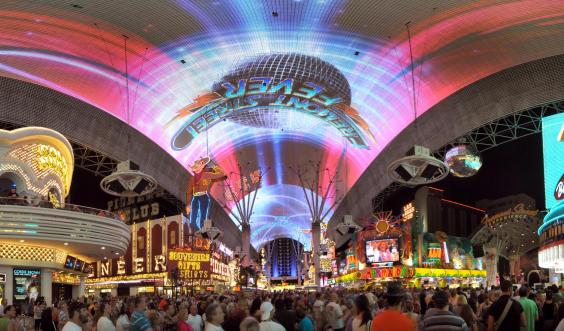
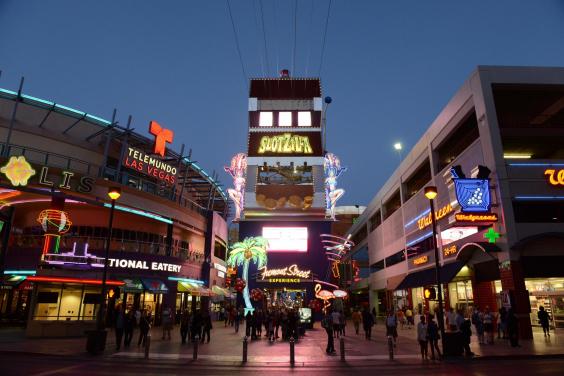
Fremont Street is where Las Vegas started, and today the Fremont Street Experience (23) offers a sort of charmingly downmarket version of the Strip – lined with old-school casinos like the Golden Nugget, “only in America” restaurants such as the Heart Attack Grill (where staff spank you if you fail to finish your ticker-testing meal), and bars selling super-sized cups of beer. The best view of it all is undoubtedly from SlotZilla (24) – a zip-wire ride that takes off from a giant slot machine and, if you opt for the higher, 114ft option, whizzes you along the entire length of the Experience. 

2010-323-2.jpg
The Fremont Street Experience lies at the historical heart of the city
slotzilla-zip-line.jpg
The SlotZilla zip line takes off from a giant slot machine – obviously

The icing on the cake

This depends on which day you liked most. If the Strip is your thing, find more Las Vegas pizzazz at a show. Cirque du Soleil has seven different themed extravaganzas on the Strip at the moment, or for something more intimate, BAZ at The Venetian (5) is a glittery, musical mash-up of Baz Luhrmann movies.

More into Downtown culture? First Friday in the Arts District (25), on the first Friday of every month, offers free art shows and live music, with food trucks supplying the sustenance. If you want to see more art, take a car south of Paradise to find Seven Magic Mountains (26), a trippy art installation by Swiss artist Ugo Rondinone, where towers of colourful boulders have been stacked in the lonely Nevada desert. Unveiled in May, it will stay put for two years. 

Getting there

Touch down is at McCarran airport (27), which is just a 15-minute cab ride from the Strip. According to the Nevada Taxicab Authority, it should cost around $21.95 to reach the Bellagio, which is roughly the mid-point of the Strip. Bus 108 from Terminal 1 runs to Downtown in about half an hour for $2.

The RTCSNV runs the Deuce bus between Fremont Street and Mandalay Bay at the south of the Strip 24/7. Tickets cost $6 for two hours, $8 for 24 hours and $20 for three days. It also operates the SDX bus which, with fewer stops, is a quicker way to get from the Strip to Downtown and also swings by the Arts District. It runs 9am to midnight and fares are the same. 

Staying there

Vegas is known for its mega-resorts, so The Cromwell’s (28) claim to be a “boutique hotel” should be taken relatively – it has 188 rooms, compared with 3,976 at Caesars Palace. There’s a smattering of a decadent Parisian theme – sultry rooms decked out in purple and black – and at around $148 a night (inclusive of tax and resort fee), and smack-bang in the middle of the Strip, it’s a deal.

Party poseurs will love The Cosmopolitan (12), which has massive, apartment-style rooms (there’s even a microwave for late-night snacking) and great views of the Strip. Milk and cookies at bedtime is a nice touch. Starting rates from $246 per night, including tax and resort fee.

For something more sophisticated, the Mandarin Oriental (29) is without doubt the classiest broad in Vegas. Its Asian-accented, non-gaming environment provides a Zen oasis away from all those bright lights and slot machines, and rooms have floor-to-ceiling windows proffering knockout views – even in the toilet (fret not, there’s a sheer modesty blind to keep your bathroom activities private). Rooms from $300 per night, including tax and resort fee.

More information

lasvegas.com/uk

Click here to view the California & the Golden West Tour, with Independent Holidays.